 GreeceGreece sits at the southern tip of the Balkan Peninsula in Southeastern Europe, surrounded…
DESTINATION
Libya
A guide to Libya's location, history, culture and cuisine, from the Mediterranean coast to Saharan oases, with current official safety warnings.
📅 Last updated:
🌍 Quick Facts
Libya at a glance
Capital: Tripoli
Currency: Libyan dinar (LYD)
Language: Arabic (official)
Population: About 7.5 million (UN estimate, 2026)
Time zone: Eastern European Time (UTC+2)
Calling code: +218
Internet domain: .ly
Main airport: Mitiga International Airport (MJI), Tripoli; Benina International Airport (BEN), Benghazi
Best time to visit: October to April for cooler weather on the coast and in the desert, subject to official advisories
📍 Libya Map
🖼️ Libya: Location, History, Culture & Food
✨ Complete Travel Guide
Safety Notice: official advisories warn against travel to Libya. The US Department of State rates Libya Level 4, Do Not Travel (advisory dated 31 August 2026), citing crime, terrorism, health concerns, unrest, kidnapping and landmines. The UK Foreign, Commonwealth & Development Office advises against all travel to most of Libya and against all but essential travel to the cities of Tripoli, Benghazi and Misrata. Check the US State Department advisory and the UK FCDO travel advice for the latest wording before making any plans. Last checked: November 2026.
Where Is Libya Located?
Libya is a North African country on the southern shore of the Mediterranean Sea, between Egypt to the east and Tunisia to the west. It also shares borders with Algeria, Niger, Chad and Sudan. Its capital, Tripoli, sits on the northwest coast.
Last checked: November 2026
Covering about 1.76 million square kilometres, Libya is the fourth-largest country in Africa. Its coastline runs for roughly 1,770 kilometres along the Mediterranean, and its land borders total more than 4,300 kilometres. The longest frontiers are with Egypt, Chad and Algeria, while the shortest is with Niger.
More than 90 percent of the country is desert or semi-desert, because the Sahara reaches the Mediterranean hinterland. The population is concentrated on the narrow, milder coastal belt, where Tripoli and Benghazi, the two largest cities, are found. The country is traditionally described in three historic regions: Tripolitania in the northwest, Cyrenaica in the east and Fezzan in the desert southwest.
The coast curves around the Gulf of Sidra, where the desert meets the sea, and the green uplands of the Jebel Akhdar rise in the northeast near the ancient city of Cyrene. In the northwest, the Nafusa Mountains stand above the coastal plain, while the far south merges into the central Sahara, with oases such as Ghadames and Ghat. Libya uses Eastern European Time, UTC+2. For a closer look at individual destinations, see our guide to the best places to visit in Libya and the guide to getting around Libya.
Introduction to Libya
Libya is an oil-rich North African country of roughly seven million people, with a Mediterranean coast, a vast Saharan interior and a blend of Arab and Amazigh (Berber) heritage. Arabic is the official language. Since 2014 it has been divided between rival authorities, which shapes both daily life and what travellers can safely do.
Last checked: November 2026
Most Libyans live in coastal cities, with Tripoli, Misrata and Benghazi the largest urban centres. Population estimates vary between sources, from about 7.1 to 7.8 million, so figures should be treated as approximate. Italian and English are widely understood in the major cities, and Amazigh languages are still spoken in parts of the country.
The economy depends heavily on oil and gas, which account for the large majority of government revenue and exports. Output has fluctuated with political and security conditions, and the lack of a single unified government has slowed recovery and tourism development. For anyone interested in the country’s heritage, Libya holds some of the best-preserved Roman and Greek sites in the Mediterranean, which is why understanding the current official advisories matters before reading further.
Practical planning is covered in separate guides. Our Libya visa and entry guide explains the eVisa system, the best time to visit Libya compares seasons by region, and the Libya itinerary ideas outline routes of different lengths. You can also read about where to stay in Libya and flights to Libya. Because conditions change quickly, treat every guide as a starting point and confirm details with official sources.
History of Libya
Libya’s history runs from Phoenician and Greek trading colonies through Roman, Ottoman and Italian rule to independence in 1951. Oil wealth followed in the late 1950s, a 1969 coup brought Muammar Gaddafi to power, and the 2011 revolution ended his rule and opened a long period of instability.
Last checked: November 2026
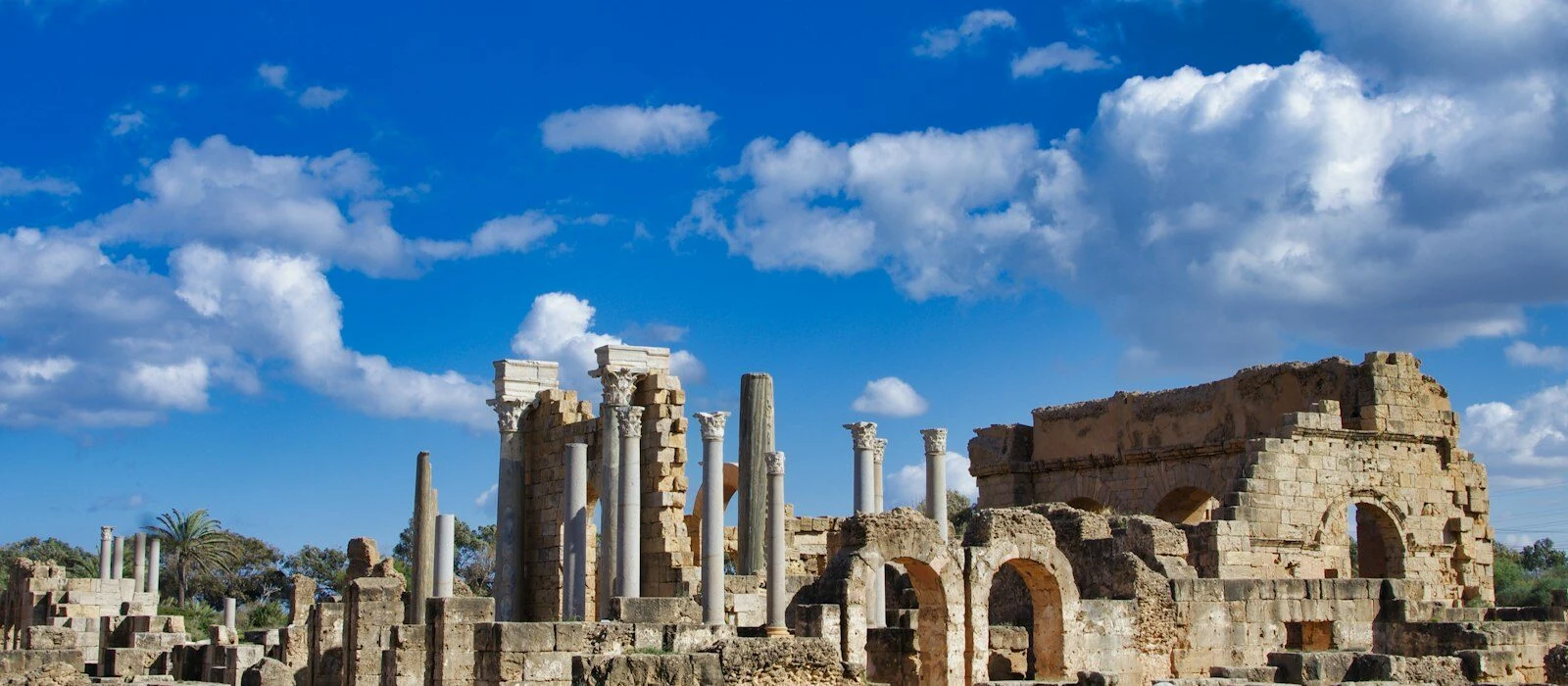
Phoenicians founded trading settlements in the west, where Tripoli began as the ancient city of Oea, while Greek colonists settled the east and founded Cyrene. Rome later absorbed both regions and built great coastal cities such as Leptis Magna and Sabratha, whose ruins remain among the country’s best-known heritage sites.
The Ottoman Empire ruled the coast from the mid-16th century until Italy invaded in 1911. Italy unified Tripolitania and Cyrenaica as a single colony in 1934, and its rule ended during the Second World War. Libya became an independent kingdom under King Idris on 24 December 1951, and the discovery of oil at the end of that decade transformed a very poor country into a wealthy one.
Gaddafi seized power in 1969 and held it for more than four decades. Protests that began in Benghazi in February 2011 grew into an armed uprising, and the National Transitional Council declared the country liberated in October of that year. Since 2014 rival administrations in the west and east have competed for authority, a division that continues to define the security situation.
Earlier chapters also shaped the country’s character. The Garamantes, a Saharan people, built a trading kingdom in the Fezzan, and Arab conquest in the seventh century brought Islam and the Arabic language. Under the Ottomans, the Karamanli dynasty governed Tripoli as a largely independent state from 1711 until 1835. The years since 2011 have seen periods of fighting, a ceasefire in 2020 and repeated delays to national elections, so political authority remains contested.
Culture and Traditions of Libya
Libyan culture blends Arab, Amazigh (Berber), Mediterranean and Saharan influences, with Islam at the centre of daily and family life. Hospitality, strong family ties and shared tea or coffee are the most visible traditions, and communities such as the Tuareg and Tebu keep their own languages and customs.
Last checked: November 2026
Guests are traditionally welcomed with dates, tea or coffee, and meals are often shared with extended family. Libyan tea is brewed strong and sweet, and serving it is a social ritual rather than a quick drink. Courtesy and respect for elders matter in everyday conversation, and visitors are expected to dress modestly and follow local religious customs.
The Amazigh communities of the west and the Tuareg of the southern Sahara have preserved distinct dress, silverwork and music. Coastal towns draw on maluf, a style of music with Andalusian roots, alongside Bedouin songs and folk dance. Religious holidays such as Eid al-Fitr and Eid al-Adha are the main celebrations of the year, marked by family visits, prayers and festive food, and their dates shift each year with the Islamic lunar calendar.
Libya’s weekend falls on Friday and Saturday, and Friday prayers shape the rhythm of the week. Alcohol is prohibited, and public life follows conservative norms, so visitors should dress modestly and ask permission before photographing people. During Ramadan, daytime eating and drinking in public is discouraged, while evenings fill with family meals and gatherings.
Food and Cuisine of Libya
Libyan cuisine mixes Arab, Amazigh and Mediterranean traditions, with a strong Italian influence in Tripoli and the coast. Staples include wheat, barley, couscous, lamb, olive oil and dates. Signature dishes include bazin, asida, couscous, shorba and mbakbaka.
Last checked: November 2026
Bazin is the best-known traditional dish: an unleavened barley dough, shaped into a dome and served with a tomato-based stew, often with lamb, potatoes and boiled eggs. Asida is a cooked wheat dough served with date syrup or butter, while couscous, usually steamed over a meat stew, is a common family meal. Shorba is a spiced lamb and vegetable soup, and it is a typical way to break the fast during Ramadan.
Italian rule left its mark on dishes such as mbakbaka, a pasta stew with meat and tomato. Other dishes to look for are usban, a stuffed sausage made with rice, herbs and offal; shakshouka, eggs cooked in a spiced tomato sauce; rishta, a noodle dish; sharmoula, a garlicky tomato condiment; and makroudh, a date-filled semolina pastry. Strong sweet tea is served after meals.
Lunch is traditionally the main meal of the day, and many dishes are cooked around lamb, olive oil, tomatoes, spices and dates. A fiery chilli paste is a common addition at the table for those who like heat. Because Libya is a dry country, meals are served without alcohol, and meat is halal. Cafes and bakeries add Italian-influenced pastries, pasta and coffee, a legacy of the colonial period that remains visible in Tripoli’s everyday food.
Photo credits: Leptis Magna baths by Ahmed Almakhzanji (Unsplash licence). Ghadames, Leptis Magna and Tadrart Acacus photos by Luca Galuzzi (www.galuzzi.it), licensed under CC BY-SA 2.5 via Wikimedia Commons.
Explore Libya Travel Guides
Explore our detailed guides to plan every part of your Libya trip.
Libya: Best Places
A grouped guide to Libya's Roman and Greek ruins, Saharan oases, coast and cities, with time needed, who each place suits and...
View Guide ›Libya: Best Time to Visit
Libya's climate by region and month, from coastal temperatures and rainfall to desert heat, plus holidays, Ramadan timing and packing advice.
View Guide ›Libya: Flights
International airports, airlines and routes for flying to Libya, plus arrival tips, the time zone, a Before You Fly checklist and quick...
View Guide ›Libya: Getting Around
How to travel within Libya: domestic flights, coastal roads, taxis, car hire and driving rules, with realistic expectations and a safety checklist.
View Guide ›Libya: Hotels
Where to stay in Libya's main cities, from Tripoli's established five-star hotels to desert-town options, with booking tips and what remains unverified.
View Guide ›Libya: Itineraries
Four outline Libya itineraries of 3, 5, 7 and 10 days built around Tripoli, the Roman coast, the Nafusa hills and the...
View Guide ›Libya: Visa
How Libya's eVisa and entry rules work, who needs a sponsor, passport checks and why official travel warnings matter before you plan...
View Guide ›Explore Libya Tours
Discover guided tours and adventures in Libya. Compare itineraries, prices and traveller reviews on TourRadar before you book.
Guided tours & deals
Affiliate partner · Globe Navo may earn a commission from qualifying bookings at no extra cost to you.
❓ Libya FAQ
Where is Libya?
Libya is a North African country on the southern shore of the Mediterranean Sea. It lies between Egypt and Tunisia and also borders Algeria, Niger, Chad and Sudan. Its capital, Tripoli, is on the northwest coast, and most of the country is Saharan desert.
What is the capital and currency of Libya?
The capital of Libya is Tripoli, on the Mediterranean coast. The national currency is the Libyan dinar (LYD). Benghazi and Misrata are other major cities, and the country follows Eastern European Time, which is UTC+2 throughout the year.
What language is spoken in Libya?
Arabic is the official language, spoken in a local Libyan dialect. Amazigh languages are used by communities in the west and Tuareg and Tebu languages in the south. Italian and English are widely understood in larger cities, especially among older people and in business.
What is Libya known for?
Libya is known for its well-preserved Roman and Greek ruins at Leptis Magna, Sabratha and Cyrene, the desert old town of Ghadames, Sahara rock art and large oil reserves. Its recent history is marked by political division that began in 2014.
What are the traditional foods of Libya?
Signature dishes include bazin, a barley dough served with tomato stew, asida with date syrup, couscous with lamb, shorba soup and mbakbaka pasta. Libyan tea is strong and sweet, and meals are halal and served without alcohol.
Plan Your Trip to Libya
Your Next Adventure in Libya Awaits!
Explore Deals →🎁 Best deals for Libya
Offers from trusted travel stores for your Libya trip. Compare a few options before you book, and check each store's terms for the final price.
Browse by type: Hotel deals · Flight deals · Travel eSIM · Car rental
More destinations to explore
GreeceGreece sits at the southern tip of the Balkan Peninsula in Southeastern Europe, surrounded…
 ArmeniaArmenia travel guide covering where the country is, its history, culture and food, plus…
 Côte d’IvoireCôte d'Ivoire travel guide covering where the country is, its history, culture, traditions and…