Safety Notice: The US Department of State rates Libya Level 4, Do Not Travel, and the UK FCDO advises against all travel to most of the country. The outlines below are planning frameworks for a situation in which official advice allows travel and a licensed operator confirms access. They are not a recommendation to travel. Read the US advisory and UK FCDO advice first.
How Should You Plan a Libya Itinerary?
Most outline itineraries for Libya start in Tripoli and work along the western coast to the Roman sites, adding desert or eastern extensions only if time and conditions allow. Independent travel is generally not permitted, so routes are normally set by a licensed operator and may change at short notice.
Last checked: November 2026
Libya is the fourth-largest country in Africa, and distances are long. We have not verified road journey times, which depend on checkpoints, security arrangements and road conditions, so none are quoted here. The only travel time we could confirm is that scheduled flights between Tripoli and Benghazi are generally listed at roughly one hour to one hour and a half. Ask your operator for current timings in writing.
Planning Principles
- Keep it short and flexible: build slack days into every route, because changes happen with little warning.
- Stay in the west first: operator guidance describes the western coast as the most commonly visited area, while eastern and southern routes carry additional restrictions.
- Avoid driving at night and off-road travel: government advice warns about road accidents and landmines.
- Do not rely on independent transport: use operator-arranged vehicles and approved guides.
3-Day Outline: Tripoli and the Roman Coast
Overnight base: Tripoli.
- Day 1: Arrive at Mitiga Airport, settle in and explore Tripoli’s old medina and the Italian-era waterfront.
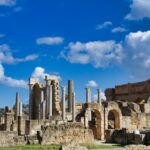
- Day 2: A day excursion to Leptis Magna near Al Khums, covering the forum, arch, theatre and baths. Allow most of the day.
- Day 3: A half-day trip to Sabratha on the coast west of Tripoli, then return for departure.
Practical advice: this is the most compact plan. Sabratha lies roughly 40 miles west of Tripoli according to travel guides, so confirm timings with your operator rather than assuming a fixed driving time.
5-Day Outline: Add the Nafusa Mountains
Overnight bases: Tripoli and a hill town in the Nafusa Mountains, subject to what your operator can arrange.
- Day 1: Arrival and Tripoli medina.
- Day 2: Leptis Magna.
- Day 3: Sabratha, then onward by road towards the western highlands.
- Day 4: Explore Amazigh villages, olive groves and traditional hill architecture.
- Day 5: Return to Tripoli and depart.
Practical advice: this adds cultural depth but also more road time and checkpoints. Confirm whether local accommodation is available and approved.
7-Day Outline: Roman Coast and Ghadames
Overnight bases: Tripoli, then Ghadames.
- Days 1 to 3: The 3-day Tripoli, Leptis Magna and Sabratha outline.
- Days 4 to 6: Travel to Ghadames, a UNESCO-listed oasis town near the Algerian and Tunisian borders, and spend a full day in its old town and palm gardens.
- Day 7: Return to Tripoli and depart.
Practical advice: Ghadames is remote and border-adjacent. We could not verify current transport links, flights or permit rules, so treat this as feasible only if your operator documents the route, permissions and security arrangements. Allow spare days.
10-Day Outline: Coast, Desert and Cyrenaica
Overnight bases: Tripoli, Ghadames, then Benghazi and Shahhat (near Cyrene), only if eastern access is confirmed.
- Days 1 to 3: Tripoli, Leptis Magna and Sabratha.
- Days 4 to 6: Ghadames and its desert surroundings.
- Day 7: Return to Tripoli and fly to Benghazi if scheduled flights are available. Flights on this route are generally listed at about an hour to an hour and a half.
- Days 8 to 9: Cyrene, with its Temple of Apollo and agora, plus the Green Mountain scenery.
- Day 10: Return to Benghazi and depart.
Practical advice: the UK advises against all but essential travel to Benghazi and against all travel to much of eastern Libya. This route needs the most careful, documented planning, and independent confirmation that each region will accept your visa.
Itinerary Mistakes to Avoid
- Packing too many sites into a day; heritage sites need hours, not minutes
- Assuming a visa issued in one region will be accepted in another
- Booking non-refundable flights before the visa and operator are confirmed
- Travelling during Ramadan or Eid without checking what is open
- Ignoring insurance exclusions linked to Do Not Travel advisories
Itinerary FAQs
How many days do you need in Libya?
Three days covers Tripoli, Leptis Magna and Sabratha. Seven to ten days allows a desert extension or the east, but extra regions mean more permissions, distance and risk, so build flexibility into the plan.
Can I plan my own route in Libya?
Reports indicate independent tourism is generally not allowed, and visitors normally travel through a licensed operator with an approved route. Always confirm requirements through official channels before arranging anything.
Is it realistic to visit east and west in one trip?
It is possible on paper, usually by flying between Tripoli and Benghazi, but rival authorities and varying advisories make it complex. The FCDO warns that visas issued overseas may not be recognised in some areas.
When is the best time for these routes?
Spring and autumn suit the coast, and October to April suits the desert. See our guide to the best time to visit Libya for month-by-month conditions.
Related Guides
- Libya travel guide and country overview
- Libya visa and entry requirements
- Best places to visit in Libya
- Best time to visit Libya
- Where to stay in Libya
- Flights to Libya
- How to get around Libya
Heritage reference: UNESCO World Heritage sites in Libya.