 ThailandThailand sits in Southeast Asia between the Gulf of Thailand and the Andaman Sea,…
DESTINATION
Côte d’Ivoire
Côte d'Ivoire travel guide covering where the country is, its history, culture, traditions and food, with links to visa, places, flights and transport guides.
📅 Last updated:
🌍 Quick Facts

Côte d’Ivoire at a glance
Capital: Yamoussoukro (official); Abidjan (economic capital)
Currency: West African CFA franc (XOF)
Language: French (official)
Population: About 29 million (2021 census)
Time zone: Greenwich Mean Time (UTC+0)
Calling code: +225
Internet domain: .ci
Main airport: Félix-Houphouët-Boigny International Airport (ABJ), Abidjan
Best time to visit: December to March (dry season in the south)
📍 Côte d’Ivoire Map
🖼️ Côte d’Ivoire: Location, History, Culture & Food
✨ Complete Travel Guide
Safety Notice: The US State Department rates Côte d’Ivoire Level 2 (Exercise Increased Caution) and says not to travel to the northern border region for any reason. A summary of UK FCDO advice says to avoid all travel within 40 km of the Burkina Faso and Mali borders, in the northern Zanzan and Savanes areas and in Comoé National Park, and to avoid all but essential travel within 20 km of the Liberia border. These warnings apply to specific areas, not the whole country. Read the latest US travel advisory and UK travel advice before you book. Last checked: November 2026.
Where Is Côte d’Ivoire Located?
Côte d’Ivoire is a country on the southern coast of West Africa, on the Gulf of Guinea. It borders Liberia and Guinea to the west, Mali and Burkina Faso to the north, and Ghana to the east. It covers about 322,000 square kilometres, and Abidjan is its largest city.
Last checked: November 2026
The country is roughly square in shape. A lagoon-lined Atlantic coast runs along the south, with beaches, fishing villages and the lagoons around Abidjan and Grand-Bassam. Behind the coast lies a belt of tropical forest, which gives way to savanna in the centre and a drier, more open landscape in the north. In the far west, the Nimba range rises along the border with Guinea and Liberia. Major rivers include the Bandama, the Comoé and the Sassandra.
Yamoussoukro is the official capital, while Abidjan is the economic centre and the place where most visitors arrive. Côte d’Ivoire uses Greenwich Mean Time all year, so it is on the same time as London in winter and an hour behind in summer. The international calling code is +225. To see how the regions compare for a trip, read our guide to the best places to visit in Côte d’Ivoire.
Introduction to Côte d’Ivoire
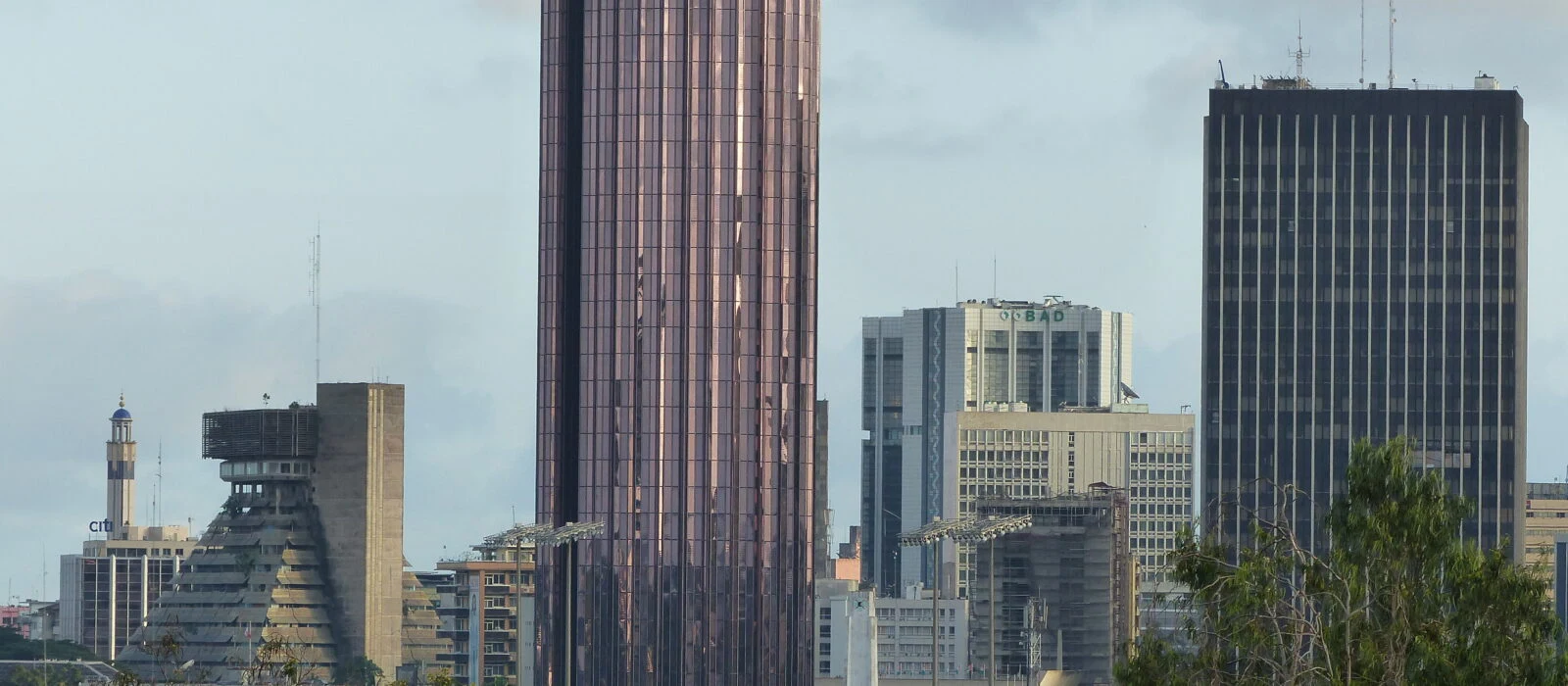
Côte d’Ivoire is a French-speaking republic of about 29 million people at the 2021 census. It is known for cocoa, a lively music scene, the modern skyline of Abidjan, the colonial-era streets of Grand-Bassam and protected rainforests such as Taï National Park.
Last checked: November 2026
French is the official language, and Ivorians also speak dozens of local languages, including Baoulé, Dioula, Bété and Senufo. The country is one of the world’s leading cocoa producers, and it is a major economic hub in francophone West Africa. The currency is the West African CFA franc (XOF), which is shared with several neighbouring countries.
Visitors usually start in Abidjan, where neighbourhoods such as Plateau, Cocody and Marcory mix offices, markets, restaurants and nightlife. From there, many travellers head east to the beaches near Grand-Bassam, north-west to Yamoussoukro and its famous basilica, or west toward the forests and mountains around Man. Because entry rules depend on your passport, check the Côte d’Ivoire visa guide early, and use our flights to Côte d’Ivoire guide to plan your arrival.
If you want a ready-made route, the Côte d’Ivoire itineraries suggest how to combine the main stops. Our guide to the best time to visit Côte d’Ivoire explains how the seasons differ between the south and the north.
History of Côte d’Ivoire
Côte d’Ivoire was home to farming and trading kingdoms long before it became a French colony in 1893. It gained independence on 7 August 1960 under Félix Houphouët-Boigny, who led the country for over three decades. Political conflict in the 2000s was followed by a long period of rebuilding.
Last checked: November 2026
Before colonial rule, the region was shaped by trade routes linking the forest and the Sahel. In the north, the Kong state flourished in the early 18th century and became known for its trade and scholarship. Around the same period, the Baoulé people settled in the centre, and the story of Queen Pokou remains an important part of their identity. The coast takes its name from the ivory trade of earlier European visitors.
France established a colony in 1893, and the country later became part of French West Africa. Grand-Bassam served as the early colonial capital, and its historic quarter is now a UNESCO World Heritage site. After independence in 1960, Houphouët-Boigny governed until his death in 1993. Yamoussoukro, his home town, became the official capital in 1983, and the Basilica of Our Lady of Peace was consecrated there in 1990.
The country went through a coup in 1999, then armed conflict from 2002 and a violent post-election crisis in 2010 and 2011. Since then, Côte d’Ivoire has focused on rebuilding its infrastructure and economy, and Abidjan has grown into one of West Africa’s busiest cities. When you travel, getting around Côte d’Ivoire by road is the best way to see how far the country’s main routes have developed.
Culture and Traditions of Côte d’Ivoire
Ivorian culture is a blend of many ethnic groups, each with its own language, music, masks and ceremonies. Islam, Christianity and traditional beliefs all play a part in daily life. Music, dance and football are shared passions that bring people together across regions.
Last checked: November 2026
The west of the country is known for Dan masks and ceremonies, and the town of Man is a good place to learn about them. The Gouro people of the centre are known for the Zaouli dance, which UNESCO recognises as part of humanity’s intangible cultural heritage. In the north, the Senufo are known for balafon music, carved figures and weaving. The Baoulé are known for gold-weight casting and woven cloth, and the N’zima people celebrate the Abissa festival around Grand-Bassam each year.
Modern music is just as important. Zouglou grew out of student life in Abidjan, and coupé-décalé became a dance-floor style that spread across Africa and Europe. Football is a national obsession, and the national team, the Elephants, draws large crowds of supporters.
Greetings matter. Take time to say hello before asking a question, and use your right hand when giving or receiving something. Dress modestly in mosques and villages, ask before photographing people, and be respectful around sacred masks and ceremonies. Many hosts welcome visitors warmly, and a few words of French go a long way.
Food and Cuisine of Côte d’Ivoire
Ivorian food is built on cassava, plantain, yam, rice, fish, chicken, palm oil and chilli. Meals are often served with rich sauces, grilled meat or fish and fresh onions. Casual open-air restaurants called maquis are the easiest places to try local dishes.
Last checked: November 2026
Many dishes are shared among friends and family, and eating with the right hand is common in informal settings. Spice levels vary, so you can usually ask for the pepper on the side. Here are ten signature dishes to look for:
- Attiéké: fermented cassava served like couscous, often with grilled fish and tomato-onion relish.
- Alloco: fried ripe plantain, a popular snack and side dish.
- Kedjenou: chicken or guinea fowl slowly cooked with vegetables and spices in a sealed pot.
- Foutou banane: pounded plantain and cassava, eaten with a sauce.
- Sauce graine: a rich palm-nut sauce, often served with meat or fish.
- Placali: a smooth cassava paste served with sauces such as okra or peanut.
- Garba: attiéké with fried tuna, a favourite cheap lunch in Abidjan.
- Poulet braisé: grilled chicken, usually served with onions, chilli and attiéké or fried plantain.
- Poisson braisé: grilled fish, often served at lagoon-side and coastal restaurants.
- Choukouya: spiced grilled meat, a popular evening street food.
For drinks, try bissap (a hibiscus drink), gnamankoudji (ginger juice) and, where it is available, bangui (palm wine). Ask about ingredients if you have allergies or dietary needs, and choose busy stalls with fresh food. If you are choosing where to stay near good food, our Côte d’Ivoire hotels guide explains which areas of Abidjan and the coast are easiest to base yourself in.
Explore Côte d’Ivoire Travel Guides
Explore our detailed guides to plan every part of your Côte d’Ivoire trip.
Côte d’Ivoire: Best Places
Best places to visit in Côte d'Ivoire: Abidjan, Grand-Bassam, Yamoussoukro, Man, Taï National Park and the coast, with time needed and who...
View Guide ›Côte d’Ivoire: Best Time to Visit
Best time to visit Côte d'Ivoire: dry and rainy seasons, regional differences, month-by-month conditions, festivals, holidays and packing tips.
View Guide ›Côte d’Ivoire: Itineraries
Côte d'Ivoire itineraries for 3, 5, 7 and 10 days, linking Abidjan, Grand-Bassam, Yamoussoukro, Man and the coast, with overnight stops and...
View Guide ›Côte d’Ivoire: Visa
Côte d'Ivoire visa guide: who needs a visa, how the SNEDAI e-visa works, passport and yellow fever rules, border checks and safety...
View Guide ›Côte d’Ivoire: Flights
Flights to Côte d'Ivoire: Abidjan airport, reported airlines and routes, arrival tips, time zone and a Before You Fly checklist.
View Guide ›Côte d’Ivoire: Getting Around
Getting around Côte d'Ivoire: city buses, taxis, ride-hailing, intercity travel, domestic flights, driving rules and practical transport tips.
View Guide ›Côte d’Ivoire: Hotels
Where to stay in Côte d'Ivoire: best areas in Abidjan, Grand-Bassam, Assinie and Yamoussoukro, hotel types, family and halal-friendly tips and booking...
View Guide ›Explore Côte d’Ivoire Tours
Discover guided tours and adventures in Côte d’Ivoire. Compare itineraries, prices and traveller reviews on TourRadar before you book.
Guided tours & deals
Affiliate partner · Globe Navo may earn a commission from qualifying bookings at no extra cost to you.
❓ Côte d’Ivoire FAQ
Do I need a visa to visit Côte d’Ivoire?
Most travellers do. Citizens of ECOWAS countries are exempt, and many other nationalities can apply for an e-visa on the official SNEDAI portal before travel. Rules depend on your passport, so check the portal and our visa guide before booking.
Is Côte d’Ivoire safe for tourists?
Most visitors stay in Abidjan and the southern coast. The US State Department rates the country Level 2 and says not to travel to the northern border region. UK advice also warns against some northern areas. Check the latest advisories before you go.
What is the capital of Côte d’Ivoire?
Yamoussoukro is the official capital, and it is home to the Basilica of Our Lady of Peace. Abidjan is the economic centre, the largest city and the place where most international flights arrive, so most visitors begin their trip there.
What language is spoken in Côte d’Ivoire?
French is the official language and is used in government, schools and business. Ivorians also speak dozens of local languages, including Baoulé, Dioula and Bété. English is not widely spoken outside tourist areas, so a few French phrases are very useful.
What currency does Côte d’Ivoire use?
The West African CFA franc (XOF) is the currency. Carry some cash for taxis, markets and small towns, because cards are less common outside hotels and larger restaurants. Check current exchange rates and ask your hotel where to change money safely.
Plan Your Trip to Côte d’Ivoire
Your Next Adventure in Côte d’Ivoire Awaits!
Explore Deals →🎁 Best deals for Côte d’Ivoire
Offers from trusted travel stores for your Côte d’Ivoire trip. Compare a few options before you book, and check each store's terms for the final price.
Browse by type: Hotel deals · Flight deals · Travel eSIM · Car rental
 SimOptionsFind the latest SimOption promo code and coupon code for travel eSIM data plans. See how to apply an offer at checkout, fix common code errors and stay connected abroad.
Get Coupon View Deal
 TourRadarTourRadar is an online marketplace for multi-day guided tours, small-group trips and tailor-made journeys offered by independent tour operators around the world.
Get Coupon View Deal
More destinations to explore
ThailandThailand sits in Southeast Asia between the Gulf of Thailand and the Andaman Sea,… KyrgyzstanA landlocked Central Asian country of high mountains, alpine lakes and nomadic yurt culture.…