 Barbados
DESTINATION
Malaysia
Malaysia travel guide covering Kuala Lumpur, Penang, Langkawi, Melaka, Sabah and Sarawak. Best time to visit, practical entry tips, food highlights and FAQs for first-time visitors.
📅 Last updated:
Malaysia: Hotels · Flights · Visa Guide · Deals
🌍 Quick Facts

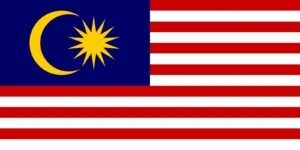
Malaysia at a glance
🏛️
Capital: Kuala Lumpur
💱
Currency: Malaysian Ringgit (MYR)
💬
Language: Malay (English widely spoken)
👥
Population: About 34 million
🕒
Time zone: MYT (UTC+8)
📞
Calling code: +60
🌐
Internet domain: .my
✈️
Main airport: Kuala Lumpur International (KUL)
★
Best time to visit: Dec to Mar (west coast), Mar to Oct (east coast and Borneo)
Food
- Nasi Lemak
- Roti Canai
- Char Kuey Teow
- Penang Laksa
- Satay
- Teh Tarik
Places
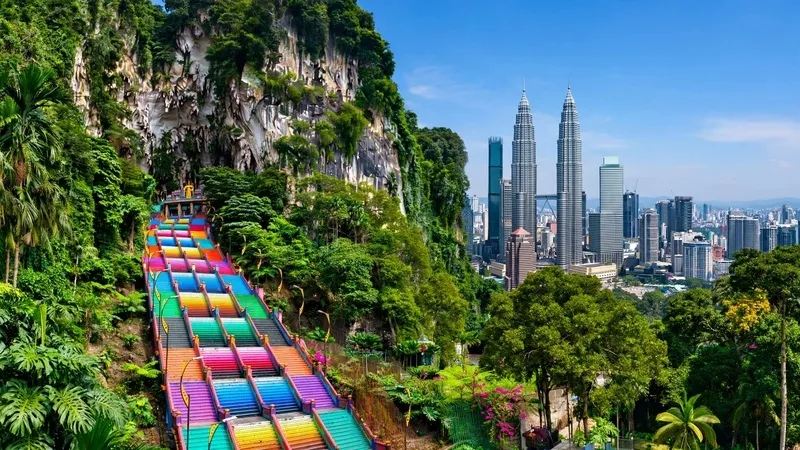
- Petronas Twin Towers, Kuala Lumpur
- Batu Caves
- George Town, Penang
- Langkawi
- Melaka
- Mount Kinabalu
- Gunung Mulu National Park
- Kinabatangan River
Weather
Malaysia is hot and humid all year, with typical daytime temperatures of about 28 to 33 degrees Celsius. The west coast is driest from December to March, while the east coast, Sabah and Sarawak are better from March to October. The northeast monsoon from about November to February closes many east-coast island resorts, and afternoon showers can appear in any month.
Culture
Malaysia is a multicultural country with Malay, Chinese, Indian and indigenous communities. Islam is the official religion, so dress modestly at mosques and religious sites, remove your shoes before entering homes and many temples, and ask before photographing people. Most restaurants are halal, while pork and alcohol are mainly sold in Chinese restaurants and non-Muslim areas. Public displays of affection are frowned upon, and the right hand is used for eating and passing things.
Cities
- Kuala Lumpur
- George Town (Penang)
- Melaka
- Kuching
- Kota Kinabalu
- Johor Bahru
📍 Malaysia Map
📷 Photos of Malaysia
Explore Malaysia Travel Guides
Explore our detailed guides to plan every part of your Malaysia trip.
📍
Malaysia: Best Places
Discover the best places to visit in Malaysia, from Kuala Lumpur and Penang to Langkawi, Melaka, Sabah and Sarawak. Practical tips on...
View Guide › 🌤️Malaysia: Best Time to Visit
Best time to visit Malaysia by region: west coast, east coast islands and Borneo. Month-by-month weather guide and tips for planning your...
View Guide › ✈️Malaysia: Flights
Flights to Malaysia: main airports, routes from abroad, getting from the airport to the city, domestic flights and booking tips.
View Guide › 🗺️Malaysia: Itineraries
Malaysia itineraries for 7, 10 and 14 days covering Kuala Lumpur, Melaka, Penang, Langkawi and Borneo, with transport, season and booking tips.
View Guide › 🛂Malaysia: Visa
Malaysia visa rules, eVisa, MDAC arrival card and entry requirements. Check the latest information for your nationality before you travel.
View Guide › 🛌Malaysia: Hotels
Where to stay in Malaysia: the best areas in Kuala Lumpur, Penang, Langkawi, Melaka and Borneo, with hotel types, booking tips and...
View Guide ›🖼️ Malaysia: Location, History, Culture & Food
✨ Complete Travel Guide
Malaysia travel Guide Introduction, History, Food and Culture for First-Time Visitors
Malaysia is a Southeast Asian country made up of 13 states and three federal territories. The South China Sea splits it into two parts: Peninsular Malaysia, and Malaysian Borneo, which covers Sabah and Sarawak. About 34.4 million people live here, based on the national statistics department’s 2026 estimate.
So what’s the quick introduction to Malaysia’s history, food and culture? A busy trading port started the story, people from many places built the society, and that mix now shows up in every meal and festival. This guide walks through each part in plain language, then finishes with practical tips for planning a trip.
Malaysia at a Glance
Kuala Lumpur is the national capital and the largest city. Putrajaya, a planned city nearby, is the administrative centre where the federal government works. Malay is the official language, and English is widely used in business. Honestly, you’ll manage fine in the cities with English, though a few Malay words go a long way.
Malaysia is also a constitutional monarchy. Nine of the 13 states have hereditary rulers, and the country’s king, called the Yang di-Pertuan Agong, is chosen from among them.
A Short History of Malaysia
The Malacca Sultanate and the age of trade
Much of the story starts on the Strait of Malacca, a key sea route. In the 15th century, the Malacca Sultanate grew into a major port, and traders arrived from Arabia, China and India. Popular legend credits a prince named Parameswara with founding it. The sultanate also helped spread Islam across the peninsula and shaped the Malay world. One of the most important written records of that era is the Sejarah Melayu, a chronicle of the Malacca Sultanate that Malay literature still draws on.
Portuguese, Dutch and British rule
The Portuguese captured Malacca in 1511. The Dutch came next, and later the British, who built the Straits Settlements around Penang, Malacca and Singapore. George Town in Penang was named after King George III. Chinese communities also grew along the west coast during this period, adding to the mix of peoples.
Independence and the birth of Malaysia
Japan occupied British Malaya during World War Two. Afterward, the peninsula became the Malayan Union in 1946 and the Federation of Malaya in 1948. Malaya gained independence on 31 August 1957, with Tunku Abdul Rahman as its first prime minister.
On 16 September 1963, Malaya joined Sabah, Sarawak and Singapore to form Malaysia. Singapore left and became independent on 9 August 1965. That’s why Malaysians mark two dates: Merdeka Day on 31 August and Malaysia Day on 16 September.
The People and Languages
The population is diverse. Bumiputera, a group that includes Malays and indigenous peoples, make up about 70.5 percent of citizens. Chinese Malaysians account for roughly one-fourth of the population, and Malaysian Indians, mostly Tamil speakers, form the other large community on the peninsula.
Borneo adds more layers. The Iban are the largest indigenous group in Sarawak, and both Sabah and Sarawak are home to many smaller groups with their own languages. In total, Malaysia has speakers of 137 living languages.
Islam is the official religion, and about three-fifths of the population is Muslim. The constitution also guarantees freedom of religion, so Buddhism, Christianity and Hinduism are all part of daily life.
Malaysian Food: The Easiest Way to Understand the Country
Food is where the mix of cultures is simplest to taste. Malay, Chinese, Indian and Peranakan traditions all appear on the same table. Here are six dishes worth searching for:
Nasi lemak: Often called the national dish. Rice cooked in coconut milk comes with sambal, fried anchovies, peanuts, cucumber and egg. Many people eat it for breakfast, but it’s sold all day.
Roti canai: A flatbread with Indian roots that took its own shape in Malaysia. Cooks toss and spin the dough, then griddle it. You dip it in dhal or curry.
Laksa: A noodle soup that changes by region. Penang’s asam laksa is sour and tamarind-based, curry laksa uses coconut milk, and Sarawak laksa uses belachan, a fermented shrimp paste.
Char kway teow: Smoky stir-fried flat rice noodles, closely linked with Penang.
Nasi kerabu: Blue rice from Kelantan and Terengganu, colored with bunga telang flowers. In Kelantan it’s traditionally eaten by hand.
Cendol and teh tarik: A cooling dessert and a pulled milk tea. You’ll find both at kopitiams, which are local coffee shops, and at mamak restaurants.
By the way, mamak stalls serve Indian-Malaysian food, and Penang is especially known for its street food. If you’re short on time, plan meals around those two names. At a busy stall, order a small portion first. That way you can try more dishes in one sitting.
Festivals and Everyday Culture
Malaysia’s calendar follows its communities. Hari Raya Aidilfitri marks the end of Ramadan, and many Muslim families host open houses where neighbors and friends are welcome. Chinese New Year lasts 15 days, and children receive red packets called ang pow.
Deepavali, the festival of lights, falls in October or November, depending on the lunar calendar. Thaipusam honors Lord Murugan and is famously held at Batu Caves, near Kuala Lumpur.
In Borneo, the harvest festivals are Kaamatan in Sabah on 30 and 31 May, and Gawai Dayak in Sarawak on 1 and 2 June. Most travelers find that a festival day adds food, music and crowds, so book rooms early.
Heritage Sites Worth Knowing
Malaysia has six UNESCO World Heritage properties. Two are natural: Gunung Mulu National Park in Sarawak and Kinabalu Park in Sabah, both listed in 2000. Mount Kinabalu, at 4,095 meters, is the highest mountain between the Himalayas and New Guinea. Mulu, on Borneo, is described as the most studied tropical karst area in the world, and its namesake peak, Gunung Mulu, rises 2,377 meters.
The four cultural properties are Melaka and George Town (2008), the Lenggong Valley archaeological sites (2012), the Niah Caves complex in Sarawak (2024), and the Forest Research Institute Malaysia Forest Park in Selangor (2025). Melaka and George Town are the easiest to visit, because both are walkable historic port cities. For more places to see, read our best places to visit in Malaysia.
Planning Your Trip
The best time to go depends on the coast. The west coast of the peninsula, including Penang, Melaka and Langkawi, gets more rain during the southwest monsoon, from about April to October. The east coast, including Terengganu, Redang and Tioman, gets heavy rain from November to March, and some islands pause ferry services then. Borneo rains throughout the year, with a peak from November to January. Our best time to visit Malaysia guide has the full breakdown.
Entry rules depend on your nationality, so check them with the Immigration Department before you book. Every foreign visitor must also fill in the free Malaysia Digital Arrival Card online, within three days before arrival. Our Malaysia visa guide has the details, and our flights to Malaysia guide covers airports and routes.
Malaysia is also running its Visit Malaysia 2026 campaign this year, with more than 300 events planned. The country hopes to welcome 43 million international visitors in 2026, after 38.3 million arrived between January and November 2025, so popular places can get busy. A simple first trip could pair Kuala Lumpur for city life, Penang or Melaka for heritage and food, and Borneo for rainforest and mountains. See our Malaysia itineraries for 7, 10 and 14-day routes, and our where to stay in Malaysia guide for the best areas.
Related Guides
Explore more destinations: France · Turkey · Dubai · Thailand · Pakistan
Explore Hotels & Flights
Search accommodation and flights for your destination with Expedia. Compare available options and continue to Expedia to complete your booking.
Affiliate partner · Globe Navo may earn a commission from qualifying bookings at no extra cost to you.
❓ Malaysia FAQ
Do I need a visa for Malaysia?
Many travelers, including most visitors from Europe, North America, Australia, Japan and South Korea, can enter visa-free for 30 or 90 days depending on nationality. Citizens of some countries, including Pakistan, need to arrange a visa before travelling, so check the official Immigration Department of Malaysia website for your passport. Almost all foreign visitors must also complete the free Malaysia Digital Arrival Card (MDAC) online within three days before arrival, on the official portal only.
When is the best time to visit Malaysia?
Malaysia is warm all year. The west coast (Kuala Lumpur, Penang, Langkawi, Melaka) is generally driest from December to March, while the east-coast islands, Sabah and Sarawak are better from March to October. If you want to cover both coasts and Borneo in one trip, March to April or September usually gives the most balanced weather.
How much does a trip to Malaysia cost?
Malaysia is good value for Southeast Asia. As a rough guide, budget travelers spend about 100 to 200 ringgit a day, mid-range travelers about 250 to 500 ringgit and luxury travel starts at around 700 ringgit a day, excluding flights. Prices are higher in resort islands and for Borneo wildlife tours, so check current prices.
How many days do I need in Malaysia?
Five to seven days is enough for Kuala Lumpur, Penang and Melaka. Ten days lets you add Langkawi or another island, and two weeks lets you add Sabah or Sarawak in Borneo. Flying between regions saves time.
Is Malaysia safe for tourists?
Malaysia is generally safe and welcoming for visitors. Watch for petty theft and bag snatching in busy areas, take care when crossing roads, and expect heavy rain and occasional floods in monsoon months. Several governments advise against travel to parts of the east coast of Sabah, so read your own government travel advice before you go.
Is food in Malaysia halal and vegetarian-friendly?
Malaysia is a Muslim-majority country and halal food is available everywhere. Pork and alcohol are mainly sold in Chinese restaurants and non-Muslim areas. Vegetarian food is easy to find, especially in Indian and Chinese restaurants, and many hawker stalls can make dishes without meat if you ask.
What currency is used in Malaysia, and can I pay by card?
The currency is the Malaysian ringgit (MYR). Cards are widely accepted in cities, malls and hotels, and e-wallets are popular, but you will still need cash for hawker stalls, markets and small shops. Grab, the local ride-hailing app, works well in cities and often costs less than street taxis.
Plan Your Trip to Malaysia
Your Next Adventure in Malaysia Awaits!
Explore Deals →🎁 Best deals for Malaysia
Offers from trusted travel stores for your Malaysia trip. Compare a few options before you book, and check each store's terms for the final price.
Browse by type: Hotel deals · Flight deals · Travel eSIM · Car rental
 KkdayFind current Kkday coupons and deals for tours, attraction tickets, transport and first app orders. See minimum spend, discount caps and exclusions before you book.
Get Coupon View Deal
 eSIMFOXeSIMFOX is a travel eSIM provider offering prepaid mobile data plans for single countries and wider regions, delivered digitally so you can connect as soon as you land.
Get Coupon View Deal
 QuibityQuibity is a travel eSIM provider that lets you buy a mobile data plan online and activate it on your phone, so you can get connected abroad without a physical SIM card.
Get Coupon View Deal
 ExpediaDiscover great deals on hotels, flights, vacation packages, car rentals, and activities with Expedia. Compare travel options and plan your next trip with convenient booking choices.
Get Coupon View Deal
 KlookKlook is a travel activities platform where you can book attraction tickets, tours, day trips, transport passes, airport transfers and local experiences in destinations worldwide.
Get Coupon View Deal
 Trip.comTrip.com is a global online travel platform for flights, hotels, train tickets, airport transfers, attraction tickets and travel packages, available on web and mobile app.
Get Coupon View Deal
 TourRadarTourRadar is an online marketplace for multi-day guided tours, small-group trips and tailor-made journeys offered by independent tour operators around the world.
Get Coupon View Deal