Safety Notice: Weather is only one factor. The US Department of State rates Libya Level 4, Do Not Travel, and the UK FCDO advises against all travel to most of the country. Check the US advisory and UK FCDO advice before choosing dates.
When Is the Best Time to Visit Libya?
For climate alone, the most comfortable periods are spring (March to May) and autumn (September to November) on the coast, and October to April for the desert. Summers are hot almost everywhere. Because Libya spans coast, mountains and Sahara, the best time differs by region.
Last checked: November 2026
Climate sources broadly agree that about 90 percent of Libya is desert or semi-desert, while a narrow Mediterranean strip is milder and wetter. Britannica notes that the Sahara’s influence is stronger in summer and that long droughts are common in the steppe and desert. Use the guidance below to understand conditions, not to plan travel against official warnings.
Regional Climate Differences
Mediterranean coast (Tripoli, Misrata, Benghazi)
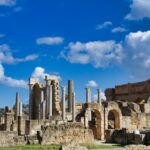
The coast has hot, sunny summers and mild, wetter winters. Tripoli receives roughly 330 millimetres of rain a year, mostly from November to January, and Benghazi about 260 millimetres. Autumn and spring are the most pleasant seasons for sightseeing at sites such as Leptis Magna and Sabratha.
Green Mountain and Nafusa highlands
The highlands around Cyrene are the wettest part of the country, with annual rainfall reported at roughly 600 millimetres. Spring brings greener landscapes, while winter nights can be cold at altitude.
Sahara and desert oases
The desert has extreme summer heat and large day-to-night swings. Travel guides recommend October to April for Ghadames and Tadrart Acacus, with daytime highs of roughly 15 to 30 degrees Celsius and cold nights. Rain may not fall for years in some areas.
Month-by-Month Conditions (Tripoli Coast)
Figures are long-term averages from travel climate data and vary by year. Typical daytime highs and sea temperatures are:
- January: about 17°C; sea 17°C; one of the wetter months
- February: about 19°C; sea 16°C; cool with showers
- March: about 21°C; sea 16°C; mild, with the first hot winds possible
- April: about 25°C; sea 17°C; often cited as one of the best months
- May: about 29°C; sea 19°C; warm, with ghibli dust winds possible
- June: about 33°C; sea 22°C; hot and dry
- July: about 33°C; sea 25°C; hot, sunny, humid on the coast
- August: about 34°C; sea 27°C; the hottest month and warmest sea
- September: about 32°C; sea 26°C; still hot but easing
- October: about 28°C; sea 24°C; widely seen as a comfortable month
- November: about 23°C; sea 22°C; mild, rain returns
- December: about 18°C; sea 19°C; typically the wettest month, around 65 millimetres
Best Periods for Different Travel Styles
- Archaeological sites: April, May, October and November for lower heat and fewer rain disruptions
- Desert and Sahara: October to April, when temperatures are manageable
- Swimming and coast: July to October, when the sea is warmest
- Wildflowers and greener hills: spring, particularly March to May in the highlands
Festivals, Public Holidays and Ramadan
Libya’s weekend falls on Friday and Saturday. Fixed national holidays include Revolution Day on 17 February, Liberation Day on 23 October and Independence Day on 24 December. Islamic holidays move each year with the lunar calendar. For 2027, calendars list Ramadan as starting around 8 February, Eid al-Fitr around 10 March and Eid al-Adha around 16 to 17 May, but exact dates depend on moon sighting, so confirm locally.
During Ramadan, many cafes and restaurants close in daylight and visitors are expected to avoid eating, drinking or smoking in public. Business hours shorten and evenings become the busiest time. Eid holidays can close offices and strain transport, so avoid scheduling logistics around them.
One further date drawing interest: operators note that a total solar eclipse crosses Libya in August 2027, with the east often mentioned as a viewing area. Treat this as a general astronomy note rather than a travel recommendation, given current advisories.
Peak and Low Seasons
Libya has no mass tourism season. Operator guidance generally points to October to April as the main window for organised tours, mainly because of desert conditions, while summer is hottest and quietest for visitors. Any pricing or availability should be confirmed with providers rather than assumed.
What to Pack
- Light, modest, breathable clothing for the coast; a headscarf can be useful and is expected at religious sites
- Warm layers for desert nights and winter evenings
- A scarf or mask during ghibli (hot dusty wind) periods in spring and autumn
- Sun protection, a hat and plenty of water
- A light rain jacket for coastal winters
Best Time to Visit FAQs
What is the best month to visit Libya?
For comfortable weather, April and October are often cited for the coast. Desert travel is usually better from October to April. These are climate observations only, and governments advise against travel to most of the country.
Is Libya too hot in summer?
Coastal highs near 33 to 34 degrees in July and August are manageable for some visitors, but the interior can be far hotter. Desert travel in midsummer is generally discouraged by operators for safety reasons.
When does it rain in Libya?
Rain falls mainly from November to March on the coast, with December often the wettest month in Tripoli. Highland areas receive more, and large parts of the desert get almost none.
Should I avoid Ramadan?
Not necessarily, but daytime services are limited and public eating is discouraged. Some travellers value the evening atmosphere. Confirm dates locally, because they depend on moon sighting.
Related Guides
- Libya travel guide and country overview
- Libya visa and entry requirements
- Best places to visit in Libya
- Libya itinerary ideas
- Where to stay in Libya
- Flights to Libya
- How to get around Libya
Further official reading: Government of Canada travel advice for Libya.