 Albania
DESTINATION
France
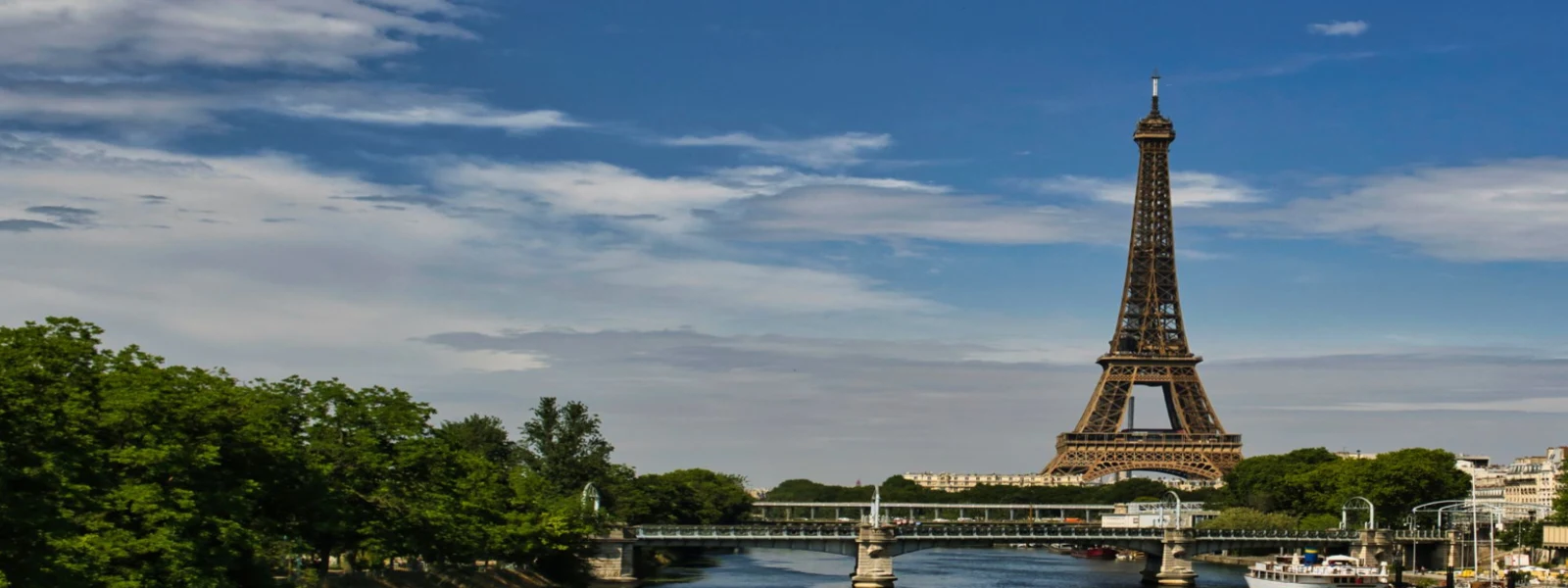
Discover France, from the Eiffel Tower and the Louvre to the palaces of Versailles, Loire chateaux, Mont Saint-Michel and the sunny French Riviera. Plan your trip with top attractions, travel tips and FAQs.
📅 Last updated:
France: Hotels · Flights · Visa Guide · Deals
🌍 Quick Facts

France at a glance
🏛️
Capital: Paris
💱
Currency: Euro (EUR)
💬
Language: French
👥
Population: About 68 million
🕒
Time zone: CET (UTC+1), CEST (UTC+2) in summer
📞
Calling code: +33
🌐
Internet domain: .fr
✈️
Main airport: Paris Charles de Gaulle (CDG)
★
Best time to visit: April to June and September to October
Food
- Croissants Baguette and cheese Coq au vin Ratatouille Macarons Crepes
Places
- Eiffel Tower Louvre Museum Palace of Versailles Mont Saint-Michel Chateau de Chenonceau Calanques National Park
Weather
France has a temperate climate. Summers are warm and sunny, especially in the south, winters are cool and rainy in the north, and the Alps get heavy snow from December to March.
Culture
France is known for art, fashion, cuisine and wine. Greet shopkeepers with Bonjour, dine late, and expect a slow, relaxed meal. Tipping is optional because service is usually included.
Cities
- Paris Nice Lyon Marseille Bordeaux Strasbourg
📍 France Map
📷 Photos of France
Explore France Travel Guides
Explore our detailed guides to plan every part of your France trip.
🛂
France: Visa
Who needs a Schengen visa for France, the 90-day rule, the new Entry/Exit System, ETIAS and the documents to prepare.
View Guide › 📍France: Best Places
The best places to visit in France by region and travel style, with how long to spend in each.
View Guide › 🌤️France: Best Time to Visit
France's seasons month by month, the best months for sightseeing, beaches and wine, and the events that change prices and crowds.
View Guide › 🗺️France: Itineraries
Day-by-day France itineraries for 3, 5, 7 and 10 days, with train times and tips for linking Paris with other regions.
View Guide › 🛌France: Hotels
The best areas to stay in Paris, Nice, Lyon and the Loire, with hotel prices, extra costs and booking tips.
View Guide › ✈️France: Flights
France's main airports, tips for finding a better fare, transfers into Paris and other cities, and what to do before you fly.
View Guide ›🖼️ France: Location, History, Culture & Food
✨ Complete Travel Guide
France Travel Guide: What to See, Eat and Know Before You Go
This France travel guide starts with one surprise: the country is far more varied than the postcards suggest. France sits in Western Europe, with coastlines on both the Atlantic and the Mediterranean, and it borders Belgium, Germany, Switzerland, Italy and Spain, among others. Paris is the capital. Lyon, Marseille, Nice, Bordeaux and Strasbourg are the other big names.
The landscape jumps from snowy Alpine and Pyrenean peaks to lavender fields, vineyards and sandy beaches. Culture here means café terraces, open-air markets and lunches that last two hours. Food is the main event: croissants, baguettes, cheese, crêpes, coq au vin, bouillabaisse. The country is best known for the Eiffel Tower, fashion, wine and castles that look straight out of a storybook.
A Short History for Your France Travel Guide
People were painting caves here roughly 17,000 years ago, and the Lascaux paintings in the Dordogne prove it. Later, Celtic tribes called the Gauls lived in the region until Julius Caesar’s armies conquered it in the 50s BC. You can still see Roman ruins in Nîmes and Arles, and honestly, those amphitheaters are impressive.
The Franks came next, and that’s where the name “France” comes from. Charlemagne was crowned emperor in the year 800. Centuries of kings followed, including Louis XIV, who turned Versailles into a palace that still stuns people.
Then the French Revolution began in 1789 and ended the old monarchy. Napoleon crowned himself emperor in 1804. Both world wars hit France hard, and the D-Day landings in Normandy in June 1944 were a turning point in World War II. Knowing this makes every castle and memorial in this France travel guide feel more real.
France Visa Guide: What to Know Before You Fly
Planning a trip to France? Good news: most short visits are simple. France is part of the Schengen Area, and US citizens need no visa for stays under 90 days. Many other nationalities get the same deal, but always check your own passport’s rules.
Here’s the catch. That 90-day limit runs across all Schengen countries combined, not just France, so a week in Italy counts too.
Also new: since 10 April 2026, Schengen borders use the Entry/Exit System (EES). On your first entry you may have fingerprints and a photo taken, so allow extra time at the airport.
What about ETIAS? It’s a travel authorization, not a visa, and it isn’t open yet. A 2027 launch now looks most likely.
Staying longer, working or studying? You’ll need a proper visa before you travel. Our France visa guide has more detail, and you should always confirm details on the official French government website, then check the latest deals below for flights, hotels and travel insurance
Top Places to Visit in France
Picking the best places in France for visit depends on your style, but these earn their fame. For a longer list, see our best places to visit in France.
Paris. See the Eiffel Tower, spend a morning at the Louvre, then wander Montmartre and the Seine. Go early, because crowds build fast.
Versailles. It’s an easy half-day trip from Paris by train. The Hall of Mirrors and the gardens are worth it.
Loire Valley. Castles like Chambord and Chenonceau, plus lovely wine. Cycling between villages is a great way to see it.
Normandy and Mont-Saint-Michel. The D-Day beaches are moving, and the abbey on its tidal island looks unreal at sunrise.
Provence and the French Riviera. Lavender blooms in summer, Avignon has its papal palace, and Nice has a seafront promenade that’s perfect at sunset.
Lyon. Widely seen as the country’s food capital. Eat at a traditional bouchon.
Bordeaux. Elegant streets, serious wine and Saint-Émilion nearby.
French Alps. Chamonix sits below Mont Blanc, great for hiking in summer and skiing in winter.
Best Time to Visit France
Spring and early autumn are the sweet spot, with mild weather and thinner crowds. For the best places in France for visit in comfort, aim for May, June or September. Our best time to visit France guide has the full breakdown.
- April to June: Gardens are in bloom and days are long. Easter and May public holidays can be busy.
- July and August: Hot and crowded, and the Riviera is at its most expensive. Some small family-run shops and restaurants close for the August holidays, especially in cities. Lavender in Provence usually peaks around late June to July.
- September and October: Warm seas on the Mediterranean, the grape harvest in wine regions and fewer tourists.
- November to March: Cheaper hotels and quiet museums, but short, grey days in the north. This is the season for Christmas markets (Strasbourg is famous for them) and for skiing in the Alps from about December.
How Much Does a Trip to France Cost?
France is not a cheap country, and Paris costs more than almost anywhere else in it. These are rough 2026 daily budgets per person, not counting international flights. Treat them as a guide, since prices change with the season and the city.
- Budget (about 80 to 120 euros a day): a hostel bed or a basic hotel room shared with someone, bakery and market meals, metro and regional trains.
- Mid-range (about 170 to 260 euros a day): a comfortable three-star hotel, restaurant lunches and dinners, a few paid sights.
- Luxury (400 euros a day and up): boutique or palace hotels, fine dining and private transfers.
Typical prices to help you plan:
- Bakery sandwich or quiche: about 4 to 8 euros.
- Set lunch menu (formule) at a bistro: about 15 to 25 euros.
- Main course at a bistro dinner: about 18 to 35 euros.
- Single metro, RER or train ticket in Paris and the surrounding Île-de-France region: 2.55 euros. The airport ticket is 14 euros.
- Mid-range hotel in central Paris: often 150 to 200 euros a night, and more in peak season. Smaller cities are usually cheaper.
Costs people forget: Since 14 January 2026, the Louvre charges most non-EU visitors 32 euros, up from 22. Versailles has a similar two-tier system, and the Passport ticket costs 35 euros in high season for visitors from outside the EU, Iceland, Liechtenstein and Norway. Hotels also add a small tourist tax (taxe de séjour) per person per night, and it depends on the hotel category. Book timed tickets online and check the official site for current prices. Compare flights, hotels and travel insurance in the deals section below.
Getting Around France: Transportation
In Paris: The metro and RER are the quickest way around. The old paper tickets are being phased out, so use a rechargeable Navigo Easy card or tap in with your phone or contactless card where it is accepted. If you stay four days or more, the weekly Navigo pass (about 32 euros, valid Monday to Sunday) can be better value than single tickets. Skip taxis for short trips, because traffic is heavy.
Between cities: Trains are the easiest option. High-speed TGV trains link Paris and Lyon in roughly two hours, and Paris to Nice takes about six hours. Book early, because advance fares can be far cheaper than same-day tickets. Regional TER trains are cheaper and slower, and flights only make sense for long trips such as Paris to Nice if the price is right.
By car: A car makes sense for Provence, the Loire and the Dordogne, but never for Paris. Parking in cities is expensive and many old centers restrict traffic. Check whether your driving licence is accepted, and ask your rental company if you need an international driving permit.
Strikes: Rail and air strikes happen in France fairly often. Check train and flight status the day before travel, and consider flexible tickets and travel insurance for important connections.
Where to Stay in France
In Paris, the Latin Quarter and Le Marais are central and walkable, and Montmartre feels like a village on a hill. Outer arrondissements with a good metro link, such as Canal Saint-Martin or Belleville, often give better value. In the south, Nice is a good base for the Riviera and Avignon for Provence. For the Loire, base yourself in Amboise or Tours. In Lyon, the Presqu’île is central and easy.
Book ahead for Eiffel Tower summit tickets, timed Louvre entry, Versailles, TGV seats and anything near Mont-Saint-Michel. If you are traveling in July, August or during Paris Fashion Week, reserve hotels well in advance. For hotels, check the latest deals below, and read our where to stay in France guide.
Best Food in France: What to Eat
Food is a real reason to come. Meals are slower than you might be used to, and lunch is often the best-value meal of the day. These are worth trying:
- Croissants, pains au chocolat and baguettes: best from a neighborhood boulangerie in the morning.
- Crêpes and galettes: sweet crêpes and savory buckwheat galettes are a specialty of Brittany.
- Cheese: hundreds of types, from brie and camembert to comté and roquefort. Ask a cheese shop to recommend something.
- Coq au vin and boeuf bourguignon: slow-cooked classics that suit cooler weather.
- Bouillabaisse: a fish stew from Marseille. Expensive, but it is the dish of the Mediterranean coast.
- Lyonnaise cuisine: hearty dishes in a traditional bouchon.
- Macarons, tarte tatin and crème brûlée: desserts that are hard to skip.
Halal and dietary needs: Paris, Lyon, Marseille and other big cities have many halal restaurants, butchers and grocers, especially with North African, Turkish and Middle Eastern food. Traditional French dishes often contain pork, lard or wine, so ask about ingredients, and look for halal signs or a vegetarian or fish option. Vegetarian choices are easier to find in cities than in small villages.
7-Day France Itinerary: Paris, Versailles and the Riviera
This route covers the classics: four days in Paris with a palace day trip, then the sunny Mediterranean coast. It works any time of year, though the Riviera is at its best from May to October.
- Day 1, Paris: Arrive and keep it easy. Walk along the Seine, see Notre-Dame from outside and enjoy a bistro dinner in Le Marais.
- Day 2, Paris: Start at the Louvre with a timed ticket. In the afternoon, see the Eiffel Tower area and Trocadéro, and book a night view if you can.
- Day 3, Paris: Wander Montmartre and Sacré-Cœur in the morning, then visit Sainte-Chapelle or the Musée d’Orsay.
- Day 4, Versailles: Take a half-day trip to the palace and gardens. Book a timed ticket and arrive early. Return to Paris in the afternoon.
- Day 5, travel to Nice: Take a morning TGV, which takes about six hours, or fly. Spend the evening on the Promenade des Anglais.
- Day 6, the Riviera: Explore Nice’s old town and market, then take a short train to Èze or Monaco.
- Day 7, depart: Fly home from Nice and leave a comfortable buffer before your flight.
Tip: If you would rather avoid a long train day, fly Paris to Nice and use the saved time on the coast. Compare flights, hotels and eSIMs in the deals section below, and see our flights to France and France itineraries guides.
10-Day France Itinerary: Paris, the Loire, Lyon and Nice
Ten days lets you add castles and France’s food capital without rushing. Check train times when you book, because routes between regions often connect through Paris.
- Days 1 to 3, Paris: Follow the first three days of the 7-day plan: the Louvre, the Eiffel Tower area, Montmartre and a Seine evening.
- Day 4, Versailles: A half-day at the palace and gardens, then a free evening in Paris.
- Days 5 and 6, Loire Valley: Take the train to Amboise or Tours. Visit Chambord and Chenonceau, and consider cycling between villages and wine tasting.
- Day 7, travel to Lyon: Return via Paris and continue by TGV. Allow most of the day.
- Day 8, Lyon: Explore Vieux Lyon and the covered food market, and have dinner at a traditional bouchon.
- Day 9, travel to Nice: Take the train or a short flight to the Riviera. Enjoy the seafront at sunset.
- Day 10, depart: Fly home from Nice and keep a buffer for your flight.
Winter option: From December to March, swap Nice for the Alps (Chamonix or Annecy) if you want snow, or stay in Paris longer for Christmas markets and quieter museums.
Tips by Traveler Type
Couples: Loire castles, a Seine evening, sunset on the Riviera.
Families: Disneyland Paris, Brittany’s beaches, Alpine lakes. This France travel guide would also add Normandy for older kids who like history.
Backpackers: hostels, bakery lunches and regional trains keep costs down.
Solo travelers: France feels easy alone. Free walking tours and food markets are great for meeting people.
What to Pack
Comfortable shoes, because cobblestones are real. Bring layers, a type C/E plug adapter, a zipped crossbody bag, a light scarf for covering shoulders in churches and a reusable water bottle.
Things to Avoid in France: Safety, Scams and Etiquette
France is generally safe, but a few simple rules prevent most problems:
- Don’t leave bags unattended or in your back pocket. Pickpockets work crowded spots like the Paris Metro, the Louvre and the Eiffel Tower.
- Don’t stop for clipboard “petition” signers, friendship-bracelet sellers near Sacré-Cœur, or someone who “finds” a gold ring at your feet. Say no and keep walking.
- Don’t buy tickets from street sellers near major sights. Book on the official site.
- Don’t walk into a shop or cafe without saying “Bonjour”. It matters more than you might expect.
- Don’t expect restaurants to serve all day. Many close between lunch and dinner, and dinner often starts around 7 pm.
- Don’t plan a tight rail connection without checking for strikes.
- Don’t tip 20 percent. Service is included in restaurant bills, so tipping is optional, and rounding up is enough.
Dial 112 for any emergency, 17 for police, 15 for an ambulance and 18 for the fire brigade.
How to Save Money
Lunch set menus (formules) cost far less than dinner. Bakery sandwiches and market picnics stretch a budget nicely. Ask for une carafe d’eau and you’ll get free tap water. Book trains early, and for current hotel and flight prices, check the latest deals below.
Related Destinations
Planning a European trip? Many travelers combine France with Italy — the two countries pair beautifully for a multi-country itinerary covering Paris, Rome, Florence and the Mediterranean coasts.
Explore more: Italy Travel Guide · Turkey · All Destinations
Explore Hotels & Flights
Search accommodation and flights for your destination with Expedia. Compare available options and continue to Expedia to complete your booking.
Affiliate partner · Globe Navo may earn a commission from qualifying bookings at no extra cost to you.
❓ France FAQ
Best time to visit France?
Spring (April to June) and autumn (September to October) offer mild weather and fewer crowds.
Do I need a visa for France?
It depends on your passport. Citizens of the US, UK, Canada, Australia and many other countries can visit for up to 90 days in any 180-day period without a visa. Others, including Pakistani passport holders, need a Schengen visa. Apply well in advance and check the official France-Visas website.
What currency is used in France?
The Euro (EUR). Cards are widely accepted, but carry some cash for small shops.
How many days are enough for France?
5 to 7 days for Paris and Versailles, and 10 to 14 days to add the Loire Valley, Normandy and the Riviera.
Is France safe for tourists?
Yes, but watch for pickpockets at busy sites like the Eiffel Tower and on the metro.
How do I get around France?
Use the metro in Paris, high-speed TGV trains between cities, and a rental car for the countryside.
Is English spoken in France?
Widely in tourist areas, but a few French phrases like Bonjour and Merci go a long way.
Plan Your Trip to France
Your Next Adventure in France Awaits!
Explore Deals →🎁 Best deals for France
Offers from trusted travel stores for your France trip. Compare a few options before you book, and check each store's terms for the final price.
Browse by type: Hotel deals · Flight deals · Travel eSIM · Car rental
 KkdayFind current Kkday coupons and deals for tours, attraction tickets, transport and first app orders. See minimum spend, discount caps and exclusions before you book.
Get Coupon View Deal
 eSIMFOXeSIMFOX is a travel eSIM provider offering prepaid mobile data plans for single countries and wider regions, delivered digitally so you can connect as soon as you land.
Get Coupon View Deal
 QuibityQuibity is a travel eSIM provider that lets you buy a mobile data plan online and activate it on your phone, so you can get connected abroad without a physical SIM card.
Get Coupon View Deal
 ExpediaDiscover great deals on hotels, flights, vacation packages, car rentals, and activities with Expedia. Compare travel options and plan your next trip with convenient booking choices.
Get Coupon View Deal
 KlookKlook is a travel activities platform where you can book attraction tickets, tours, day trips, transport passes, airport transfers and local experiences in destinations worldwide.
Get Coupon View Deal
 Trip.comTrip.com is a global online travel platform for flights, hotels, train tickets, airport transfers, attraction tickets and travel packages, available on web and mobile app.
Get Coupon View Deal
 TourRadarTourRadar is an online marketplace for multi-day guided tours, small-group trips and tailor-made journeys offered by independent tour operators around the world.
Get Coupon View Deal