 BelarusBelarus at a glance: where it sits, how its history unfolded, what shapes its…
DESTINATION
Croatia
Explore Croatia: where it is, its history, culture and food, from Zagreb and the Adriatic coast to Dalmatian dishes and UNESCO traditions.
📅 Last updated:
🌍 Quick Facts

Croatia at a glance
Capital: Zagreb
Currency: Euro (EUR)
Language: Croatian
Calling code: +385
Internet domain: .hr
Main airport: Zagreb Franjo Tuđman Airport (ZAG)
📍 Croatia Map
🖼️ Croatia: Location, History, Culture & Food
✨ Complete Travel Guide
Where Is Croatia Located?
Croatia is a country in Southeast Europe, lying where Central Europe meets the Adriatic Sea. It borders Slovenia, Hungary, Serbia, Bosnia and Herzegovina and Montenegro, and shares a sea border with Italy. Its capital is Zagreb, and the country covers about 56,594 square kilometres.
Last checked: November 2026
The shape of Croatia is unusual, a crescent that curves from the Pannonian plain in the east to the Adriatic coast in the south. Flat farmland and river valleys fill the north and east, while limestone mountains and highlands rise between the interior and the sea. The highest point is Dinara, at about 1,831 metres, near the border with Bosnia and Herzegovina.
Croatia has a mainland coastline of roughly 1,777 kilometres, and counting its islands brings the total to about 5,835 kilometres. Sources count between about 1,185 and 1,246 islands, islets and reefs, and only a few dozen are inhabited. The largest are Krk and Cres, followed by Brač, Hvar and Pag.
One quirk of the map is the short coastal strip around Neum, which belongs to Bosnia and Herzegovina and separates the far south of Croatia from the rest of the mainland. The climate follows the geography. The coast and islands are Mediterranean, with hot dry summers and mild wet winters, while inland areas such as Zagreb are continental, with colder winters.
Because the country is long and narrow, regions feel very different. Istria and Kvarner lie in the northwest, Dalmatia runs down the southern coast, and Slavonia spreads across the eastern plains. For trip planning, our guide to the best time to visit Croatia explains how the seasons differ between the coast and the interior.
Introduction to Croatia
Croatia is a parliamentary republic with fewer than four million people, known for its long Adriatic coast, more than a thousand islands and well-preserved Roman, Venetian and Habsburg towns. It uses the euro, speaks Croatian and belongs to the European Union and the Schengen Area.
Last checked: November 2026
Croatia joined the European Union on 1 July 2013 and adopted the euro and joined the Schengen Area on 1 January 2023. For visitors, that means a single currency and fewer border formalities on most land routes into neighbouring EU countries. Entry rules still depend on nationality, so check our Croatia visa guide before you book.
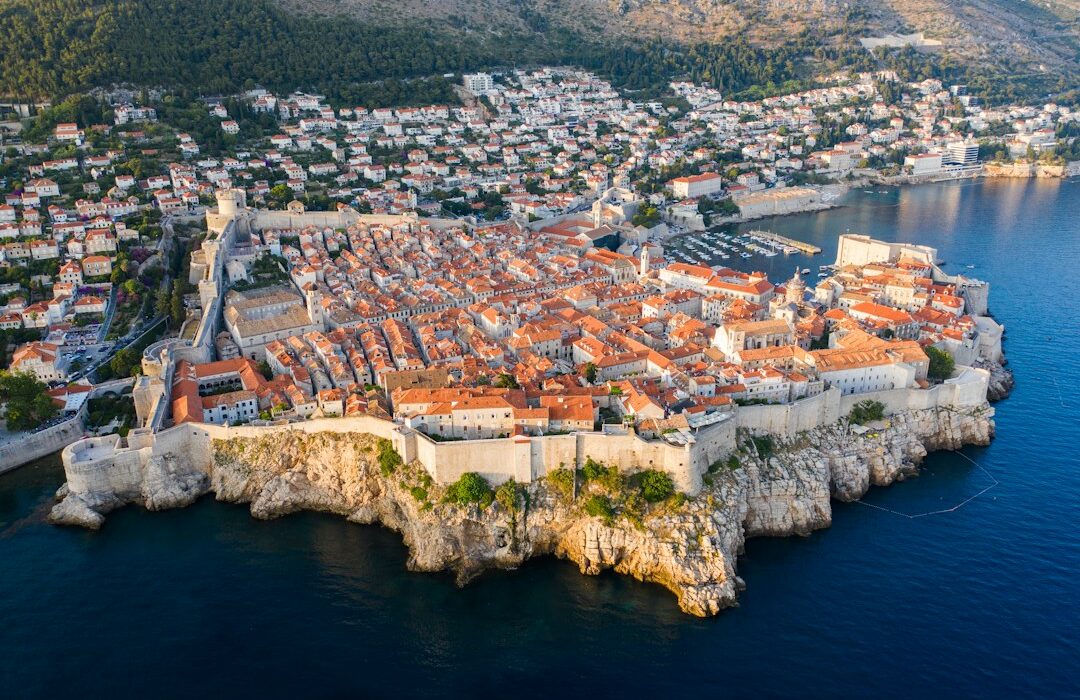
Zagreb, the capital, is a city of cafés, museums, parks and Austro-Hungarian architecture. On the coast, Split, Dubrovnik, Zadar, Šibenik and Pula each have their own character, from Roman ruins to stone-walled old towns. Inland, Plitvice Lakes National Park is known for its terraced lakes and waterfalls.
UNESCO lists ten World Heritage properties in Croatia, according to the UNESCO World Heritage Centre. They include Plitvice Lakes, the Old City of Dubrovnik, the Historical Complex of Split with the Palace of Diocletian, the historic city of Trogir and the Cathedral of St James in Šibenik. Our best places to visit in Croatia guide shows how to choose between them.
Because Croatia is compact but its geography is complicated, a short plan helps. The Croatia itineraries page suggests routes of different lengths. The country is also easy to enter by air, and our guide to flights to Croatia covers the main international airports.
History of Croatia
Croatia’s history runs from Roman Dalmatia and a medieval kingdom, founded under King Tomislav by 925, through union with Hungary and Habsburg rule, to Yugoslavia. It declared independence on 25 June 1991, fought a war lasting until 1995, joined NATO in 2009 and the EU in 2013.
Last checked: November 2026
Roman and medieval Croatia
The coast was part of the Roman province of Dalmatia, and the Palace of Diocletian in Split is one of the best-preserved Roman buildings in the world. Croats settled the region in the early Middle Ages, and by the ninth century they had organised into duchies. Tomislav is recorded as the first king of Croatia by 925.
Union with Hungary and Habsburg rule
In 1102, Croatia entered a union with the Kingdom of Hungary, and in 1527 it joined the Habsburg Monarchy. For centuries the Adriatic coast followed a different path. Venice controlled much of Dalmatia, while Dubrovnik ran as an independent maritime republic. That is why the coast has Italian-style stone towns and the interior has Central European towns and castles.
Yugoslavia and independence
After the First World War, Croatia became part of a new South Slavic state that was later called Yugoslavia. After 1945 it was one of the six republics of socialist Yugoslavia. Croatia declared independence on 25 June 1991, and the war that followed lasted until 1995. It joined the United Nations in 1992.
Since then, the country has joined NATO on 1 April 2009 and the European Union on 1 July 2013. The adoption of the euro and entry into the Schengen Area on 1 January 2023 completed a long run of integration steps. War damage to historic places such as Dubrovnik has since been repaired.
Culture and Traditions of Croatia
Croatian culture blends Mediterranean, Central European and Slavic influences. Catholic holidays, village festivals, coastal singing groups and local crafts shape daily life. UNESCO recognises more than a dozen Croatian traditions as intangible heritage, including klapa singing, lacemaking and the Sinjska alka tournament.
Last checked: November 2026
Klapa is an a cappella style of singing from Dalmatia, performed by small groups of male or mixed voices and inscribed by UNESCO in 2012. You can hear it in town squares and stone courtyards along the coast, especially in summer. In the hinterland, ojkanje singing and the silent circle dance known as nijemo kolo are also on UNESCO’s lists.
Lacemaking is another recognised craft, practised in Pag, Hvar and Lepoglava, and licitar gingerbread hearts from northern Croatia are a well-known souvenir. The Sinjska alka, held in Sinj on the first Sunday of August, is a knights’ tournament in which riders gallop at a hanging ring. In Dubrovnik, the Festivity of St Blaise on 3 February honours the city’s patron saint with processions and the release of white doves.
Daily life has its own rhythm. Coffee is a social ritual, and locals often linger over a single cup for an hour. Families gather for long Sunday lunches, and village festivals mark saints’ days across the year. The Christmas and Easter seasons bring markets, church processions and regional foods.
Croatian is the official language, written in the Latin alphabet. Simple greetings such as dobar dan (good day) and hvala (thank you) are appreciated everywhere. Dress modestly when you visit churches, and keep the volume down in old-town residential streets at night. To plan where to base yourself for a cultural trip, see our guide to hotels in Croatia.
Food and Cuisine of Croatia
Croatian food varies by region: seafood, olive oil and slow-cooked meats on the Adriatic coast, truffles and handmade pasta in Istria, and hearty meat dishes and cheese pastries inland. Signature dishes include peka, black risotto, pašticada, Pag cheese and štrukli.
Last checked: November 2026
The coast has Italian influences from centuries of Venetian rule, while the north has Austrian and Hungarian touches. There is no single official national dish, though many Croatians name peka as a favourite. Here are some signature dishes to look for.
- Peka: meat, often lamb or veal, slow-cooked with potatoes and vegetables under an iron bell covered in embers.
- Crni rižot (black risotto): rice cooked with cuttlefish or squid and coloured by its ink.
- Pašticada: a Dalmatian beef stew cooked slowly in wine and spices and usually served with gnocchi.
- Brodet: a fish stew with tomatoes and wine, usually served with polenta.
- Paški sir (Pag cheese): a hard, salty sheep’s cheese from the island of Pag.
- Fuži with truffles: hand-rolled Istrian pasta served with local truffles.
- Zagorski štrukli: a pastry filled with cottage cheese, eggs and sour cream, baked or boiled.
- Kulen: a spicy, paprika-seasoned cured sausage from Slavonia.
- Pršut: air-dried ham, often served with cheese and olives.
- Čobanac: a rich meat stew from eastern Croatia.
- Ćevapi: grilled minced-meat sausages, served with bread and onion.
Wine is part of the table, and Istria is known for Malvazija, a light white. Meals often start with cured meats and cheese, and many families make their own olive oil, rakija and preserves. For a taste of different regions in one trip, the Croatia itineraries page links routes to food stops, and our guide to getting around Croatia explains how to reach them.
Explore Croatia Travel Guides
Explore our detailed guides to plan every part of your Croatia trip.
Croatia: Visa
Entry rules, Schengen 90/180 days, EES and ETIAS status, and official visa contacts.
View Guide ›Croatia: Best Places
Croatia's most worthwhile towns, islands, parks and heritage sites, grouped by interest.
View Guide ›Croatia: Best Time to Visit
Seasons, regional climate, festivals and packing tips for the coast and the interior.
View Guide ›Croatia: Itineraries
Realistic 3, 5, 7 and 10 day Croatia routes with overnight stops and practical tips.
View Guide ›Croatia: Hotels
Where to stay in Croatia: best areas, accommodation types, booking tips and local taxes.
View Guide ›Croatia: Flights
International airports, airlines, arrival tips and a pre-flight checklist for Croatia.
View Guide ›Croatia: Getting Around
Ferries, buses, trains, driving rules and city transport across Croatia.
View Guide ›Explore Croatia Tours
Discover guided tours and adventures in Croatia. Compare itineraries, prices and traveller reviews on TourRadar before you book.
Guided tours & deals
Affiliate partner · Globe Navo may earn a commission from qualifying bookings at no extra cost to you.
❓ Croatia FAQ
Where is Croatia located?
Croatia is in Southeast Europe, on the eastern shore of the Adriatic Sea. It borders Slovenia, Hungary, Serbia, Bosnia and Herzegovina and Montenegro, and faces Italy across the water. The capital, Zagreb, lies inland in the north.
What currency does Croatia use?
Croatia has used the euro since 1 January 2023, when it replaced the kuna. It joined the Schengen Area on the same date, so travellers moving between most EU neighbours no longer face routine border checks.
What language is spoken in Croatia?
Croatian is the official language and is written in the Latin alphabet. English is often understood in tourist areas, though it helps to learn a few Croatian greetings, such as dobar dan for good day and hvala for thank you.
How many UNESCO World Heritage Sites does Croatia have?
UNESCO lists ten World Heritage properties in Croatia, including Plitvice Lakes National Park, the Old City of Dubrovnik and the Historical Complex of Split with the Palace of Diocletian. Some properties are shared with other countries.
What is Croatia's national dish?
Croatia has no single official national dish. Peka, meat and vegetables slow-cooked under an iron bell, is often named as a favourite, while coastal people may choose black risotto or pašticada, and inland people štrukli.
Plan Your Trip to Croatia
Your Next Adventure in Croatia Awaits!
Explore Deals →🎁 Best deals for Croatia
Offers from trusted travel stores for your Croatia trip. Compare a few options before you book, and check each store's terms for the final price.
Browse by type: Hotel deals · Flight deals · Travel eSIM · Car rental
 SimOptionsFind the latest SimOption promo code and coupon code for travel eSIM data plans. See how to apply an offer at checkout, fix common code errors and stay connected abroad.
Get Coupon View Deal
 TourRadarTourRadar is an online marketplace for multi-day guided tours, small-group trips and tailor-made journeys offered by independent tour operators around the world.
Get Coupon View Deal
More destinations to explore
BelarusBelarus at a glance: where it sits, how its history unfolded, what shapes its…
 AndorraAndorra is a small Pyrenean country between France and Spain, known for skiing, hiking,…