 Cabo Verde
DESTINATION
Belarus
Belarus at a glance: where it sits, how its history unfolded, what shapes its culture and which dishes define the table.
📅 Last updated:
Belarus: Hotels · Flights · Visa Guide · Deals
🌍 Quick Facts

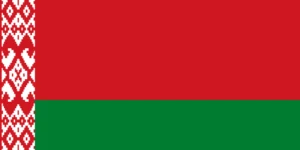
Belarus at a glance
🏛️
Capital: Minsk
💱
Currency: Belarusian Ruble (BYN)
💬
Language: Belarusian and Russian
👥
Population: About 9.06 million as of 2026
🕒
Time zone: UTC+3, no daylight saving
📞
Calling code: +375
🌐
Internet domain: .by
✈️
Main airport: Minsk National Airport (MSQ)
★
Best time to visit: May to September, when the weather is mildest
Food
- Draniki
- Machanka
- Kalduny
- Borscht
- Kvass
Places
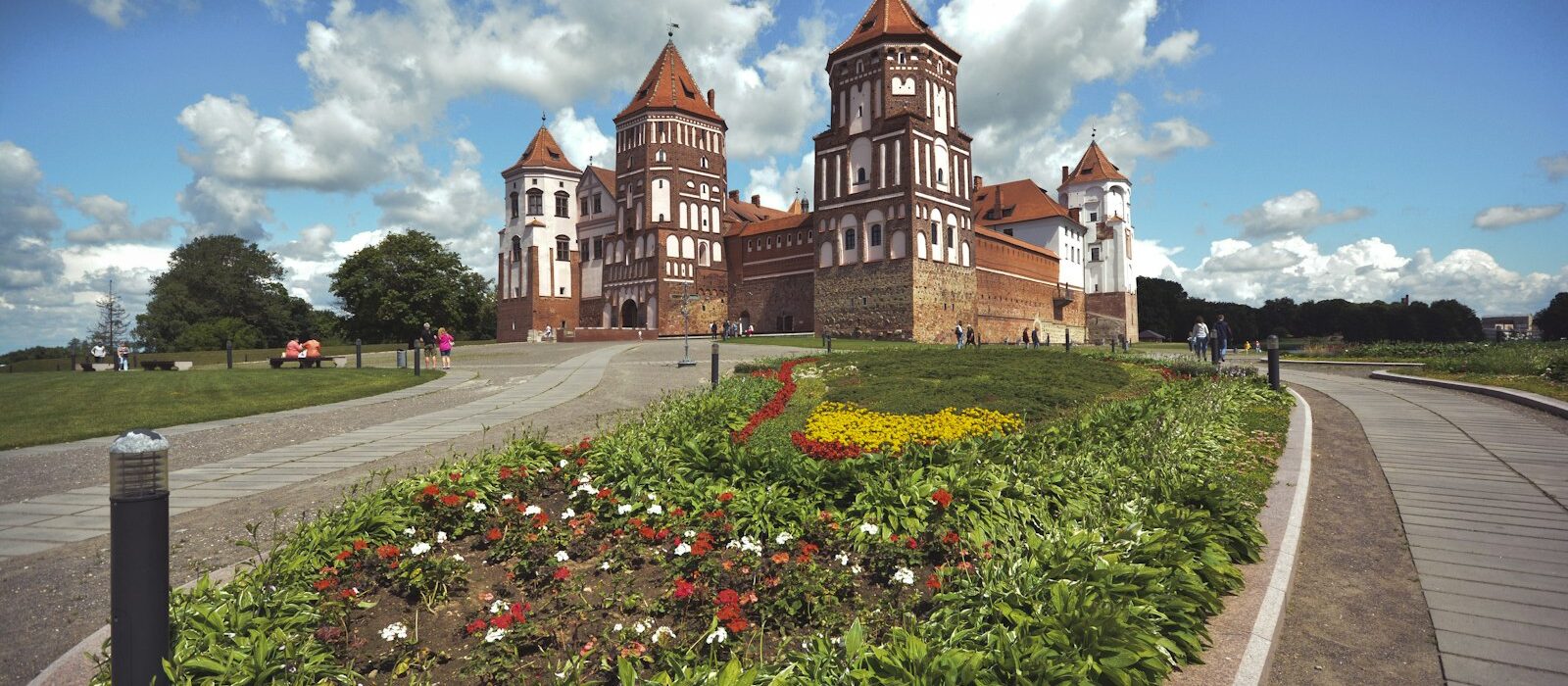
- Mir Castle Complex
- Nesvizh Castle
- Brest Fortress
- Bialowieza Forest
- Grodno Old Town
- Khatyn Memorial
Weather
Belarus has a continental climate with long, cold winters and warm summers. Winter lows average around -4°C, and July and August highs reach about 25°C. Rain falls on about five to seven days per month.
Culture
Most people speak Russian or Belarusian, and English is hard to find outside Minsk. Belarus has a strong World War II memory, with memorials such as the Brest Fortress and Khatyn. Draniki, potato pancakes, and kvass are everyday food and drink.
Cities
- Minsk
- Brest
- Grodno
- Mogilev
- Vitebsk
- Gomel
📍 Belarus Map
📷 Photos of Belarus
Explore Belarus Travel Guides
Explore our detailed guides to plan every part of your Belarus trip.
🗺️
Belarus: Itineraries
Route examples for 3, 5 and 7 days in Belarus, with distances and travel times between sights and notes on how advisories...
View Guide › 🛂Belarus: Visa
Who can enter Belarus without a visa, what insurance and funds are required, border crossing notes and the safety advisories you should...
View Guide › 📍Belarus: Best Places
The best places to visit in Belarus grouped by type, with distances from Minsk and a guide to choosing between castles, cities,...
View Guide › 🌤️Belarus: Best Time to Visit
A month-by-month guide to Belarus weather, with what each season means for travel, what to pack and how advisories affect planning.
View Guide › ✈️Belarus: Flights
Which airport serves Belarus, how to reach Minsk from it, airlines flying in, land alternatives and a checklist before you fly.
View Guide › 🚆Belarus: Getting Around
How to travel inside Belarus: trains, buses, car hire, taxis and the Minsk metro, with city travel times and a guide to...
View Guide › 🛌Belarus: Hotels
Where to stay in Belarus: practical bases in Minsk and the main sightseeing towns, with registration, payment and booking tips.
View Guide ›🖼️ Belarus: Location, History, Culture & Food
✨ Complete Travel Guide
Safety warning: governments advise against travel to Belarus.
- The US State Department rates Belarus Level 4: Do Not Travel (issued 29 December 2025). It says the advisory covers the whole country.
- The UK Foreign Office advises against all travel to Belarus (last updated 10 September 2026).
- The Canadian government advises you to avoid all travel (updated 2 July 2026).
The main risks named by these governments are arbitrary detention, surveillance of phones and online accounts, very limited consular help, the war in Ukraine and land borders that can close without warning. The US embassy in Minsk has suspended operations. Belarus does not recognise dual nationality. The UK Foreign Office also says that travelling against its advice may invalidate travel insurance. This guide is for information only and is not a recommendation to travel. Read the US State Department advisory, the UK Foreign Office advice and the Canadian travel advice first.
Where Is Belarus Located?
Belarus is a landlocked country in Eastern Europe, and this Belarus travel guide starts with where it sits on the map. It borders Russia to the north and east, Ukraine to the south, Poland to the west, and Lithuania and Latvia to the northwest. The capital, Minsk, lies near the centre of the country.
Last checked: November 2026
The country covers about 207,600 square kilometres, slightly smaller than the US state of Kansas. It measures roughly 560 km from north to south and 650 km from west to east. Belarus has no coast, and Lithuania and Latvia block its access to the Baltic Sea.
The land is mostly flat, with an average height of about 160 metres above sea level. The highest point, Dzyarzhynskaya Hara, rises to only about 345 metres. The north has glacial hills and many lakes, and Lake Narach is the largest. The marshy Palyessye lowland covers about a third of the territory, mostly in the south, and is shared with Ukraine, Poland and Russia. Forests cover roughly 40% of the country, according to World Travel Guide.
Belarus uses UTC+3 all year, with no daylight saving change. It has six regions, named after Brest, Grodno, Minsk, Mogilev, Gomel and Vitebsk, and Minsk city is administered separately. Our guide to the best places to visit in Belarus shows where the main sights sit, and the getting around Belarus guide explains how the regions connect.
Belarus Travel Guide: An Introduction to the Country
Belarus is a presidential republic in Eastern Europe, known for its large forests, medieval castles, Soviet-era architecture and the memory of World War II. The capital is Minsk, the official languages are Belarusian and Russian, and the currency is the Belarusian ruble (BYN). Alexander Lukashenko has been president since 1994.
About 9.06 million people lived in the country on 1 January 2026, according to the national statistics committee, Belstat. That figure covers the whole country, while Minsk alone has close to two million residents.
Four UNESCO World Heritage properties lie in Belarus: the Bialowieza Forest, the Mir Castle Complex, the Radziwill complex at Nesvizh and the Struve Geodetic Arc. UNESCO’s Belarus page lists each one with its inscription year.
People sometimes assume that Belarus and Russia share one culture. Belarus has its own language, a long history inside the Grand Duchy of Lithuania and a separate state, although Russian is widely spoken. The name comes from the medieval term “White Rus”, which appeared in Latin texts as Russia Alba.
Entry rules depend on your passport and change often, so read our Belarus visa guide before you plan. Most international visitors arrive at Minsk National Airport, which our guide to flights to Belarus covers.
History of Belarus
The lands of present-day Belarus were ruled by many states rather than one continuous country. They passed from early Slavic principalities to the Grand Duchy of Lithuania, the Polish–Lithuanian Commonwealth, the Russian Empire and the Soviet Union. Belarus declared independence on 25 August 1991.
Early Slavic Principalities, to the 13th Century
Slavic tribes settled the area in the early Middle Ages. Polotsk appears in the chronicles under the traditional date of 862, which makes it one of the oldest towns in the eastern Slavic world. Polotsk and Turov became the first principalities of the region within Kyivan Rus. Minsk has its first written record in 1067.
The Grand Duchy of Lithuania and the Commonwealth
After the Mongol invasions, Belarusian lands became part of the Grand Duchy of Lithuania, starting in the 13th century. Lithuania and Poland joined in a personal union in 1386 and merged into the Polish–Lithuanian Commonwealth in 1569. This period left castles and palaces such as Mir and Nesvizh, and visitors can link them in one long day on our Belarus itineraries.
The Russian Empire, 1772 to 1917
The Commonwealth was divided in three partitions, in 1772, 1793 and 1795, and almost all Belarusian lands passed to the Russian Empire. Russian rule lasted until Germany occupied the territory during World War I.
Soviet Belarus, 1917 to 1991
The Belarusian People’s Republic was proclaimed on 25 March 1918, and the Byelorussian Soviet Socialist Republic followed in 1919. In 1922 the republic became one of the founding members of the Soviet Union. Western lands that Poland had held between the wars joined it in 1939.
World War II devastated the country. Belarus lost about a quarter of its population, and memorials such as the Brest Fortress and Khatyn commemorate events from those years. The republic was a founding member of the United Nations in 1945.
Independence, 1990 to Today
Parliament declared sovereignty on 27 July 1990, and independence followed on 25 August 1991 as the Soviet Union collapsed. A new constitution was adopted in March 1994, and Alexander Lukashenko was elected president that year. The history page of the presidential website gives the official account of these periods.
Culture in Belarus: Language, Faith and Traditions
Belarusian culture blends Slavic folk traditions with Orthodox and Catholic Christianity and the legacy of Polish, Lithuanian, Russian and Soviet rule. Belarusian and Russian are the two official languages, and many people use both. Folk festivals, embroidery, straw weaving and a strong memory of World War II shape everyday life.
Language
Most people speak Russian or Belarusian, and English is hard to find outside Minsk, according to Belarus Digest. Most road signs use Cyrillic, although signs at main transport hubs are often repeated in Latin letters. A simple greeting is “Dobry dzien”, which means good day.
Religion
Christianity is the main religion. Orthodox Christianity is the largest denomination and Roman Catholicism the second, while a sizeable share of people say they have no religion, and surveys differ on the exact split. There is no state religion. Many Christian holidays are marked twice, once by the Catholic calendar and once by the Orthodox calendar, so Christmas is observed on both 25 December and 7 January.
Festivals
- Kalyady: the winter holiday season, with masked processions and songs.
- Maslenitsa: a late-winter festival that sees off winter and welcomes spring.
- Radunitsa: a day for remembering the dead, held after Easter.
- Kupalle: a midsummer night festival with bonfires and the legend of the fern flower.
- Dazhynki: a national harvest festival and fair for rural workers.
Dates change each year, so check the best time to visit Belarus guide and official tourism pages before you plan around an event.
Etiquette
A firm handshake is the usual greeting, and calm, polite manners in public are the norm. Take your shoes off when you enter a home, and bring a small gift such as sweets or flowers. Give an odd number of flowers, because even numbers are kept for funerals. Photography near government or military sites can draw attention, so ask before you shoot.
Music and Arts
Folk music in Belarus draws on religion and village life, and the embroidered shirt known as the vyshyvanka remains a national symbol. Traditional crafts include straw weaving, ceramics, woven textiles and decorative glass. The painter Marc Chagall grew up in Vitebsk, and the writer Svetlana Alexievich won the Nobel Prize in Literature in 2015. Minsk has its own national opera and ballet theatre.
Food in Belarus: Staples, Dishes and Drinks
Belarusian food is hearty and built around potatoes, pork, dairy, mushrooms and rye bread. The best-known dish is draniki, crisp potato pancakes served with sour cream. Other staples include machanka, a pork stew eaten with pancakes, kolduny dumplings and cold beetroot soup. Flavours are mild, with little pepper or garlic.
Staples
Local ingredients drive the cuisine: potatoes, meat, milk, vegetables and forest mushrooms. Black rye bread is the everyday loaf, and sour cream, dill and onion appear on most tables. Modern restaurants often mix in Russian and Soviet dishes, so look for the local names below on a menu.
Signature Dishes
- Draniki: pancakes of grated potato, often served with sour cream and sometimes filled with meat or mushrooms.
- Machanka: pork and sausage stewed in a thick sauce, also called vereshchaka, eaten with pancakes or draniki.
- Kolduny: potato dumplings stuffed with minced meat or mushrooms.
- Babka: a baked casserole of grated potato.
- Kletski: flour dumplings served in soup or with sour cream.
- Kholodnik: cold beetroot soup with sour cream, dill and boiled egg, often served with hot potatoes.
- Borscht: hot beetroot soup.
- Zhur: a sour rye soup that reflects Polish influence.
Street Food and Cafés
Street food is simple. Markets and kiosks in Minsk sell pirozhki, which are stuffed pastries, along with dairy products such as kefir and cottage cheese. Cafés serve draniki, and the Zybitskaya Street area has many bars and cafés. Most restaurants cluster in Minsk, so see where to stay in Belarus if you want a base near them.
Drinks
Kvass, a fermented drink made from rye bread, and cranberry juice are the traditional soft drinks. Mead and krambambula, a spiced honey spirit, are the best-known alcoholic options, alongside vodka, which includes versions made from birch sap or flavoured with forest herbs.
Desserts
Sweets are a local strength. The Kommunarka confectionery company has shops in Minsk selling chocolates, hard sweets and hot chocolate, and cranberries in powdered sugar are a common souvenir.
Regional Differences
Western Belarus shows Polish influence, as in zhur, while Jewish cooking shaped potato dishes such as babka in the 19th century. Soviet-era menus also left their mark, which is why Russian dishes appear in many restaurants alongside Belarusian ones.
Explore Hotels & Flights
Search accommodation and flights for your destination with Expedia. Compare available options and continue to Expedia to complete your booking.
Affiliate partner · Globe Navo may earn a commission from qualifying bookings at no extra cost to you.
❓ Belarus FAQ
Is Belarus safe to visit right now?
No. The US lists Belarus at Level 4 (Do Not Travel, 29 Dec 2025), the UK FCDO advises against all travel (updated 10 Sep 2026) and Canada advises avoiding all travel (2 Jul 2026). Check your own government advisory and your insurer before any planning.
Do I need a visa for Belarus?
It depends on your passport and how you enter. Citizens of 76 countries (74 per one embassy) can enter visa-free for up to 30 days through Minsk airport, and citizens of 38 European countries can enter by road or rail until 31 Dec 2026. Confirm the current list with the Belarus Ministry of Foreign Affairs or an embassy.
What is the best time to visit Belarus?
May to September is the mildest period, with July and August highs around 25°C. Winters are long and cold, so pack accordingly if you travel between November and March.
How do I get to Belarus?
Most international flights land at Minsk National Airport (MSQ), about 42 km east of the city. Land entry is possible only at open border crossings, and availability changes, so check the current list before you travel.
What are the entry conditions for tourists?
Visitors are generally expected to hold medical insurance valid in Belarus (at least 10,000 euros) and show enough funds for the stay. Sources differ on exact amounts and registration deadlines, so verify with an official source before you go.
Plan Your Trip to Belarus
Your Next Adventure in Belarus Awaits!
Explore Deals →🎁 Best deals for Belarus
Offers from trusted travel stores for your Belarus trip. Compare a few options before you book, and check each store's terms for the final price.
Browse by type: Hotel deals · Flight deals · Travel eSIM · Car rental
 KkdayFind current Kkday coupons and deals for tours, attraction tickets, transport and first app orders. See minimum spend, discount caps and exclusions before you book.
Get Coupon View Deal
 eSIMFOXeSIMFOX is a travel eSIM provider offering prepaid mobile data plans for single countries and wider regions, delivered digitally so you can connect as soon as you land.
Get Coupon View Deal
 QuibityQuibity is a travel eSIM provider that lets you buy a mobile data plan online and activate it on your phone, so you can get connected abroad without a physical SIM card.
Get Coupon View Deal
 ExpediaDiscover great deals on hotels, flights, vacation packages, car rentals, and activities with Expedia. Compare travel options and plan your next trip with convenient booking choices.
Get Coupon View Deal
 KlookKlook is a travel activities platform where you can book attraction tickets, tours, day trips, transport passes, airport transfers and local experiences in destinations worldwide.
Get Coupon View Deal
 Trip.comTrip.com is a global online travel platform for flights, hotels, train tickets, airport transfers, attraction tickets and travel packages, available on web and mobile app.
Get Coupon View Deal
 TourRadarTourRadar is an online marketplace for multi-day guided tours, small-group trips and tailor-made journeys offered by independent tour operators around the world.
Get Coupon View Deal