 Antigua and Barbuda
DESTINATION
Benin
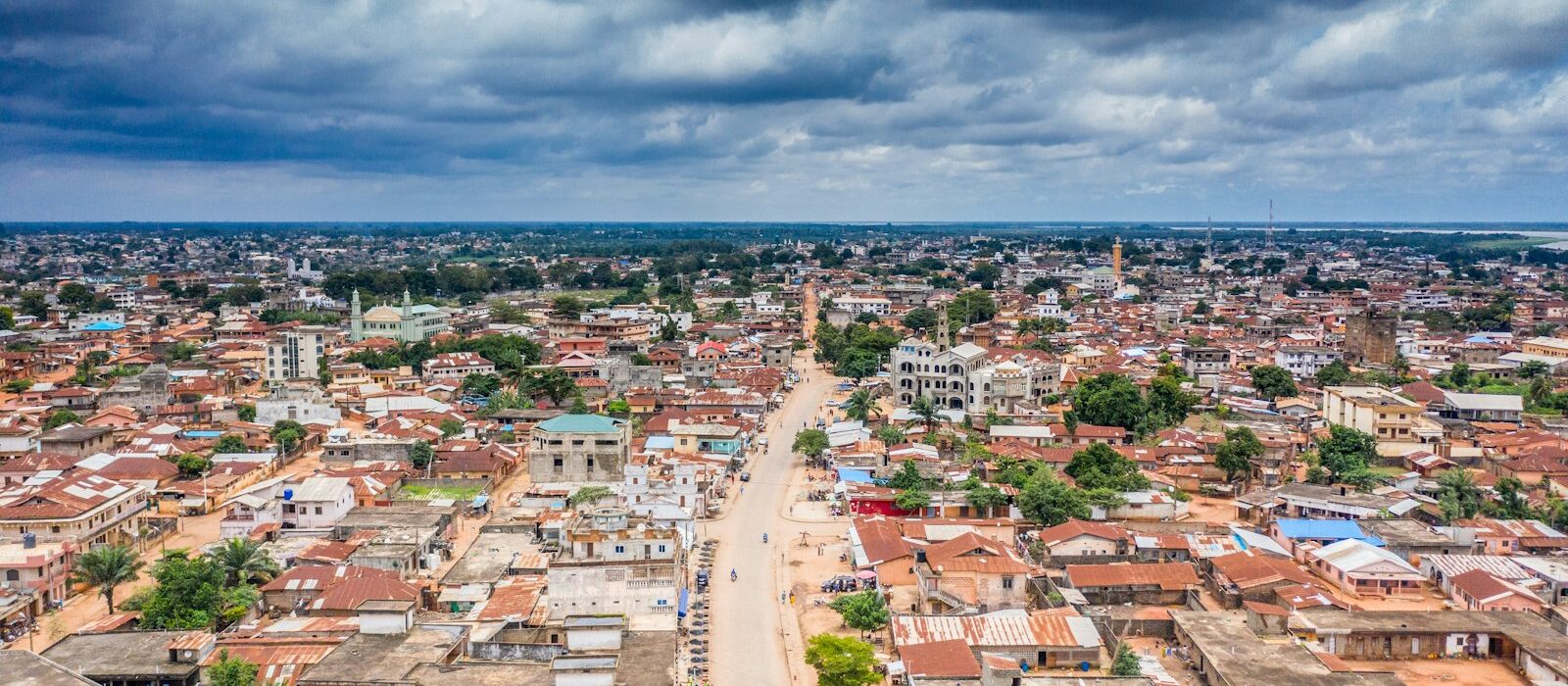
Benin is a West African country known for Vodun culture, the Royal Palaces of Abomey and the historic coast around Ouidah. Most tourism is in the south.
📅 Last updated:
Benin: Hotels · Flights · Visa Guide · Deals
🌍 Quick Facts

Benin at a glance
🏛️
Capital: Porto-Novo (official); Cotonou (seat of government)
💱
Currency: West African CFA franc (XOF)
💬
Language: French (official)
👥
Population: About 15.2 million as of 2026
🕒
Time zone: West Africa Time (UTC+1)
📞
Calling code: +229
🌐
Internet domain: .bj
✈️
Main airport: Cadjehoun Airport (COO), Cotonou
★
Best time to visit: November to February (dry season)
Food
- Igname pilée (pounded yam)
- Pâte with sauce
- Amiwo with chicken
- Akassa
- Wagashi (local cheese)
Places
- Royal Palaces of Abomey
- Route des Esclaves, Ouidah
- Ganvié stilt village
- Porto-Novo museums
- Grand-Popo beach
Weather
Hot and humid in the south; main rains from April to mid-July
Culture
Vodun heritage, the Royal Palaces of Abomey and the coastal slave-route history
Cities
- Cotonou
- Porto-Novo
- Ouidah
- Abomey
- Grand-Popo
📍 Benin Map
📷 Photos of Benin
Explore Benin Travel Guides
Explore our detailed guides to plan every part of your Benin trip.
🗺️
Benin: Itineraries
Realistic Benin itineraries for 3, 5, 7 and 10 days in the south, with road travel times between Cotonou, Ouidah, Ganvié, Porto-Novo,...
View Guide › 🛂Benin: Visa
Check who needs a visa for Benin, how the official eVisa works, passport rules, the yellow fever policy and safety notes for...
View Guide › 📍Benin: Best Places
The best places to visit in southern Benin include Ouidah, Abomey, Ganvié, Porto-Novo, Grand-Popo and Cotonou, with how long to allow for...
View Guide › 🌤️Benin: Best Time to Visit
The dry season from November to February is the most comfortable time to visit southern Benin. Vodun Days run 2 to 9...
View Guide › ✈️Benin: Flights
Most flights to Benin land at Bernardin Gantin Airport (Cadjehoun) in Cotonou. See routes, airlines, transfers and a Before You Fly checklist.
View Guide › 🚆Benin: Getting Around
Get around Benin by zemidjan, taxi app, shared taxi or bus. See road times between Cotonou, Ouidah and Abomey, plus driving rules.
View Guide › 🛌Benin: Hotels
Compare Haie Vive, Fidjrossè, Ouidah, Grand-Popo and Porto-Novo to find the best area to stay in Benin for your trip, with booking...
View Guide ›🖼️ Benin: Location, History, Culture & Food
✨ Complete Travel Guide
Safety notice: northern Benin
The US State Department rates Benin Level 2, Exercise Increased Caution (advisory issued 4 July 2026), and sets Level 4, Do Not Travel, for the border regions of northern and northeastern Benin, including areas bordering Burkina Faso and Niger and parts of the Nigerian border, because of terrorism, crime and kidnapping. The UK Foreign, Commonwealth and Development Office (FCDO) advises against all travel to Parc du W, the Mékrou and Djona hunting zones, Pendjari National Park and its adjacent hunting grounds, and all areas within 5 km of the Burkina Faso border. It advises against all but essential travel to the rest of the Alibori and Atacora departments.
This guide covers the south, where most tourism happens. Read the current US advisory and the UK travel advice before you book, because they change. Travel insurance may not cover trips made against official advice.
Where Is Benin Located?
This Benin travel guide starts with the map. Benin is a narrow country in West Africa, with Togo to the west, Nigeria to the east, and Burkina Faso and Niger to the north. Its 121-kilometre coast faces the Gulf of Guinea. Porto-Novo is the official capital, and Cotonou is the seat of government.
Last checked: November 2026
Benin covers about 112,600 square kilometres, according to the CIA World Factbook, and stretches roughly 700 kilometres from the Atlantic coast to the Niger River in the north. It lies between the Equator and the Tropic of Cancer, so the climate is tropical, and it keeps West Africa Time (UTC+1) all year.
The south is a low, sandy coast with lagoons and lakes, including Lake Nokoué beside Cotonou and Lake Ahémé to the west. Behind it, low plateaus are cut by river valleys that run north to south. The land rises toward the Atakora hills in the north-west, and the highest point, Mont Sokbaro, reaches 658 metres. The country has 12 departments.
Benin is often confused with the old Kingdom of Benin, known for its bronzes, which lay in what is now Nigeria. The modern country took its name from the Bight of Benin and was called Dahomey until 1975.
Most visitors stay near the coast, where Cotonou, Ouidah, Porto-Novo and Grand-Popo are within about two hours of each other by road. Our guide to the best places to visit in Benin explains each stop, the Benin itineraries give day-by-day plans, and the guide to getting around Benin covers road transport.
Benin Travel Guide: Introduction, Language and Currency
Benin is a presidential republic in West Africa, known for Vodun, the Royal Palaces of Abomey and a coast tied to the Atlantic slave trade. French is the official language, the currency is the West African CFA franc, and the population is about 15.2 million as of 2026, according to United Nations estimates.
That population figure covers the whole country, not a single city. Roughly half of Beninese live in the far south near the coast, and Cotonou is the largest city. Romuald Wadagni, a former finance minister, took office as president on 24 May 2026, succeeding Patrice Talon.
The West African CFA franc is pegged to the euro at 655.957 francs per euro, the calling code is +229 and the internet domain is .bj. Figures for area, borders and religion in this guide come from the CIA World Factbook entry for Benin.
Benin is widely described as the birthplace of Vodun, and that is its most distinctive trait. Vodun is an organised religion with priests, shrines and annual ceremonies, and it differs from the horror-film image of voodoo that many people know abroad. The coast also holds memorial sites of the Atlantic slave trade, and the north has national parks that are under travel advisories.
Most visitors need an eVisa before they arrive, and the Benin visa guide for tourists explains the official route. Flights land at Bernardin Gantin Airport, also called Cadjehoun Airport, in Cotonou, and the flights to Benin guide covers airlines and routes. The where to stay in Benin guide compares the main areas.
History of Benin: From Dahomey to Democracy
The best-known chapter of Benin’s history is the Kingdom of Dahomey, which rose around 1600 and was conquered by France in 1892 to 1894. The territory became the French colony of Dahomey, gained independence on 1 August 1960, ended Marxist rule in 1990 and has been a multiparty republic since.
Early Kingdoms and the Rise of Dahomey
Before French rule, the area held many independent states that differed in language and culture. The Kingdom of Dahomey, centred on Abomey, grew into the strongest of them. According to UNESCO (United Nations Educational, Scientific and Cultural Organization), twelve kings ruled it from 1625 to 1900 and each built a palace, which is why the Royal Palaces of Abomey joined the World Heritage List in 1985.
Dahomey fielded an elite army that included women soldiers, and its rulers took part in the Atlantic slave trade through ports such as Ouidah. The Route des Esclaves in Ouidah, about 4 km long, marks the last stretch that captives walked to the sea.
French Conquest and Colonial Rule
King Behanzin resisted French claims to Cotonou, and France invaded in 1892 to 1894. Behanzin was deposed and exiled, and in 1894 the territory became the colony of Dahomey. It became an overseas territory of France in 1946 and a self-governing republic within the French Community on 4 December 1958.
Independence and the Marxist Years
Dahomey became fully independent on 1 August 1960, with Hubert Maga as its first president. The following decade brought unstable governments. Mathieu Kérékou took power in a coup in 1972, and in 1975 the country was renamed the People’s Republic of Benin under a Marxist-Leninist system. The collapse of the country’s only commercial bank in 1988 added to the economic pressure, and Kérékou dropped Marxism-Leninism by 1989.
Democracy Since 1990
A national conference in Cotonou in February 1990 ended one-party rule, and a new constitution was adopted by referendum on 2 December 1990. Nicéphore Soglo won the first free presidential election in March 1991, and Kérékou returned through an election in 1996. Thomas Yayi Boni served from 2006 to 2016, followed by Patrice Talon from 2016 to 2026. Talon’s government survived a coup attempt in December 2025. Romuald Wadagni won the April 2026 election and was sworn in on 24 May 2026 for a seven-year term. The Beninese government’s own history page confirms the 1958 and 1960 dates.
Culture of Benin: Language, Religion and Festivals
Benin’s culture blends more than 50 ethnic groups, French as the official language, and Vodun, which many people practise alongside Christianity or Islam. Fon and Yoruba are the main local languages in the south, and Bariba and Fulani in the north. Music, masked dances and religious life shape festivals and everyday routines.
Language
French is the official language, and about 50 national languages are recognised. The 2013 census put Fon and related groups at 38.4 percent of the population, Adja and related groups at 15.1 percent, Yoruba and related groups at 12 percent and Bariba and related groups at 9.6 percent. A few French greetings help, because local languages change from town to town.
Religion
The state formally recognised Vodun in 1996. The CIA World Factbook, using 2013 figures, lists Muslims at 27.7 percent of the population, Roman Catholics at 25.5 percent and Vodoun followers at 11.6 percent. Many Christians and Muslims also take part in Vodun customs, so these categories overlap.
Festivals
Vodun Days in Ouidah are the best-known event. Under a 2024 law, the national holiday for traditional religions falls on the second Friday of January. In 2027 the festival runs from 2 to 9 January, with public holidays on Thursday 7 and Friday 8 January, according to the Beninese government. Expect masked figures such as Zangbeto and Egungun, processions and concerts on the beach. Gelede, a Yoruba masked dance tradition, is also linked to the Porto-Novo area. Independence Day on 1 August marks the end of French rule. See the best time to visit Benin guide for weather and crowds.
Etiquette
Benin is a conservative society, so dress modestly at temples and mosques and avoid public displays of affection. Use your right hand to eat and to pass items. Ask before photographing people or shrines.
Music and Arts
Drums sit at the centre of festivals and religious events, and singer Angélique Kidjo was among the artists billed at Vodun Days in 2026. Craftspeople work in bronze, carved wood and appliqued cloth. The Royal Palaces of Abomey are known for their painted clay bas-reliefs, and the Zinsou Foundation museum in Ouidah shows contemporary African art.
Food in Benin: Staples, Dishes and Drinks
Beninese food is built on maize, yams, cassava and plantain, served with sauces of tomato, onion, chili, fish or peanuts. In the south, fish and chicken are common. In the centre and north, pounded yam is a favourite. Meals are often eaten by hand, using the right hand.
Staples
Maize paste is the everyday base in the south, and visitors often mix up pâte and amiwo: both are maize dough, but amiwo is cooked with tomato and palm oil and tastes richer. Menus are not always labelled, so ask what goes into a sauce if you eat halal or have allergies.
Signature Dishes
- Pâte: plain maize paste, eaten with a sauce.
- Amiwo: red maize dough with tomato, often served with chicken.
- Akassa: fermented maize porridge with a mild sour taste.
- Igname pilée: pounded yam served with sauces such as peanut.
- Moyo: tomato, onion and pepper sauce served with fried fish.
- Aloko: fried plantain, served as a side or snack.
- Wagashi: firm, mild local cheese, fried or grilled.
- Télibo: grey paste made from cassava flour.
- Atassi: rice cooked with beans, eaten with sauce.
- Kuli kuli: crunchy peanut snacks.
Street Food
Aloko, grilled corn and wagashi skewers appear at roadside stalls and markets, such as Dantokpa market in Cotonou.
Drinks
Sodabi is a spirit distilled from palm wine, and it is often served at ceremonies and events.
Desserts
Desserts are usually simple. Fried plantain and peanut beignets serve as sweet snacks, and markets sell fresh tropical fruit.
Explore Hotels & Flights
Search accommodation and flights for your destination with Expedia. Compare available options and continue to Expedia to complete your booking.
Affiliate partner · Globe Navo may earn a commission from qualifying bookings at no extra cost to you.
❓ Benin FAQ
Do I need a visa to visit Benin?
Most travellers do. Apply for the eVisa on the official portal at evisa.bj at least 7 days before travel. African passport holders have visa-free access for up to 90 days, according to the portal FAQ, and a Ministry of Foreign Affairs table lists other waivers. Confirm your own passport.
Is Benin safe for tourists?
The southern coast, where most tourism happens, is generally safer, according to the US State Department, but crime and kidnapping for ransom occur. The US says not to travel to the northern border regions, and the UK advises against Pendjari, Parc du W and areas within 5 km of the Burkina Faso border.
When is the best time to visit Benin?
The dry season from November to February is the most comfortable, and Vodun Days in Ouidah fall around 9 and 10 January. The main rains run from about April to mid-July. Harmattan dust can cause haze from December to February.
What currency is used in Benin?
The West African CFA franc (XOF), pegged to the euro at 655.957 francs per euro. Carry some local currency for markets, taxis and small meals, and ask your hotel what payment methods it accepts.
Is a yellow fever certificate required for Benin?
The Ministry of Health says vaccination certificates are not checked at entry points, and yellow fever vaccination is still recommended. The ministry can bring back checks in a health emergency, and other countries on your route may ask for proof, so carry your card.
Plan Your Trip to Benin
Your Next Adventure in Benin Awaits!
Explore Deals →🎁 Best deals for Benin
Offers from trusted travel stores for your Benin trip. Compare a few options before you book, and check each store's terms for the final price.
Browse by type: Hotel deals · Flight deals · Travel eSIM · Car rental
 KkdayFind current Kkday coupons and deals for tours, attraction tickets, transport and first app orders. See minimum spend, discount caps and exclusions before you book.
Get Coupon View Deal
 eSIMFOXeSIMFOX is a travel eSIM provider offering prepaid mobile data plans for single countries and wider regions, delivered digitally so you can connect as soon as you land.
Get Coupon View Deal
 QuibityQuibity is a travel eSIM provider that lets you buy a mobile data plan online and activate it on your phone, so you can get connected abroad without a physical SIM card.
Get Coupon View Deal
 ExpediaDiscover great deals on hotels, flights, vacation packages, car rentals, and activities with Expedia. Compare travel options and plan your next trip with convenient booking choices.
Get Coupon View Deal
 KlookKlook is a travel activities platform where you can book attraction tickets, tours, day trips, transport passes, airport transfers and local experiences in destinations worldwide.
Get Coupon View Deal
 Trip.comTrip.com is a global online travel platform for flights, hotels, train tickets, airport transfers, attraction tickets and travel packages, available on web and mobile app.
Get Coupon View Deal
 TourRadarTourRadar is an online marketplace for multi-day guided tours, small-group trips and tailor-made journeys offered by independent tour operators around the world.
Get Coupon View Deal