 Belize
DESTINATION
Azerbaijan
Azerbaijan is a South Caucasus country on the Caspian Sea, known for Baku’s Old City, ancient rock art and mountain villages. This guide covers safety notices, entry rules, when to go and where to stay.
📅 Last updated:
Azerbaijan: Hotels · Flights · Visa Guide · Deals
🌍 Quick Facts

Azerbaijan at a glance
🏛️
Capital: Baku
💱
Currency: Azerbaijani manat (AZN)
💬
Language: Azerbaijani (official); Russian and English used in business
👥
Population: About 10.3 million
🕒
Time zone: UTC+4 (no daylight saving)
📞
Calling code: +994
🌐
Internet domain: .az
✈️
Main airport: Heydar Aliyev International (GYD), Baku
★
Best time to visit: April to June and September to October
Food
- Plov (saffron rice)
- Dolma (stuffed grape leaves)
- Qutab (thin stuffed pastry)
- Piti (lamb stew)
- Sheki halva
Places
- Walled City of Baku
- Gobustan rock art
- Khinalug village
- Sheki Khan Palace
- Ateshgah fire temple
- Yanar Dag
Weather
Hot summers and mild, windy winters in Baku; snow in the mountains
Culture
Tea is central to daily life and is served in pear-shaped armudu glasses. Azerbaijan is largely secular, though most people are Muslim, and women usually dress in conservative western-style clothing in Baku. Carry your passport at all times.
Cities
- Baku
- Gobustan
- Quba
- Khinalug
- Sheki
- Gabala
📍 Azerbaijan Map
📷 Photos of Azerbaijan
Explore Azerbaijan Travel Guides
Explore our detailed guides to plan every part of your Azerbaijan trip.
🗺️
Azerbaijan: Itineraries
Plan 3, 5 or 7 days in Azerbaijan with realistic driving times from Baku, route ideas for Gobustan, Quba, Khinalug and Sheki,...
View Guide › 🛂Azerbaijan: Visa
How the Azerbaijan e-visa works, who can apply, which passport and border rules apply, and what to check against official safety advice...
View Guide › 📍Azerbaijan: Best Places
The best places to visit in Azerbaijan by type: Baku’s Old City, Gobustan rock art, Khinalug, Sheki and the mountains, with travel...
View Guide › 🌤️Azerbaijan: Best Time to Visit
When to visit Azerbaijan by season and month, with Baku and mountain weather, Novruz and Ramadan effects, packing tips and safety checks.
View Guide › ✈️Azerbaijan: Flights
How to fly to Azerbaijan: Baku’s main airport, regional airports, why flying is the only unrestricted way in, and disruption checks.
View Guide › 🚆Azerbaijan: Getting Around
Plan travel inside Azerbaijan by train, bus, taxi, metro or car, with realistic journey times from Baku and a quick guide to...
View Guide › 🛌Azerbaijan: Hotels
Where to stay in Azerbaijan by trip type: Baku’s Old City and centre, mountain bases like Quba and Gabala, and Sheki, with...
View Guide ›🖼️ Azerbaijan: Location, History, Culture & Food
✨ Complete Travel Guide
Safety notice, last checked November 2026
The US State Department rates Azerbaijan Level 3, “Reconsider travel”, citing terrorism, armed conflict and landmines. Its advisory, updated on 10 September 2026, says not to travel to these regions because of landmines: Aghdam, Aghdara, Fuzuli, Gubadli, Jabrayil, Kalbajar, Khankendi, Khojali, Khojavend, Lachin, Shusha and Zangilan. It also covers the borders with Armenia and Iran, warns of an ongoing threat of drone and missile attacks linked to the Iran conflict, and notes that commercial flights have been seriously disrupted.
The UK government advises against all travel within 5 km of the border with Armenia, and against all but essential travel to parts of south-western Azerbaijan, including Kelbajar, Lachin, Qubadli, Zengilan, Jabrayil, Fuzuli, Khojavand, Shusha, Khojali, Khankendi, Aghdam and Tartar. It warns that travel insurance may be invalid if you travel against its advice.
Read the US advisory and the UK travel advice before you plan, and check both again before you leave.
Where Is Azerbaijan Located?
Azerbaijan is a country in the South Caucasus, between Eastern Europe and Western Asia, with the Caspian Sea on its eastern coast. Its capital is Baku. It borders Russia, Georgia, Armenia and Iran, and its Nakhchivan exclave touches Turkey. The country covers about 86,600 square kilometres.
Last checked: November 2026
This Azerbaijan travel guide starts with the map, because geography explains a lot about the country. The Greater Caucasus mountains run along the north, with peaks above 4,000 metres. The Kura and Aras rivers cross a low central plain, and the Talysh Mountains and Lankaran lowlands lie in the south. Baku sits on the Absheron Peninsula, which juts into the Caspian.
Many people are surprised that the Caspian is called a sea but is the world’s largest inland body of water. Azerbaijan also has hundreds of mud volcanoes, many of them in and around the Gobustan area and the Absheron Peninsula. The country uses UTC+4 all year, because it doesn’t observe daylight saving time. Our getting around Azerbaijan guide covers movement inside the country, and the flights to Azerbaijan guide covers arrival by air.
Azerbaijan Travel Guide: What the Country Is Known For
Azerbaijan is a unitary presidential republic known for Baku’s Walled City, ancient rock art, mountain villages, tea culture and a long oil history. Azerbaijani is the official language, the currency is the manat (AZN), and the capital is Baku. About 10.3 million people lived in the country on 1 January 2026, according to the State Statistical Committee.
That population figure is for the whole country, not for Baku. About 54 percent of people live in urban areas, according to the committee’s 2026 figures. The rest live in rural districts and mountain villages.
Three details set Azerbaijan apart from its neighbours:
- It has five UNESCO World Heritage sites: the Walled City of Baku (2000), the Gobustan Rock Art Cultural Landscape (2007), the Historic Centre of Sheki (2019), the Khinalig cultural landscape and Köç Yolu transhumance route (2023), and the Hyrcanian Forests, listed with Iran in 2019, with the Azerbaijani part added in 2023. See the UNESCO page for Azerbaijan.
- Mugham, a classical vocal and instrumental tradition, has been on UNESCO’s intangible heritage list since 2008.
- Mountain villages such as Khinalug sit within a day’s journey of the capital.
Entry rules vary by passport, and our Azerbaijan visa guide for tourists explains them. To choose places, see the best places to visit in Azerbaijan, or follow one of the Azerbaijan itineraries. For official visitor information, see azerbaijan.travel.
History of Azerbaijan: From Caucasian Albania to Independence
Azerbaijan’s history runs from ancient Caucasian Albania and the Shirvanshah dynasty through Russian and Persian rule to the Soviet era and independence in 1991. Its position on trade routes and its oil have shaped almost every period. The modern republic dates from 1991.
Early settlement and medieval states
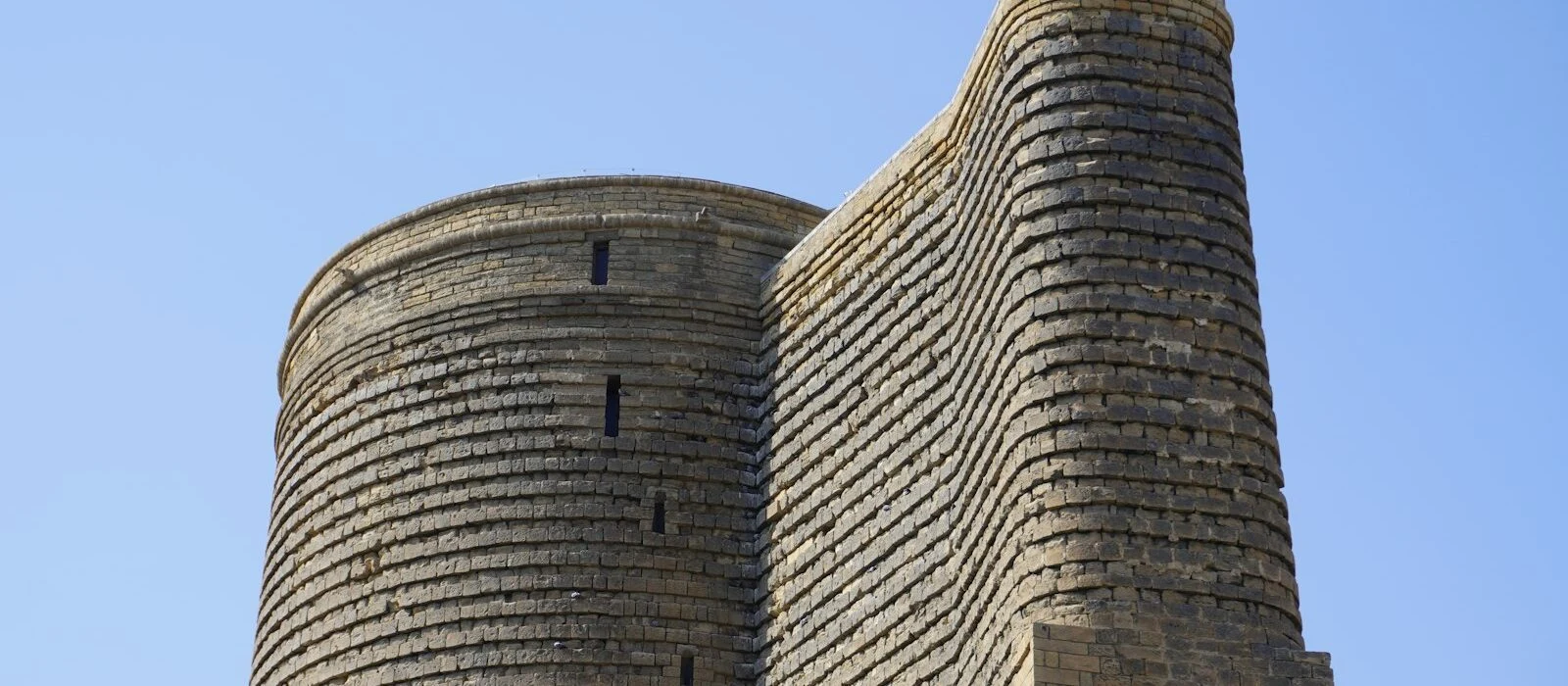
People left rock engravings at Gobustan over thousands of years. In antiquity, much of the area was known as Caucasian Albania, which has no link to the Balkan country of Albania. Islam arrived in the 7th century. The Shirvanshahs ruled from Shirvan for centuries, and their palace complex and the Maiden Tower, which dates to roughly the 12th century, still stand in Baku’s Walled City.
Russian and Persian rule
The Treaty of Gulistan in 1813 and the Treaty of Turkmenchay in 1828 divided the region between the Russian Empire and Persia. Baku’s oil boom began in the late 19th century, and by 1900 the city was one of the world’s leading oil producers. Wealthy oil families funded theatres, schools and some of the grand buildings seen in Baku today.
Republic and Soviet era
The Azerbaijan Democratic Republic was proclaimed on 28 May 1918. It was the first democratic republic in the Muslim world, and women gained the right to vote that year. The Red Army entered Baku in April 1920, and Azerbaijan became a Soviet republic. Baku’s oil also supplied much of the Soviet Union’s fuel in the Second World War.
Independence and the modern state
Azerbaijan restored its independence on 18 October 1991, shortly before the Soviet Union dissolved. Fighting over the Karabakh region began in the late 1980s and ended with a ceasefire in 1994. A second war in 2020 and an operation in September 2023 brought the region under Azerbaijani control. The border with Armenia remains closed, according to the UK government. Many visitors are surprised that Independence Day falls on 28 May, which marks the 1918 republic rather than 1991.
Azerbaijani Culture and Traditions
Azerbaijani culture blends Turkic, Persian and Russian influences with a strong tradition of hospitality, tea and music. These influences show in food, music and craft. Most people are Muslim, but daily life is largely secular, and customs vary between Baku, the mountain villages and the south.
Language
Azerbaijani, a Turkic language, is the official language, and it has been written in the Latin alphabet since 1991. Russian is still widely understood, and English is used in business. Smaller communities speak languages such as Lezgian and Talysh.
Religion
Most people are Muslim, and Shia Islam is the larger branch. Orthodox Christian, Jewish and other communities also live in the country. At mosques, cover your shoulders and knees and remove your shoes before entering.
Festivals
Novruz, the spring festival held around the equinox, is the biggest celebration of the year. Families light bonfires, sprout wheat and bake sweets such as pakhlava and shekerbura. UNESCO listed Novruz in 2009 as a multinational inscription. An autumn pomegranate festival also draws visitors. Dates and events change each year, so our best time to visit Azerbaijan guide has a month-by-month list.
Etiquette
Azerbaijanis greet with a handshake, and many people remove their shoes at the door of a home. Tea is offered as a sign of welcome, and hosts often add fruit, jam and sweets. Dress modestly in rural areas and religious sites. Bargaining is common in bazaars but not in shops with fixed prices.
Music and arts
Mugham was inscribed by UNESCO in 2008, the art of the ashiq, a travelling bard, in 2009, and Azerbaijani carpet weaving in 2010. The tar and the kamancha, both stringed instruments, are central to folk music. Uzeyir Hajibeyov composed Leyli and Majnun in 1908, often described as the first opera in the Muslim world. Silk headscarves called kelagayi are another traditional craft.
Azerbaijani Food: Traditional Dishes, Drinks and Desserts
Azerbaijani food is built on rice, lamb, herbs, fresh bread and fruit, with saffron, sumac and dried fruits as common flavours. Plov, dolma and qutab are the best-known dishes, and tea is served with almost every meal or visit. Recipes differ by region.
Staples and regional differences
Bread baked in a clay oven, rice, lamb, beef, chicken, yoghurt and fresh herbs such as dill, coriander and mint appear on most tables. The Caspian coast is known for fish, Sheki for piti and halva, and the south around Lankaran for tea and citrus. Plov has many regional versions, so the same name can mean different dishes.
Signature dishes
- Plov: saffron rice, often served with lamb, dried fruit or chestnuts.
- Dolma: stuffed grape leaves or vegetables. UNESCO listed the dolma-making and sharing tradition in 2017.
- Qutab: a thin griddled pastry with herb, meat or pumpkin filling.
- Dushbara: tiny lamb dumplings served in broth.
- Piti: a lamb and chickpea stew cooked in a clay pot, a Sheki speciality.
- Lule kebab: minced lamb grilled on a skewer.
- Kuku: a thick herb and egg omelette.
- Dovga: a yoghurt and herb soup, served warm or cold.
- Lavangi: chicken or fish stuffed with a walnut and onion paste.
- Chikhirtma: a chicken soup thickened with egg and a sour note.
Street food
Qutab stalls, tandoor-baked bread and grilled kebabs are easy to find. Shaurma, a meat wrap, is common in Baku. Fresh bread with cheese and herbs makes a cheap, filling snack.
Drinks
Black tea comes in small pear-shaped glasses called armudu, usually with jam, lemon or sweets. Ayran is a salted yoghurt drink, and sherbet is a sweet fruit drink that people also serve at celebrations.
Desserts
Pakhlava is a diamond-shaped pastry layered with nuts, and shekerbura is a crescent pastry filled with ground nuts and sugar. Sheki halva is a layered sweet made with rice flour and syrup, and gurabiya are shortbread-style biscuits. To base yourself near these regional foods, see our where to stay in Azerbaijan guide.
Explore Hotels & Flights
Search accommodation and flights for your destination with Expedia. Compare available options and continue to Expedia to complete your booking.
Affiliate partner · Globe Navo may earn a commission from qualifying bookings at no extra cost to you.
❓ Azerbaijan FAQ
Is Azerbaijan safe to visit right now?
The US State Department rates Azerbaijan Level 3, Reconsider travel, citing terrorism, armed conflict and landmines. The UK government warns against travel to parts of the country. Read both advisories, avoid the named regions, and check them again close to departure.
Do I need a visa for Azerbaijan?
Most visitors do. Citizens of eligible countries can apply on the official ASAN Visa portal, evisa.gov.az. The standard e-visa is single entry and allows 30 days within a 90-day validity period. Other nationalities apply through an Azerbaijani embassy.
Can I enter Azerbaijan by land?
Not reliably. The UK government says the land borders with Iran and Georgia are temporarily closed, the Armenia border remains closed, and entry is only unrestricted by air. Plan to arrive and leave by plane.
What language and currency are used in Azerbaijan?
Azerbaijani is the official language, and Russian and English are used in business. The currency is the Azerbaijani manat (AZN). Carry your passport at all times, because police sometimes check identity documents.
When is the best time to visit Azerbaijan?
Mid-April to early June and early September to late October are usually the most comfortable months. Summers are hot in Baku, winters are cold and windy, and the mountains get snow from December to February.
Plan Your Trip to Azerbaijan
Your Next Adventure in Azerbaijan Awaits!
Explore Deals →🎁 Best deals for Azerbaijan
Offers from trusted travel stores for your Azerbaijan trip. Compare a few options before you book, and check each store's terms for the final price.
Browse by type: Hotel deals · Flight deals · Travel eSIM · Car rental
 KkdayFind current Kkday coupons and deals for tours, attraction tickets, transport and first app orders. See minimum spend, discount caps and exclusions before you book.
Get Coupon View Deal
 eSIMFOXeSIMFOX is a travel eSIM provider offering prepaid mobile data plans for single countries and wider regions, delivered digitally so you can connect as soon as you land.
Get Coupon View Deal
 QuibityQuibity is a travel eSIM provider that lets you buy a mobile data plan online and activate it on your phone, so you can get connected abroad without a physical SIM card.
Get Coupon View Deal
 ExpediaDiscover great deals on hotels, flights, vacation packages, car rentals, and activities with Expedia. Compare travel options and plan your next trip with convenient booking choices.
Get Coupon View Deal
 KlookKlook is a travel activities platform where you can book attraction tickets, tours, day trips, transport passes, airport transfers and local experiences in destinations worldwide.
Get Coupon View Deal
 Trip.comTrip.com is a global online travel platform for flights, hotels, train tickets, airport transfers, attraction tickets and travel packages, available on web and mobile app.
Get Coupon View Deal
 TourRadarTourRadar is an online marketplace for multi-day guided tours, small-group trips and tailor-made journeys offered by independent tour operators around the world.
Get Coupon View Deal