 Bosnia and HerzegovinaExplore Bosnia and Herzegovina: where it is, its history, culture and food, from Sarajevo's…
DESTINATION
Morocco
Morocco is a North African kingdom of Atlantic and Mediterranean coasts, Atlas peaks, ancient medinas, rich history and famously flavourful cuisine.
📅 Last updated:
🌍 Quick Facts

Morocco at a glance
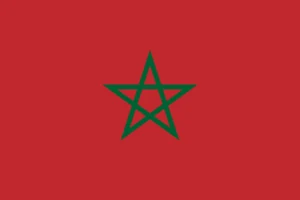
Capital: Rabat
Currency: Moroccan dirham (MAD)
Language: Arabic and Amazigh (French widely used)
Population: About 36.8 million (2024 census)
Time zone: UTC+0 (GMT), all year since 20 September 2026
Calling code: +212
Internet domain: .ma
Main airport: Mohammed V International Airport (CMN), Marrakech Menara Airport (RAK)
Best time to visit: March to May and September to November
📍 Morocco Map
🖼️ Morocco: Location, History, Culture & Food
✨ Complete Travel Guide
Where Is Morocco Located?
Morocco sits in the far northwest of Africa, with the Atlantic Ocean along its western side and the Mediterranean Sea along its northern edge. Algeria lies to the east, the disputed territory of Western Sahara to the south, and Spain is a short sea crossing away over the Strait of Gibraltar. The capital is Rabat.
Last checked: November 2026
Few countries combine so many landscapes in one place. Morocco is the only African country with coastlines on both the Atlantic and the Mediterranean, and at the narrowest point of the Strait of Gibraltar only about 14 kilometres of water separate it from Spain. The Rif Mountains rise in the north, while the Atlas ranges run diagonally across the interior from the south-west towards the north-east and divide the coast from the Sahara.
The High Atlas holds Jbel Toubkal, which reaches 4,165 metres and is the highest peak in North Africa. South and east of these mountains the land turns arid, and palm-filled oases and sand dunes mark the edge of the Sahara. Morocco covers roughly 446,550 square kilometres without Western Sahara, and its Atlantic and Mediterranean shores add up to a coastline of about 1,835 kilometres.
Most people live on the western side of the country. Casablanca is the largest city and the commercial centre, Rabat is the political capital, and Fez, Marrakech, Tangier and Agadir are other major urban hubs. Morocco also has land borders with the two Spanish cities of Ceuta and Melilla on its northern coast, which are small enclaves rather than separate countries.
With about 37 million inhabitants, Morocco is large enough that distances matter. Moving from the blue-washed Rif town of Chefchaouen to the dunes near Merzouga means crossing several mountain ranges and a full day on the road, so it helps to think of the country in regions rather than as a single stop.
Introduction to Morocco
Morocco is a kingdom in North Africa where Arab, Amazigh (Berber), African and European influences meet. Travellers come for walled medinas, desert dunes, Atlantic surf towns and mountain villages. Arabic and Amazigh are the official languages, French is widely used, the currency is the Moroccan dirham (MAD), and the capital is Rabat.
Last checked: November 2026
The country has become one of the most visited in Africa. Moroccan tourism officials reported close to 20 million visitor arrivals for 2025 in their preliminary count, a record that reflects better air links, new hotels and a broader range of things to do beyond the classic imperial cities. Even so, it is easy to find quiet corners once you leave the main squares.
Each region has its own character. Marrakech is famous for its busy square and gardens, Fez for a medina that feels frozen in the Middle Ages, and Chefchaouen for its blue-washed lanes. Along the Atlantic, Essaouira and Taghazout attract wind and wave lovers, while in the south a night in a desert camp near the dunes is a highlight for many first-time visitors.
Getting by is straightforward. In tourist areas you will meet people who switch between Arabic, French, Spanish and English, and bargaining in the souks is part of normal shopping rather than a trick played on visitors. Dress codes are relaxed in big cities and beach resorts, but covering shoulders and knees is a courteous choice in smaller towns and around religious sites.
Morocco also suits many kinds of trips. Families can combine a city break with a beach stay, hikers can head for the Atlas, and food lovers can build a journey around markets and cooking classes. The key is to pick a few regions and travel between them at a comfortable pace.
History of Morocco
Morocco’s recorded history stretches from ancient Berber kingdoms and Roman rule to a chain of Islamic dynasties that began with the Idrisids in 788. The Alaouite dynasty has ruled since the 17th century. France and Spain established protectorates in 1912, and Morocco regained independence in 1956 under Mohammed V.
Last checked: November 2026
Long before Islam arrived, the Amazigh people lived across the region, and the northern coast fell within the orbit of Phoenician traders and then Rome. The ruins at Volubilis, near Meknes, show how far the Roman province of Mauretania Tingitana reached into the interior. Arab armies brought Islam in the seventh century, and local tribes gradually adopted the new faith while keeping many of their own customs.
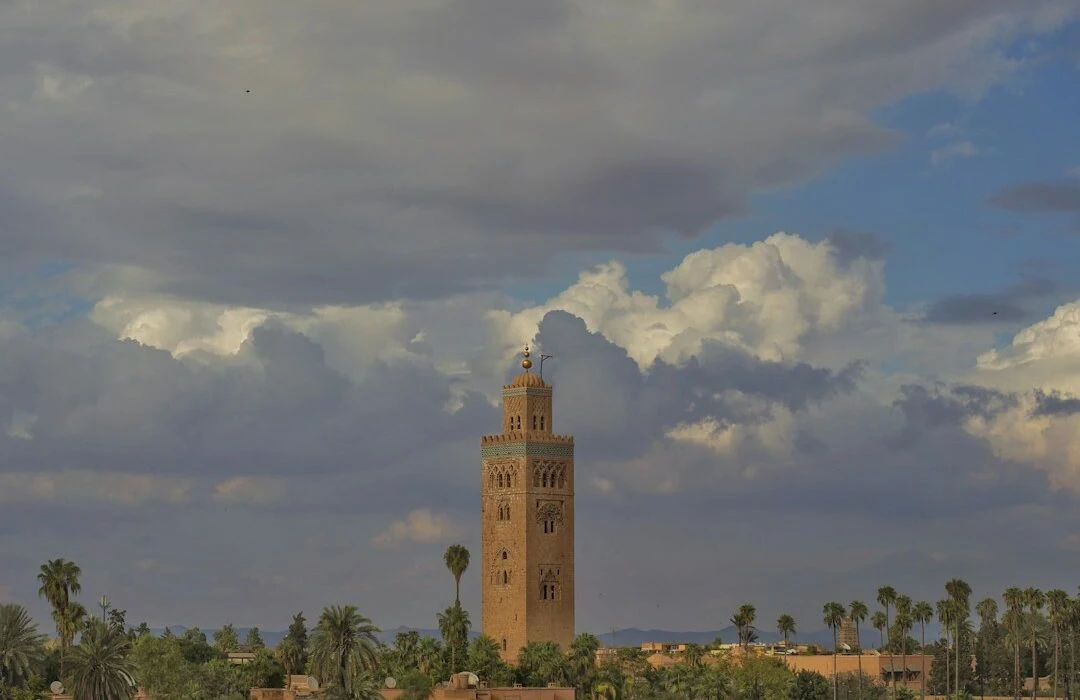
In 788 Idris I founded the first independent Moroccan state, and his son Idris II made Fez its capital. Later dynasties built larger realms: the Almoravids founded Marrakech, the Almohads raised monuments such as the Koutoubia minaret, and the Marinids left the madrasas that still stand in Fez. The Saadians defeated a Portuguese army at the Battle of the Three Kings in 1578, and Morocco was among the North African lands that never came under Ottoman rule.
The Alaouites took control in 1666 and made Meknes a grand imperial capital under Moulay Ismail. By the early twentieth century, growing European pressure led to the Treaty of Fez in 1912, which created a French protectorate, while Spain held zones in the north and south and Tangier received an international status. Resistance continued for decades, and Sultan Mohammed V became a symbol of the independence movement.
France recognised Morocco’s independence on 2 March 1956, and Spain followed a month later. Mohammed V took the title of king in 1957. Hassan II ruled from 1961 until 1999, and his son Mohammed VI has reigned since then. A new constitution approved in 2011 recognised Amazigh as an official language alongside Arabic, and today Morocco is a constitutional monarchy with an elected parliament.
Culture and Traditions of Morocco
Moroccan culture blends Amazigh roots, Arab and Islamic traditions, Andalusian refinement and French and Spanish influences. Islam is the state religion and shapes the rhythm of daily life, from the call to prayer to Ramadan. Hospitality, craftsmanship, music and shared meals matter more than any single monument.
Last checked: November 2026
Everyday speech mixes Moroccan Arabic, known as Darija, with Amazigh languages such as Tamazight, Tashelhit and Tarifit, and many people also speak French. Offering mint tea is the classic gesture of welcome. Hosts pour it from a height to create a foam, and it is polite to accept at least one glass when you are invited into a shop or home.
The country holds a strong place on UNESCO’s intangible heritage lists. The cultural space of Jemaa el-Fna in Marrakech, where storytellers, musicians and food stalls gather each evening, was recognised in 2008. Argan-related know-how, Gnawa music, the horseback display known as tbourida and the sung poetry of malhoun have also been inscribed, and couscous traditions are listed jointly with Algeria, Tunisia and Mauritania.
Craft is part of the landscape. Tanners in Fez, potters in Safi, weavers in the Middle Atlas and metalworkers in Marrakech keep old techniques alive, and the medinas are organised by trade, so you can wander from the dyers’ lane to the brass lane in a few minutes. Zellige mosaic tile, carved cedar and plaster, and hand-knotted rugs appear in everything from riads to mosques.
Religious festivals shape the calendar. Ramadan is a month of fasting from dawn to sunset, followed by Eid al-Fitr, and Eid al-Adha is another major family holiday. Many Amazigh communities also celebrate their new year in January, and summer brings local gatherings called moussems, which combine pilgrimage, trade and folklore.
A few habits go a long way. Greet people before asking a question, ask permission before photographing individuals, and cover shoulders and knees in smaller towns and religious areas. Non-Muslims cannot enter most mosques, with a few notable exceptions, so look for signs before stepping inside. In homes, remove your shoes at the door and eat with your right hand when sharing a communal dish.
Food and Cuisine of Morocco
Moroccan cuisine is built on slow-cooked stews, steamed semolina, fresh bread and layered spices such as cumin, ginger, saffron and cinnamon. Sweet and savoury flavours often meet in the same dish. Couscous is widely seen as the national dish, tagine is the best-known meal, and mint tea ends almost every gathering.
Last checked: November 2026
Meals are shared, and bread acts as the main utensil. A typical lunch starts with several cooked and fresh salads, followed by a tagine or other main dish, then fruit. Lamb and chicken are the most common meats, coastal towns serve excellent grilled fish, and many dishes can be made without meat if you ask in advance.
These signature dishes are a good place to start:
- Tagine: meat, fish or vegetables simmered in a conical clay pot, often with olives, preserved lemon or dried fruit.
- Couscous: steamed semolina topped with vegetables and meat, traditionally served after Friday midday prayers.
- Pastilla: a flaky pie, usually filled with chicken or seafood and dusted with cinnamon and sugar.
- Harira: a tomato, lentil and chickpea soup, famously served to break the fast in Ramadan.
- Tanjia: beef or lamb slow-cooked in a clay urn with spices, a Marrakech speciality.
- Mechoui: lamb roasted slowly until tender, often prepared for celebrations.
- Rfissa: shredded flatbread soaked in a spiced chicken and lentil broth.
- Zaalouk: a smoky aubergine and tomato salad eaten with bread.
- Msemen: square, layered griddle bread served with honey or cheese at breakfast.
- Sfenj: light, ring-shaped doughnuts fried to order and usually eaten with tea.
Street food is part of the fun. Evening stalls in big squares serve grilled meats, snails and soups, while neighbourhood bakeries sell fresh bread and pastries. Look for busy stalls with fast turnover, and drink bottled water if your stomach is sensitive.
During Ramadan, many local restaurants open only after sunset, although tourist areas usually keep some places open during the day. Planning a late dinner in the month of fasting can be a highlight, as the whole city gathers to eat together.
Planning a trip? Start with our Morocco visa guide for entry rules, then browse the best places to visit in Morocco and the best time to visit Morocco. Our Morocco itinerary ideas, advice on where to stay in Morocco, a guide to flights to Morocco and tips on how to get around Morocco complete the picture.
Safety notice. The UK Foreign, Commonwealth and Development Office advises against all travel to parts of Western Sahara: areas within 40 km north and west of the Berm, including the city of Es Semara, and the territory south and east of it. Western Sahara is a disputed territory, and the UK publishes separate advice for it, while its regional advice for Morocco does not list any part of Morocco itself as off-limits. The US Department of State currently asks travellers to exercise increased caution in Morocco because of the risk of terrorism. Advisories change, so read the latest versions before you book.
Explore Morocco Travel Guides
Explore our detailed guides to plan every part of your Morocco trip.
Morocco: Best Places
A practical guide to Morocco's standout destinations, from imperial medinas and Atlantic coast towns to Atlas mountain trails and Sahara dunes.
View Guide ›Morocco: Best Time to Visit
Compare Morocco's seasons region by region, with monthly temperatures, rainfall patterns, holiday dates and packing tips to help you pick the right...
View Guide ›Morocco: Flights
Which airports serve Morocco, which airlines fly there, how direct and connecting routes work, and what to check before you fly and...
View Guide ›Morocco: How to Get Around
How to travel between and within Moroccan cities by train, bus, shared taxi, tram, domestic flight or rental car, with realistic times...
View Guide ›Morocco: Itineraries
Four realistic Morocco routes of 3, 5, 7 and 10 days, with logical overnight stops, main activities and honest advice on how...
View Guide ›Morocco: Visa
Find out which passports enter Morocco visa-free, who can use the online e-visa portal, what documents to carry and how to avoid...
View Guide ›Morocco: Hotels
Where to stay in Morocco's main cities and regions, from medina riads to desert camps, with advice for each budget, family needs...
View Guide ›Explore Morocco Tours
Discover guided tours and adventures in Morocco. Compare itineraries, prices and traveller reviews on TourRadar before you book.
Guided tours & deals
Affiliate partner · Globe Navo may earn a commission from qualifying bookings at no extra cost to you.
❓ Morocco FAQ
Where is Morocco located?
Morocco is in the northwest corner of Africa, with the Atlantic Ocean to the west and the Mediterranean Sea to the north. Algeria lies to the east and Western Sahara to the south, while Spain is across the Strait of Gibraltar. The capital is Rabat, and the largest city is Casablanca.
What currency and languages are used in Morocco?
The Moroccan dirham (MAD) is the official currency. Arabic and Amazigh are the official languages, and French is widely used in business and tourism. In major tourist areas you will also meet people who speak English or Spanish, so communication is rarely a problem.
What is Morocco famous for?
Morocco is known for walled medinas, lively souks, Sahara dunes, the Atlas Mountains and a long Atlantic coast. It is also famous for tagine and couscous, mint tea, zellige tilework and Gnawa music. Marrakech, Fez and Chefchaouen are favourite stops for first-time visitors.
What is the national dish of Morocco?
Couscous is widely regarded as the national dish and is traditionally eaten on Fridays after midday prayers. Tagine, a slow-cooked stew named after its clay pot, is the meal most visitors try first. Pastilla and harira are also popular favourites across the country.
What time zone does Morocco use?
From 20 September 2026 Morocco officially uses Greenwich Mean Time (UTC+0) all year, ending the permanent UTC+1 system introduced in 2018. Check your phone clock and any older timetables, because some may still show the previous offset.
Plan Your Trip to Morocco
Your Next Adventure in Morocco Awaits!
Explore Deals →🎁 Best deals for Morocco
Offers from trusted travel stores for your Morocco trip. Compare a few options before you book, and check each store's terms for the final price.
Browse by type: Hotel deals · Flight deals · Travel eSIM · Car rental
More destinations to explore
Bosnia and HerzegovinaExplore Bosnia and Herzegovina: where it is, its history, culture and food, from Sarajevo's…
 TurkeyTurkey sits between Europe and Asia, with coasts on three seas. Learn where it…
 MongoliaDiscover Mongolia's place between Russia and China, its nomadic heritage, living traditions and hearty…