 MontenegroMontenegro is an Adriatic country of walled coastal towns, high mountains and canyons, with…
DESTINATION
Mongolia
Discover Mongolia's place between Russia and China, its nomadic heritage, living traditions and hearty food, from open steppe to Ulaanbaatar.
📅 Last updated:
🌍 Quick Facts

Mongolia at a glance
Capital: Ulaanbaatar
Currency: Mongolian tögrög (MNT)
Language: Mongolian
Population: About 3.5 million
Time zone: UTC+8 (Ulaanbaatar Time)
Calling code: +976
Internet domain: .mn
Main airport: Chinggis Khaan International Airport (UBN)
Best time to visit: June to August
📍 Mongolia Map
🖼️ Mongolia: Location, History, Culture & Food
✨ Complete Travel Guide
Where Is Mongolia Located?
Mongolia is a landlocked country in East Asia, set between Russia to the north and China to the south. Its capital, Ulaanbaatar, lies in the north-central part of the country. With about 1.56 million square kilometres of land and roughly 3.5 million people, it is one of the least densely populated nations on Earth.
Last checked: November 2026
Landscapes change quickly across this vast territory. The Altai Mountains rise in the far west, where Khüiten Peak reaches 4,374 metres, while the forested Khangai and Khentii ranges run through the centre and north-east. Rolling grassland covers much of the middle, and the Gobi Desert spreads across the south. In the north, Lake Khövsgöl lies close to the Russian frontier, surrounded by taiga forest and mountains.
Mongolia has no coastline, and its combined borders with Russia and China stretch for well over 8,000 kilometres. Only a handful of crossings are open to foreign travellers, which is one reason most visitors arrive by air or on the long-distance trains that link Ulaanbaatar with Beijing and Moscow. Border zones of up to 100 kilometres inside the frontier can require special permission, so remote routes need planning.
Ulaanbaatar sits on a high plateau beside the Tuul River at roughly 1,300 metres above sea level, which helps explain its reputation as one of the world’s coldest capital cities. The country is divided into 21 provinces, called aimags, plus the capital municipality. Outside the capital, towns are small and far apart, so distance matters far more here than a map first suggests.
Mongolia keeps Ulaanbaatar Time, which is UTC+8, and its international calling code is +976. The climate is sharply continental, with long, cold winters and short, warm summers, so the season you choose shapes both the scenery and the activities available.
Introduction to Mongolia
Mongolia is a vast, sparsely populated country where nomadic herding is still part of everyday life. Visitors come for open steppe, desert dunes, mountain lakes, monasteries and the legacy of Chinggis Khaan. The official language is Mongolian, the currency is the tögrög (MNT), and the capital is Ulaanbaatar.
Last checked: November 2026
For a country of its size, Mongolia feels remarkably uncrowded. Outside Ulaanbaatar, where nearly half of all Mongolians live, you can drive for hours past herds of horses, sheep and goats with only the occasional ger camp in view. That emptiness is the main attraction: big skies, silence and a rare chance to see a way of life still shaped by the seasons.
Ulaanbaatar is the usual starting point. It mixes Soviet-era apartment blocks and glass towers with Buddhist temples, museums and busy markets, and it is where most international flights arrive. From there, travellers head to the Gobi Desert, the old imperial heartland around Karakorum, the northern lakes, or the Altai region in the far west, where Kazakh eagle hunters keep an ancient tradition alive.
Practicalities are part of the adventure. English is spoken in Ulaanbaatar’s hotels and tour offices but much less in rural areas, and everyday signs use the Cyrillic alphabet. Roads outside the capital are often rough, and facilities can be basic, so many visitors travel with a driver or an experienced guide when heading into remote regions.
The country rewards unhurried travel. A single journey can take you from a modern café district to a family ger where tea is poured the moment you sit down. Many people find that the warmth of that welcome, more than any single landmark, is what they remember best.
History of Mongolia
Mongolia’s story begins with the nomadic peoples of the steppe and reaches its peak in 1206, when Chinggis Khaan united the Mongol tribes. His successors built the largest contiguous land empire in history. After centuries of Qing rule, Mongolia declared independence in 1911, became a Soviet-aligned republic in 1924 and moved to democracy in 1990.
Last checked: November 2026
Long before the Mongol Empire, steppe peoples such as the Xiongnu, Xianbei, Göktürks and Uyghurs built powerful nomadic states in the region. Skilled horsemen and highly mobile, these confederations often shaped the fortunes of their settled neighbours in China and Central Asia.
In 1206 a gathering of tribal leaders proclaimed Temüjin as Chinggis Khaan, or Genghis Khan. Under him and his descendants, Mongol armies and administrators connected lands from the Pacific coast to Eastern Europe, and Silk Road trade became safer for merchants. Ögedei Khan made Karakorum the imperial capital, and Kublai Khan later founded the Yuan dynasty in China. The Orkhon Valley around Karakorum is now a UNESCO World Heritage cultural landscape.
As the empire fragmented, the Mongols returned to their homeland, and Tibetan Buddhism spread widely from the late sixteenth century, leading to monasteries such as Erdene Zuu. The Manchu Qing dynasty brought the region under its rule in the seventeenth century. When the Qing collapsed in 1911, Mongolian leaders declared independence and installed the Bogd Khan, the spiritual head of Mongolian Buddhism, as ruler.
The Mongolian People’s Republic was proclaimed in 1924 and was closely tied to the Soviet Union, and religious institutions were severely suppressed in the 1930s. Peaceful democratic protests in 1990 ended one-party rule, and a new constitution took effect in 1992. Today Mongolia is a parliamentary republic, and Chinggis Khaan is honoured as a national symbol, with his name on the main international airport and a giant equestrian statue east of Ulaanbaatar.
Culture and Traditions of Mongolia
Mongolian culture grows from nomadic herding, Tibetan Buddhism and older shamanic beliefs. Families traditionally raise five animals: horses, camels, cattle, sheep and goats. Hospitality, horsemanship, throat singing and festivals such as Naadam and Tsagaan Sar are central to national identity, and Mongolian is written in the Cyrillic alphabet today.
Last checked: November 2026
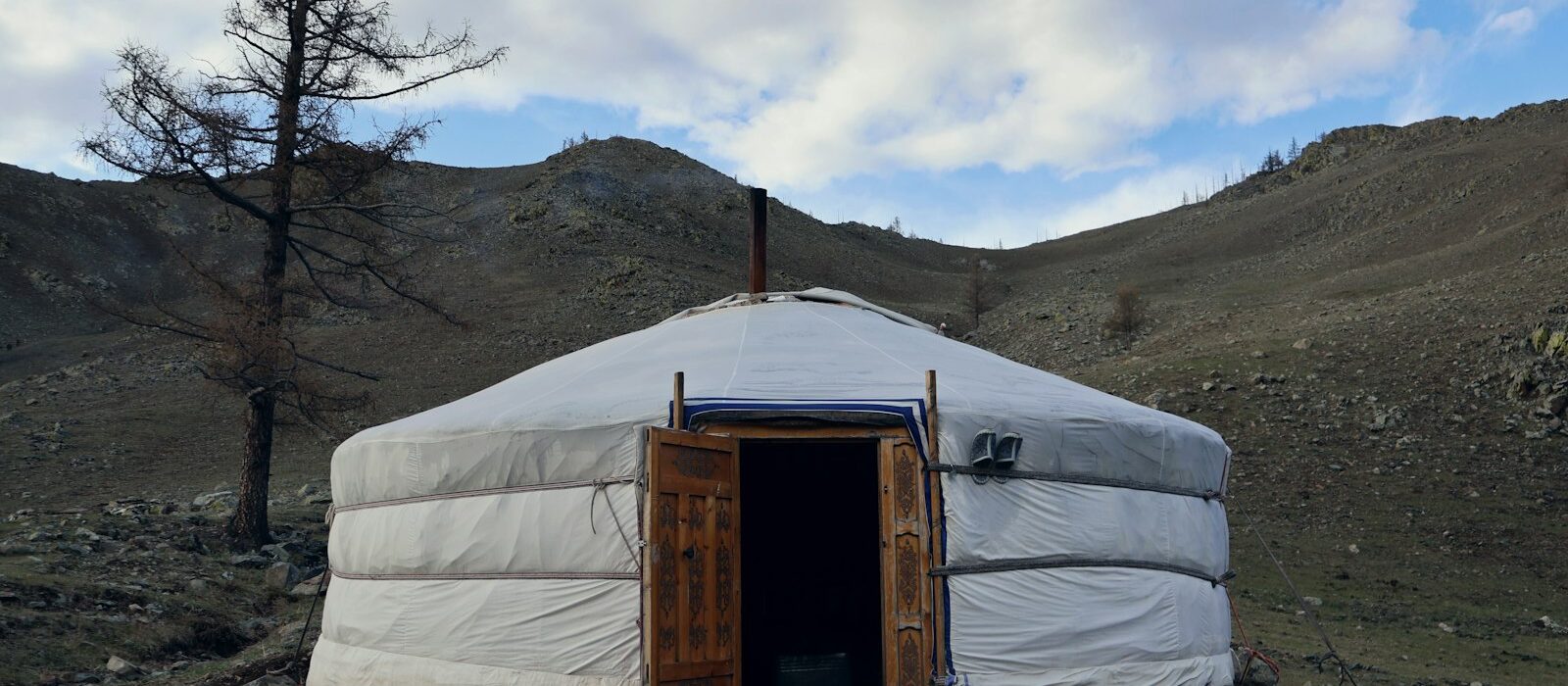
The ger, a round felt-covered tent also known as a yurt, is the traditional home and remains common in both the countryside and the edges of Ulaanbaatar. Its wooden frame can be packed up and moved in a few hours, and its layout follows custom: the door usually faces south, the hearth sits in the centre, and the place of honour is at the back, opposite the entrance.
Music and performance hold a special place. The morin khuur, a two-stringed horsehead fiddle, is a national emblem, and khoomei, or throat singing, produces more than one pitch at once. Both appear on UNESCO’s lists of intangible cultural heritage, as does the long song, or urtiin duu. Concerts in Ulaanbaatar and some ger camps give visitors a chance to hear them live.
Naadam, held every July, is the biggest national festival and centres on wrestling, horse racing and archery. The main events in Ulaanbaatar are usually held around 11 to 13 July. Tsagaan Sar, the lunar new year, falls in late winter and is marked by family visits, gifts and mountains of dumplings. Religious life is visible too, with active monasteries in Ulaanbaatar and across the country, alongside reverence for the eternal blue sky and the spirits of mountains and rivers.
Visitors can show respect by following simple customs. Accept food or drink with your right hand or both hands, avoid stepping on the threshold of a ger, and move clockwise around the stove inside. Ask before photographing people, and dress modestly in monasteries.
Food and Cuisine of Mongolia
Mongolian cuisine is built around meat, dairy and flour, shaped by a herding lifestyle and cold winters. Typical meals feature mutton or beef, dumplings, noodles, milk tea and fermented mare’s milk. Flavours are simple and hearty, with salt more common than spices, and vegetables play a bigger role in the city than in the countryside.
Last checked: November 2026
Dairy products, often called white foods, are a pillar of the diet, especially in summer, while red foods, meaning meat, dominate in winter. Because herds are the main source of food, dishes are usually steamed, boiled or cooked with hot stones rather than fried in much oil. Vegetarians should plan ahead, as meat is nearly universal outside Ulaanbaatar.
These signature dishes are a good place to start:
- Buuz: steamed dumplings filled with minced mutton or beef, a favourite at Tsagaan Sar.
- Khuushuur: large fried meat pastries, crisp outside and juicy inside, especially popular during Naadam.
- Tsuivan: hand-cut noodles stir-fried or steamed with meat and vegetables.
- Khorkhog: mutton cooked with hot stones in a sealed container, usually served at celebrations and gatherings.
- Boodog: goat cooked with hot stones inside its own skin, a countryside speciality.
- Bantan: a warming soup of meat and small pieces of dough.
- Aaruul: dried curds that are sour, firm and chewy, eaten as a snack.
- Suutei tsai: salted milk tea, offered to guests as a welcome.
- Airag: lightly fermented mare’s milk, a summer drink with a tangy taste.
- Bortsog: fried dough biscuits, often dipped in tea.
Eating is social. Hosts often offer tea and snacks as soon as guests arrive, and refusing everything can seem impolite, so take at least a small taste. In Ulaanbaatar, restaurants range from traditional canteens to Korean, Japanese and European venues, which gives vegetarians and fussy eaters more choice. The stir-fry buffets known abroad as Mongolian barbecue are not a Mongolian tradition, so do not expect to find them here.
Plan the practical side of your trip with our guides: check entry rules in the Mongolia visa guide, browse the best places to visit in Mongolia, compare the best time to visit Mongolia, follow a ready-made Mongolia itinerary, choose where to stay in Mongolia, compare flights to Mongolia and learn how to get around Mongolia.
Explore Mongolia Travel Guides
Explore our detailed guides to plan every part of your Mongolia trip.
Mongolia: Best Places
A guide to Mongolia's best places, from Ulaanbaatar's monasteries and Gobi dunes to Lake Khövsgöl, with time needed and visitor tips.
View Guide ›Mongolia: Best Time to Visit
When to visit Mongolia: month-by-month weather, Naadam and other festivals, regional differences and what to pack for each season.
View Guide ›Mongolia: Flights
Flights to Mongolia explained: Chinggis Khaan International Airport, main airlines and routes, arrival tips and a pre-flight checklist.
View Guide ›Mongolia: How to Get Around
How to get around Mongolia: domestic flights, trains, buses, taxis, car rental and driving rules, with the best option for common journeys.
View Guide ›Mongolia: Itineraries
Realistic 3, 5, 7 and 10 day Mongolia itineraries with routes, overnight stops, driving times and practical tips for first-time visitors.
View Guide ›Mongolia: Visa
Find out who can enter Mongolia without a visa, who needs the e-visa, which documents are required and how to extend a...
View Guide ›Mongolia: Hotels
Where to stay in Mongolia: the best areas of Ulaanbaatar, Terelj and Gobi ger camps, plus options by budget and booking tips.
View Guide ›Explore Mongolia Tours
Discover guided tours and adventures in Mongolia. Compare itineraries, prices and traveller reviews on TourRadar before you book.
Guided tours & deals
Affiliate partner · Globe Navo may earn a commission from qualifying bookings at no extra cost to you.
❓ Mongolia FAQ
What is the capital of Mongolia?
Ulaanbaatar is the capital and largest city of Mongolia. It is home to nearly half of the population and serves as the political, economic and cultural centre. Most international flights arrive at Chinggis Khaan International Airport, south of the city.
What language is spoken in Mongolia?
Mongolian is the official language and is written in Cyrillic for everyday use. Some older people understand Russian, and English is most common in hotels, tour offices and restaurants in Ulaanbaatar, so a few Mongolian greetings help in rural areas.
What currency does Mongolia use?
Mongolia uses the tögrög, also written tugrik, with the code MNT. Cards are widely accepted in Ulaanbaatar, but it is wise to carry some cash for rural areas, markets and small shops where card payments may not be available.
Is Mongolia a landlocked country?
Yes, Mongolia has no coastline. It is bordered by Russia to the north and China to the south, and most visitors arrive by air or by long-distance train. By area, it is the second-largest landlocked country after Kazakhstan.
When is the Naadam festival held?
Naadam is the biggest national festival in Mongolia, held every July with wrestling, horse racing and archery. The main events in Ulaanbaatar are usually held around 11 to 13 July, but check the official dates each year before planning.
Plan Your Trip to Mongolia
Your Next Adventure in Mongolia Awaits!
Explore Deals →🎁 Best deals for Mongolia
Offers from trusted travel stores for your Mongolia trip. Compare a few options before you book, and check each store's terms for the final price.
Browse by type: Hotel deals · Flight deals · Travel eSIM · Car rental
More destinations to explore
MontenegroMontenegro is an Adriatic country of walled coastal towns, high mountains and canyons, with…
 MozambiqueDiscover Mozambique's Indian Ocean coast, Portuguese-era history, Makonde and marrabenta culture, and seafood dishes…
 IsraelIsrael travel guide: where it is, its history, culture and signature dishes, plus a…