 Guinea-BissauDiscover Guinea-Bissau: where this small West African country sits on the Atlantic coast, plus…
DESTINATION
Montenegro
Montenegro is an Adriatic country of walled coastal towns, high mountains and canyons, with Orthodox traditions and a cuisine split between sea and highlands.
📅 Last updated:
🌍 Quick Facts

Montenegro at a glance
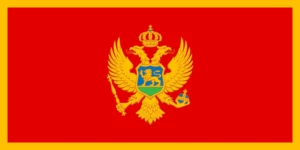
Capital: Podgorica
Currency: Euro (EUR)
Language: Montenegrin (official)
Population: 623,633 (2023 census)
Time zone: UTC+1 (Central European Time), UTC+2 in summer
Calling code: +382
Internet domain: .me
Main airport: Podgorica (TGD), Tivat (TIV)
Best time to visit: May, June and September for the coast, June to September for hiking, December to March for skiing
📍 Montenegro Map
🖼️ Montenegro: Location, History, Culture & Food
✨ Complete Travel Guide
Where Is Montenegro Located?
Montenegro is a small country in Southeastern Europe, on the Balkan Peninsula, with a coast on the Adriatic Sea. It shares land borders with Croatia, Bosnia and Herzegovina, Serbia, Kosovo and Albania, and its administrative capital is Podgorica, while Cetinje holds the title of old royal capital.
Last checked: November 2026
The country covers about 13,812 square kilometres, which places it among the smaller states of Europe, and its shoreline stretches for roughly 293 kilometres. Across the water to the southwest lies Italy, separated from Montenegro by nothing but open sea. The local name, Crna Gora, translates as Black Mountain, and the landscape lives up to it: steep limestone ranges rise quickly behind the narrow coastal strip.
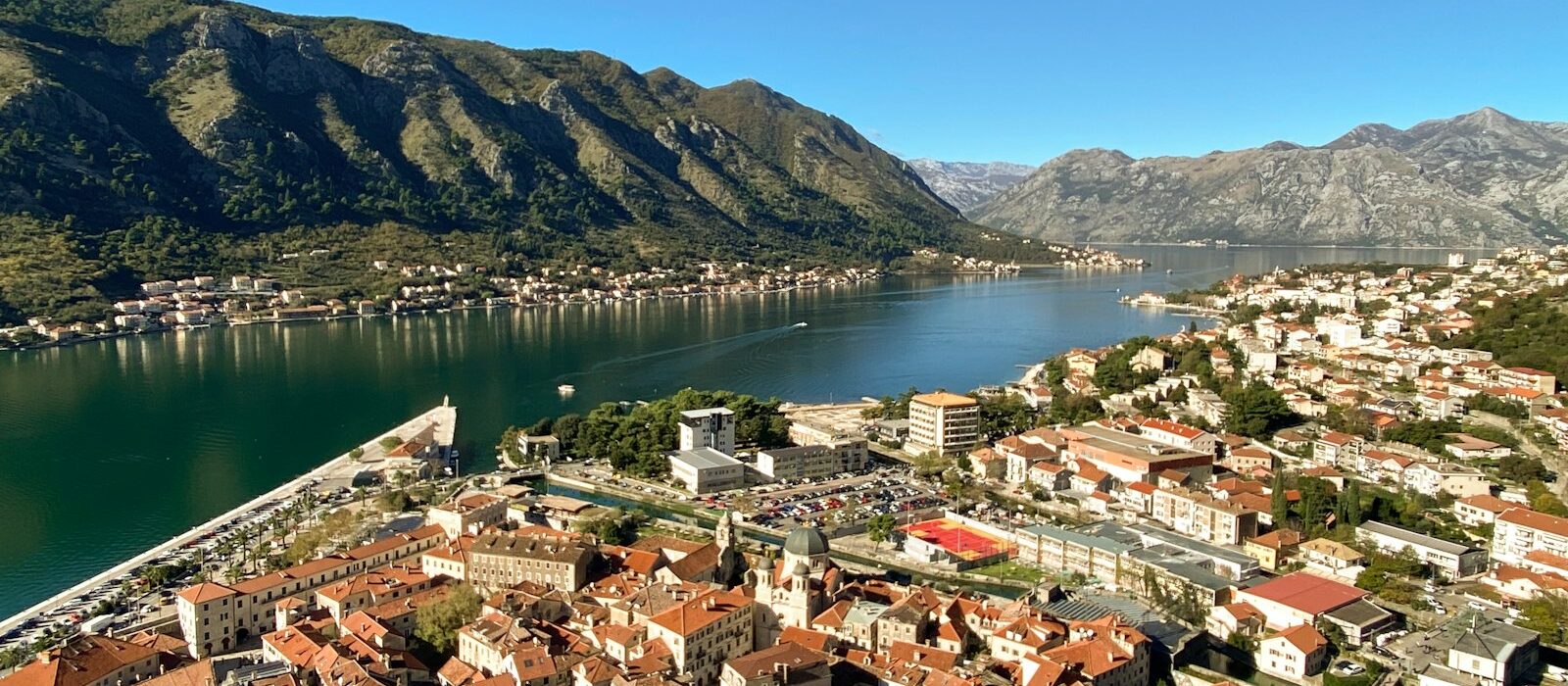
Two water features shape the map in the south. The Bay of Kotor is a fjord-like inlet that cuts deep into the shoreline, and Lake Skadar, one of the largest lakes in the Balkans, spreads across the frontier with Albania. Podgorica sits in the central lowlands, inland from the coast, and most visitors reach the rest of the country from there or from the seaside airports.
The country divides naturally into three zones. The Adriatic coast runs from Herceg Novi in the northwest to Ulcinj near the Albanian border, with Kotor, Budva and Bar in between. The central basin around Podgorica and Lake Skadar forms the low, warm heart of the country, and the north is a plateau of high ranges, canyons and forest that holds Durmitor, Biogradska Gora and the mountain towns of Žabljak and Kolašin. Distances are short, so the coast and the mountains can be combined in a single trip; our guide to getting around Montenegro explains the options, and the page on flights to Montenegro covers the two international airports at Podgorica and Tivat.
Introduction to Montenegro
Montenegro packs Adriatic beaches, walled medieval towns, glacial lakes and deep canyons into a country smaller than many European regions. Travellers come for the Bay of Kotor, the old town of Budva and the mountain scenery of Durmitor National Park, with the coast and the peaks often only a few hours apart.
Last checked: November 2026
Two areas carry World Heritage status. UNESCO listed the Natural and Culturo-Historical Region of Kotor in 1979, recognising a bay where Venetian-era stone towns sit directly beneath the cliffs, and it added Durmitor National Park the following year for its glacial landforms, forests and river gorges. The Tara canyon inside Durmitor is regularly described as one of the deepest in Europe, which is why rafting is among the most popular summer activities there.
Beyond those headline sites, Montenegro has five national parks in total, including Biogradska Gora with its primeval forest and the Prokletije range on the Albanian frontier. Podgorica works as the practical hub, Cetinje offers museums and the former royal quarter, and the euro is the everyday currency. Most visitors split their time between the coast and the northern mountains.
The country suits several kinds of trip. History lovers base themselves in Kotor and Cetinje, outdoor travellers head for Durmitor, the Tara canyon and Lake Skadar, and families often settle near the beaches around Budva and Bar. Our guide to the best places to visit in Montenegro compares the main destinations, the Montenegro itineraries turn them into routes of three to ten days, and the hotel guide explains where to sleep. Before you go, check the visa requirements for Montenegro and the best time to visit Montenegro.
History of Montenegro
Montenegro’s story runs from the medieval realm of Duklja through centuries of Ottoman and Venetian pressure to recognised independence in 1878, then a kingdom, then membership of Yugoslavia from 1918. A referendum in May 2006 led to the restored independence declared on 3 June of that year.
Last checked: November 2026
The territory first appears as the principality of Duklja, which broke away from Byzantine control in 1042. Later centuries were shaped by two outside powers: the Republic of Venice held the Bay of Kotor and much of the coast between 1420 and 1797, while the Ottoman Empire pressed on the interior. Highland clans around Cetinje held out, and from 1516 the prince-bishops of the town governed what became a small church-led state, passing power within the Petrović-Njegoš family.
That family turned the territory into a secular principality in 1852 and won international recognition for it at the Congress of Berlin in 1878. Nicholas I later raised the country to a kingdom in 1910. After the First World War it was absorbed into the first Yugoslavia, and after the Second World War it became one of the republics of socialist Yugoslavia. A looser state union with Serbia followed in the early 2000s, and a May 2006 referendum ended it, with independence declared on 3 June 2006.
Since independence the country has moved quickly toward Western institutions. It joined the United Nations in June 2006, became a member of NATO in 2017 and has been negotiating for membership of the European Union, while using the euro as its everyday money even though it is not part of the eurozone. Today the old Venetian towns of the bay, the royal quarter of Cetinje and the Orthodox monasteries are the most visible traces of that layered past.
Culture and Traditions of Montenegro
Montenegrin culture blends Orthodox Christian and Mediterranean influences, strong family ties and a long oral tradition of epic poetry. Visitors meet it in the kolo circle dance, the seafaring customs of the Bay of Kotor and the monasteries of the interior, while Montenegrin is the official language, written in both Latin and Cyrillic script.
Last checked: November 2026
The best-known living tradition belongs to the Boka Navy, a maritime brotherhood said to date from the year 809 in Kotor. On festival days its members put on ornate uniforms, perform the circle dance and walk in procession with the relics of Saint Tryphon, the town’s patron. UNESCO added the Boka Navy to its list of intangible cultural heritage in 2021, so the ceremony is a genuine community event rather than a staged show.
Inland, culture has long been carried by words and song. Singers accompany heroic stories on the one-stringed gusle, and the national poet Petar II Petrović-Njegoš gave the country its defining literary work, The Mountain Wreath, in 1846. His tomb on Mount Lovćen is still a pilgrimage site for Montenegrins. Most residents belong to the Orthodox Church, religious holidays are observed seriously, and family gatherings sit at the centre of social life, so guests who are invited to a home should expect generous hosting.
Language reflects the country’s mixed history. Montenegrin is the official language, while Serbian, Bosnian, Albanian and Croatian are also in official use, and English is often spoken in tourist areas. Orthodox Christians are the largest community, alongside Muslim communities in towns such as Ulcinj, Plav and Rožaje and Catholic communities around the Bay of Kotor. National holidays include Independence Day on 21 and 22 May and Statehood Day on 13 and 14 July, when towns hold public events.
Food and Cuisine of Montenegro
Montenegrin food combines mountain and sea: smoked ham, cheeses and hearty cornmeal dishes inland, and garlicky seafood, black risotto and lake carp along the coast and around Lake Skadar. Njeguški pršut and kačamak are the dishes most closely tied to the national table.
Last checked: November 2026
The highland kitchen is built on dairy, grain and cured meat. Njeguški pršut is a dry-cured, smoked ham from the village of Njeguši above the Bay of Kotor, usually sliced thinly and served with local cheese and olives. Kačamak is a dense porridge of cornmeal and potato finished with cheese or kajmak, a layered cream cheese, while cicvara is a similar cornmeal-and-cheese porridge eaten for breakfast. Raštan, a dark leafy cabbage, is stewed with smoked meat in colder months, and njeguški stek wraps ham and kajmak inside a breaded cutlet.
The coast cooks the opposite way, with olive oil, wine and fresh catch. Buzara is shellfish or prawns simmered in garlic and wine, brodet is a fish stew served with polenta, and crni rižot gets its colour from squid ink. Around Lake Skadar the speciality is smoked carp, often paired with a salad and bread. For something sweet, order priganice, small fried dough balls that arrive with honey. Local wine and rakija, a fruit brandy, usually come with the meal, and restaurants in every region tend to serve generous portions meant for sharing.
Wine and coffee round out the table. Montenegrin wine centres on two local grapes, the red Vranac and the white Krstač, and many restaurants pour them alongside rakija. Coffee is taken slowly, and a long lunch is the usual way to spend a midday. Ask for the day’s fish or the house cheese rather than sticking to a set menu, as small family kitchens tend to cook whatever is freshest.
Explore Montenegro Travel Guides
Explore our detailed guides to plan every part of your Montenegro trip.
Montenegro: Best Places
A grouped guide to Montenegro's best places: Kotor, Perast, Budva, Durmitor, Lake Skadar and more, with time needed and who each suits.
View Guide ›Montenegro: Best Time to Visit
Month-by-month weather in Montenegro, regional climate differences and the best season for beaches, hiking, rafting and skiing.
View Guide ›Montenegro: Flights
How to fly to Montenegro: the airports at Podgorica and Tivat, airlines and connection options, arrival tips and a short checklist to...
View Guide ›Montenegro: How to Get Around
How to travel inside Montenegro by bus, train, car and ferry, with realistic journey times, driving rules, ticket tips and the best...
View Guide ›Montenegro: Itineraries
Ready-made Montenegro routes for 3, 5, 7 and 10 days, from Kotor and Cetinje to Lake Skadar and Durmitor, with overnight bases...
View Guide ›Montenegro: Visa
Who can enter Montenegro without a visa, how long you can stay, which documents to carry and how short-stay visas are requested.
View Guide ›Montenegro: Hotels
Where to stay in Montenegro: the best coastal and mountain bases, hotel types for every budget, booking considerations and what to know...
View Guide ›Explore Montenegro Tours
Discover guided tours and adventures in Montenegro. Compare itineraries, prices and traveller reviews on TourRadar before you book.
Guided tours & deals
Affiliate partner · Globe Navo may earn a commission from qualifying bookings at no extra cost to you.
❓ Montenegro FAQ
What is the capital of Montenegro?
Podgorica is the administrative capital and largest city, lying in the central lowlands. Cetinje, in the old heartland near Mount Lovćen, keeps the title of old royal capital and is a popular day trip from the coast.
Where is Montenegro located?
Montenegro lies in Southeastern Europe on the Balkan Peninsula, with a coast on the Adriatic Sea. It borders Croatia, Bosnia and Herzegovina, Serbia, Kosovo and Albania, and Italy lies across the water to the southwest.
Does Montenegro use the euro?
Yes. The euro is the everyday currency in Montenegro, even though the country is not a member of the eurozone. Carrying some cash is still useful for small cafes, parking and villages away from the coast.
What language is spoken in Montenegro?
Montenegrin is the official language, written in both Latin and Cyrillic script. Serbian, Bosnian, Albanian and Croatian are also in official use, and English is often spoken in hotels, restaurants and other tourist areas.
When did Montenegro become independent?
Montenegro declared restored independence on 3 June 2006, after a referendum in May of that year ended its state union with Serbia. The country joined the United Nations the same month and became a NATO member in 2017.
Plan Your Trip to Montenegro
Your Next Adventure in Montenegro Awaits!
Explore Deals →🎁 Best deals for Montenegro
Offers from trusted travel stores for your Montenegro trip. Compare a few options before you book, and check each store's terms for the final price.
Browse by type: Hotel deals · Flight deals · Travel eSIM · Car rental
More destinations to explore
Guinea-BissauDiscover Guinea-Bissau: where this small West African country sits on the Atlantic coast, plus…
 ChadSafety notice: official advisories warn against travel to Chad. The US Department of State…
 CyprusCyprus travel guide covering where the island is, how it is governed, its history,…