 AlgeriaAlgeria travel guide to its location, history, culture and food, with links to visa,…
DESTINATION
Chad
📅 Last updated:
🌍 Quick Facts

Chad at a glance
Capital: N'Djamena
Currency: Central African CFA franc (XAF)
Language: French, Arabic
Population: About 21.6 million (UN estimate, 2026)
Time zone: West Africa Time (UTC+1)
Calling code: +235
Internet domain: .td
Main airport: N'Djamena Hassan Djamous International Airport (NDJ)
Best time to visit: November to April (dry season)
📍 Chad Map
🖼️ Chad: Location, History, Culture & Food
✨ Complete Travel Guide
Safety notice: official advisories warn against travel to Chad. The US Department of State rates Chad Level 4, Do Not Travel (advisory issued 28 April 2026), citing crime, terrorism, unrest, inadequate health infrastructure, kidnapping and landmines. The UK Foreign, Commonwealth and Development Office (FCDO) advises against all travel to parts of Chad, including the northern provinces of Borkou, Ennedi Ouest, Ennedi Est and Tibesti, and the Lake Chad region. Landmines are also a risk in Sila and Moyen-Chari provinces. Read the current US State Department advisory and UK FCDO travel advice before making any plans. Travelling against official advice can invalidate travel insurance.
Where Is Chad Located?
Chad is a landlocked country in north-central Africa, covering about 1.28 million square kilometres. This Chad travel guide starts with its position: Libya lies to the north, Sudan to the east, the Central African Republic to the south, Cameroon and Nigeria to the southwest, and Niger to the west.
Last checked: November 2026
The United Nations places Chad in Middle Africa, although much of the country belongs to the Sahara and the Sahel. People often assume it is a West African state because of its western neighbours.
Chad has no coastline. The capital, N’Djamena, sits on the Chari River close to the Cameroon border, and it is the only city with an international airport. Chad uses West Africa Time (UTC+1) all year and does not change its clocks.
The land divides into climate zones that follow the rainfall:
- Saharan north: under 200 millimetres of rain a year, with desert plains and mountains.
- Sahelian belt: roughly 200 to 600 millimetres, with dry grassland and scattered trees.
- Sudanian south: roughly 600 to 1,000 millimetres, with savanna, farmland and the main rivers.
The highest point is Emi Koussi in the Tibesti range, at about 3,400 metres. The Ennedi Plateau and the Ouaddai highlands rise in the east. The Chari and Logone rivers flow north from the south and supply most of the water that reaches Lake Chad. That lake has shrunk sharply since the 1960s and is now far smaller than older maps suggest.
Distance and weather shape every plan here. The month-by-month guide to the best time to visit Chad explains how the seasons change the roads, and the guide to getting around Chad covers the few routes that work.
Chad Travel Guide: Introduction to the Country
Chad is a presidential republic with N’Djamena as its capital. French and Arabic are the official languages, and the currency is the Central African CFA franc (XAF). About 21.6 million people live in Chad as of 2026, according to United Nations estimates.
The country is known for three things. Zakouma National Park, in the south-east, is one of the best-known conservation recoveries in Central Africa. The Sahara in the north holds two UNESCO World Heritage properties, the Lakes of Ounianga and the Ennedi Massif. And the Djurab Desert is where the skull of Toumai, one of the oldest known hominid fossils, was found.
Chad is also very young. The median age is about 15.7 years, and fewer than a quarter of people live in cities. The figure of about 1.9 million for N’Djamena is a city estimate for 2025, so it should not be mixed up with the national total. Abéché, Moundou and Sarh are the next largest urban areas, each with a few hundred thousand people.
Visitors should know that tourism infrastructure is thin. Most trips are arranged through a specialist operator, and the country is not a place for improvised travel. Entry rules matter first, so start with the Chad visa guide and the page on flights to Chad. For ideas on how a trip is usually built, see the Chad itineraries.
History of Chad: From Early Settlement to Today
People have lived in what is now Chad for millions of years. The fossil Toumai dates to about 6 to 7 million years ago, Islamic kingdoms ruled around Lake Chad by the 16th century, and France held the territory until independence on 11 August 1960. Conflict and coups have marked much of the period since.
Early settlement and Toumai
Between July 2001 and March 2002, a team led by Michel Brunet found fossils at Toros-Menalla in the Djurab Desert. The species was named Sahelanthropus tchadensis and announced in 2002. Scientists date it to roughly 6 to 7 million years ago, and the find pushed back the timeline of human evolution in Africa.
Kingdoms around Lake Chad
Islam reached the region from about the 11th century. By the 16th century, three Muslim kingdoms had grown around the lake: Kanem-Bornu, Baguirmi and Ouaddai. They controlled trade routes across the Sahel and competed for power for hundreds of years. The warlord Rabih al-Zubayr conquered much of the area in the 1890s, until French forces defeated and killed him at Kousseri on 22 April 1900.
French colonial rule
France created the Military Territory of Chad on 5 September 1900. The territory joined French Equatorial Africa in 1910 and became a separate colony on 17 March 1920. Chad turned into an overseas territory on 27 October 1946 and a republic within the French Community on 28 November 1958.
Independence and conflict
Chad became independent on 11 August 1960 under its first president, François Tombalbaye, who later took the name Ngarta. Rebellion began in 1966 with the FROLINAT movement. Tombalbaye was killed in a coup in 1975, and Libya occupied the Aouzou Strip in 1977. The International Court of Justice settled that dispute in 1994.
Hissène Habré seized power in June 1982. Idriss Déby overthrew him in December 1990, and Habré fled to Senegal. A special court in Dakar, the Extraordinary African Chambers, sentenced Habré to life imprisonment on 30 May 2016.
Chad since 1990
Idriss Déby ruled for 30 years and died on 20 April 2021 after fighting between the army and rebels in the north. His son, Mahamat Déby, took over as head of a military council. Voting took place on 6 May 2024, and the electoral agency declared Mahamat Déby the winner with 61.3 percent of the vote. His main rival, Succès Masra, disputed the result. Déby was sworn in on 23 May 2024. In October 2025, parliament approved a constitutional change that lengthened presidential terms from five to seven years.
The sites linked to this history are the subject of the guide to the best places to visit in Chad. The embassy of Chad in the United States also publishes a short official history.
Culture of Chad: Languages, Religion and Everyday Life
Chad has about 200 ethnic groups and more than 130 languages. French and Arabic are official, and Chadian Arabic works as a common language in many markets. Islam is the largest religion, followed by Christianity, with Muslims mainly in the north and Christians mainly in the south.
Language
French is used in government, schools and business. Arabic is the second official language, and the Chadian dialect differs from the Arabic of the Middle East. In practice, most people speak at least one local language at home, such as Sara in the south or Kanembu around the lake. Learning a few greetings in French or Arabic goes a long way.
Religion
The 2014 to 2015 census, as cited in a US State Department religious freedom report, counted 52.1 percent Muslim, 23.9 percent Protestant and 20 percent Roman Catholic. Smaller groups reported no religion or traditional beliefs. Most Muslims belong to the Sufi Tijaniyah order. Local customs often blend with these faiths, especially in the south.
Festivals
Independence Day on 11 August is the main national holiday. Eid al-Fitr and Eid al-Adha follow the Islamic calendar, so shops and offices may close on changing dates. During Ramadan, daytime dining is quiet in Muslim areas.
The Gerewol is a courtship festival of the Wodaabe, a Fulani herding people. Men wear makeup and elaborate dress, dance in lines, and young women choose the winners. It takes place at the end of the rainy season, and the Chadian gatherings are small and set locally each year. It is often confused with Niger’s Cure Salée, which is a separate event held in Niger.
Clothing, music and arts
Dress is modest, and the expectation is stricter for women. Many women wear a loose top with a wrapped pagne skirt in woodblock-print, batik or tie-dye cloth. Dance, song and costume differ by ethnic group, and the Wodaabe men’s dance at the Gerewol is the best-documented example.
Etiquette
Greetings are long and take priority over any request. Use the right hand to give, receive and eat, and show respect to elders. Accept tea if it is offered. The evening meal is often shared from one large dish, and men and women may eat separately.
Ask before photographing people. Chadian rules restrict photography of military sites, official buildings, airports and public monuments, and a permit is needed in many cases. Same-sex relations are illegal under Chadian law.
Chad Food: Staples, Signature Dishes and Drinks
Chadian food is built on millet, sorghum and maize, eaten with a sauce or stew. A thick porridge called boule is the everyday base. Cooks flavour dishes with okra, tomatoes, peanuts, dried fish and meat, and the southern and northern kitchens differ noticeably.
Staples
Boule is the starch at most meals. People pinch off a piece with the right hand, roll it, and dip it in the sauce. Rice and maize appear more often in towns. In the south, red beans and fresh produce are common because the rainfall is higher.
Signature dishes
- Boule: a thick porridge of millet, sorghum or maize, served with sauce.
- Daraba: a stew of okra, tomatoes, sweet potato, greens and peanut butter.
- Jarret de boeuf: a beef and vegetable stew simmered for at least two hours.
- Kisser: a sourdough crêpe, often eaten with a sauce.
- Esh: boiled millet flour with a sauce, typical of the northern Arab communities.
- Aiyash: millet balls dipped in sauces, eaten by Chadian Arabs.
- Okra stew: a thick gumbo-style dish, often served with boule.
- Squash and peanut stew: a mild stew thickened with ground peanuts.
Street food
Roadside stalls grill goat and chicken over charcoal. Cooks also sell millet pancakes and fried millet balls. Some stalls offer toasted termites or crickets as a snack.
Drinks
Tea is the most common drink. Karkanji is a red tea of dried hibiscus with ginger, clove, cinnamon and sugar, served hot or cold. Bili-bili is a millet beer, and Gala is a local lager. Both are drunk mainly by non-Muslims, since many Chadians do not drink alcohol. Another popular drink blends mango juice with milk, sugar and cardamom.
Desserts
Sweet bouillie is a porridge of rice or millet with sugar, sometimes with peanuts, coconut or tamarind. Dates, raisins and fresh mango are the usual way to end a meal.
Northern cooking leans on milk and meat, a legacy of nomadic Arab and Toubou herders. The south has more fish from the rivers, including tilapia and catfish. Most visitors eat at their hotel or camp, so it helps to check where to stay in Chad and what meals are included.
Explore Chad Travel Guides
Explore our detailed guides to plan every part of your Chad trip.
Chad: Best Places
Zakouma National Park is Chad's main visitor destination. See which places are open, which UNESCO sites lie in advisory areas, and when...
View Guide ›Chad: Best Time to Visit
Chad's dry season runs November to April, with cool nights from December to February. See the month-by-month weather and the Zakouma season.
View Guide ›Chad: Itineraries
Plan 5, 7 or 10 days in Chad around N'Djamena and Zakouma National Park, with charter and road options, travel times and...
View Guide ›Chad: Visa
Chad requires a visa for most visitors, applied for online before travel. See who needs one, passport and yellow fever rules, and...
View Guide ›Chad: Flights
Fly into N'Djamena, Chad's only international airport. See airlines, typical routes, airport transfers and a pre-flight checklist.
View Guide ›Chad: Getting Around
Chad has no railway and few paved roads. See charter flights, 4x4 road travel, driving rules, taxis and realistic travel times.
View Guide ›Chad: Hotels
Hotels in N'Djamena and camps in Zakouma National Park, with notes on security, payment, families, meals and how to confirm the real...
View Guide ›Explore Chad Tours
Discover guided tours and adventures in Chad. Compare itineraries, prices and traveller reviews on TourRadar before you book.
Guided tours & deals
Affiliate partner · Globe Navo may earn a commission from qualifying bookings at no extra cost to you.
❓ Chad FAQ
Is Chad in West Africa or Central Africa?
The United Nations places Chad in Middle Africa, which is another name for Central Africa. Geographically it also belongs to the Sahara and the Sahel, which is why it is sometimes grouped with West African states. It borders Niger, Nigeria and Cameroon.
Why is Lake Chad shrinking?
Lake Chad has lost much of its area since the 1960s, mainly because of long dry spells and growing use of water from the Chari and Logone rivers that feed it. Four countries share the lake: Chad, Niger, Nigeria and Cameroon. Its size also varies from season to season.
What is the currency of Chad?
Chad uses the Central African CFA franc, abbreviated XAF. It is shared with several neighbouring countries and is pegged to the euro at a fixed rate of 655.957 francs to one euro. Cash is widely used, and few places accept cards.
Does Chad have a coastline?
No. Chad is landlocked, and the nearest ocean is the Atlantic, reached through neighbouring countries. Trade often moves through Cameroon, and an oil pipeline built in 2003 runs from the Doba fields in southern Chad to the Cameroonian coast at Kribi.
What does the flag of Chad look like?
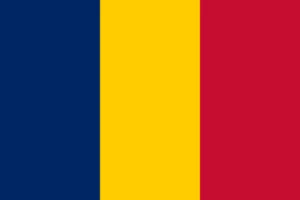
The flag has three vertical stripes in blue, yellow and red. It looks almost the same as the flag of Romania, and similar to those of Andorra and Moldova. Chad adopted its flag in 1959, shortly before independence on 11 August 1960.
Plan Your Trip to Chad
Your Next Adventure in Chad Awaits!
Explore Deals →🎁 Best deals for Chad
Offers from trusted travel stores for your Chad trip. Compare a few options before you book, and check each store's terms for the final price.
Browse by type: Hotel deals · Flight deals · Travel eSIM · Car rental
 SimOptionsFind the latest SimOption promo code and coupon code for travel eSIM data plans. See how to apply an offer at checkout, fix common code errors and stay connected abroad.
Get Coupon View Deal
 KkdayFind current Kkday coupons and deals for tours, attraction tickets, transport and first app orders. See minimum spend, discount caps and exclusions before you book.
Get Coupon View Deal
 eSIMFOXeSIMFOX is a travel eSIM provider offering prepaid mobile data plans for single countries and wider regions, delivered digitally so you can connect as soon as you land.
Get Coupon View Deal
 QuibityQuibity is a travel eSIM provider that lets you buy a mobile data plan online and activate it on your phone, so you can get connected abroad without a physical SIM card.
Get Coupon View Deal
 ExpediaDiscover great deals on hotels, flights, vacation packages, car rentals, and activities with Expedia. Compare travel options and plan your next trip with convenient booking choices.
Get Coupon View Deal
 KlookKlook is a travel activities platform where you can book attraction tickets, tours, day trips, transport passes, airport transfers and local experiences in destinations worldwide.
Get Coupon View Deal
 Trip.comTrip.com is a global online travel platform for flights, hotels, train tickets, airport transfers, attraction tickets and travel packages, available on web and mobile app.
Get Coupon View Deal
 TourRadarTourRadar is an online marketplace for multi-day guided tours, small-group trips and tailor-made journeys offered by independent tour operators around the world.
Get Coupon View Deal
More destinations to explore
AlgeriaAlgeria travel guide to its location, history, culture and food, with links to visa,…
 AzerbaijanAzerbaijan is a South Caucasus country on the Caspian Sea, known for Baku’s Old…
 MyanmarMyanmar is a Southeast Asian country between India, China and Thailand, with a long…