 CameroonCameroon at a glance: where it is, what it is known for, its history,…
DESTINATION
Guinea-Bissau
Discover Guinea-Bissau: where this small West African country sits on the Atlantic coast, plus its history, culture and signature local food.
📅 Last updated:
🌍 Quick Facts

Guinea-Bissau at a glance
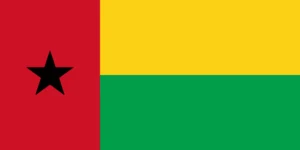
Capital: Bissau
Currency: West African CFA franc (XOF)
Language: Portuguese (official), Crioulo
Population: About 2.1 million
Time zone: UTC (GMT)
Calling code: +245
Internet domain: .gw
Main airport: Osvaldo Vieira International Airport (OXB), Bissau
Best time to visit: November to April (dry season)
📍 Guinea-Bissau Map
🖼️ Guinea-Bissau: Location, History, Culture & Food
✨ Complete Travel Guide
Safety Notice: The US Department of State rates Guinea-Bissau Level 3, Reconsider Travel, citing unrest, inadequate health infrastructure and landmines. Read the current official advice in our Guinea-Bissau visa guide before you plan.
Where Is Guinea-Bissau Located?
Guinea-Bissau is a small country in West Africa on the Atlantic coast. It is bordered by Senegal to the north and Guinea to the east and south, with the Atlantic Ocean to the west. Its capital, Bissau, lies on the coast, and the Bijagós Archipelago sits just offshore.
Last checked: November 2026
The country covers about 36,125 square kilometres, of which roughly 28,120 are land and the rest water, which makes it one of the smaller nations on the African continent. Its name includes the capital, Bissau, a detail added after independence so travellers and officials would not confuse it with the neighbouring Republic of Guinea.
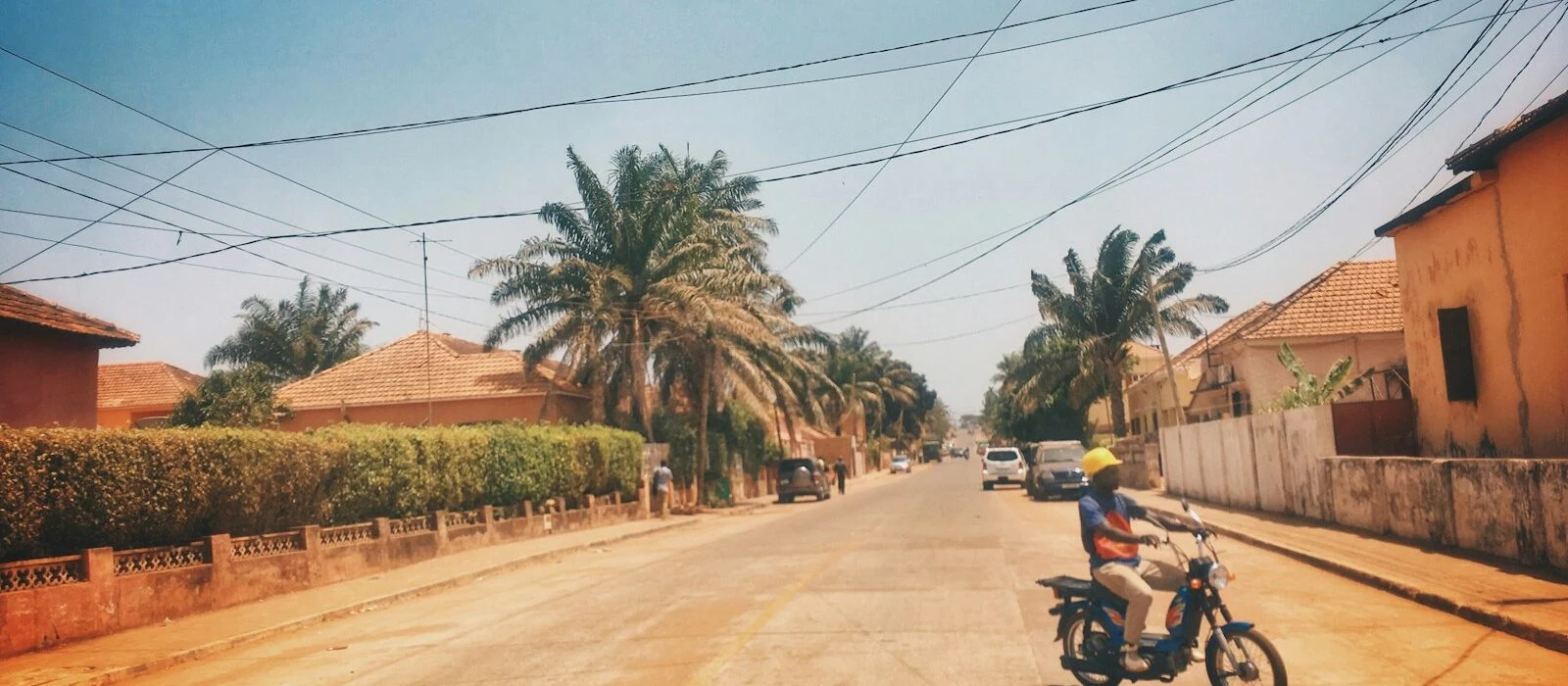
The landscape is mostly low and flat. The coast is deeply cut by wide river estuaries and fringed with mangrove swamps, while the interior rises gently into savanna toward the east. Because so much of the land lies close to sea level, rivers and tidal channels shape daily life, farming and travel across the country.
Offshore, the Bijagós Archipelago stretches along the coast as a chain of about eighteen main islands and many smaller islets. The archipelago is recognised as a UNESCO Biosphere Reserve, and it is known for its beaches, marine life and traditional island cultures. Administratively, Guinea-Bissau is divided into eight regions, with Bissau forming its own autonomous sector.
If you’re planning a trip, start with our guide to the best places to visit in Guinea-Bissau. The islands, the old river towns and the capital are all spread out, and most journeys take longer than the map suggests. Our getting around guide explains the ferries, shared taxis and road conditions in plain terms, and the flights guide covers the only international airport, in Bissau.
Introduction to Guinea-Bissau
Guinea-Bissau is a small West African republic of roughly two million people, with Bissau as its capital and largest city. Portuguese is the official language, while Crioulo, a Portuguese-based creole, works as the everyday common tongue. The currency is the West African CFA franc (XOF).
Last checked: November 2026
The country is a semi-presidential republic that became independent from Portugal in 1974. Since then it has gone through considerable political and military upheaval, a background that travellers should keep in mind when reading current official advice before a trip.
The population is young and ethnically varied. Roughly 60 percent of people are under 25, and the main groups are the Balanta, Fulani, Manjaco, Mandinga and Papel. Alongside Crioulo and Portuguese, languages such as Pular, the Fula language, and Mandingo are widely spoken.
Religion is similarly mixed: estimates put Muslims at about 46 percent, followers of folk religions at about 31 percent and Christians at about 19 percent. About one fifth of the population lives in Bissau, while the rest is spread across predominantly rural regions, which gives much of the country a quiet, village-based character.
Practical details matter here more than in most countries. British and US travellers need a visa, and the rules differ by passport, so read our visa guide before you book. Hotels are limited and simple, which is why it helps to look at where to stay in Guinea-Bissau early. Honestly, a little planning goes a long way.
History of Guinea-Bissau
Guinea-Bissau was a Portuguese colony for centuries and became independent in 1974 after a long armed struggle led by the PAIGC movement. The country declared independence on 24 September 1973, and Portugal recognised it on 10 September 1974. Since then its history has been marked by political and military upheaval.
Last checked: November 2026
Before European contact, the area was part of the Mali Empire and later the Kaabu Kingdom. Portuguese navigators began exploring the rivers of this coast in the 15th century, and the territory eventually became known as Portuguese Guinea. For a long time, Portuguese presence was concentrated in coastal trading posts rather than the interior.
In 1956, Amílcar Cabral and other nationalists founded the African Party for the Independence of Guinea and Cape Verde, known as the PAIGC. Its guerrilla campaign against Portuguese rule grew through the 1960s, and by the early 1970s it held large parts of the countryside while Portuguese forces were mostly confined to towns and fortified bases. Cabral was assassinated in Conakry in January 1973, a few months before independence was declared.
Portugal’s Carnation Revolution of April 1974 paved the way for formal recognition that September. Luís Cabral, half-brother of Amílcar, became the first president, and the name of the capital was added to the country’s name to avoid confusion with neighbouring Guinea. A coup in 1980 ended the first government, and the decades since have brought repeated changes of power, which is why visitors are wise to read current official travel advice and our Guinea-Bissau visa guide before booking.
That past is still easy to see on the ground. Cacheu, with its old fort, and Bolama, the colonial capital until 1941, are two of the places where the colonial era feels closest. If history is your main reason for coming, our itinerary guide shows how to fit them into a realistic route.
Culture and Traditions of Guinea-Bissau
Guinea-Bissau’s culture blends many ethnic traditions with a Portuguese-influenced Creole identity. Music, dance, masks and community ceremonies are central to social life. The best-known cultural event is the annual Carnival, held in February, mainly in Bissau and on the Bijagós Archipelago.
Last checked: November 2026
Carnival brings together communities from different regions for several days of parades, drumming and dance. Handmade masks and costumes can depict almost any subject, and the celebration mixes African and Portuguese traditions. Independence Day on 24 September is another important national date, marking the 1973 declaration of independence.
Music is the country’s most visible art form. Gumbé is the signature genre and fuses several folk traditions, while the calabash is a main instrument in fast, rhythmically complex dance music. Other styles include tina, tinga and kussundé, and instruments such as the kora and balafon accompany ceremonies and storytelling.
The Bijagós people of the archipelago maintain especially distinctive customs. Their society is notably matrilineal, initiation ceremonies mark the passage between life stages, and carved wooden masks and figures are used in sacred rituals. Visitors should ask permission before photographing ceremonies or sacred places, and should follow local guidance on what may be seen or entered.
Timing a trip around Carnival changes everything. It’s loud, colourful and unforgettable, but it also means fuller guesthouses and slower transport in Bissau. Our best time to visit guide explains when the dry season starts, how weather differs between the coast and the interior and how Ramadan can affect opening hours. Dress modestly in towns, and always ask before photographing people.
Food and Cuisine of Guinea-Bissau
Guinea-Bissau’s cooking is built around rice, fish, peanuts and palm oil. Stews served with rice are the everyday standard, and caldo de mancarra, a peanut stew, is the dish most often named as the country’s signature. Cashew, the main export crop, also shapes local drinks and snacks.
Last checked: November 2026
The long Atlantic coast makes fish and shellfish staples, usually grilled or stewed. Peanuts, known locally as mancarra, arrived through the Portuguese and now appear in many family recipes. Meals are often shared from a common dish, and chilli, onion, garlic and palm oil are common seasonings.
Signature dishes to look for include:
- Caldo de mancarra: a thick peanut stew made with chicken, fish or shrimp and served over rice.
- Caldo branco: a fish stew often described as a national dish, with vegetables such as okra or cassava.
- Caldo de tchebem (chabéu): a palm-based stew eaten with rice.
- Jollof rice: rice cooked with palm oil, tomato and onion, popular at celebrations.
- Yassa: chicken or fish in a tangy mustard-and-lemon onion sauce.
- Calulu: a fish stew similar to others across West Africa.
- Millet couscous: a grain dish served with sauces.
- Dried fish: a common ingredient and preserved staple.
- Abacate recheado com atum: avocado stuffed with tuna, usually served as a starter.
- Raivas: a pastry of Portuguese origin sold in local bakeries.
Palm wine is served at weddings and other ceremonies, while cashew apples are turned into juice, wine and a stronger spirit. Fresh cashew juice is seasonal, so availability depends on the time of year.
Eating out is simple in most places. Look for small family restaurants and market stalls, where a plate of rice with stew is the standard meal, and order fish when you’re near the coast. Meals can take a while to arrive, so be patient. If you have dietary needs, say so early and clearly.
Explore Guinea-Bissau Travel Guides
Explore our detailed guides to plan every part of your Guinea-Bissau trip.
Guinea-Bissau: Best Places
Discover the best places to visit in Guinea-Bissau, from the Bijagós islands and turtle beaches to Cacheu, Bolama and Bafatá, with time...
View Guide ›Guinea-Bissau: Best Time to Visit
Find the best time to visit Guinea-Bissau: dry and rainy seasons, month-by-month conditions, coast versus interior, Carnival, Ramadan and what each season...
View Guide ›Guinea-Bissau: Flights
Plan your flight to Guinea-Bissau: Osvaldo Vieira International Airport in Bissau, airlines reported on the route, connections via Lisbon, Casablanca and Dakar,...
View Guide ›Guinea-Bissau: Getting Around
Learn how to get around Guinea-Bissau: shared taxis, ferries to the Bijagós, car rental and driving rules, road conditions, realistic journey times...
View Guide ›Guinea-Bissau: Itineraries
Realistic Guinea-Bissau itineraries for 3, 5, 7 and 10 days, with routes from Bissau to Bafatá, Cacheu and Bubaque, overnight stops, travel...
View Guide ›Guinea-Bissau: Visa
Guinea-Bissau visa guide: what US and UK government advice says about visas, passports and yellow fever certificates, and how to confirm the...
View Guide ›Guinea-Bissau: Hotels
Choose where to stay in Guinea-Bissau: the best areas in Bissau, Bubaque and inland towns, budget, mid-range and upscale options, halal-friendly tips...
View Guide ›Explore Guinea-Bissau Tours
Discover guided tours and adventures in Guinea-Bissau. Compare itineraries, prices and traveller reviews on TourRadar before you book.
Guided tours & deals
Affiliate partner · Globe Navo may earn a commission from qualifying bookings at no extra cost to you.
❓ Guinea-Bissau FAQ
Where is Guinea-Bissau located?
Guinea-Bissau is a small country on the Atlantic coast of West Africa. It borders Senegal to the north and Guinea to the east and south. It should not be confused with Guinea or Equatorial Guinea, which are separate countries.
What is the capital of Guinea-Bissau?
The capital and largest city is Bissau, on the Atlantic coast. About one fifth of the population lives there. The city is the country’s political and commercial centre, and it is where Carnival is celebrated each February.
What languages are spoken in Guinea-Bissau?
Portuguese is the official language, but Crioulo, a Portuguese-based creole, is the common everyday language. Pular, Mandingo and several other local languages are also widely spoken, reflecting the country’s varied ethnic groups.
When did Guinea-Bissau become independent?
Guinea-Bissau declared independence from Portugal on 24 September 1973, which is celebrated as Independence Day. Portugal formally recognised it on 10 September 1974 after the Carnation Revolution. Luís Cabral became the first president.
What is traditional food like in Guinea-Bissau?
Meals are built around rice, fish, peanuts and palm oil. Caldo de mancarra, a peanut stew, is the best-known dish, alongside caldo branco, jollof rice and yassa. Palm wine and cashew wine are common drinks.
Plan Your Trip to Guinea-Bissau
Your Next Adventure in Guinea-Bissau Awaits!
Explore Deals →🎁 Best deals for Guinea-Bissau
Offers from trusted travel stores for your Guinea-Bissau trip. Compare a few options before you book, and check each store's terms for the final price.
Browse by type: Hotel deals · Flight deals · Travel eSIM · Car rental
More destinations to explore
CameroonCameroon at a glance: where it is, what it is known for, its history,…
 KiribatiKiribati travel guide covering where Kiribati is, its history, culture and traditions, and its…
 MoroccoMorocco is a North African kingdom of Atlantic and Mediterranean coasts, Atlas peaks, ancient…