 HungaryHungary travel guide: where the country is, its history, culture and food, from Budapest…
DESTINATION
Monaco
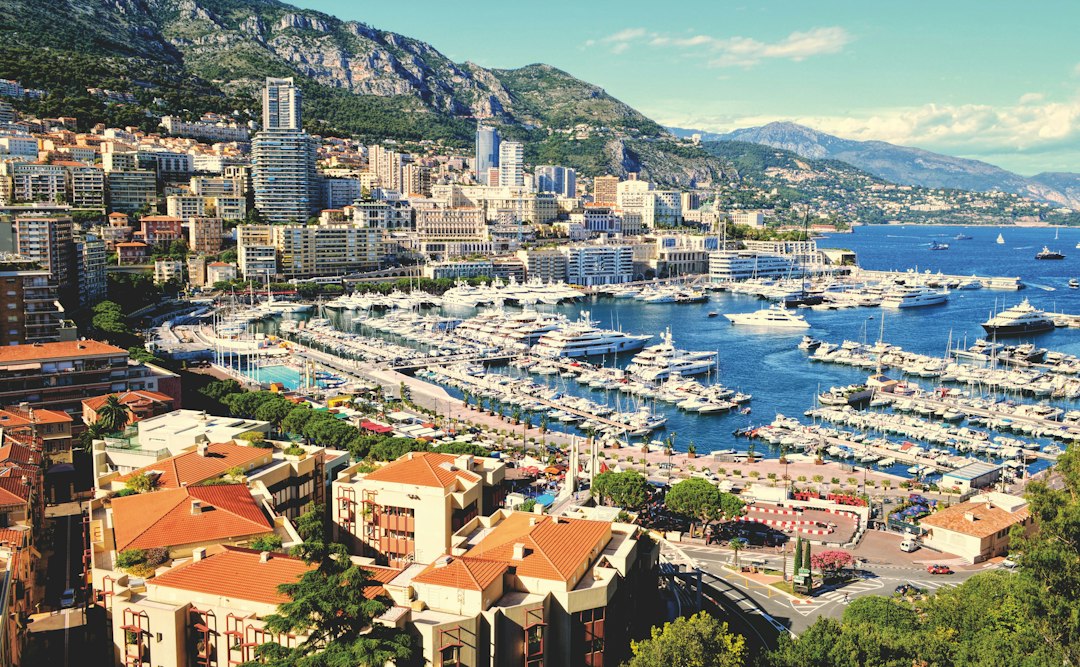
Monaco is a tiny principality on the French Riviera, known for its harbour, royal palace, Monégasque culture and Mediterranean cuisine.
📅 Last updated:
🌍 Quick Facts

Monaco at a glance
Capital: Monaco
Currency: Euro (EUR)
Language: French (official); Monégasque, Italian and English also spoken
Population: About 38,000 (2024 census)
Time zone: CET (UTC+1); CEST (UTC+2) in summer
Calling code: +377
Internet domain: .mc
Main airport: Nice Côte d’Azur Airport (NCE)
Best time to visit: May to June and September to early October; the best time varies by season
📍 Monaco Map
🖼️ Monaco: Location, History, Culture & Food
✨ Complete Travel Guide
Where Is Monaco Located?
Monaco is a sovereign city-state on the Mediterranean coast of Western Europe, in the heart of the French Riviera. France wraps around it on every land side, and the Italian border lies a short drive to the east. At roughly two square kilometres, it ranks among the smallest countries on Earth.
Last checked: November 2026
The principality sits on a narrow strip of coast at the foot of the Maritime Alps, with steep hillsides rising straight from the harbour. Its shoreline runs only about four kilometres, so almost everything you will want to see is within walking distance of the water.
Monaco is divided into districts rather than separate towns. Monaco-Ville, known as the Rock, holds the Prince’s Palace and the old quarter. Monte-Carlo is the glamorous area around the casino, while La Condamine surrounds the port and Fontvieille occupies land reclaimed from the sea.
The country has no separate countryside, so a visit feels like exploring one dense, hilly city. Neighbouring French towns such as Beausoleil and Cap-d’Ail blend into Monaco with no visible break, which is why many visitors cross the border without noticing.
Monaco’s land border with France is only a few kilometres long, and ordinary streets cross it rather than checkpoints. The principality has also grown by reclaiming land from the sea, most visibly in Fontvieille and along the Larvotto seafront, so it is larger today than it was a century ago. Nice Côte d’Azur Airport, roughly 20 kilometres away, is the closest major airport, and our guide to flights to Monaco covers the practical details. Once you are inside the country, the guide to getting around Monaco explains how the lifts, buses and trains connect its districts.
Introduction to Monaco
Monaco is a tiny constitutional monarchy on the French Riviera, ruled by the House of Grimaldi and led today by Prince Albert II. Around 38,000 people live in its two square kilometres, where a royal old town, a famous casino district and a busy harbour sit almost on top of each other.
Last checked: November 2026
French is the official language, though Italian, English and the local Monégasque dialect are all part of everyday life. The euro is the currency. Only a minority of residents hold Monégasque nationality, so the population is a mix of French, Italian, British and many other nationalities.
For travellers, the appeal is concentration. In a single day you can watch the guard at the palace, walk through terraced gardens, visit a cliffside aquarium and museum, and see the yachts lined up in Port Hercule. The country is clean, orderly and closely managed, which gives it a very different feel from the busier Riviera towns around it.
Monaco’s political system is as compact as its geography. The Prince is head of state and shares power with an elected National Council and a government led by a Minister of State, and France is responsible for the principality’s defence under long-standing treaty arrangements. For visitors, the practical result is a safe, tidy and easy-to-navigate destination. To decide what to see, start with our guide to the best places to visit in Monaco, and read the Monaco visa requirements before you book, because entry follows Schengen rules.
History of Monaco
Monaco began as a Genoese fortress in 1215, and the Grimaldi family has held power since François Grimaldi seized the Rock in 1297. Treaties with France confirmed its sovereignty in 1861, and the princes ruled absolutely until the first constitution arrived in 1911.
Last checked: November 2026
The famous story of 1297 says Grimaldi entered the fortress disguised as a Franciscan monk, with a sword hidden under his habit. Two swordbearing monks still appear on the Grimaldi coat of arms. The family later added Menton in 1346 and Roquebrune in 1355, and they held these lands for centuries, apart from a spell of French control between 1793 and 1814.
The nineteenth century reshaped everything. Menton and Roquebrune rebelled in 1848, and in 1861 Prince Charles III gave them up to France in return for a large payment and guaranteed independence, shrinking his realm dramatically. Short of income, he backed a gaming company, and the casino of Monte-Carlo opened in 1863. Its profits were so large that residents stopped paying income tax in 1869.
Political change followed in the twentieth century. Unrest in 1910 pushed Prince Albert I to grant the 1911 constitution, and a 1918 treaty tied Monaco’s foreign policy to French interests. The principality joined the United Nations as a full member in 1993.
The mid-twentieth century brought a different kind of fame. Prince Rainier III succeeded his grandfather in 1949 and married the American actress Grace Kelly in 1956, an event that made the principality a global talking point. The first Monaco Grand Prix took place in 1929, and the street circuit has remained part of the city’s identity ever since. A constitutional revision in 1962 strengthened the role of the elected National Council and abolished the death penalty. Many of these stories belong to particular places, so our Monaco itineraries show how to see the palace, casino and harbour in a sensible order.
Culture and Traditions of Monaco
Monégasque culture blends Ligurian, Provençal and French influences around a strong sense of princely heritage. Catholic feast days, the local Monégasque language, National Day on 19 November and a busy calendar of opera, ballet and motor racing all shape how the principality celebrates itself.
Last checked: November 2026
The Monégasque language is a Ligurian dialect that survives mainly through schools, street names and family use. Roman Catholicism has deep roots here, and the patron saint, Saint Devote, is honoured each January with a procession and the symbolic burning of a boat near the harbour. National Day, on 19 November, brings official ceremonies and festive food.
The arts have been a priority since the Belle Époque. The opera house inside the casino complex was designed by Charles Garnier, who also created the Paris Opéra, and the Ballets de Monte-Carlo continue the principality’s dance tradition. Prince Albert I, a pioneer of oceanography, founded the Oceanographic Museum, which still anchors the city’s scientific identity.
Etiquette is polished rather than stiff. Smart dress is expected in casinos and upscale restaurants, locals value discretion, and a courteous greeting in French goes a long way.
Public life revolves around a handful of annual events. The Monte-Carlo International Circus Festival, founded by Prince Rainier III in 1974, brings performers from around the world each winter, while the Monte-Carlo Philharmonic Orchestra and the opera keep classical music at the centre of the calendar. Motor racing, yachting and tennis add a sporting side to the national character, and the principality takes real pride in staging these occasions well. Because dates change from year to year, check our best time to visit Monaco guide when planning a trip around a festival.
Food and Cuisine of Monaco
Monégasque food is a sun-soaked mix of Ligurian and Provençal cooking built on olive oil, vegetables, fish and herbs. Barbagiuan, a fried pastry filled with Swiss chard and ricotta, is considered the national dish, while stocafi, a dried cod stew, is the classic fish speciality.
Last checked: November 2026
The cuisine grew out of fishing and small-scale farming, which is why salt cod, greens and chickpeas appear so often. Many dishes are shared with Nice and western Liguria, so you will taste familiar Riviera flavours with local touches. Traditional restaurants cluster in the old town and around the covered market in La Condamine.
Signature dishes to look for include:
- Barbagiuan: crisp fried pastry stuffed with chard and ricotta, especially popular on National Day.
- Stocafi: stockfish simmered with tomato, olives and small vegetables.
- Socca: a thin chickpea pancake, best eaten hot from a market stall.
- Pissaladière: an onion tart topped with anchovies and olives.
- Fougasse monégasque: a sweet festive bread scented with orange blossom and aniseed.
- Brandamincium: salt cod whipped with garlic, oil and cream.
- Bouillabaisse: a Mediterranean fish stew served with bread.
- Tourte aux blettes: a savoury Swiss chard pie common across the Riviera.
Bitter orange liqueur and local pastries often finish a meal. Alongside these humble classics, Monaco also has world-class fine dining, so you can eat a market snack at lunch and a tasting menu in the evening.
Dining out is part of the Monaco experience. The principality has a high concentration of fine-dining restaurants, including some with international acclaim, yet family-run places in La Condamine and the old town still serve the traditional dishes listed above. Many of the more formal restaurants sit inside the large hotels, so your choice of base can shape your meals, and our guide on where to stay in Monaco describes each district. Cafés open early for coffee and pastries, and lunch is often the best-value time to eat well.
Explore Monaco Travel Guides
Explore our detailed guides to plan every part of your Monaco trip.
Monaco: Best Places
A walkable guide to Monaco’s top sights, from the palace and Oceanographic Museum to gardens, beaches and markets, with practical visiting tips.
View Guide ›Monaco: Best Time to Visit
Month-by-month guide to Monaco’s weather, sea temperatures, events and public holidays, with advice on the best season for each travel style.
View Guide ›Monaco: Flights
Fly to Monaco via Nice Côte d’Azur Airport: how to reach the principality, transfer options, time zone and a practical pre-flight checklist.
View Guide ›Monaco: Getting Around
How to get around Monaco and the nearby Riviera: lifts, buses, the waterbus, trains, taxis, driving rules and the best option for...
View Guide ›Monaco: Itineraries
Four realistic Monaco itineraries for 3, 5, 7 and 10 days, combining the principality’s sights with easy rail day trips along the...
View Guide ›Monaco: Visa
How visitors enter Monaco: no border checks, Schengen rules applied through France, who needs a visa, and what to prepare before you...
View Guide ›Monaco: Hotels
Where to stay in Monaco by district and budget, with notes on hotel types, the local tourist tax and booking tips for...
View Guide ›Explore Monaco Tours
Discover guided tours and adventures in Monaco. Compare itineraries, prices and traveller reviews on TourRadar before you book.
Guided tours & deals
Affiliate partner · Globe Navo may earn a commission from qualifying bookings at no extra cost to you.
❓ Monaco FAQ
Where is Monaco located?
Monaco is a tiny city-state on the Mediterranean coast of Western Europe, on the French Riviera. France surrounds it on all land sides, and Italy lies a short distance to the east. It covers about two square kilometres, making it one of the smallest countries in the world.
What language is spoken in Monaco?
French is the official language and is used in government and daily life. Italian, English and the local Monégasque dialect are also heard, so visitors can usually manage in English at hotels, restaurants and shops, though a French greeting is always appreciated.
What currency does Monaco use?
Monaco uses the euro, the same currency as France. Cards are widely accepted in hotels, restaurants and shops, but it is useful to carry a little cash for small purchases such as market snacks, tips or bus fares.
What is Monaco famous for?
Monaco is famous for the Casino de Monte-Carlo, the Grand Prix street circuit, luxury yachts and the Grimaldi royal family. Visitors also come for the Oceanographic Museum, the terraced gardens and the dramatic harbour views across the principality.
What food is Monaco known for?
Traditional Monégasque food includes barbagiuan, a fried pastry filled with Swiss chard and ricotta, and stocafi, a stockfish stew. Socca, pissaladière and Mediterranean fish dishes are also common, and fine-dining restaurants sit alongside simple market stalls.
Plan Your Trip to Monaco
Your Next Adventure in Monaco Awaits!
Explore Deals →🎁 Best deals for Monaco
Offers from trusted travel stores for your Monaco trip. Compare a few options before you book, and check each store's terms for the final price.
Browse by type: Hotel deals · Flight deals · Travel eSIM · Car rental
More destinations to explore
HungaryHungary travel guide: where the country is, its history, culture and food, from Budapest…
 EswatiniEswatini is a small landlocked kingdom in southern Africa, known for wildlife reserves, royal…
 MaldivesA country overview of the Maldives: its Indian Ocean atoll geography, Islamic and island…