 FranceFrance is a Western European country known for Paris, castles, wine and food. Learn…
DESTINATION
Eswatini
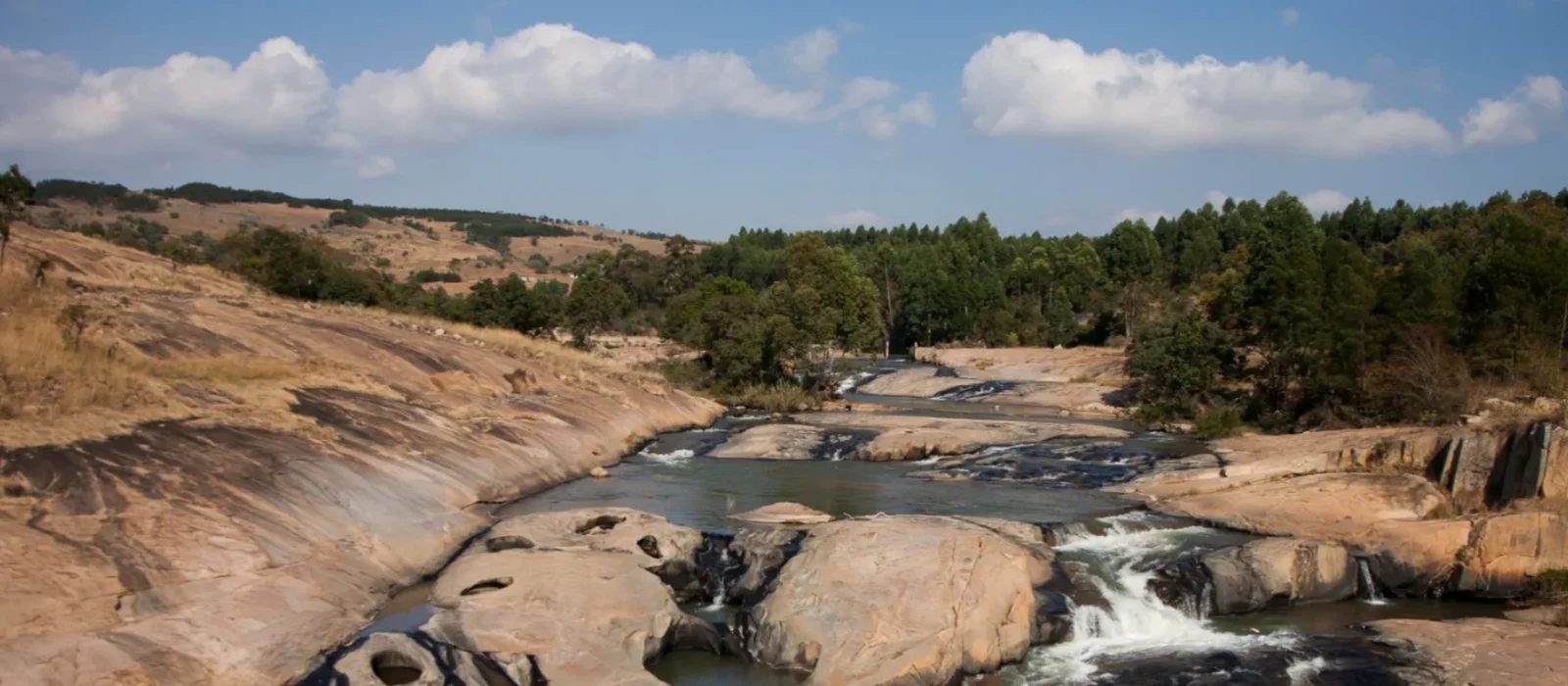
Eswatini is a small landlocked kingdom in southern Africa, known for wildlife reserves, royal ceremonies and Swazi culture.
📅 Last updated:
🌍 Quick Facts

Eswatini at a glance
Capital: Mbabane (administrative), Lobamba (royal and legislative)
Currency: Swazi Lilangeni (SZL)
Language: siSwati and English
Population: About 1.2 million (estimates vary by source)
Time zone: SAST (UTC+2)
Calling code: +268
Internet domain: .sz
Main airport: King Mswati III International Airport (SHO)
Best time to visit: May to September (dry season)
📍 Eswatini Map
🖼️ Eswatini: Location, History, Culture & Food
✨ Complete Travel Guide
Where Is Eswatini Located?
Eswatini is a small landlocked kingdom in southern Africa. South Africa surrounds it on the north, west and south, while Mozambique lies along its eastern border. Mbabane is the administrative capital, and Lobamba is the royal and legislative capital.
Last checked: November 2026
The country covers about 17,364 square kilometres, which makes it one of the smallest nations on the African mainland. Its centre sits near 26.5° south and 31.5° east. Because the distances are short, a traveller can pass from mountain scenery to open savannah in a single day.
Eswatini is usually described in bands that run from west to east. The cool, green Highveld rises in the west around Mbabane. The Middleveld lies in the centre, the hot Lowveld stretches across the east, and the Lubombo plateau forms the eastern edge. Rainfall is higher in the west and lower in the east, and summer temperatures in the Lowveld can approach 40°C. The country keeps South Africa Standard Time (UTC+2) all year, with no daylight saving.
The Ezulwini Valley links Mbabane and Manzini and holds many of the country’s lodges, craft centres and cultural sites. It is also close to Lobamba, so most first-time visitors pass through it. Its name is often translated as the Place of Heaven, and the valley is also called the Royal Valley because the Parliament buildings and royal residences stand nearby at Lobamba.
Only about a quarter of the population lives in towns and cities. Mbabane, the largest urban area, had an estimated 68,000 residents in 2018, so even the capital feels small and unhurried. Outside the towns, the landscape is dominated by farmland, grazing land, plantations and protected reserves, and most travellers find that the countryside is never far away.
Introduction to Eswatini
Eswatini, known as Swaziland until 2018, is an absolute monarchy led by King Mswati III. About 1.2 million people live there, most of them emaSwati. English and siSwati are the official languages, and the currency is the lilangeni, which is pegged to the South African rand.
Last checked: November 2026
The name change was proclaimed on 19 April 2018, and Eswatini means the Land of the Swazi. Estimates of the population vary by source and year, from roughly 1.1 to 1.3 million, which reflects how small and young the country is. The dialling code is +268 and the internet domain is .sz.
For travellers, the appeal is compact variety. Wildlife reserves offer rhino, elephant and lion in settings that feel quieter than the larger safari parks nearby. Hikers can use mountain trails in the northwest, and cyclists and walkers can share open ground with zebra and antelope in some sanctuaries. The country also records close to 500 bird species, which makes it rewarding for birdwatchers.
Culture is just as important as scenery. Royal ceremonies, craft traditions and homestead visits give visitors a way to understand a living monarchy rather than a museum version of one. Most travel is easy to organise because roads are generally short and the main attractions cluster around a few bases.
The country is young as well as small. The median age is around 20, and more than a third of the population is under 15. Eswatini belongs to the Southern African Customs Union, and its economy is closely tied to South Africa, its main trading partner. That link explains why the rand is so familiar in shops and why many visitors arrive through Johannesburg. Literacy is high, and English is widely used in government and business, so visitors rarely struggle to communicate in the main towns.
Wildlife conservation has a long history here. Several reserves began as private or royal initiatives to bring back animals that had been hunted out, and today they protect rhino, elephant, hippo and many antelope species. Guided drives, walking safaris and cycling are all possible, and the smaller scale of the parks makes wildlife easier to watch without crowds.
History of Eswatini
Eswatini’s history begins with early settlement and the rise of the Ngwane people, who built a kingdom in the 18th and 19th centuries. It became a British protectorate in 1903 and regained independence on 6 September 1968. King Mswati III has reigned since 1986.
Last checked: November 2026
Artefacts show that people lived in the area as far back as the early Stone Age. The Ngwane people, under leaders such as Ngwane III and Sobhuza I, settled in the heartland of today’s country and gradually grew stronger. The name Swazi comes from King Mswati II, who ruled in the 19th century and expanded the kingdom’s territory. Early capitals included Zombodze, associated with Sobhuza I, and Shiselweni at the foot of the Mhlosheni hills, associated with Ngwane III. Continuing conflict with the neighbouring Ndwandwe people pushed the Ngwane people into the hills and shaped the early kingdom.
European powers defined the modern borders in the late 19th century. After the Second Boer War, Britain administered the territory as a high commission territory from 1903. In 1949 Britain rejected a South African request to take control, and the kingdom moved toward self-government in the 1960s.
Independence came on 6 September 1968 under King Sobhuza II, who had ruled since 1921. After his death in 1982, his son Mswati III was crowned in 1986. Since the 1970s the country has been an absolute monarchy, and political parties are banned. Protests and unrest have occurred in recent years, which is one reason official travel advisories ask visitors to avoid demonstrations.
In 2018, on the 50th anniversary of independence, King Mswati III announced that the country would be known as Eswatini, a name that means the Land of the Swazi. The change was presented as a return to a pre-colonial identity, and the old name Swaziland still appears on older maps, books and websites. If you search for older travel information, remember that both names refer to the same country.
Culture and Traditions of Eswatini
Swazi culture centres on the monarchy, family homesteads and annual ceremonies. The best-known events are Umhlanga, the Reed Dance, held in late August or early September, and Incwala, a three-week kingship ritual held around December and January.
Last checked: November 2026
Umhlanga brings thousands of young women together to cut reeds and present them to the royal household. Incwala is the most important national ceremony and is closely tied to the kingship. The tourism authority says visitors are welcome at both, but dates change each year, and local rules apply, so ask your accommodation or guide how to attend respectfully.
Visitors can also learn about traditional life at Mantenga Cultural Village, a recreated homestead modelled on life around the 1850s. Near the royal and legislative capital of Lobamba, the Embo State Palace and the Parliament buildings sit in the Ezulwini Valley, which locals call the Royal Valley. Handicraft centres in the same area sell woven goods and other local products.
Around 90 percent of people are Christian, and many follow Christian and traditional customs side by side. Greetings matter, and a polite hello such as sawubona goes a long way. Dress modestly in villages and ceremonial settings, and always ask before photographing people.
Family and community life are central. Homesteads are traditionally organised around an extended family, and respect for elders and for the royal family shapes everyday manners. Visitors are generally greeted warmly, and a little patience and courtesy go a long way. Craft traditions, including woven grass goods and other handmade items, can be found at craft centres in the Ezulwini Valley, where buying directly from makers supports local communities.
Music and dance are part of both ceremonies and everyday celebrations, and cultural villages such as Mantenga offer demonstrations that show how songs, dances and daily tasks fit together. Ask your host which events are open to visitors and which are private, since not every ceremony is a public attraction.
Food and Cuisine of Eswatini
Eswatini’s cooking is built on mealie meal, or ground maize, usually served with meat, beans and vegetables. Dinner is the main meal. Traditional dishes are simple and filling, and many are shared among family and neighbours.
Last checked: November 2026
Maize porridge appears at most family tables, often alongside a stew or a relish of leafy greens. Meat is popular, and grilled meat, known locally as braai, is part of celebrations and weekend gatherings. Fermented dairy and traditional brews have long been part of village life, so you will see them at homesteads and cultural centres. Spellings and recipes differ between families and regions, so treat the list below as a guide.
Ten dishes and drinks worth looking for include:
- Sishwala: thick maize-meal porridge, the everyday staple.
- Umbidvo: a relish of leafy greens, often cooked with ground peanuts.
- Sidvudvu: a soft pumpkin porridge.
- Emasi: soured or fermented milk.
- Tinkhobe: boiled whole maize kernels, often mixed with beans.
- Umncweba: dried, salted meat similar to biltong.
- Incwancwa: a sour fermented porridge.
- Buganu: a drink made from fermented marula fruit.
- Umcombotsi: a traditional homebrewed beer.
- Braai: grilled beef, chicken or sausage served with pap.
Restaurants in the larger towns and the Ezulwini Valley also serve international dishes, so travellers who prefer familiar food will have choices.
A typical home meal pairs mealie meal with chicken or beef and cooked vegetables, and dinner is usually the largest meal of the day. Visitors who want to taste traditional dishes can ask at cultural villages and lodges, which often prepare local food for guests. If you have dietary needs, tell your host in advance, because vegetarian, halal and allergy-friendly options may require notice outside the larger hotels and restaurants.
Drinks follow the same pattern. Sour milk and traditional brews appear at homesteads, while towns also serve soft drinks, coffee and the regional beers and wines familiar from South Africa. When trying homemade drinks, ask your host about ingredients and alcohol content first.
Ready to plan? Start with our Eswatini visa and entry guide, then browse the best places to visit in Eswatini and the best time to visit Eswatini. Our Eswatini itineraries turn the highlights into day-by-day routes. For bookings, see where to stay in Eswatini, flights to Eswatini and how to get around Eswatini.
Safety Notice
The US State Department rates Eswatini at Level 2, Exercise Increased Caution, in an advisory issued on 10 July 2026, citing crime and unrest. It advises visitors to avoid all public gatherings, even peaceful ones. Canada also advises a high degree of caution. The advisories apply to the country as a whole and do not name a single region to avoid. Check the latest official advice before you travel.
Last checked: November 2026
Explore Eswatini Travel Guides
Explore our detailed guides to plan every part of your Eswatini trip.
Eswatini: Best Places
The best places to visit in Eswatini, from Hlane and Mkhaya to Malolotja, Mantenga and the Ezulwini Valley.
View Guide ›Eswatini: Best Time to Visit
When to visit Eswatini: seasons, regional weather, month-by-month notes, festivals and packing tips.
View Guide ›Eswatini: Itineraries
Realistic 3, 5, 7 and 10 day Eswatini itineraries covering the Ezulwini Valley, Hlane, Mkhaya and Malolotja.
View Guide ›Eswatini: Visa
Visa rules, documents, border checks and official links for visiting Eswatini.
View Guide ›Eswatini: Flights
How to fly to Eswatini: King Mswati III International Airport, airlines, arrival tips and a Before You Fly checklist.
View Guide ›Eswatini: Getting Around
How to get around Eswatini: driving on the left, car rental, minibus taxis, taxis, borders and travel times.
View Guide ›Eswatini: Hotels
Where to stay in Eswatini: the best areas, hotel types, booking tips and current deals.
View Guide ›Explore Eswatini Tours
Discover guided tours and adventures in Eswatini. Compare itineraries, prices and traveller reviews on TourRadar before you book.
Guided tours & deals
Affiliate partner · Globe Navo may earn a commission from qualifying bookings at no extra cost to you.
❓ Eswatini FAQ
Do I need a visa to visit Eswatini?
Many nationalities can enter without a visa for up to 30 days, but the rule depends on your passport. The government says nationals of countries not on its visa-required list need not apply. Check the official visa page before you book.
Is Eswatini safe for tourists?
The US State Department rates Eswatini Level 2, Exercise Increased Caution, in an advisory issued on 10 July 2026, citing crime and unrest. Avoid public gatherings, travel in daylight, and check the latest official advice before you go.
What currency is used in Eswatini?
The official currency is the lilangeni (SZL), which is pegged to the South African rand. Sources list the rand as used alongside it, but confirm acceptance and exchange options with your accommodation before you travel.
When is the best time to visit Eswatini?
The dry winter from roughly May to September is usually best for wildlife and hiking. Summer is hotter and wetter but green. Festivals such as Umhlanga and Incwala also affect timing, so check dates before you plan.
How do I get to Eswatini?
Most travellers fly to King Mswati III International Airport (SHO), usually connecting through Johannesburg, which takes around an hour. You can also arrive by road from South Africa or Mozambique, subject to border hours and entry rules.
Plan Your Trip to Eswatini
Your Next Adventure in Eswatini Awaits!
Explore Deals →🎁 Best deals for Eswatini
Offers from trusted travel stores for your Eswatini trip. Compare a few options before you book, and check each store's terms for the final price.
Browse by type: Hotel deals · Flight deals · Travel eSIM · Car rental
 SimOptionsFind the latest SimOption promo code and coupon code for travel eSIM data plans. See how to apply an offer at checkout, fix common code errors and stay connected abroad.
Get Coupon View Deal
 TourRadarTourRadar is an online marketplace for multi-day guided tours, small-group trips and tailor-made journeys offered by independent tour operators around the world.
Get Coupon View Deal
More destinations to explore
FranceFrance is a Western European country known for Paris, castles, wine and food. Learn… CameroonCameroon at a glance: where it is, what it is known for, its history,…

 El SalvadorEl Salvador travel guide covering where the country is, its history, culture, traditions and…