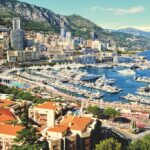
The easiest way to get around Monaco is on foot, using the free public lifts and escalators to handle the hills, with buses and a small waterbus for longer hops. For trips along the coast, regional trains are quick and avoid traffic. Most visitors never need a car inside the principality.
Last checked: November 2026
Walking and Public Lifts
Monaco is built on steep slopes, but the government has added a large network of public lifts, escalators and moving walkways that make climbing between levels simple. Local press reports 79 lifts, 35 escalators and eight conveyor belts, and the principality publishes a guide to walking around Monaco with maps. Using a lift can be faster than a bus for short vertical trips, for example between the harbour and the Rock. Comfortable shoes are still essential.
Buses in Monaco
The Compagnie des Autobus de Monaco, known as CAM, runs the local bus network, and its official website publishes lines and timetables. Lines 1 and 2 are the most useful for visitors, since they connect the old town, the casino area and other main districts. Services generally run from early morning until about 9 pm, followed by night routes, according to the tourist office’s bus page.
Tickets can be bought from the driver, at bus-stop machines and online, and contactless card payment is accepted on board. Single fares are low, and advance tickets are usually cheaper than paying the driver, but check the current tariff because prices change. An on-demand service called ClicBus also operates in the principality.
Waterbus
A solar-electric waterbus crosses Port Hercule between the casino side of the harbour and the foot of the Rock. It is a short, scenic alternative to walking around the quays, and it runs at regular intervals during the day. Check the CAM site for current hours, because frequency changes by season.
Trains Along the Coast
Regional TER trains stop at Monaco-Monte-Carlo, an underground station in the La Condamine district with several exits into the city. These trains are the quickest way to reach Menton, Nice and the small villages in between, and they avoid road traffic, which can be heavy at busy times. Buy tickets at the station machines or through the rail operator’s app, and validate them if the machine requires it. Our itinerary guide shows how to build day trips around these services.
Taxis and Ride-Hailing
Taxis wait at the railway station and at stands around the principality, and you can also book by phone. Always check that the meter is running or agree the fare first. Taxis are an expensive way to travel for short hops, but they can be useful late at night. Reports about ride-hailing apps are mixed, so do not assume they will work. Check your app before you rely on it.
Bikes and Other Options
Monaco has an electric bike-sharing system called MonaBike with docking stations around the city, and an open-top tourist bus tour is available for sightseeing. Cyclists will find the hills challenging, but electric assistance helps.
Driving and Car Rental
You drive on the right in Monaco, and road rules closely follow French rules. Parking is scarce and expensive, and the narrow streets, one-way systems and Grand Prix closures make driving stressful. If you do arrive by car, use a public car park, such as the one beneath the casino gardens, and then walk or use the lifts.
Visitors who need a rental car for the wider Riviera usually collect it from larger French towns rather than inside Monaco. Before you travel, confirm whether your home driving licence is accepted for France and whether you need an International Driving Permit. We have not verified licence rules for every nationality.
Domestic Flights and Ferries
There are no domestic flights, since Monaco is only about two square kilometres. Long-distance ferries do not serve the principality. The harbour waterbus described above is the only regular boat service.
Best Option for Each Journey
- Harbour to the Rock: a public lift, or the waterbus if you want a scenic crossing.
- Casino to the palace: bus line 1 or 2, or a walk with lifts.
- Monaco to Menton or Nice: regional train.
- Late-night return to your hotel: taxi or night bus.
- Beach at Larvotto: a bus or an easy walk from Monte-Carlo.
Common Mistakes
- Planning to drive and park near major attractions.
- Assuming a ride-hailing app will work.
- Forgetting the lifts and climbing the hills on foot.
- Not checking last bus and train times.
- Travelling during Grand Prix weekend without allowing for road closures.
Getting Around Checklist
- Download a map showing public lifts and bus stops.
- Carry a contactless bank card for bus fares.
- Save a taxi number in your phone.
- Check the timetable for the last train back to your base.
- Wear comfortable shoes for steep paths.
Frequently Asked Questions
Is public transport in Monaco free?
Public lifts and escalators are free. Buses and trains charge fares, and prices can change, so check current tariffs before you travel.
Do I need a car in Monaco?
No. The principality is small and well served by lifts, buses and trains. A car is more of a burden than a help because of limited parking.
Is Monaco walkable?
Yes, though hilly. The public lifts and escalators make walking much easier, and most major sights are close together.
Are there bikes for rent?
Yes. MonaBike offers electric bikes from docking stations around the city, and the electric assistance helps on the slopes.
Car Rentals with Klook
Compare car rental options and find a convenient way to explore Monaco. Continue to Klook to check suppliers, prices and availability.
Affiliate partner · Globe Navo may earn a commission from qualifying bookings.