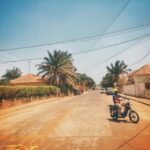
Getting around Guinea-Bissau is half the adventure and half the challenge. The country is flat and small, but roads are patchy, boats depend on tides and nothing runs to a strict timetable. Slow down and it works. Rush and it doesn’t.
Quick answer: Most travellers use shared taxis on the main paved road, hired cars with drivers for day trips and ferries for the Bijagós islands. There’s no passenger rail that we could find and no scheduled domestic flights listed. Travel only in daylight, and expect delays in the rainy season.
Last checked: November 2026
Safety Notice: The US Department of State rates Guinea-Bissau Level 3, Reconsider Travel, citing unrest, inadequate health infrastructure and landmines. Stay on main roads, avoid night travel and do not leave marked paths.
Road Conditions and Safety
Official advice is blunt. Canada’s guidance says roads are poorly lit and poorly maintained, and tells travellers not to leave designated roads and pathways because of possible minefields. The UK says landmines remain a risk outside Bissau and advises staying on paved roads. The US advises staying on main roads and not travelling at night.
There’s another seasonal catch. Travel sources report that many unpaved roads become impassable during the rains from June to October, and some routes need four-wheel drive. Plan inland travel for the dry season if you can.
Two areas need extra care. Canada advises against non-essential travel within 20 kilometres of the Senegal border, including the road from São Domingos to Mpack, and US security reporting urges caution on the roads between Mpack, São Domingos and Varela.
Domestic Flights and Trains
Flights: We found no scheduled domestic passenger flights from Bissau’s airport. Charter flights to the islands may exist, but we couldn’t verify any operator, so treat them as unconfirmed and ask a reputable local tour company.
Trains: We found no passenger railway service in Guinea-Bissau. Don’t plan around one.
Shared Taxis and Buses
Intercity travel mostly means shared taxis, often called bush taxis or minibuses. They leave from market areas and transport hubs in Bissau and depart when they’re full, so there’s no fixed schedule. Starting early gives you the best chance of finding a seat and arriving in daylight.
- Bissau to Bafatá: the main paved route and the easiest inland trip. Allow half a day, including waiting time.
- Bafatá to Gabú: rougher in places. Allow most of a day.
- Bissau to Cacheu: a trip of roughly 100 kilometres on a road that travel writers describe as potholed. Hire a car and driver for this one.
Fares aren’t regulated in a way we could verify. Ask locally what the right price is before you get in, and keep small notes handy.
Ferries and Boats
You reach the Bijagós Archipelago by water. The ferry operator Consulmar publishes a timetable showing Bissau to Enxudé on Monday to Thursday (a 45-minute crossing with same-day return) and Bissau to Bubaque on Fridays, returning on Sundays. Other services, such as boats to Bolama, are described as less regular and dependent on tides and weather.
- Confirm times at the port the day before, because schedules can change.
- Expect delays. Sources describe the Bubaque crossing as slow, and cancellations are more common in rough seas from June to September.
- Private speedboats and motorised canoes exist but vary a lot in safety and price. Ask whether lifejackets are carried and don’t travel in poor weather.
Car Rental and Driving Rules
Traffic drives on the right. We couldn’t find an official source on car rental requirements, minimum age, insurance or whether an international driving permit is needed. One unofficial source says most national licences are accepted, but treat that as unverified and check with the rental company and your insurer.
- Most visitors hire a car with a local driver. It costs more than driving yourself, but the driver knows the roads and the checkpoints.
- If you do self-drive, take a four-wheel-drive vehicle outside Bissau and never drive at night.
- Expect police or military checkpoints. Carry your passport, visa and licence, or certified copies.
- Fuel can be hard to find outside larger towns, so fill up when you can.
Taxis and Ride-Hailing
In Bissau you’ll see regular taxis and minibuses known locally as toca-toca. Taxis don’t use meters that we could verify, so agree the fare before you leave. Avoid taking taxis alone after dark.
We couldn’t verify any app-based ride-hailing service in Bissau, so don’t count on one. Ask your hotel or guesthouse to call a driver they trust instead.
Common Mistakes to Avoid
- Leaving a long journey until the afternoon. Daylight runs out fast.
- Assuming the ferry will run on time, or at all.
- Walking off the road to take photos. Landmines are a real risk in places.
- Travelling inland in August without a backup plan.
- Paying a driver in full before the trip is finished.
Getting Around FAQs
How do you travel between towns in Guinea-Bissau?
Mostly by shared taxi or minibus, which leave when full, or by hired car with a driver. The main paved road runs from Bissau toward Bafatá. Travel in daylight and allow plenty of extra time for waiting and breakdowns.
Which side of the road do they drive on?
Traffic drives on the right in Guinea-Bissau. Road conditions are far more of a challenge than the driving side, with potholes, poor lighting, checkpoints and unmarked hazards, so drive carefully and avoid night journeys.
How do I get to the Bijagós Islands?
By boat. The operator Consulmar lists a Friday ferry from Bissau to Bubaque with a Sunday return. Private boats are another option but vary in safety and price. Confirm times locally and allow for delays and rough seas.
Is it safe to drive in Guinea-Bissau?
It carries real risks. Government advice cites poor roads, bad lighting, landmines off main routes and security concerns near the Senegal border. If you drive, stay on main roads, avoid night travel and consider hiring a local driver.
Official Sources
- Consulmar: ferry timetable Bissau to Bijagós, Bubaque and Enxudé
- UK FCDO: Guinea-Bissau safety and security
- Government of Canada: Guinea-Bissau travel advice
Car Rentals with Klook
Compare car rental options and find a convenient way to explore Guinea-Bissau. Continue to Klook to check suppliers, prices and availability.
Affiliate partner · Globe Navo may earn a commission from qualifying bookings.