 Botswana
DESTINATION
Angola
Angola is a Portuguese-speaking country on Africa’s Atlantic coast. This guide covers its location, history, culture and food.
📅 Last updated:
Angola: Hotels · Flights · Visa Guide · Deals
🌍 Quick Facts

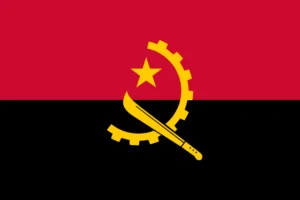
Angola at a glance
🏛️
Capital: Luanda
💱
Currency: Angolan kwanza (AOA)
💬
Language: Portuguese (official), with Umbundu, Kimbundu and Kikongo widely spoken
👥
Population: About 36.6 million as of 2024
🕒
Time zone: West Africa Time (WAT), UTC+1 all year
📞
Calling code: +244
🌐
Internet domain: .ao
✈️
Main airport: Dr. António Agostinho Neto International Airport (NBJ), about 40 km from Luanda
★
Best time to visit: May to September (dry season)
Food
- Funge (cassava or maize porridge)
- Muamba de galinha (chicken stew)
- Calulu (slow-cooked stew)
- Grilled fish
Places
- Kalandula Falls
- Tundavala Gap
- Serra da Leba road
- Kissama National Park
- Mbanza Kongo (UNESCO)
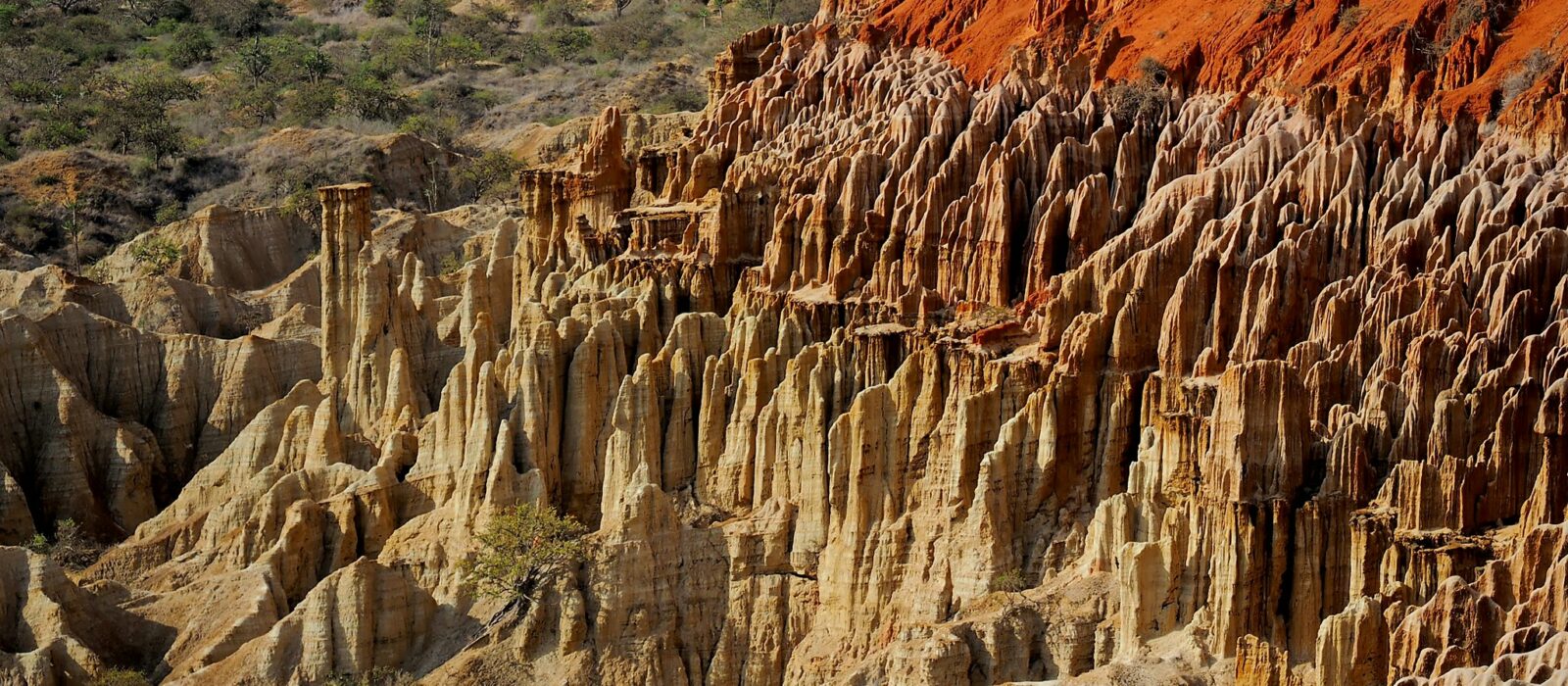
- Miradouro da Lua
Weather
Tropical in the north with rains from October to April, drier and cooler from May to September, and a desert climate in the far south
Culture
Portuguese is the official language, and Umbundu, Kimbundu and Kikongo are widely spoken. Mbanza Kongo, a UNESCO site since 2017, preserves the legacy of the Kingdom of Kongo. Dress for sun and humidity, and carry a light layer for cooler highland mornings.
Cities
- Luanda
- Lubango
- Benguela
- Malanje
- Namibe
- Mbanza Kongo
📍 Angola Map
📷 Photos of Angola
Explore Angola Travel Guides
Explore our detailed guides to plan every part of your Angola trip.
🗺️
Angola: Itineraries
Angola itineraries for 3, 5, 7 and 10 days, with realistic travel times between Luanda, Kalandula Falls, Benguela and Lubango.
View Guide › 🛂Angola: Visa
Many tourists can enter Angola visa-free for 30 days per entry. Others apply for an e-visa online. See documents, rules and safety...
View Guide › 📍Angola: Best Places
The best places to visit in Angola, grouped by type, with how long to spend at Luanda, Kalandula Falls, Lubango, Benguela and...
View Guide › 🌤️Angola: Best Time to Visit
The best time to visit Angola is the dry season from May to September. See weather by month and region, festivals and...
View Guide › ✈️Angola: Flights
Flights to Angola mostly land at Luanda’s NBJ airport. Learn about airlines, airport transfers, the time zone and a pre-flight checklist.
View Guide › 🚆Angola: Getting Around
How to get around Angola by domestic flight, train, coach, taxi or 4x4, with travel times between cities and road rules for...
View Guide › 🛌Angola: Hotels
Where to stay in Angola by city: the best areas in Luanda, Benguela, Lubango and Malanje, plus types of stay and booking...
View Guide ›🖼️ Angola: Location, History, Culture & Food
✨ Complete Travel Guide
Safety notice. The US State Department rates Angola Level 2, Exercise increased caution, and Level 3, Reconsider travel, for the Luanda greater metropolitan area because of crime. The UK FCDO advises against all but essential travel to Cabinda Province (except Cabinda city), to areas within 1 km of the Democratic Republic of the Congo border in Lunda Norte Province (except official border crossings), and against travelling to the rest of Lunda Norte and to Lunda Sul unless absolutely necessary. Read the US travel advisory and the UK travel advice before you book.
Where Is Angola Located?
Angola is a country in southwestern Africa with a long Atlantic coastline. It borders the Democratic Republic of the Congo to the north and northeast, Zambia to the east and Namibia to the south, and its capital is Luanda. This Angola travel guide starts with geography, because distances shape every trip.
Last checked: November 2026
The country covers about 1,246,700 square kilometres, according to the CIA World Factbook, which makes it one of the largest in Africa. A narrow coastal plain rises to a central plateau, and the highest point is Morro de Môco at 2,620 metres. The south coast meets the Namib Desert, while the north is wetter and greener. The Kwanza River crosses the centre and reaches the Atlantic south of Luanda. The coastline runs about 1,600 kilometres, according to the CIA World Factbook, and Cabinda borders the Republic of the Congo as well as the Democratic Republic of the Congo. The highlands around Huambo and Lubango lie inland, well away from the coast.
Cabinda Province is an exclave north of the Congo River, cut off from the rest of Angola by a strip of Congolese territory. Angola uses West Africa Time, which is UTC+1 all year, with no daylight saving. A common mix-up is to picture a small coastal country. The coast is long, but the highlands and the distances inland decide how you travel. Most visitors arrive by air, and our guide to flights to Angola explains the airports, while getting around Angola covers domestic routes.
Angola Travel Guide: What Is the Country Known For?
Angola is known for Kalandula Falls, the Serra da Leba road, long Atlantic beaches and its Portuguese-speaking culture. It is a presidential republic, the capital is Luanda, and the currency is the Angolan kwanza (AOA). Portuguese is the official language, and João Lourenço has been president since 2017.
About 36.6 million people live in Angola as of 2024, according to the national statistics institute, INE, whose census counted 36,604,681 residents. That figure covers the whole country. Luanda Province alone had about 8.67 million of them, so the capital region holds almost a quarter of all Angolans. Oil is the main export, and Angola is one of the largest oil producers in Africa.
Three things set the country apart:
- Portuguese is the main language, spoken by about 71 percent of people, according to the CIA World Factbook.
- Angola has one UNESCO World Heritage Site, Mbanza Kongo, inscribed in 2017.
- A short flight takes you from the tropical coast to cool highlands or to desert.
Most trips focus on two or three regions. Our guide to the best places to visit in Angola sorts the sights by type, and the guide on where to stay in Angola compares bases in Luanda and the provinces. Entry rules differ by passport, so read the Angola visa guide for tourists before you book. The Angola itineraries match time to distance.
A Short History of Angola
People have lived in what is now Angola for thousands of years. Portuguese ships reached the coast in the 1480s, Luanda was founded in 1576, and Angola became independent on 11 November 1975. A civil war then lasted until 2002.
Early Kingdoms and Portuguese Arrival
Before the Portuguese came, several kingdoms shaped the region. The Kingdom of Kongo lay in the north, and the Kingdom of Ndongo lay inland to the south. The name Angola comes from ngola, the title of Ndongo’s rulers. In the 17th century, Queen Njinga led Ndongo and Matamba against Portuguese expansion.
Portuguese caravels led by Diogo Cão reached the Congo estuary in the 1480s, and sources differ on the exact year. Paulo Dias de Novais founded Luanda in 1576. Angola then became a major source of enslaved people shipped across the Atlantic to plantations in Brazil.
Colonial Rule and Independence
The Dutch held Luanda from 1641 to 1648, and Portugal then took it back. Portuguese control spread inland over the following centuries, and after the Berlin Conference of 1884 and 1885 Portugal sent campaigns inland to secure the borders it claimed. An armed struggle against colonial rule began in 1961 and ended after a 1974 coup in Lisbon. The Alvor Agreement of January 1975 set the route to independence, which Angola declared on 11 November 1975.
Civil War and Reconstruction
Independence brought a civil war between the MPLA government and the rebel movement UNITA. It lasted from 1975 to 2002 and ended after the death of UNITA leader Jonas Savimbi. Oil and diamond income then paid for rebuilding. Angola held a national census in 2014 and again in 2024, the only two since independence.
The historic buildings that survive are easy to place on a map. Our guide to Angola’s sights covers the fort at Luanda and Mbanza Kongo, the former capital of the Kingdom of Kongo.
Angolan Culture: Language, Religion and Festivals
Angolan culture blends Bantu traditions with Portuguese influence. Portuguese is the official language, and Umbundu, Kimbundu and Kikongo are widely spoken national languages. About two-fifths of Angolans are Catholic and about two-fifths are Protestant. Music such as semba, kizomba and kuduro is known well beyond the country.
Language
Chokwe, Nhaneca and Nganguela are also recognised national languages, and many Angolans speak more than one. Menus and signs are usually in Portuguese. A few words help: bom dia means good morning, and obrigado or obrigada means thank you.
Religion
Christianity is the main religion, with roughly 41 percent Catholic and 38 percent Protestant, according to the CIA World Factbook. Britannica notes that about one-tenth follow traditional or other beliefs. Dress neatly when you visit a church.
Festivals
Dates follow the national calendar and the seasons:
- February: the Carnival of Luanda, with dates that change each year.
- August: the Nossa Senhora do Monte festivities in Lubango, which have been held in August.
- September: the Benguela International Fair (FIB), a trade fair with concerts, usually held in September.
- 11 November: Independence Day, a public holiday.
Confirm event dates with the organisers, and see the best time to visit Angola guide for how they fit the seasons.
Etiquette
Greet people before you ask a question, and use a simple bom dia or boa tarde. Ask before photographing people. Dress for heat in the cities, and carry a light layer for cooler highland mornings.
Music and Arts
Semba is often described as one of Angola’s best-known music styles. Kuduro was born in Luanda’s urban neighbourhoods and mixes electronic beats with African percussion. Kizomba, a slower partner dance and music style, also took shape in Angola in the 1980s before it spread to Europe and other parts of Africa. Angolan writers such as Pepetela and José Eduardo Agualusa write in Portuguese and are read abroad.
Angolan Food: What to Eat and Drink
Angolan food is built around funge, a cassava or maize porridge, served with stews, grilled fish and beans. Palm oil, okra, peanuts and fresh fish appear in many dishes. Muamba de galinha, a chicken stew, is often called the national dish, and menus are usually written in Portuguese.
Staples
Cassava, maize, beans and rice fill most plates. Palm oil gives many stews their red colour, and peanuts, called ginguba, add richness. Chilli sauce made from gindungo, the local hot pepper, is common at the table. Pork and chicken are widely eaten, and one traditional dish uses blood, so ask about ingredients if you avoid them.
Signature Dishes
- Funge: a smooth porridge of cassava or maize flour that goes with almost every stew.
- Muamba de galinha: chicken cooked with palm oil, okra and garlic, usually served with funge or rice.
- Calulu: a slow-cooked stew of dried or fresh fish with okra, tomato and sweet potato leaves.
- Mufete: grilled fish served with plantain, sweet potato and cassava.
- Muamba de ginguba: a peanut-sauce version of the chicken stew.
- Kizaca: a dish made from cassava leaves.
- Feijão de óleo de palma: beans cooked in palm oil, served with many main courses.
- Cabidela: chicken cooked in its blood with vinegar, served with rice and funge.
- Arroz com feijão: rice and beans, a daily side dish.
Street Food
Grilled cassava is sold on the street in some towns, and roasted peanuts are a common snack. Street food varies by city, so look for stalls with a steady line of local customers.
Drinks
Cuca and Nocal are two well-known Angolan beers. Kissangua, a fermented maize drink, is a specialty of southern Angola. Fresh juices are common, and bottled water is the safer choice.
Desserts
Cocada amarela is a yellow coconut pudding made with egg yolks, sugar and cinnamon, a sign of Portuguese influence. Doce de ginguba is a peanut sweet, and mukua, from the baobab fruit, is used in sorbet.
Food also changes by region. Coastal towns serve fish and lobster, the north leans on palm oil and cassava, and the south has its own drinks such as kissangua.
Explore Hotels & Flights
Search accommodation and flights for your destination with Expedia. Compare available options and continue to Expedia to complete your booking.
Affiliate partner · Globe Navo may earn a commission from qualifying bookings at no extra cost to you.
❓ Angola FAQ
Do I need a visa to visit Angola?
Citizens of more than 98 countries can visit Angola for tourism without a visa, for up to 30 days per entry and 90 days per year. Others apply through the official e-visa portal, evisa.ao. Carry a passport valid for at least six months, and confirm your nationality with the Angolan embassy before you book.
Is Angola safe for tourists?
It depends on where you go. The US rates Angola Level 2 and the Luanda area Level 3, Reconsider travel, because of crime. The UK advises against all but essential travel to parts of Cabinda and Lunda Norte, and against travel to the rest of Lunda Norte and Lunda Sul unless absolutely necessary. Use pre-booked taxis and carry evacuation insurance.
When is the best time to visit Angola?
Most travelers go in the cooler dry season from May to September, called cacimbo, when roads are easier and skies are clearer. The rains run from about October to April. The south around Namibe and Lubango stays drier than the north for much of the year.
Which airport do I use for Luanda?
Use Dr. António Agostinho Neto International Airport (NBJ), about 40 km southeast of the city center. The older Quatro de Fevereiro airport closed to commercial flights on 1 March 2026. Check the airport code on your ticket and arrange a pre-booked transfer through your hotel.
What are the main sights in Angola?
Highlights include Kalandula Falls in Malanje Province, the Tundavala Gap and Serra da Leba road near Lubango, Kissama National Park south of Luanda, the desert coast around Namibe, and Mbanza Kongo, the only UNESCO World Heritage Site in Angola, inscribed in 2017.
Plan Your Trip to Angola
Your Next Adventure in Angola Awaits!
Explore Deals →🎁 Best deals for Angola
Offers from trusted travel stores for your Angola trip. Compare a few options before you book, and check each store's terms for the final price.
Browse by type: Hotel deals · Flight deals · Travel eSIM · Car rental
 KkdayFind current Kkday coupons and deals for tours, attraction tickets, transport and first app orders. See minimum spend, discount caps and exclusions before you book.
Get Coupon View Deal
 eSIMFOXeSIMFOX is a travel eSIM provider offering prepaid mobile data plans for single countries and wider regions, delivered digitally so you can connect as soon as you land.
Get Coupon View Deal
 QuibityQuibity is a travel eSIM provider that lets you buy a mobile data plan online and activate it on your phone, so you can get connected abroad without a physical SIM card.
Get Coupon View Deal
 ExpediaDiscover great deals on hotels, flights, vacation packages, car rentals, and activities with Expedia. Compare travel options and plan your next trip with convenient booking choices.
Get Coupon View Deal
 KlookKlook is a travel activities platform where you can book attraction tickets, tours, day trips, transport passes, airport transfers and local experiences in destinations worldwide.
Get Coupon View Deal
 Trip.comTrip.com is a global online travel platform for flights, hotels, train tickets, airport transfers, attraction tickets and travel packages, available on web and mobile app.
Get Coupon View Deal
 TourRadarTourRadar is an online marketplace for multi-day guided tours, small-group trips and tailor-made journeys offered by independent tour operators around the world.
Get Coupon View Deal