 MongoliaDiscover Mongolia's place between Russia and China, its nomadic heritage, living traditions and hearty…
DESTINATION
Nepal
Discover where Nepal sits in the Himalayas, how its history unfolded, and what shapes its festivals, traditions and food, from dal bhat to Newar feasts.
📅 Last updated:
🌍 Quick Facts

Nepal at a glance
Capital: Kathmandu
Currency: Nepalese rupee (NPR)
Language: Nepali (plus many regional languages)
Population: About 29.6 million
Time zone: Nepal Time (UTC+5:45), no daylight saving
Calling code: +977
Internet domain: .np
Main airport: Tribhuvan International Airport (KTM)
Best time to visit: October to November and March to April; the best time varies by region
📍 Nepal Map
🖼️ Nepal: Location, History, Culture & Food
✨ Complete Travel Guide
Where Is Nepal Located?
Nepal is a landlocked country in South Asia, set along the southern slopes of the Himalayas. India borders it to the east, south and west, and China’s Tibet Autonomous Region lies to the north. The capital is Kathmandu, and the country covers about 147,181 square kilometres.
Last checked: November 2026
The shape is a long, narrow rectangle. Nepal stretches roughly 800 kilometres from east to west but only about 150 to 240 kilometres from north to south, so a short journey can cross several landscapes and climates.
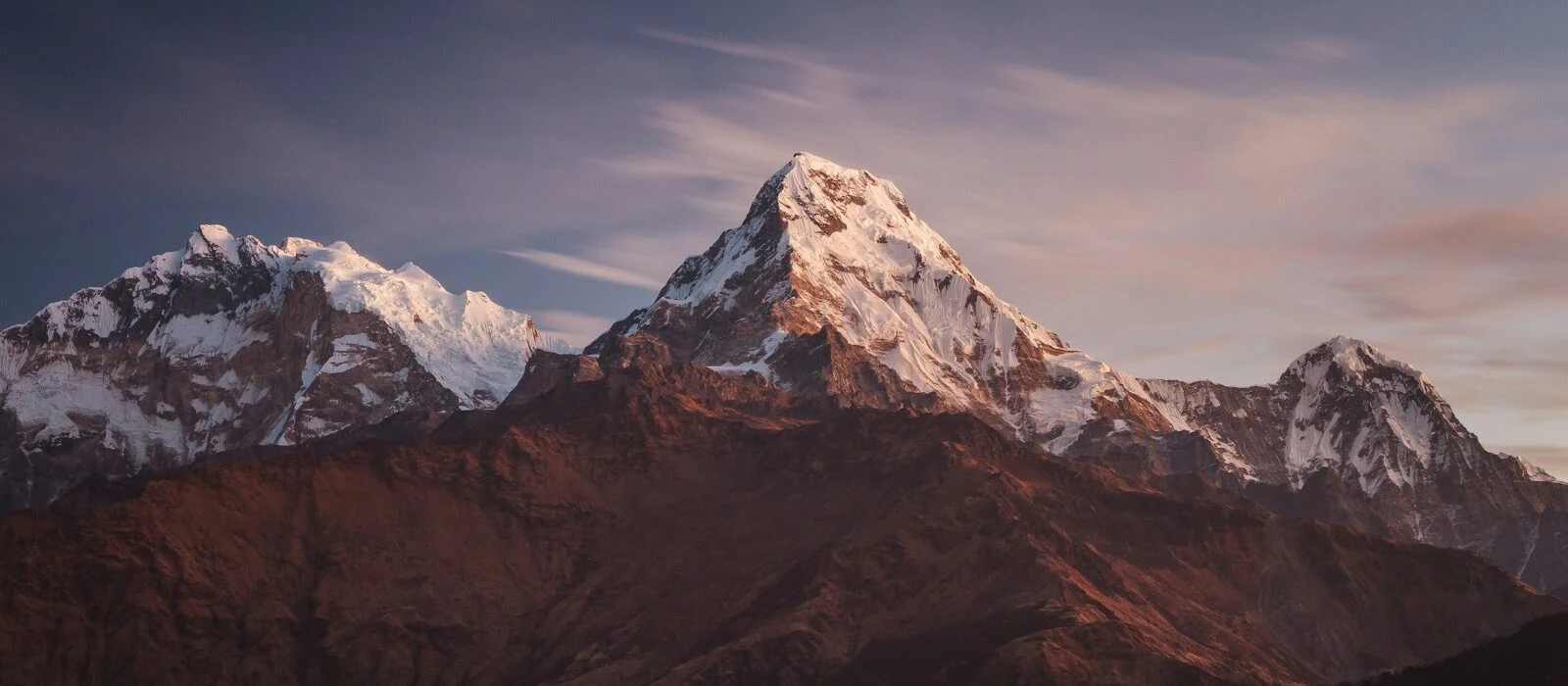
Three belts run side by side across the country. The Tarai in the south is a flat, fertile plain along the Indian border. The middle hills hold Kathmandu, Pokhara and most of the valleys where people farm and live. In the north rise the high Himalayas, home to eight of the world’s ten highest mountains. Mount Everest, called Sagarmatha in Nepali, sits on the border with China. Roughly three-quarters of the land is mountainous, which explains why roads wind and why many villages are reached on foot.
Kathmandu lies at about 1,324 metres above sea level in a hill valley near the Bagmati and Vishnumati rivers, so it is noticeably cooler than the southern plains. Nepal keeps its own time, UTC+5:45 with no daylight saving, which puts it 15 minutes ahead of India. The narrow Siliguri Corridor in India is the only strip of land separating Nepal from Bangladesh.
Introduction to Nepal
Nepal is a federal democratic republic of roughly 30 million people, known for the world’s highest mountains, the birthplace of the Buddha and the temples of the Kathmandu Valley. Kathmandu is the capital, Nepali is the official language, and the currency is the Nepalese rupee.
Last checked: November 2026
Under the constitution adopted in 2015, Nepal is a federation of seven provinces. President Ram Chandra Paudel is head of state. After a snap election on 5 March 2026, Balendra Shah of the Rastriya Swatantra Party was sworn in as prime minister on 27 March 2026.
Population figures differ by source. The 2021 census counted about 29.2 million people, while World Bank data for 2025 gives roughly 29.6 million. That census recorded 142 ethnic and caste groups and 123 mother tongues, so the country is far more varied than its size suggests. Hinduism and Buddhism together cover about 90 per cent of the population, and the constitution is secular.
Visitors come for trekking in the Himalayas, wildlife in the Tarai, and the palace squares and temples of the Kathmandu Valley, a UNESCO World Heritage cultural site. Pokhara, a lakeside city in the hills, is a common base for the Annapurna region, and Lumbini in the south is the traditional birthplace of the Buddha. Mountains, forests, farmland and old towns sit close together, which is much of the country’s appeal.
To plan a trip, start with the Nepal visa guide for tourists, then compare the best places to visit in Nepal with the best time to visit Nepal. The Nepal itineraries for 3, 5, 7 and 10 days turn those ideas into routes, while the guides to where to stay in Nepal, flights to Nepal and how to get around Nepal cover the practical details.
History of Nepal
Nepal’s story runs from ancient Himalayan kingdoms and the birth of the Buddha at Lumbini to the unification of the country by the Shah dynasty in the 18th century. A decade of civil conflict ended in 2006, the monarchy was abolished in 2008, and the current constitution dates from 2015.
Last checked: November 2026
Early Kingdoms and the Malla Era
Lumbini, in the southern Tarai, is traditionally recognised as the birthplace of Siddhartha Gautama, who became the Buddha. In the first millennium CE the Kathmandu Valley was ruled by the Licchavi dynasty, and its Newar inhabitants built a rich urban culture. Later the Malla kings governed the valley, which split into the rival city-kingdoms of Kathmandu, Patan and Bhaktapur. Their rulers competed to build pagoda temples and carved palace squares, many of which still define those towns.
Unification and the Rana Years
Prithvi Narayan Shah, king of the small hill state of Gorkha, conquered the Kathmandu Valley in 1768 and made it the centre of a growing kingdom. A war with the British East India Company from 1814 to 1816 ended with the Treaty of Sugauli, which cut Nepal back to close to its present borders. From 1846 to 1951 hereditary Rana prime ministers held real power while the Shah kings were figureheads, and the country stayed largely closed to foreigners.
Opening to the World
A revolution in 1950 and 1951 restored royal rule under King Tribhuvan, and Nepal joined the United Nations in 1955. Tenzing Norgay and Edmund Hillary reached the summit of Everest on 29 May 1953, bringing worldwide attention to the Nepalese mountains. Political parties were banned under the panchayat system from 1960, until a popular movement in 1990 brought back multiparty politics.
Conflict, Republic and Recent Years
A Maoist insurgency began in 1996 and lasted until a peace agreement in November 2006. In 2008 a newly elected Constituent Assembly declared Nepal a republic and ended the monarchy. A magnitude 7.8 earthquake struck on 25 April 2015 and killed close to 9,000 people, and the new constitution followed on 20 September 2015.
In September 2025, youth-led protests over corruption turned deadly, at least 77 people were killed, and the government of KP Sharma Oli fell. Former chief justice Sushila Karki led an interim government from 12 September 2025 until the March 2026 election.
Culture and Traditions of Nepal
Nepali culture blends Hindu and Buddhist traditions with the customs of more than 140 ethnic and caste groups. Festivals follow the lunar calendar, temples and stupas stand in everyday streets, and respect for elders and guests shapes manners. Dashain and Tihar are the biggest family festivals of the year.
Last checked: November 2026
Languages and Communities
Nepali, written in the Devanagari script, is the official language and the common tongue between communities. Maithili, Bhojpuri, Tharu, Tamang and Nepal Bhasa, the language of the Newars, are among the many others heard. Newars are the traditional city-builders of the Kathmandu Valley, Sherpas live mainly in the Everest region, and the Tharu are long-time residents of the Tarai.
Religion and Sacred Places
Hindu temples and Buddhist stupas often share the same square, and many families honour both traditions. Boudhanath and Swayambhunath are famous stupas in the Kathmandu Valley, and Pashupatinath is the great Shiva temple on the Bagmati. In Kathmandu, a young girl is still chosen as the Kumari, a living goddess, in a tradition that continues in the old city.
Festivals
Dashain, in autumn, is the longest and most important Hindu festival, when families gather, receive blessings and eat together. Tihar, the festival of lights, follows a few weeks later and honours crows, dogs, cows and siblings over several days. Holi, Buddha Jayanti and Indra Jatra in Kathmandu are also widely celebrated. All of them follow lunar calendars, so dates move each year.
Etiquette
Greet people with a gentle namaste, hands pressed together. Remove shoes before entering homes and temples, and ask before photographing people or ceremonies. Walk clockwise around stupas and prayer wheels, give and receive items with the right hand, and avoid touching anyone’s head. Some Hindu temples, including the inner areas of Pashupatinath, are closed to non-Hindus, and leather items may be refused at certain shrines.
Arts and Crafts
Newar woodcarving decorates windows, doors and temple struts across the valley. Thangka painting, a Buddhist tradition of detailed scroll art, is practised in Kathmandu and Patan, and metalwork in Patan has a long reputation. Many Nepali men wear the dhaka topi, a patterned cap, on formal occasions.
Food and Cuisine of Nepal
Nepali food centres on dal bhat, a plate of rice with lentil soup, vegetable curry and pickle, eaten once or twice a day across the country. Beyond it you will find Tibetan-style momo dumplings, Newar feasts in the Kathmandu Valley, and mild, lightly spiced dishes built on lentils, grains, vegetables and herbs.
Last checked: November 2026
Meals are usually shared and often eaten by hand, and plenty of dishes suit vegetarians. Altitude and ethnicity shape the menu: buckwheat and millet dominate the hills, rice the plains, and fermented greens and dried meats help people through the winter.
Signature Dishes
- Dal bhat: steamed rice with lentil soup, seasonal vegetables and pickle, usually with free refills.
- Momo: steamed or fried dumplings filled with buffalo, chicken or vegetables, served with a spicy tomato chutney.
- Dhido: a thick porridge of buckwheat or millet flour, traditional in the hills.
- Gundruk: fermented, dried leafy greens cooked into a sour soup or side dish.
- Sel roti: a ring-shaped, slightly sweet rice-flour bread fried in oil, common at festivals.
- Choila: a Newar dish of spiced, grilled meat, often buffalo, eaten with beaten rice.
- Chatamari: a thin rice-flour crepe topped with minced meat or egg, sometimes called Nepali pizza.
- Yomari: steamed rice-flour dumplings filled with molasses and sesame, a Newar festival sweet.
- Thukpa: a hearty noodle soup with vegetables or meat, popular in the mountains.
- Juju dhau: creamy sweet yogurt from Bhaktapur, set in clay pots.
Drinks and Tea Houses
Chiya, a spiced milk tea, is poured at homes, shops and trekking lodges all day. Tongba is a warm millet drink sipped through a bamboo straw in the eastern hills, and raksi is a home-distilled spirit made from grains. Along trekking routes, tea houses serve dal bhat, noodles and soups, and many travellers are told that dal bhat gives lasting energy for a long walking day.
Safety Notice: The U.S. Department of State rates Nepal at Level 2, “Exercise increased caution,” citing natural disasters and the chance of local demonstrations. Within that advisory, it tells travellers not to go to the Rasuwagadhi-Timure-Syafrubesi area of Rasuwa district, including the Nepal–China border crossing, at Level 4, “Do not travel,” after the flash flood and landslide of 26 August 2026. The warning covers that area only, not the whole country. Advisories can change, so read the current U.S. travel advisory for Nepal before you travel (advisory issued September 2026, checked November 2026).
Explore Nepal Travel Guides
Explore our detailed guides to plan every part of your Nepal trip.
Nepal: Best Places
A guide to ten of Nepal’s best places, from the Kathmandu Valley’s sacred sites to Pokhara, Chitwan, Lumbini and the Annapurna and...
View Guide ›Nepal: Best Time to Visit
A month-by-month look at Nepal’s climate, from clear autumn skies to the summer monsoon, with advice by region, festival and travel style.
View Guide ›Nepal: Flights
Flights to Nepal explained: the main international airport, airlines and routes, arrival tips, time zone and a pre-departure checklist.
View Guide ›Nepal: How to Get Around
Practical guide to getting around Nepal: domestic flights, tourist buses, taxis and ride apps, plus how to choose the best option per...
View Guide ›Nepal: Itineraries
Four realistic Nepal itineraries for 3, 5, 7 and 10 days, with routes, overnight stops, travel times and practical tips for each...
View Guide ›Nepal: Visa
How tourist visas for Nepal work: who needs one, the 15, 30 and 90-day options, online or arrival applications, free visas and...
View Guide ›Nepal: Hotels
Where to stay in Nepal: the best areas in Kathmandu, Pokhara, Chitwan and Lumbini, with tips on budgets, families, taxes and booking.
View Guide ›Explore Nepal Tours
Discover guided tours and adventures in Nepal. Compare itineraries, prices and traveller reviews on TourRadar before you book.
Guided tours & deals
Affiliate partner · Globe Navo may earn a commission from qualifying bookings at no extra cost to you.
❓ Nepal FAQ
Where is Nepal located?
Nepal is a landlocked country in South Asia, with India to the east, south and west and China’s Tibet Autonomous Region to the north. It stretches along the southern slopes of the Himalayas and includes eight of the world’s ten highest mountains. Kathmandu is the capital.
What are the capital, currency and language of Nepal?
Kathmandu is the capital, the currency is the Nepalese rupee (NPR), and Nepali is the official language. Nepal keeps its own time, UTC+5:45 all year, which is 15 minutes ahead of India. Many people in tourist areas also speak some English.
What is Nepal famous for?
Nepal is famous for the Himalayas, including Mount Everest, and for trekking regions such as Annapurna. It is also known for Lumbini, the traditional birthplace of the Buddha, the UNESCO-listed temples of the Kathmandu Valley, and wildlife in the southern Tarai.
What food should I try in Nepal?
Start with dal bhat, the rice and lentil plate eaten across the country, then try momo dumplings, Newar dishes such as choila and chatamari, and sweets like sel roti and juju dhau. Many dishes suit vegetarians, and spiced milk tea is served everywhere.
Which are Nepal’s biggest festivals?
Dashain, in autumn, is the longest and most important Hindu festival, and Tihar, the festival of lights, follows a few weeks later. Both follow lunar calendars, so dates change each year. Buddha Jayanti, Holi and Indra Jatra are also widely celebrated.
Plan Your Trip to Nepal
Your Next Adventure in Nepal Awaits!
Explore Deals →🎁 Best deals for Nepal
Offers from trusted travel stores for your Nepal trip. Compare a few options before you book, and check each store's terms for the final price.
Browse by type: Hotel deals · Flight deals · Travel eSIM · Car rental
More destinations to explore
MongoliaDiscover Mongolia's place between Russia and China, its nomadic heritage, living traditions and hearty…
 FranceFrance is a Western European country known for Paris, castles, wine and food. Learn…
 ChinaExplore China's location, geography, history, culture and food, with links to visa, best places,…