 FranceFrance is a Western European country known for Paris, castles, wine and food. Learn…
DESTINATION
China
Explore China's location, geography, history, culture and food, with links to visa, best places, best time to visit, itinerary, hotel, flight and transport guides.
📅 Last updated:
🌍 Quick Facts

China at a glance
Capital: Beijing
Currency: Renminbi (CNY)
Language: Mandarin Chinese (Putonghua)
Population: About 1.4 billion
Time zone: UTC+8 (no daylight saving)
Calling code: +86
Internet domain: .cn
Main airport: Beijing Capital Airport (PEK)
Best time to visit: Spring and autumn for much of the country, varies by region
📍 China Map
🖼️ China: Location, History, Culture & Food
✨ Complete Travel Guide
Where Is China Located?
China is located in East Asia, on the western shore of the Pacific Ocean. It shares land borders with 14 countries, including Russia, Mongolia, India, Nepal, Vietnam and Kazakhstan, and has a long coastline on the Yellow Sea, East China Sea and South China Sea. Its capital is Beijing.
Last checked: November 2026
Geographically, China is a country of steps. The Tibetan Plateau and the Himalaya rise in the west and southwest, and Mount Everest sits on the frontier with Nepal. Deserts and grasslands, including the Gobi and Inner Mongolia, stretch across the north. Toward the east, the land drops through mountains and basins to fertile plains and the Pacific coast.
Two great rivers shape the country. The Yangtze, Asia’s longest river, flows from west to east and reaches the sea near Shanghai. The Yellow River crosses the northern plains, where early Chinese civilisation took root. In the far south, the tropical island province of Hainan lies off the coast, while the southern frontier meets Myanmar, Laos and Vietnam.
With an area similar to the continental United States, China is enormous, yet it uses a single time zone, China Standard Time (UTC+8), with no daylight saving. Beijing is the political capital, and Shanghai, Guangzhou, Shenzhen, Chengdu and Chongqing are among its other major cities. Because the climate changes sharply from region to region, it is worth reading our guide to the best time to visit China before choosing a route.
Introduction to China
China, officially the People’s Republic of China, is one of the world’s two most populous countries, with about 1.4 billion people, and one of its oldest continuous civilisations. Visitors can see ancient capitals, futuristic cities, karst mountains, deserts and high plateaus in one country, though the best trip depends on how much time you have.
Last checked: November 2026
Modern China moves fast. Its cities have gleaming skylines, extensive metro systems and a large high-speed rail network. Yet older rhythms remain close by, from tea houses and temple fairs to walled towns and village markets. Many travellers are surprised by how quickly they move between a modern business district and a centuries-old courtyard neighbourhood.
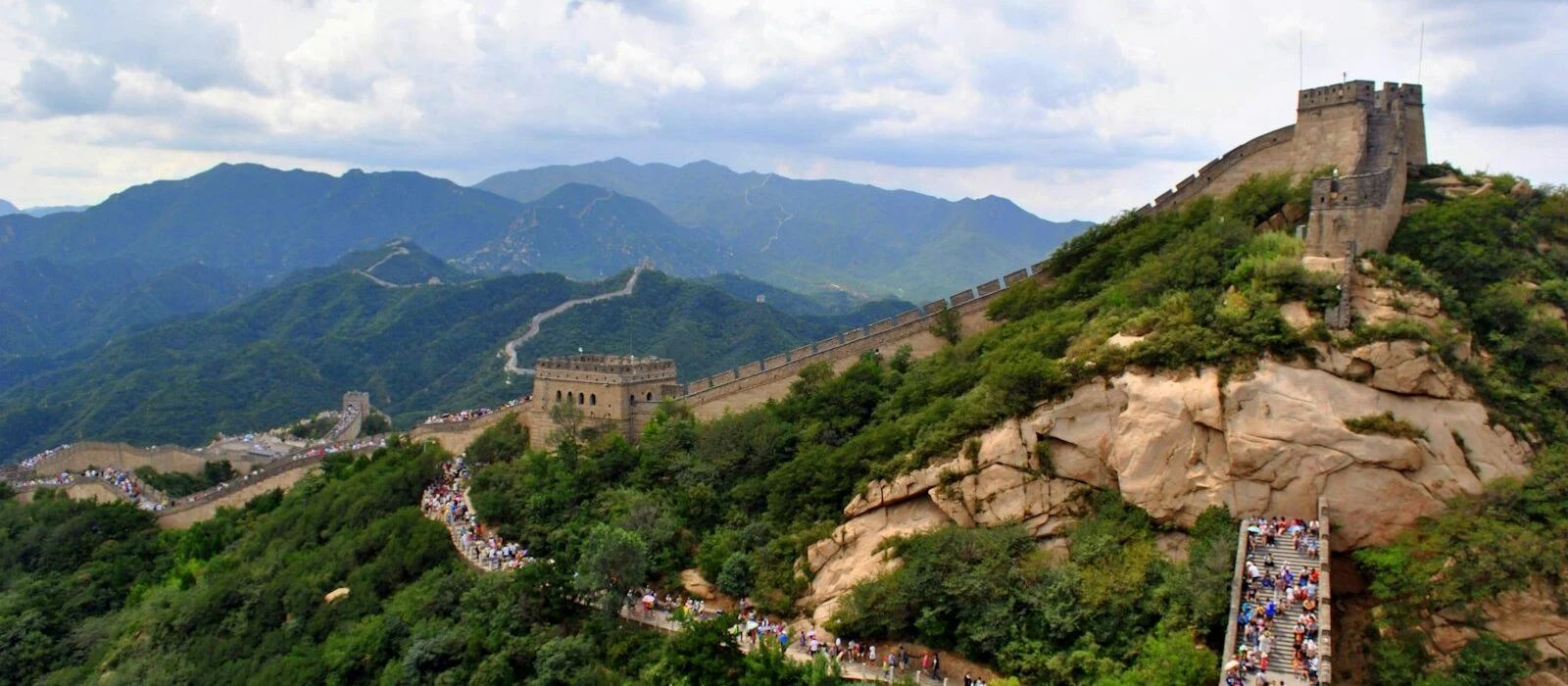
The country’s natural variety is just as striking. Sandstone pillars rise above the forests of Zhangjiajie, limestone peaks line the rivers around Guilin and Yangshuo, and Sichuan is known as the home of the giant panda. China also has dozens of UNESCO World Heritage Sites, including the Great Wall, the Forbidden City and the Terracotta Army near Xi’an.
Daily life relies heavily on mobile payment apps, and English is not widely spoken outside major tourist areas, so a little preparation goes a long way. When you are ready to plan, start with our China visa guide for tourists, then explore the best places to visit in China, sample China itineraries, compare where to stay in China, check flights to China and read how getting around China works.
History of China
China’s recorded history stretches back more than 3,000 years. The Shang dynasty left writing on oracle bones, Qin Shi Huang unified the country in 221 BCE, and imperial dynasties ruled until 1912. The People’s Republic of China was founded in 1949, and the country has changed rapidly since the late 1970s.
Last checked: November 2026
Early Chinese states grew along the Yellow River, and the Shang and Zhou periods laid the foundations of writing, ritual and bronze-casting. Thinkers such as Confucius and Laozi lived during the Spring and Autumn and Warring States periods, and their ideas about family, duty, harmony and nature still influence daily life. The Qin ruler Qin Shi Huang brought the warring states together in 221 BCE and is remembered for the Terracotta Army buried near his tomb.
The Han dynasty expanded the empire and helped open the Silk Road, which linked China with Central Asia and beyond. Under the Tang dynasty, Chang’an, today’s Xi’an, became one of the world’s most cosmopolitan cities, and the Song era was marked by advances in printing, navigation and urban commerce. The Mongol-led Yuan dynasty made Beijing its capital, and the Ming dynasty built the Forbidden City and strengthened large sections of the Great Wall that visitors see today.
The Qing dynasty, founded in 1644, was the last imperial dynasty and ended in 1912, when the Republic of China was established. The People’s Republic of China was proclaimed in 1949. Economic reforms from the late 1970s drove rapid urbanisation, and many of today’s skylines, rail lines and airports are products of the last few decades.
Culture and Traditions of China
Chinese culture blends Confucian, Daoist and Buddhist traditions with regional customs shaped by many ethnic groups. Mandarin, also called Putonghua, is the official language. Festivals, family meals, tea, calligraphy and respect for elders are central to everyday life, and customs vary noticeably between regions.
Last checked: November 2026
China officially recognises 56 ethnic groups, including the Han majority and 55 minority groups such as the Tibetan, Uyghur, Zhuang, Miao and Yi peoples. Each has its own languages, clothing, music and festivals, which is one reason travel in Yunnan, Guizhou, Sichuan or the northwest can feel very different from travel in Beijing or Shanghai.
The festival calendar follows the lunar calendar. Spring Festival, or Lunar New Year, is the biggest celebration, when families reunite and give red envelopes. The Mid-Autumn Festival brings mooncakes and family gatherings, Qingming is a time for honouring ancestors, and the Dragon Boat Festival is marked with boat races and sticky rice dumplings called zongzi. Dates change each year, and travel is especially busy around the major holidays.
Traditional arts remain visible across the country. Calligraphy and ink painting, Peking opera, shadow puppetry, tai chi in morning parks and elaborate tea ceremonies all draw visitors. Tea is part of hospitality, and being offered a cup is a friendly gesture.
A few customs help travellers avoid misunderstandings. Offer and receive business cards or gifts with both hands, do not stick chopsticks upright in a bowl of rice because it resembles incense offerings, and dress modestly at temples. Meals are usually shared, so dishes are placed in the middle of the table and everyone takes from them.
Food and Cuisine of China
Chinese cuisine is a collection of regional traditions rather than a single style. Sichuan food is known for numbing chilli heat, Cantonese food for delicate steaming and dim sum, and northern cooking for wheat noodles, dumplings and roast meats. Meals are shared, with rice or noodles and tea.
Last checked: November 2026
Food writers often group the country’s cooking into eight great cuisines: Sichuan, Cantonese, Shandong, Jiangsu, Zhejiang, Fujian, Hunan and Anhui. In practice, every city has its own specialities, and street stalls, noodle shops and night markets are often as memorable as formal restaurants. Vegetarian visitors can find tofu, vegetable and mushroom dishes everywhere, but it helps to ask about meat stock and hidden pork.
These signature dishes are a good place to start:
- Peking duck: roast duck with crisp skin, served with thin pancakes, spring onion and sweet bean sauce, closely linked to Beijing.
- Mapo tofu: soft tofu in a spicy, numbing Sichuan sauce with chilli bean paste and Sichuan pepper.
- Kung Pao chicken: stir-fried chicken with peanuts and dried chillies, another Sichuan classic.
- Xiaolongbao: delicate soup dumplings from the Shanghai and Jiangnan region.
- Hot pot: a simmering broth at the table for cooking meat, vegetables and noodles, especially popular in Chongqing and Sichuan.
- Dim sum: small steamed and fried dishes served with tea, central to Cantonese food culture in Guangdong.
- Char siu: sweet, glazed barbecued pork, a Cantonese favourite.
- Lanzhou beef noodles: hand-pulled noodles in a clear beef broth from Gansu province.
- Dan dan noodles: noodles with chilli oil, minced pork and preserved vegetables from Sichuan.
- Jianbing: a crepe-style street breakfast with egg, crisp wafer and sauces, popular in northern cities.
- Biangbiang noodles: wide hand-pulled noodles with chilli oil and vinegar, a signature of Xi’an and Shaanxi province.
Eating in China is also about etiquette and timing. Lunch and dinner are early in many cities, tea is usually served throughout the meal, and sharing several dishes is the norm. Our guides to the China itinerary and best places in China point out food cities worth building a route around.
Explore China Travel Guides
Explore our detailed guides to plan every part of your China trip.
China: Best Places
Discover the best places to visit in China, from the Great Wall and Forbidden City to Shanghai, Xi'an, Chengdu, Guilin, Hangzhou and...
View Guide ›China: Best Time to Visit
Find the best time to visit China by region and month, with seasons, typhoons, festivals, holidays, peak travel periods and packing tips.
View Guide ›China: Itineraries
Plan a China trip with realistic 3, 5, 7 and 10 day itineraries covering Beijing, Xi'an, Shanghai, Chengdu and Guilin, with overnight...
View Guide ›China: Visa
Check China visa rules for tourists, including 30-day visa-free entry, 240-hour transit, Hainan, passport rules, applications, registration and overstays.
View Guide ›China: Flights
Plan international flights to China, with main airports, airlines, direct and connecting options, arrival tips, time zone and a Before You Fly...
View Guide ›China: Getting Around
Learn how to get around China by high-speed train, domestic flight, metro, bus, taxi and ride-hailing, with driving rules, tickets, payments and...
View Guide ›China: Hotels
Find where to stay in China, with the best areas in Beijing, Shanghai, Xi'an, Chengdu and Guilin, plus stay types, family and...
View Guide ›Explore China Tours
Discover guided tours and adventures in China. Compare itineraries, prices and traveller reviews on TourRadar before you book.
Guided tours & deals
Affiliate partner · Globe Navo may earn a commission from qualifying bookings at no extra cost to you.
❓ China FAQ
What is the capital of China?
Beijing is the capital of China and its political and cultural centre. It is home to the Forbidden City, Tiananmen Square and the national government, while Shanghai is the largest financial centre and Guangzhou and Shenzhen are major southern hubs.
What language is spoken in China?
Mandarin Chinese, also called Putonghua, is the official language and is used nationwide. Many regions also have their own languages and dialects, such as Cantonese in Guangdong. English is not widely spoken outside major cities and tourist areas, so translation apps are helpful.
What currency does China use?
China uses the renminbi, with the yuan (CNY) as its main unit. Mobile payment apps are very common, and only some work with international cards, so set up payment before arriving and carry some cash for small purchases.
What is China famous for?
China is famous for the Great Wall, the Forbidden City, the Terracotta Army, giant pandas and diverse regional food such as Peking duck, dim sum and Sichuan hot pot. It also has modern cities like Shanghai and Shenzhen.
How many time zones does China have?
China officially uses one time zone nationwide, China Standard Time (UTC+8), and does not observe daylight saving time. Because the country is so wide, sunrise and sunset times vary greatly between the east and the far west.
Plan Your Trip to China
Your Next Adventure in China Awaits!
Explore Deals →🎁 Best deals for China
Offers from trusted travel stores for your China trip. Compare a few options before you book, and check each store's terms for the final price.
Browse by type: Hotel deals · Flight deals · Travel eSIM · Car rental
 SimOptionsFind the latest SimOption promo code and coupon code for travel eSIM data plans. See how to apply an offer at checkout, fix common code errors and stay connected abroad.
Get Coupon View Deal
 TourRadarTourRadar is an online marketplace for multi-day guided tours, small-group trips and tailor-made journeys offered by independent tour operators around the world.
Get Coupon View Deal
More destinations to explore
FranceFrance is a Western European country known for Paris, castles, wine and food. Learn… MauritaniaA traveller's overview of Mauritania: its Sahara and Atlantic setting, ancient desert towns, Hassaniya…
 IndonesiaLearn where Indonesia is, how its history unfolded, what shapes its culture and which…