 GhanaGhana travel guide to its location in West Africa, history, culture and food, from…
DESTINATION
Israel
Israel travel guide: where it is, its history, culture and signature dishes, plus a current safety notice for travellers planning a trip.
📅 Last updated:
🌍 Quick Facts

Israel at a glance
Capital: Jerusalem
Currency: New Israeli shekel (ILS)
Language: Hebrew, Arabic
Population: About 10.2 million (CBS, April 2026)
Time zone: IST (UTC+2), IDT (UTC+3) in summer
Calling code: +972
Internet domain: .il
Main airport: Ben Gurion Airport (TLV)
Best time to visit: March to May and September to November
📍 Israel Map
🖼️ Israel: Location, History, Culture & Food
✨ Complete Travel Guide
Safety Notice: check official advice before you plan any trip to Israel.
The most recent US State Department advisory we could confirm (reissued 26 August 2026) rates Israel and the West Bank Level 3, “Reconsider Travel”, and Gaza Level 4, “Do Not Travel”. It also advises against travel within about 11 km (7 miles) of Gaza. The UK FCDO’s advice, as seen in a July 2026 snapshot, advises against all travel to Gaza, to areas within 500 m of the Gaza border, to parts of the West Bank, and to parts of northern Israel and the Golan Heights near the Lebanese and Syrian borders. These warnings apply to specific regions, not to the whole country, and the situation can change quickly, including airport and flight disruption. Read the current US State Department advisory and UK FCDO travel advice, and check that your travel insurance covers your itinerary. Last checked: November 2026
Where Is Israel Located?
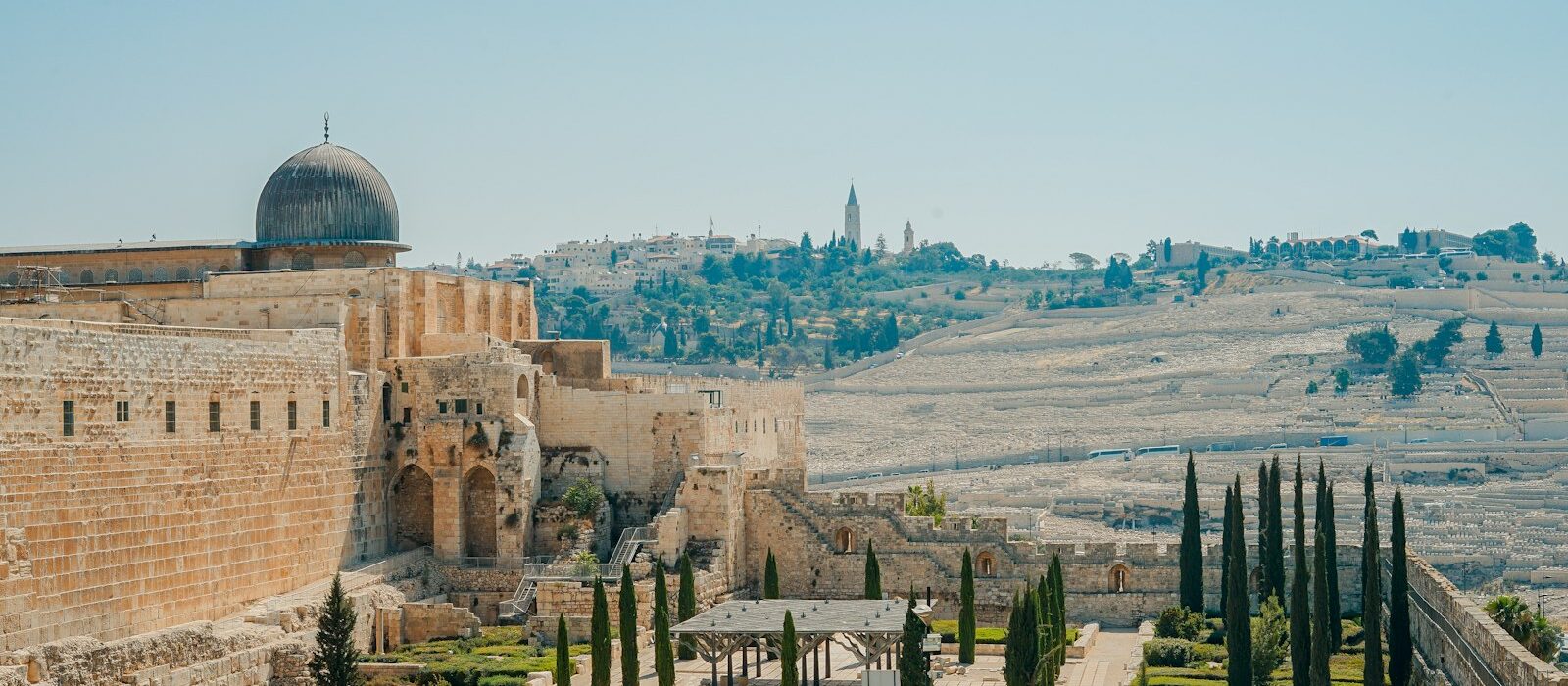
Israel is a country in the Middle East on the eastern shore of the Mediterranean Sea, between Egypt to the south-west and Lebanon to the north. It also shares borders with Jordan and Syria, and has a short coastline on the Red Sea at Eilat. Jerusalem is its designated capital, a status not recognised by every country.
Last checked: November 2026
The CIA World Factbook places Israel at roughly 31°30′N, 34°45′E and gives its total area as about 21,900 square kilometres, slightly larger than the US state of New Jersey. Despite its modest size, the country packs in a wide range of landscapes, from a low, fertile coastal plain to central hills, the Negev desert in the south and the Jordan Rift Valley in the east.
Israel is bordered by Egypt, Jordan, Lebanon and Syria, and also adjoins the West Bank and the Gaza Strip. Its Mediterranean coast is home to cities such as Tel Aviv and Haifa, while the Dead Sea, shared with Jordan and the West Bank, lies on its eastern edge. Border arrangements and the status of some territories are politically sensitive, so travellers should always rely on the current official guidance of their own government.
Introduction to Israel
Israel is a parliamentary democracy of about 10.2 million people, established in 1948 on the eastern Mediterranean coast. Its landscapes range from beaches and modern cities to mountains and desert, and its holy sites draw visitors of many faiths. Hebrew and Arabic are the main languages, and English is widely understood.
Last checked: November 2026
According to Israel’s Central Bureau of Statistics, the population stood at about 10.244 million in April 2026, made up of roughly 76% Jews and others, 21.1% Arabs and 2.9% foreign residents. The population is concentrated along the coastal plain and around Jerusalem, while the Negev desert in the south is far more thinly settled.
Visitors find a country of strong contrasts: ancient stone alleys sit close to high-tech office towers, and a few hours’ drive can take you from a Mediterranean beach to a desert canyon or the shores of the Dead Sea. The currency is the new shekel (ILS), the international calling code is +972, and clocks follow Israel Standard Time (UTC+2), moving to UTC+3 in summer.
Daily life follows the Jewish calendar in many places, so Friday evening to Saturday evening is the weekly Shabbat rest, when some shops, restaurants and public services slow down or close. Other communities keep their own weekly and religious rhythms, which is worth remembering when planning any trip. Entry rules are covered in our Israel visa requirements guide, and top sights are listed in our best places to visit in Israel guide.
History of Israel
The land of Israel has been settled for thousands of years and was ruled in turn by Canaanite, Israelite, Persian, Roman, Byzantine, Arab, Crusader, Mamluk and Ottoman powers. The modern State of Israel was declared on 14 May 1948, when the British Mandate ended, after the United Nations had proposed partitioning the territory in 1947.
Last checked: November 2026
An Egyptian inscription of around 1208 BCE, the Merneptah Stele, contains the earliest known mention of a people called Israel in Canaan. Over the following centuries the region saw the Israelite kingdoms, then conquest and rule by successive empires. Jerusalem, Acre, Caesarea and Masada still carry layers from the Roman, Byzantine, Crusader and Ottoman eras, which is why so many visitors come for the archaeology alone.
Ottoman rule lasted about 400 years and ended in 1917, when British forces took Jerusalem. The 1917 Balfour Declaration expressed British support for a Jewish national home in Palestine, and Britain then governed the territory under a League of Nations mandate until 1948. In this period Jewish immigration grew, Tel Aviv was founded in 1909 and Hebrew was revived as a spoken language, while Arab and Jewish national movements increasingly competed over the land’s future.
The 1948 declaration of independence was followed immediately by war with neighbouring Arab states. Palestinians remember the same events as the Nakba, the displacement of much of the Arab population, and the question of borders, refugees and the status of Jerusalem has shaped the region ever since. Because this history remains contested, travellers will meet different narratives depending on whom they speak to and which sites they visit.
Culture and Traditions of Israel
Israeli culture blends Jewish, Muslim, Christian and Druze traditions with customs brought by immigrants from dozens of countries. Everyday life is informal and direct, religious festivals shape the calendar, and food, music and family gatherings are central. Visitors will notice both strong religious observance and a lively secular, café and nightlife scene.
Last checked: November 2026
The CIA World Factbook’s 2022 estimate puts the population at about 73.5% Jewish, 18.1% Muslim, 1.9% Christian and 1.6% Druze. Jewish communities trace their roots to Europe, North Africa, the Middle East, Ethiopia and beyond, and each has contributed its own music, cooking and festivals. Arab Muslim and Christian communities, and the Arabic-speaking Druze of the Galilee and Carmel, keep their own celebrations and are known for generous hospitality.
Major Jewish holidays such as Rosh Hashanah, Yom Kippur, Sukkot, Hanukkah and Passover set the rhythm of the year, and shops and public services often close around them. Muslim citizens mark Ramadan, Eid al-Fitr and Eid al-Adha, while Christian communities in Nazareth, Haifa and Jerusalem celebrate Christmas and Easter with processions and decorations. In autumn, olive-harvest traditions are especially visible in Arab and Druze villages.
Israelis are often informal and outspoken, and a blunt question or opinion is usually meant as friendly interest rather than rudeness. At holy sites, covered shoulders and knees are expected, and some places have separate prayer areas or limited visiting hours. Photography, dress and behaviour rules vary between sites, so follow posted signs and the guidance of staff.
Food and Cuisine of Israel
Israeli cuisine mixes dishes brought by Jewish communities from Europe, North Africa and the Middle East with long-established Arab and Levantine cooking. Expect fresh salads, tahini, olive oil, grilled meats, flatbreads and rich desserts. Hummus, falafel and shakshuka are the best-known dishes, but regional specialities reward the curious eater.
Last checked: November 2026
Many of the country’s signature foods have roots outside Israel and are shared across the region, which is part of their appeal. Food markets such as Jerusalem’s Mahane Yehuda and Tel Aviv’s Carmel Market are good places to sample several dishes in one visit. Some restaurants follow kosher rules, so menus may separate meat and dairy, and many places close for Shabbat.
Signature dishes to try:
- Hummus: a creamy chickpea and tahini spread, often served warm as a full meal with pita.
- Falafel: deep-fried chickpea balls, usually stuffed into pita with salad, pickles and tahini.
- Shakshuka: eggs poached in a spiced tomato and pepper sauce, a popular breakfast of North African origin.
- Sabich: a pita filled with fried eggplant, boiled egg, tahini, salad and amba, brought by Iraqi Jewish immigrants.
- Israeli salad: finely chopped cucumber and tomato with herbs, lemon and olive oil, a staple of breakfast tables.
- Bourekas: flaky pastries filled with cheese, potato or spinach, from Sephardi Jewish tradition.
- Jachnun: slow-cooked rolled Yemenite pastry, typically served with grated tomato, egg and zhug.
- Shawarma: thinly sliced grilled meat served in pita or laffa with salads and sauces.
- Meorav Yerushalmi: the Jerusalem mixed grill, a spiced meat dish considered a city speciality.
- Malabi: a chilled milk pudding topped with rosewater syrup, nuts and coconut.
- Knafeh: a sweet cheese pastry of shredded dough soaked in syrup, best eaten warm.
Plan your trip: read our Israel visa requirements, explore the best places to visit in Israel, check the best time to visit Israel, follow a ready-made Israel itinerary, compare where to stay in Israel and flights to Israel, and see how to travel with our guide to getting around Israel.
Explore Israel Travel Guides
Explore our detailed guides to plan every part of your Israel trip.
Israel: Best Places
The best places to visit in Israel, grouped by interest: historic sites, cities, coast, desert and the Dead Sea.
View Guide ›Israel: Best Time to Visit
When to visit Israel by region and month, with weather, rainfall, holidays, Ramadan and peak-season notes.
View Guide ›Israel: Flights
Flights to Israel: main airports, airlines, arrival tips, a Before You Fly checklist and current flight deals.
View Guide ›Israel: Getting Around
How to get around Israel by train, bus, light rail, car and taxi, with Rav-Kav tips, driving rules and Shabbat notes.
View Guide ›Israel: Itineraries
Realistic Israel itineraries for 3, 5, 7 and 10 days, with routes, overnight bases and practical safety notes.
View Guide ›Israel: Visa
Who needs the ETA-IL or a visa for Israel, with official fees, required documents and where to apply on the government portal.
View Guide ›Israel: Hotels
Where to stay in Israel: best areas by city, hotel types for every budget, booking tips and current hotel deals.
View Guide ›Explore Israel Tours
Discover guided tours and adventures in Israel. Compare itineraries, prices and traveller reviews on TourRadar before you book.
Guided tours & deals
Affiliate partner · Globe Navo may earn a commission from qualifying bookings at no extra cost to you.
❓ Israel FAQ
Where is Israel?
Israel is in the Middle East on the eastern Mediterranean coast, bordered by Egypt, Jordan, Lebanon and Syria, and adjoining the West Bank and Gaza. It also has a short coastline on the Red Sea at Eilat.
What is the capital of Israel?
Jerusalem is the designated capital of Israel, although its status is disputed and not recognised by every country. Tel Aviv is the main coastal city and business hub, so check your own embassy guidance before travelling.
What languages are spoken in Israel?
Hebrew and Arabic are the main languages, and English is widely understood in cities, hotels and tourist areas. Many other languages are also heard because of immigration from dozens of countries.
What currency does Israel use?
Israel uses the new shekel (ILS), often written NIS. Cards are widely accepted in cities, but it is sensible to carry some cash for markets, small shops and tips. Check current exchange rates before you travel.
Is Israel safe to visit?
Official advisories differ by region: the US rates Israel Level 3 (Reconsider Travel) and advises against travel near Gaza, while the UK advises against travel to some areas. Read current government advice and check insurance cover before booking.
Plan Your Trip to Israel
Your Next Adventure in Israel Awaits!
Explore Deals →🎁 Best deals for Israel
Offers from trusted travel stores for your Israel trip. Compare a few options before you book, and check each store's terms for the final price.
Browse by type: Hotel deals · Flight deals · Travel eSIM · Car rental
More destinations to explore
GhanaGhana travel guide to its location in West Africa, history, culture and food, from…
 CzechiaCzechia travel guide covering where the country is, its history, culture and food, with…
 Guinea-BissauDiscover Guinea-Bissau: where this small West African country sits on the Atlantic coast, plus…