 HaitiDiscover Haiti: where it is, its revolutionary history, Creole culture and traditions, and signature…
DESTINATION
Marshall Islands
A guide to the Marshall Islands, a Pacific nation of coral atolls in Micronesia, covering its location, history, Marshallese customs and local food.
📅 Last updated:
🌍 Quick Facts

Marshall Islands at a glance
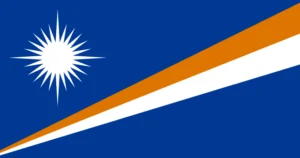
Capital: Majuro
Currency: United States dollar (USD)
Language: Marshallese and English (both official)
Population: About 42,000 (2021 census: 42,418)
Time zone: UTC+12
Calling code: +692
Internet domain: .mh
Main airport: Marshall Islands International Airport (MAJ), Majuro
Best time to visit: December to April (drier season)
📍 Marshall Islands Map
🖼️ Marshall Islands: Location, History, Culture & Food
✨ Complete Travel Guide
Where Is the Marshall Islands Located?
The Marshall Islands is a Pacific island country in Micronesia, in the central North Pacific roughly halfway between Hawaii and Australia. It consists of 29 coral atolls and five isolated islands, arranged in two parallel chains called Ratak and Ralik, and its capital, Majuro, lies in the Ratak chain.
Last checked: November 2026
The country has one of the smallest land areas of any nation, about 181 square kilometres, yet its islands are scattered across roughly 1.9 million square kilometres of ocean. The atolls and islands together comprise about 1,156 individual islands and islets, and the lagoons they enclose cover around 11,673 square kilometres. The Marshall Islands has no land borders, and by sea its neighbours include the Federated States of Micronesia to the west, Kiribati to the southeast, Nauru to the south and Wake Island to the north.
The two chains run from northwest to southeast, about 250 kilometres apart. Ratak, meaning sunrise, is the eastern chain and includes Majuro, Arno, Aur, Maloelap, Wotje and Mili. Ralik, meaning sunset, is the western chain and includes Kwajalein, Jaluit and Ebon, along with the northern atolls of Bikini, Enewetak and Rongelap.
Majuro is itself an atoll of 64 islands, and government buildings stand on three fused islands, Djarrit, Uliga and Delap. Kwajalein Atoll encloses one of the largest lagoons in the world, and the town of Ebeye on that atoll is the second-largest settlement after Majuro. More than two-thirds of the population lives on Majuro and Ebeye, while many outer atolls have only small communities.
There are no high islands, so the land is low coral limestone and sand, and the country uses UTC+12 as its time zone. The climate is tropical, hot and humid, with a wet season from about May to November and only infrequent typhoons.
Introduction to the Marshall Islands
The Republic of the Marshall Islands is a Pacific island nation of about 42,000 people (2021 census), and its capital is Majuro. Marshallese and English are the official languages, the United States dollar is the currency, and the country has been in free association with the United States since 1986.
Last checked: November 2026
The Marshall Islands is a parliamentary republic with an executive presidency, and it became a United Nations member state in 1991. Its relationship with the United States is set out in the Compact of Free Association, which entered into force on 21 October 1986 and was renewed in 2023. Under the Compact the United States is responsible for the country’s defence, and Marshallese citizens may live and work in the United States.
The economy is small and depends heavily on United States Compact funding, fishing licences and the international ship registry. Most people live on Majuro and Ebeye, while land, the lagoon and family ties remain central to Marshallese life.
The country’s only UNESCO World Heritage site is the Bikini Atoll Nuclear Test Site, inscribed in 2010 as a testimony to the start of the nuclear age. Read the official description on the UNESCO page for the Bikini Atoll Nuclear Test Site. Before you plan a trip, read our guide to Marshall Islands visa requirements. To plan the rest of your trip, explore the best places to visit in the Marshall Islands, check the best time to visit the Marshall Islands, follow a Marshall Islands itinerary, read about where to stay in the Marshall Islands, compare flights to the Marshall Islands and see how to get around the Marshall Islands.
- Official name: Republic of the Marshall Islands
- Capital: Majuro
- Languages: Marshallese and English
- Currency: United States dollar (USD)
- Time zone: UTC+12
- Calling code and domain: +692 and .mh
History of the Marshall Islands
Micronesian navigators settled the Marshall Islands long before European contact. Germany claimed the islands in 1885, Japan took control in 1914 and the United States captured them in 1944. After nuclear tests between 1946 and 1958, the country became self-governing in free association with the United States in 1986.
Last checked: November 2026
Early settlement and European claims
Little is clearly known about the earliest history, but Micronesian seafarers had settled the atolls by the first millennium BCE and navigated between them in sailing canoes. Spain claimed the islands in 1874, and after papal mediation it recognised a German claim in 1885, when the Marshall Islands became a German protectorate. German traders and administrators set up copra plantations and a trading network centred on Jaluit Atoll.
Japanese rule and the Pacific War
Japan took control of the islands at the start of World War I, and in 1920 the League of Nations gave it a mandate over the former German territories in Micronesia. Japan developed copra production and built military bases on atolls such as Kwajalein, Mili, Jaluit, Maloelap and Wotje. United States forces landed on Kwajalein Atoll on 31 January 1944 and took control of the islands from the Japanese in early February after intense fighting on Kwajalein and Enewetak, which devastated the atolls and cost many Marshallese civilians their lives.
Trust Territory and nuclear testing
In 1947 the United Nations made the Marshall Islands part of the Trust Territory of the Pacific Islands, administered by the United States. Between 1946 and 1958 the United States carried out 67 nuclear tests, mainly at Bikini and Enewetak atolls. The largest, Castle Bravo, was detonated at Bikini on 1 March 1954 and spread fallout over inhabited atolls such as Rongelap and Utirik, and communities were displaced, with health and compensation issues that continue today.
Independence and the Compact
The Marshall Islands adopted its own constitution in 1979, with Amata Kabua as its first president, and the Compact of Free Association with the United States entered into force on 21 October 1986. The United Nations formally ended the trusteeship in 1990, and the country joined the United Nations in 1991.
Culture and Traditions of the Marshall Islands
Marshallese culture, known as manit, centres on family, clan, land and hospitality. Society is matrilineal, chiefs called iroij lead clans, and canoe building, weaving and navigation remain proud traditions. Major celebrations include a child’s first birthday, called kemem, and national days such as Constitution Day and Manit Day.
Last checked: November 2026
Clans, land and family
Marshallese belong to clans, called jowi, led by chiefs known as iroij, with clan heads known as alap, and land is passed down through the mother’s line. Hospitality, cooperation and respect for elders and family are strongly valued, and land is the focus of social organisation. Visitors should ask before entering or using private land, because most land is owned by families and is not public.
Navigation, canoes and crafts
Marshallese seafarers once crossed long distances between atolls in sailing canoes, using stars, wave patterns and stick charts, which map ocean swells rather than land. Canoe building and canoe sailing are still practised, and sailing races are popular events. Women weave pandanus and coconut-fibre mats, baskets, fans and hats, and finely woven mats called jaki-ed are exchanged at important ceremonies. Crafts can be bought at shops and markets on Majuro, and the Alele Museum on Majuro keeps a collection of traditional objects.
Celebrations and holidays
The kemem, a child’s first birthday, is one of the most important family events, with feasting, singing, speeches and gifts. National days include Constitution Day on 1 May, Fishermen’s Day on the first Friday of July and Manit Day on the last Friday of September, which celebrates Marshallese custom through crafts and dance. Nuclear Victims Remembrance Day on 1 March is a solemn day of remembrance. Marshallese and English are the official languages, and a simple Yokwe (hello) is always welcome.
Food and Cuisine of the Marshall Islands
Marshallese cooking is built on what the atolls provide: breadfruit, pandanus, coconut and fresh reef and ocean fish. Signature foods include roasted breadfruit, bwiro, pandanus paste and raw tuna, while rice and flour are imported. Feasts, especially the first-birthday kemem, bring many of these dishes together.
Last checked: November 2026
Breadfruit and fish are the traditional staples, and coconut and pandanus supply flavour, sweetness and cooking fat. Local supply varies by season and by atoll, so the dishes below are the ones most often associated with Marshallese cooking rather than a fixed menu.
- Roasted breadfruit: breadfruit is the main starch and is roasted, boiled or baked, and eaten more like a vegetable than a fruit.
- Bwiro: fermented breadfruit paste, wrapped in leaves and cooked in an earth oven, which keeps for many months.
- Pandanus paste: cooked pandanus fruit pressed into dense dried cakes, known as mokwan in the Ratak chain and jaankun in the Ralik chain.
- Raw tuna: fresh tuna eaten as sashimi or marinated in coconut milk and lime, a poke-style dish.
- Baked reef fish: whole fish wrapped in leaves and cooked over coals or in an earth oven for celebrations.
- Coconut crab: a large land crab prized as a delicacy, which is not always easy to find in populated areas.
- Mashed taro: boiled and mashed taro root, served as a side dish and often combined with coconut.
- Chukuchuk: a Marshallese dish of rice and coconut.
- Sticky rice balls: a rice-based snack that reflects the role of imported rice in modern meals.
- Earth-oven pork: pork and chicken cooked in the um, the traditional earth oven, for feasts.
Coconut water is the everyday drink, and the nut is used at every stage of growth. At a kemem, guests are traditionally served a wide spread of foods and are encouraged to take some home.
Explore Marshall Islands Travel Guides
Explore our detailed guides to plan every part of your Marshall Islands trip.
Marshall Islands: Best Places
Highlights from Majuro to the outer atolls, covering beaches, museums, wartime history, diving and the Bikini Atoll World Heritage site, with access...
View Guide ›Marshall Islands: Best Time to Visit
When to go to the Marshall Islands: the December to April dry season, wet-season rain, trade winds, typhoon and drought notes, holidays...
View Guide ›Marshall Islands: Flights
Flights to the Marshall Islands: Majuro airport, United's Island Hopper from Honolulu, Nauru Airlines links, arrival tips and a pre-flight checklist.
View Guide ›Marshall Islands: Getting Around the
How to get around the Marshall Islands: shared taxis and the bus on Majuro, car hire and driving, boats to Arno and...
View Guide ›Marshall Islands: Itineraries
Realistic 3, 5, 7 and 10 day Marshall Islands itineraries based around Majuro, with Arno, Jaluit and other outer atoll options and...
View Guide ›Marshall Islands: Visa
Who can enter the Marshall Islands visa-free or on arrival, passport validity, onward tickets, extensions and the official sources to check before...
View Guide ›Marshall Islands: Hotels
Where to stay in the Marshall Islands: Majuro hotels, the Delap-Uliga-Djarrit area, Ebeye and outer-atoll guesthouses, with booking tips.
View Guide ›Explore Marshall Islands Tours
Discover guided tours and adventures in Marshall Islands. Compare itineraries, prices and traveller reviews on TourRadar before you book.
Guided tours & deals
Affiliate partner · Globe Navo may earn a commission from qualifying bookings at no extra cost to you.
❓ Marshall Islands FAQ
Where are the Marshall Islands?
The Marshall Islands are a Pacific island country in Micronesia, in the central North Pacific roughly halfway between Hawaii and Australia. They consist of 29 coral atolls and five isolated islands, arranged in two chains called Ratak and Ralik, with Majuro as the capital.
What is the capital and currency of the Marshall Islands?
The capital is Majuro, an atoll in the Ratak chain where government buildings stand on the fused islands of Djarrit, Uliga and Delap. The country uses the United States dollar as its currency, so there is no separate local currency to exchange.
What languages are spoken in the Marshall Islands?
Marshallese and English are the official languages. Marshallese is used in daily life and by government agencies, while English is also official. Learning a simple greeting such as Yokwe, which means hello, is a friendly gesture for visitors.
Why is Bikini Atoll famous?
Bikini Atoll in the Ralik chain was a United States nuclear test site, with 23 tests held there between 1946 and 1958. UNESCO inscribed the Bikini Atoll Nuclear Test Site on the World Heritage List in 2010 as testimony to the start of the nuclear age.
What is a kemem in Marshallese culture?
A kemem is the celebration of a baby first birthday and one of the most important family events in Marshallese life. Relatives and friends gather for a feast with singing, speeches and gifts, and guests are traditionally encouraged to take some food home.
Plan Your Trip to Marshall Islands
Your Next Adventure in Marshall Islands Awaits!
Explore Deals →🎁 Best deals for Marshall Islands
Offers from trusted travel stores for your Marshall Islands trip. Compare a few options before you book, and check each store's terms for the final price.
Browse by type: Hotel deals · Flight deals · Travel eSIM · Car rental
More destinations to explore
HaitiDiscover Haiti: where it is, its revolutionary history, Creole culture and traditions, and signature…
 Democratic Republic of the CongoExplore the Democratic Republic of the Congo's location, geography, history, culture and food, with…
 KazakhstanExplore Kazakhstan, the vast Central Asian country of steppe, mountains and Silk Road heritage,…