 CroatiaExplore Croatia: where it is, its history, culture and food, from Zagreb and the…
DESTINATION
Democratic Republic of the Congo
Explore the Democratic Republic of the Congo's location, geography, history, culture and food, with links to visa, best places, best time to visit, itinerary, hotel, flight and transport guides.
📅 Last updated:
🌍 Quick Facts

Democratic Republic of the Congo at a glance
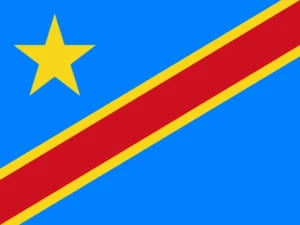
Capital: Kinshasa
Currency: Congolese franc (CDF)
Language: French (official); Kikongo, Lingala, Swahili and Tshiluba are national languages
Population: More than 100 million
Time zone: UTC+1 (Kinshasa and west), UTC+2 (east and south)
Calling code: +243
Internet domain: .cd
Main airport: Ndjili International Airport, Kinshasa (FIH)
Best time to visit: Dry season (roughly June to September in Kinshasa), but check government advisories first
📍 Democratic Republic of the Congo Map
🖼️ Democratic Republic of the Congo: Location, History, Culture & Food
✨ Complete Travel Guide
Safety Notice: As of our check on 8 November 2026, the US State Department rates the Democratic Republic of the Congo Level 4: Do Not Travel (advisory issued 15 July 2026), citing health, crime, unrest, terrorism and kidnapping, including an Ebola outbreak. The US CDC advises avoiding all travel to Ituri and Nord-Kivu provinces and nonessential travel to Haut-Uélé and Tshopo, and the Government of Canada advises avoiding all travel. The UK FCDO advises against all travel, or all but essential travel, to parts of the country. Conditions differ between regions, so read the latest US State Department advisory, UK FCDO travel advice and CDC Ebola situation summary before making any plans.
Where Is the Democratic Republic of the Congo Located?
The Democratic Republic of the Congo (DRC) lies in Central Africa on the equator. It is the second-largest country in Africa, covering about 2.3 million square kilometres, and shares borders with nine countries. Its short Atlantic coastline sits at the mouth of the Congo River, while most of the country is inland.
Last checked: November 2026
The DRC’s neighbours are Angola, Burundi, the Central African Republic, the Republic of Congo, Rwanda, South Sudan, Tanzania, Uganda and Zambia. The country is often called Congo-Kinshasa to distinguish it from the Republic of Congo, and its capital, Kinshasa, faces Brazzaville, the capital of that neighbour, across the Congo River. These are among the closest pair of national capitals in the world.
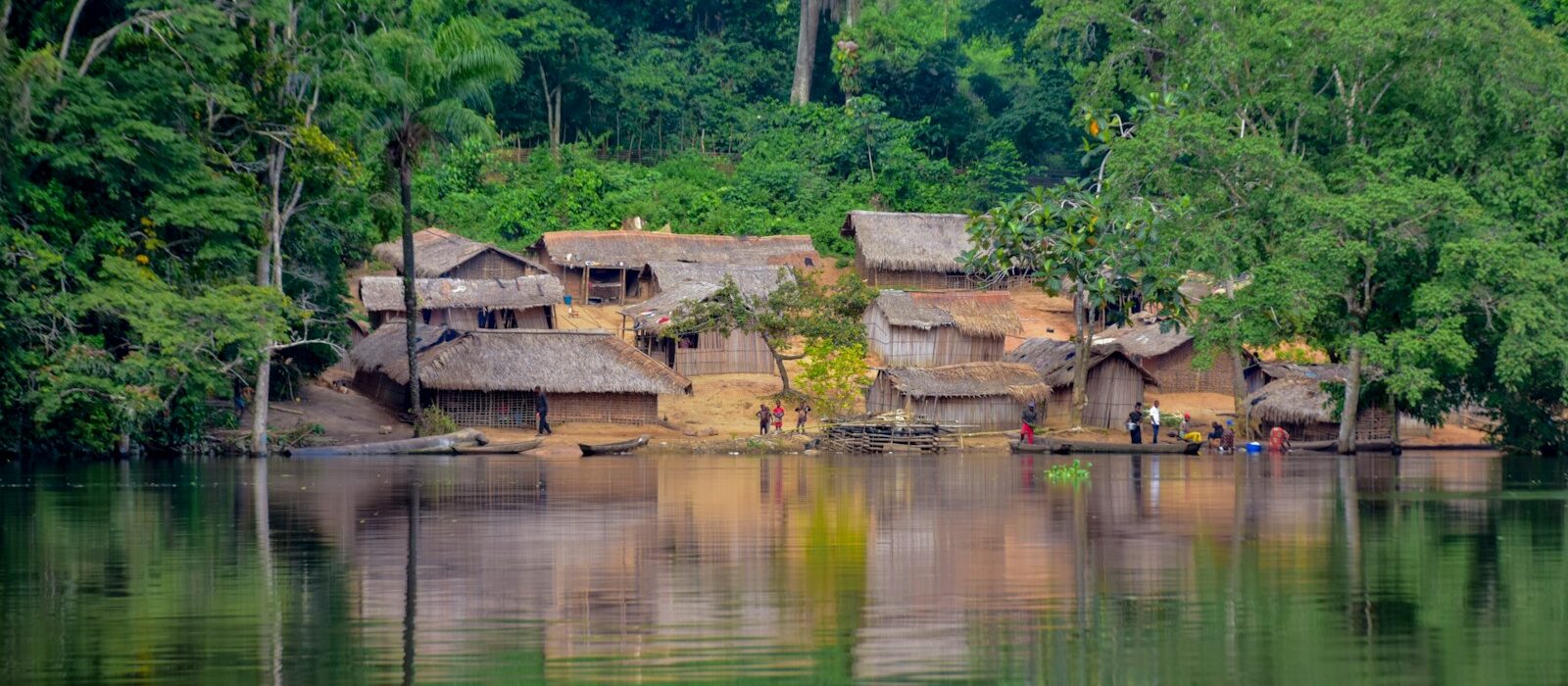
The centre of the country is the vast Congo Basin, home to the world’s second-largest rainforest after the Amazon. The Congo River, one of the deepest rivers on Earth, drains the basin and is a main artery for river transport. To the east the land rises into the Albertine Rift, with Lake Tanganyika, Lake Kivu, the Virunga volcanoes and the Rwenzori Mountains, while the south-east holds the high Katanga plateau and its mining belt.
Climate and landscapes change sharply from region to region. Our best time to visit the DRC guide explains the seasons, and the best places in the DRC guide describes the main regions and sights.
Introduction to the Democratic Republic of the Congo
The DRC is a French-speaking republic of more than 100 million people, with Kinshasa as its capital and the Congolese franc as its official currency. Four national languages, Kikongo, Lingala, Swahili and Tshiluba, are spoken alongside French, and hundreds of ethnic groups give the country exceptional diversity.
Last checked: November 2026
Kinshasa is one of Africa’s largest cities and the centre of Congolese music, fashion and politics. Other major cities include Lubumbashi in the south-east, the mining hub of Kolwezi, Mbuji-Mayi, Kisangani on the upper Congo River and Goma on Lake Kivu. The country uses the +243 calling code and the .cd internet domain. Kinshasa and the west follow West Africa Time (UTC+1), while the east and south follow Central Africa Time (UTC+2).
The DRC holds large reserves of cobalt, copper and other minerals used around the world, but it is just as notable for biodiversity. It is the only home of the bonobo and of the okapi, and it protects mountain gorillas and Grauer’s gorillas. UNESCO recognises five natural World Heritage sites here: Virunga, Garamba, Kahuzi-Biega, Salonga and the Okapi Wildlife Reserve, and several of them have at times appeared on its List of World Heritage in Danger.
Entry rules and security conditions in the DRC can change quickly. Read our DRC visa guide for entry requirements and our guide to getting around the DRC to understand how difficult domestic travel can be.
History of the Democratic Republic of the Congo
The DRC’s history runs from powerful precolonial kingdoms through the brutal Congo Free State and Belgian rule to independence on 30 June 1960. Decades of dictatorship under Mobutu, followed by wars between 1996 and 2003, shaped modern Congo, where conflict in the east continues today.
Last checked: November 2026
Before European contact, the Kongo Kingdom near the Atlantic coast and the Luba, Lunda and Kuba states of the savannah controlled trade and developed sophisticated political systems and art. Portuguese contact with Kongo began in the late fifteenth century, and the Atlantic slave trade removed large numbers of Central Africans through the coast.
In the 1880s King Leopold II of Belgium claimed the Congo basin as a personal possession, and the Congo Free State was recognised at the 1884 to 1885 Berlin Conference. Forced labour for rubber and ivory caused immense suffering and international outrage, and in 1908 Belgium took over the territory as the Belgian Congo.
Independence came on 30 June 1960 with Patrice Lumumba as prime minister, but the new state quickly fell into crisis and Lumumba was killed in January 1961. Mobutu Sese Seko took power in 1965, renamed the country Zaire in 1971 and ruled until 1997, when rebels led by Laurent-Désiré Kabila took Kinshasa and restored the name Democratic Republic of the Congo.
Two wars, in 1996 to 1997 and 1998 to 2003, drew in many neighbouring states and caused enormous loss of life. Joseph Kabila led the country after his father’s assassination in 2001, and Félix Tshisekedi has been president since 2019. Armed groups, including M23, continue to fight in the east, which is why governments warn against travel to several provinces. Historic sites in Kinshasa and Kongo Central are part of our DRC itineraries, written for future planning once advisories ease.
Culture and Traditions of the Democratic Republic of the Congo
Congolese culture is best known for rumba music, bold fashion, expressive visual art and strong community ties. Hundreds of ethnic groups and four national languages create regional traditions, while Christianity, especially Catholicism and Protestantism, shapes daily life alongside Kimbanguism and long-standing local beliefs.
Last checked: November 2026
Congolese rumba, developed in Kinshasa and Brazzaville in the mid-twentieth century, was inscribed on UNESCO’s Representative List of the Intangible Cultural Heritage of Humanity in 2021, jointly with the Republic of Congo. Artists such as Franco Luambo, Tabu Ley Rochereau and Papa Wemba carried rumba and soukous across Africa and Europe, and Kinshasa’s bars and nightclubs remain the heart of the scene.
La Sape, the Society of Ambianceurs and Elegant Persons, celebrates elaborate tailoring and vivid colour. Its followers, known as sapeurs, are found in both Kinshasa and Brazzaville. Traditional arts include Kuba raffia textiles, Luba memory boards and Chokwe and Songye masks, many of which are now also held in museums abroad.
Greetings matter in Congolese life. People usually greet one another and ask after family before getting down to business, and a handshake is common. Dress is generally neat and modest, especially in churches and rural areas. Ask permission before photographing people, and note that photographing government buildings, military sites and airports may be restricted. Independence Day on 30 June is the main national holiday.
Food and Cuisine of the Democratic Republic of the Congo
Congolese cuisine is built around cassava, plantain, rice, fish and leafy greens, served with rich palm oil sauces and grilled meats. Meals are usually shared, and a starchy staple such as fufu or ugali is eaten with a stew. Dishes vary by region, with river fish common in the Congo Basin and the east.
Last checked: November 2026
These are some of the signature dishes and foods you will meet across the country:
- Poulet à la moambe: chicken cooked in a rich sauce of palm nuts, often served with rice or cassava.
- Pondu: cassava leaves pounded and stewed with palm oil, often with fish or meat.
- Fufu and ugali: firm porridge made from cassava or maize flour, eaten by hand with stew.
- Chikwangue (kwanga): fermented cassava paste steamed in leaves and sold in long sticks.
- Liboke de poisson: fish wrapped in leaves and steamed or grilled over coals.
- Makayabu: salted fish, usually cooked in a tomato and onion sauce.
- Fumbwa: a stew of wild forest leaves cooked with peanut paste or palm oil.
- Brochettes: grilled meat or fish skewers sold at roadside stalls and evening bars.
- Makemba: fried ripe plantain, a common side dish and snack.
- Mikate: fried dough balls eaten as a breakfast or street snack.
Meals are typically shared from common dishes, and diners wash their hands before eating with the right hand. Primus, brewed by Bralima, is one of the best-known local beers. Food hygiene matters when travelling, so follow current health advice from the CDC and TravelHealthPro.
If conditions allow a trip in future, our DRC hotels guide explains where to stay in Kinshasa and beyond, and our flights to the DRC guide covers international arrival and the current entry restrictions on airlines.
Explore Democratic Republic of the Congo Travel Guides
Explore our detailed guides to plan every part of your Democratic Republic of the Congo trip.
Democratic Republic of the Congo: Best Places
A guide to the main cities, rivers, parks and cultural sights of the Democratic Republic of the Congo, with honest notes on...
View Guide ›Democratic Republic of the Congo: Best Time to Visit
When to go to the Democratic Republic of the Congo: general seasons, regional climate differences, public holidays, packing tips and why current...
View Guide ›Democratic Republic of the Congo: Itineraries
Cautious sample itineraries of 3, 5, 7 and 10 days for the Democratic Republic of the Congo, written for future planning and...
View Guide ›Democratic Republic of the Congo: Visa
How visa and entry rules work for the Democratic Republic of the Congo, including embassy applications, passport validity, Ebola-related entry restrictions and...
View Guide ›Democratic Republic of the Congo: Flights
International flight planning for the Democratic Republic of the Congo, covering main airports, Ebola-related boarding and entry rules, a Before You Fly...
View Guide ›Democratic Republic of the Congo: Getting Around the
How domestic travel works in the Democratic Republic of the Congo, covering flights, roads, river transport, taxis and driving, with verified safety...
View Guide ›Democratic Republic of the Congo: Hotels
Where to base yourself in the Democratic Republic of the Congo, with area guidance for Kinshasa and other cities, stay types and...
View Guide ›Explore Democratic Republic of the Congo Tours
Discover guided tours and adventures in Democratic Republic of the Congo. Compare itineraries, prices and traveller reviews on TourRadar before you book.
Guided tours & deals
Affiliate partner · Globe Navo may earn a commission from qualifying bookings at no extra cost to you.
❓ Democratic Republic of the Congo FAQ
What is the capital of the Democratic Republic of the Congo?
Kinshasa is the capital and largest city of the DRC. It stands on the south bank of the Congo River, directly opposite Brazzaville, the capital of the neighbouring Republic of Congo. It is the political, cultural and economic centre of the country.
What languages are spoken in the DRC?
French is the official language. Four national languages, Kikongo, Lingala, Swahili and Tshiluba, are widely spoken alongside hundreds of local languages. Lingala is especially common in Kinshasa and in Congolese music, while Swahili is widespread in the east.
What currency does the DRC use?
The official currency is the Congolese franc (CDF). According to the US State Department, many vendors also accept US dollars, but most businesses and banks only take US bills printed after 2010. Carry clean, newer notes if you bring cash.
Is it safe to travel to the DRC?
The US State Department currently rates the DRC Level 4: Do Not Travel, citing health, crime, unrest, terrorism and kidnapping, including an Ebola outbreak. The UK FCDO also advises against travel to parts of the country. Check current advisories before making any plans.
What is the DRC famous for?
The DRC is known for the Congo River and the second-largest rainforest in the world, bonobos and okapi, mineral wealth such as cobalt and copper, and Congolese rumba music. It also has five natural UNESCO World Heritage sites.
Plan Your Trip to Democratic Republic of the Congo
Find Hotels in Democratic Republic of the Congo
Compare Flight Deals
Car Rental Options
Visa Guide for Tourists
Your Next Adventure in Democratic Republic of the Congo Awaits!
Explore Deals →🎁 Best deals for Democratic Republic of the Congo
Offers from trusted travel stores for your Democratic Republic of the Congo trip. Compare a few options before you book, and check each store's terms for the final price.
Browse by type: Hotel deals · Flight deals · Travel eSIM · Car rental
 SimOptionsFind the latest SimOption promo code and coupon code for travel eSIM data plans. See how to apply an offer at checkout, fix common code errors and stay connected abroad.
Get Coupon View Deal
 TourRadarTourRadar is an online marketplace for multi-day guided tours, small-group trips and tailor-made journeys offered by independent tour operators around the world.
Get Coupon View Deal
More destinations to explore
CroatiaExplore Croatia: where it is, its history, culture and food, from Zagreb and the…
 JapanJapan travel guide with quick facts, location, history, culture and traditional food, plus UNESCO…

 NamibiaNamibia is a southwest African country of desert coast, high plateau and wide-open space,…