 LithuaniaLithuania is a Baltic country of medieval old towns, forests and a sandy coast.…
DESTINATION
Kazakhstan
Explore Kazakhstan, the vast Central Asian country of steppe, mountains and Silk Road heritage, with its location, history, culture and signature food.
📅 Last updated:
🌍 Quick Facts

Kazakhstan at a glance
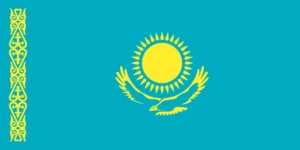
Capital: Astana
Currency: Kazakhstani tenge (KZT)
Language: Kazakh (state language) and Russian
Population: About 20.5 million
Time zone: UTC+5 (single time zone nationwide, no daylight saving)
Calling code: +7
Internet domain: .kz
Main airport: Almaty International Airport (ALA)
Best time to visit: May, June and September for mountains; April to May and September to October for cities and the south
📍 Kazakhstan Map
🖼️ Kazakhstan: Location, History, Culture & Food
✨ Complete Travel Guide
Where Is Kazakhstan Located?
Kazakhstan is a landlocked country in Central Asia. It borders Russia to the north and west, China to the east, and Kyrgyzstan, Uzbekistan and Turkmenistan to the south, while its western edge meets the Caspian Sea. Its capital is Astana, and it is the ninth-largest country in the world by land area.
Last checked: November 2026
The official Kazakh government portal gives the country’s total area as 2,724,900 square kilometres. Kazakhstan is described there as the largest landlocked state on Earth, far from any open ocean. Its frontier with Russia, at about 7,644 kilometres, is the longest international land border in the world.
Astana lies in the north-central part of the country, while Almaty, the largest city, sits in the southeast near the mountains on the Kyrgyz and Chinese borders. A small western part of Kazakhstan is generally counted as lying in Eastern Europe, which is why the country is often described as stretching from Central Asia towards Europe.
Beyond the two largest cities, Shymkent sits in the far south near the Uzbek border, and the historic Silk Road city of Turkestan lies north of it in the same southern belt. The landscape changes dramatically over long distances, from low desert plains near the Caspian Sea to the high peaks of the Tian Shan range along the southeastern frontier. Because distances are so large, it helps to think of Kazakhstan as several regions rather than a single destination.
Introduction to Kazakhstan
Kazakhstan is a presidential republic in Central Asia that declared independence from the Soviet Union on 16 December 1991. Its population is estimated at about 20.5 million people. Kazakh and Russian are widely used, the currency is the tenge, and Astana is the capital, with Almaty the main commercial and cultural centre.
Last checked: November 2026
Few countries combine so much open space with so few people. Vast grasslands, deserts, salt lakes and snow-capped mountain ranges all lie within its borders, and the population density is among the lowest in the world.
Astana’s skyline is a product of recent decades, with futuristic towers and wide avenues built largely after the city became the capital, while Almaty keeps a leafy, older feel beneath the mountains. Together they show two sides of the country: a young state building a new identity and a relaxed city shaped by trade and the foothills. Outside the cities, small towns, yurt camps and national parks are where most visitors feel the scale of the landscape. Many travellers combine a few days in a city with a short trip into the mountains or the steppe, which gives a fuller picture of the country than either one alone.
Astana has carried the capital role since the late 1990s, when the government moved from Almaty. The city was renamed Nur-Sultan in 2019 and returned to the name Astana in 2022, so older maps and guidebooks may still show the earlier name. Before you go, check the Kazakhstan visa guide to see how entry rules work, and browse the best places to visit in Kazakhstan when you start planning.
History of Kazakhstan
Kazakhstan’s history runs from nomadic steppe peoples and the Mongol conquest to the Kazakh Khanate, Russian and Soviet rule, and independence on 16 December 1991. It was the last Soviet republic to declare independence. Modern Kazakhstan has had two presidents, Nursultan Nazarbayev until 2019 and Kassym-Jomart Tokayev since.
Last checked: November 2026
The steppe was home to nomadic herders for centuries, and the area was conquered by the Mongol Empire in the 13th century. After the Golden Horde broke apart in the 15th century, the Kazakh Khanate emerged over a territory that roughly matches the modern country.
Russian forces began advancing into the Kazakh steppe in the 18th century, and by the middle of the 19th century nearly all of Kazakhstan was nominally under imperial rule. After the 1917 revolution the territory was reorganised several times, and in 1936 it became the Kazakh Soviet Socialist Republic.
The Soviet decades left lasting marks. The Baikonur Cosmodrome, in the south-central part of the country, has been central to space flight since the 1950s and is still used for launches today, under a long-term lease to Russia. Kazakhstan declared sovereignty in October 1990, and full independence followed when the Soviet Union dissolved in December 1991.
The capital moved from Almaty to Astana in 1997, a decision that reshaped the country’s political and economic map. Earlier, in August 1991, the Semipalatinsk nuclear test site in the east was closed, ending decades of Soviet testing on Kazakh soil. Since independence the country has built its economy largely on oil, gas and minerals, and it has balanced its relations with Russia, China, the West and its Central Asian neighbours.
Culture and Traditions of Kazakhstan
Kazakh culture grew out of centuries of nomadic life on the Eurasian steppe, where hospitality, horsemanship, oral poetry and music mattered most. Today it blends those roots with Islamic customs, Soviet-era influences and modern city life. Visitors will most often meet it through the yurt, the dombra and shared meals at the dastarkhan table.
Last checked: November 2026
UNESCO has placed two of the best-known traditions on its Representative List of the Intangible Cultural Heritage of Humanity: the art of dombra kuy, solo pieces performed on a two-stringed lute, and the traditional knowledge and skills of making and using the yurt. Both were inscribed in 2014. UNESCO describes the yurt as a symbol of family and hospitality.
Nauryz, the spring new year celebrated around 22 March, is one of the most important holidays of the year. UNESCO inscribed it in 2009 as a shared tradition of several countries rather than of Kazakhstan alone. Celebrations usually include public gatherings, folk music, traditional games and special seasonal dishes.
Kazakhs are widely known for their hospitality, and traditionally every guest is offered food at the dastarkhan, the low table set for shared meals. Respect for elders is also counted among the values that traditional Kazakh family life is built on.
Kazakhstan is a secular state, and most people who follow a religion are Muslim, with a sizeable Russian Orthodox community as well. Traditional horse games such as kokpar, where riders compete for control of a goat carcass, are still played at festivals and in rural areas. When invited to a home, guests usually remove their shoes at the door and are offered tea and sweets before the main meal.
Kazakhstan’s heritage is also recognised on the UNESCO World Heritage List. According to the Kazakh foreign ministry, the country now has seven properties, including the Mausoleum of Khoja Ahmed Yasawi in Turkestan, the Tamgaly petroglyphs, the Saryarka steppe and lakes, the Western Tien-Shan, the Silk Roads Chang’an–Tianshan corridor and the sacred sites of Mangystau.
Food and Cuisine of Kazakhstan
Kazakh cuisine is built around meat, dairy and bread, shaped by the nomadic life of the steppe. Lamb, beef and horse meat are the most common meats, and fermented milk drinks are a traditional staple. Beshbarmak, kazy, baursak and kumis are the dishes most closely tied to the country.
Last checked: November 2026
Meals are built for sharing, and a festive table often brings several of the dishes below together. Here are ten signature foods and drinks to look for:
- Beshbarmak: boiled meat served over broad noodles with onion and broth. The name is usually translated as “five fingers” because it was traditionally eaten by hand.
- Kazy: a horse-meat sausage that is a fixture of celebration tables, usually served sliced.
- Kuyrdak: a hearty stew of liver, heart and other organ meats, often with onions and potatoes.
- Baursak: small pieces of fried dough served with tea and at almost every gathering.
- Manty: steamed dumplings filled with minced meat, a popular comfort dish.
- Laghman: a noodle dish with meat and vegetables, shared with neighbouring Central Asian cuisines.
- Plov: a rice dish cooked with meat, widely served across Kazakhstan.
- Kumis: lightly fermented mare’s milk, a traditional steppe drink.
- Shubat: a thicker, white fermented camel’s milk drink.
- Kurt: dried salty cheese balls, often eaten as a snack with tea.
Tea is part of nearly every meal and is traditionally poured into small bowls, with hosts topping up guests’ bowls often so the drink stays hot. Bread, dried fruit and sweets usually share the table, and a festive meal often ends with more tea and conversation.
Visitors who do not eat horse meat or organ meats will still find beef, lamb, chicken and fish on many menus in the larger cities, as well as bread and pastries such as baursak.
Plan your trip: check the Kazakhstan visa guide, explore the best places to visit in Kazakhstan, pick dates with the best time to visit Kazakhstan guide, follow a Kazakhstan itinerary, choose where to stay in Kazakhstan, compare flights to Kazakhstan and learn how to get around Kazakhstan.
Explore Kazakhstan Travel Guides
Explore our detailed guides to plan every part of your Kazakhstan trip.
Kazakhstan: Best Places
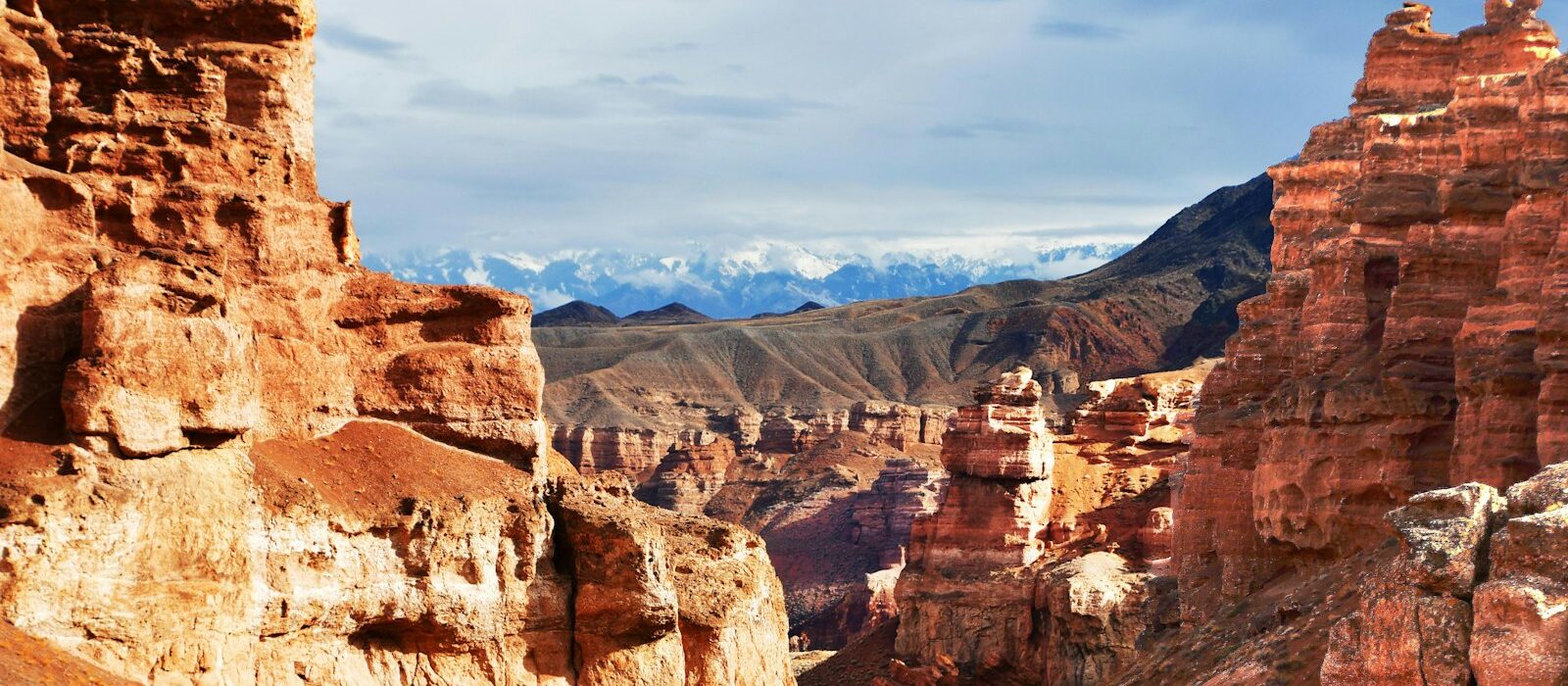
Discover the best places to visit in Kazakhstan, from UNESCO heritage sites and Charyn Canyon to Almaty, Astana and the northern steppe.
View Guide ›Kazakhstan: Best Time to Visit
Learn the best time to visit Kazakhstan, with regional climate differences, seasons, festivals like Nauryz and packing tips for every trip.
View Guide ›Kazakhstan: Flights
Find out how to fly to Kazakhstan, including the main airports, airlines, connection hubs and a checklist to complete before you travel.
View Guide ›Kazakhstan: How to Get Around
Compare trains, domestic flights, city transport, ride-hailing and driving rules to choose the best way to get around Kazakhstan.
View Guide ›Kazakhstan: Itineraries
Plan your trip with realistic 3, 5, 7 and 10-day Kazakhstan itineraries covering Almaty, Charyn Canyon, Astana and the south.
View Guide ›Kazakhstan: Visa
Find out how Kazakhstan's visa and visa-free entry rules work, which documents to prepare and where to confirm the rules for your...
View Guide ›Kazakhstan: Hotels
See where to stay in Kazakhstan, with the best areas in Almaty, Astana and Turkestan and booking tips for every budget and...
View Guide ›Explore Kazakhstan Tours
Discover guided tours and adventures in Kazakhstan. Compare itineraries, prices and traveller reviews on TourRadar before you book.
Guided tours & deals
Affiliate partner · Globe Navo may earn a commission from qualifying bookings at no extra cost to you.
❓ Kazakhstan FAQ
What is the capital of Kazakhstan?
Astana is the capital of Kazakhstan and lies in the north-central part of the country. The city was renamed Nur-Sultan in 2019 and returned to the name Astana in 2022, so older maps and guidebooks may show the earlier name. Almaty remains the largest city.
Where is Kazakhstan located?
Kazakhstan is a landlocked country in Central Asia. It borders Russia, China, Kyrgyzstan, Uzbekistan and Turkmenistan, and its western edge meets the Caspian Sea. It is the ninth-largest country in the world by land area, with vast steppe, desert and mountain landscapes.
What languages are spoken in Kazakhstan?
Kazakh is the state language, and Russian is also widely used across the country. Travellers will meet both languages in daily life, so learning a few Kazakh greetings is a thoughtful gesture, while a translation app can help in places where neither language is shared.
What currency does Kazakhstan use?
Kazakhstan uses the Kazakhstani tenge, abbreviated KZT. Exchange rates change daily, so this guide does not quote a fixed rate. Check the current rate with your bank or a trusted currency converter before you travel, and confirm any fees for cash or card use.
What is Kazakhstan famous for?
Kazakhstan is known for its enormous steppe, its nomadic heritage and the Baikonur Cosmodrome. UNESCO has recognised the dombra kuy tradition and yurt-making, and signature foods include beshbarmak, kazy, baursak and kumis. It is also the largest landlocked country on Earth.
Plan Your Trip to Kazakhstan
Your Next Adventure in Kazakhstan Awaits!
Explore Deals →🎁 Best deals for Kazakhstan
Offers from trusted travel stores for your Kazakhstan trip. Compare a few options before you book, and check each store's terms for the final price.
Browse by type: Hotel deals · Flight deals · Travel eSIM · Car rental
More destinations to explore
LithuaniaLithuania is a Baltic country of medieval old towns, forests and a sandy coast.…

 HungaryHungary travel guide: where the country is, its history, culture and food, from Budapest…