 MalawiA landlocked country in southeastern Africa shaped by Lake Malawi and the Great Rift…
DESTINATION
Latvia
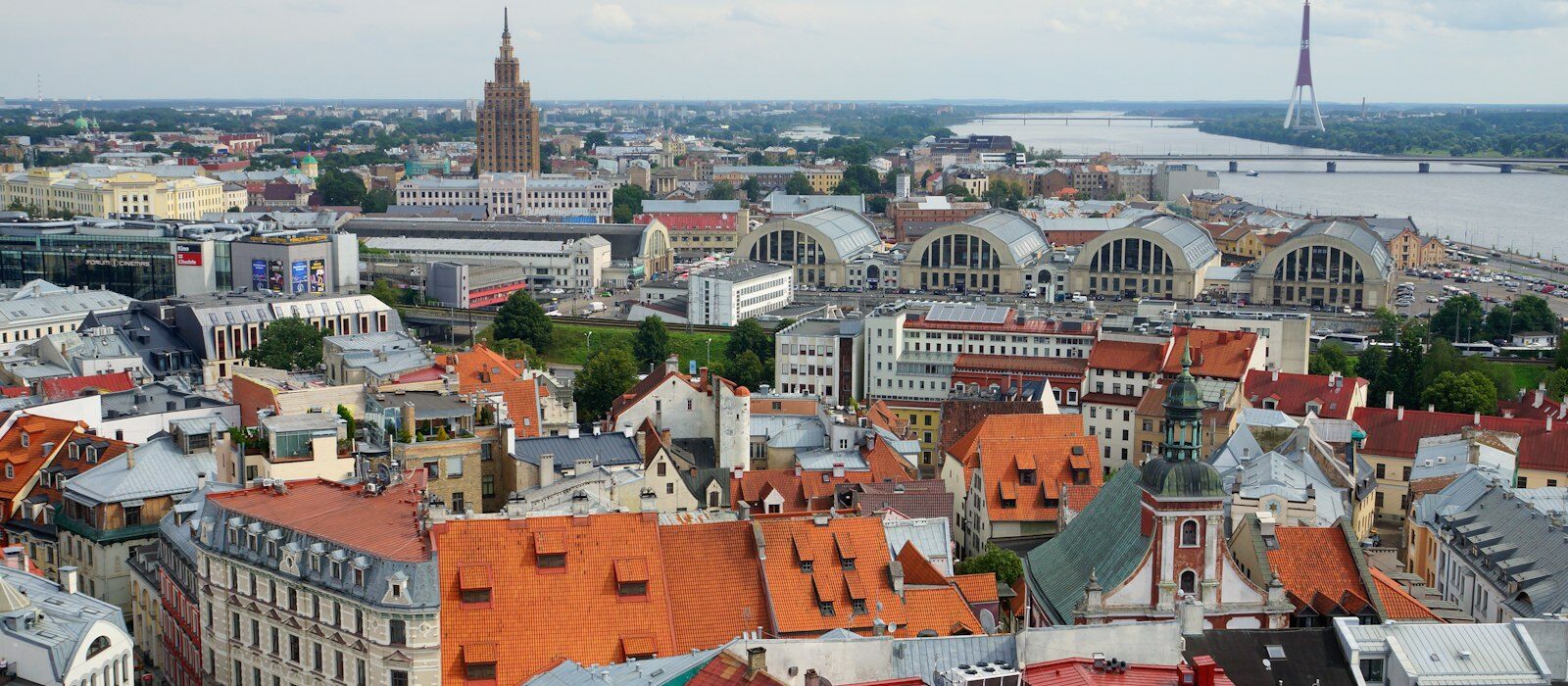
Latvia is a Baltic country of medieval old towns, Art Nouveau Riga and long coastlines. Learn its location, history, traditions and signature food.
📅 Last updated:
🌍 Quick Facts
Latvia at a glance
Capital: Riga
Currency: Euro (EUR)
Language: Latvian (official)
Population: About 1.85 million (Central Statistical Bureau, 2026)
Time zone: UTC+2 (EET); UTC+3 in summer (EEST)
Calling code: +371
Internet domain: .lv
Main airport: Riga International Airport (RIX)
Best time to visit: June to August for warm weather, beaches and Midsummer festivals
📍 Latvia Map
🖼️ Latvia: Location, History, Culture & Food
✨ Complete Travel Guide
Where Is Latvia Located?
Latvia is a country in the Baltic region of Europe, on the eastern shore of the Baltic Sea, between Estonia to the north and Lithuania to the south. It also borders Russia and Belarus to the east and southeast. Its capital and largest city, Riga, sits on the Gulf of Riga at the mouth of the Daugava River.
Last checked: November 2026
Latvia covers about 64,589 square kilometres, of which roughly 62,249 are land, which makes it slightly larger than the US state of West Virginia. Its coastline runs for about 498 kilometres along the Baltic Sea and the Gulf of Riga, so the sea shapes both the climate and the character of many coastal towns.
The country shares about 1,370 kilometres of land borders with four neighbours: Lithuania (544 km), Estonia (333 km), Russia (332 km) and Belarus (161 km). Latvia is one of the three Baltic states, together with Estonia and Lithuania, and it has been a member of both the European Union and NATO since 2004.
The terrain is mostly a low plain of fertile lowlands, with some hills in the east. The mean elevation is only about 87 metres, and the highest point, Gaiziņkalns, reaches 312 metres. The climate is maritime, with wet, moderate winters. Latvia uses Eastern European Time (UTC+2), which shifts to UTC+3 during daylight saving time in summer.
Introduction to Latvia
Latvia, officially the Republic of Latvia, is a parliamentary republic of about 1.85 million people and the middle of the three Baltic states. Visitors come for Riga’s Art Nouveau architecture, medieval old towns, long Baltic beaches, forests and bogs, and a strong song-and-dance tradition.
Last checked: November 2026
According to Latvia’s Central Statistical Bureau, the population stood at 1.845 million at the beginning of 2026, down about 0.8 percent from a year earlier. Around 589,000 people, nearly a third of the total, live in Riga. Ethnic Latvians make up about 63.8 percent of residents and ethnic Russians about 23.1 percent, which gives the cities a distinctly bilingual feel.
Latvian is the only official language, the currency is the euro (EUR), the international calling code is +371 and the country domain is .lv. Latvia joined the European Union and NATO in 2004, adopted the euro in 2014 and became a member of the OECD in 2016.
Three places in Latvia are on UNESCO’s World Heritage List: the Historic Centre of Riga, the Struve Geodetic Arc, a chain of survey points shared with nine other countries, and the Old Town of Kuldīga. Beyond Riga, the traditional regions of Kurzeme, Zemgale, Vidzeme and Latgale each have their own landscapes, dialects and local customs, from the western coast to the lake country of the east.
History of Latvia
Latvia’s modern history centres on independence proclaimed on 18 November 1918, Soviet and Nazi occupations from 1940, and the restoration of independence on 21 August 1991. It joined the EU and NATO in 2004 and adopted the euro in 2014. Earlier centuries were shaped by Baltic tribes, the Livonian Order, Sweden and the Russian Empire.
Last checked: November 2026
The territory was originally settled by Baltic peoples, and the country’s name comes from the Latgalians, one of four eastern Baltic tribes that merged to form the ethnic core of the Latvian people. Christian missionaries arrived around 1180, and Riga later grew into a major trading port. In 1282 it joined the Hanseatic League, the merchant network that linked northern European trading cities. Most of Vidzeme came under Swedish rule in 1629, while Latgale stayed under Polish control until 1772. By 1795, when the Duchy of Courland became a Russian province, all of present-day Latvia belonged to the Russian Empire.
After the Russian Empire collapsed at the end of the First World War, the Latvian People’s Council proclaimed an independent republic on 18 November 1918. A War of Independence followed, and the first elected parliament, the Constitutional Assembly, met on 1 May 1920. The interwar period was a time of agrarian reform, economic growth and cultural development.
The 1939 Molotov-Ribbentrop Pact between the Soviet Union and Nazi Germany led to the Soviet occupation of Latvia in 1940. Nazi Germany occupied the country in 1941, and the Soviets returned in 1944. Over the decades of Soviet rule, the share of ethnic Latvians in the population fell from about 77 percent in 1935 to about 52 percent in 1989.
The peaceful Singing Revolution began in 1987 across the Baltic republics. Latvia declared the restoration of its independence on 4 May 1990, and it was secured on 21 August 1991 after the failed coup attempt in Moscow. Russian troops left in 1994, and the Museum of the Occupation of Latvia in Riga is a good place to learn how Latvians remember this period.
Culture and Traditions of Latvia
Latvian culture is built on choral singing, folk songs called dainas and seasonal festivals. The Song and Dance Festival, held about every five years and recognised by UNESCO, and the midsummer holiday Jāņi on 23 and 24 June are the best-known traditions, alongside national costumes, crafts and a deep attachment to nature.
Last checked: November 2026
The first Latvian song festival took place in 1873 with about 1,000 participants, at a time when song helped Latvians keep their identity under foreign rule. Today the Song and Dance Festival gathers tens of thousands of singers, dancers and musicians, and in 2003 UNESCO recognised the Baltic song traditions, shared with Estonia and Lithuania, as a Masterpiece of the Oral and Intangible Heritage of Humanity. Many performers wear regional folk costumes, which are otherwise most often seen at festivals and on Midsummer night.
Folk poetry is the root of this tradition. The collector Krišjānis Barons published Latvju dainas between 1894 and 1915, a six-volume compilation of about 300,000 song texts and variants. The daina is a short, rhythmic folk song, and many are still sung at weddings, festivals and family gatherings. The kokle, a traditional Latvian string instrument, is often heard alongside them.
Jāņi, the summer solstice celebration, is the most widely observed holiday in Latvia, and Līgo Day on 23 June and Jāņi Day on 24 June are both public holidays. The festival has pre-Christian roots, later overlaid with the feast of Saint John the Baptist. People sing through the night, jump over bonfires, wear wreaths of flowers and leaves, and share caraway cheese and beer. Many Latvians leave the cities for the countryside at this time, so expect quieter streets in Riga.
Everyday courtesy goes a long way: a simple Labdien (hello) or Paldies (thank you) is always welcome. If locals invite you to join a dance or a song during a festival, accepting is part of the experience.
Food and Cuisine of Latvia
Latvian cuisine is hearty and built around rye bread, pork, potatoes, dairy, smoked fish and seasonal produce. Signature dishes include grey peas with bacon, speķa pīrāgi, rupjmaize, sklandrausis, aukstā zupa and maizes zupa, usually served with kvass or a shot of Riga Black Balsam.
Last checked: November 2026
Latvian food evolved to carry people through long, cold winters, so it favours simple, filling ingredients. Rye bread is a national staple, and meals often come with sour cream, kefir or soured milk on the side. Markets and self-service cafeterias in Riga are the easiest places to try everyday dishes at modest prices.
- Pelēkie zirņi ar speķi (grey peas with bacon): large grey peas stewed with fried onions and bacon pieces, widely regarded as a national dish.
- Speķa pīrāgi: wheat or rye buns filled with finely chopped streaky bacon and onion, common at Christmas and Jāņi.
- Rupjmaize: dark rye bread, a national staple served with most meals.
- Sklandrausis: a sweet pie of rye dough filled with potato and carrot paste and seasoned with caraway, of Livonian origin.
- Aukstā zupa: a cold beetroot soup, popular in the warmer months.
- Maizes zupa: a sweet dessert soup made from rye bread, dried fruit and whipped cream.
- Šprotes: smoked Baltic sprats, often eaten on rye bread.
- Jāņu siers: fresh cheese flavoured with caraway, traditionally eaten at midsummer.
- Kliņģeris: a sweet, pretzel-shaped bread served on special occasions such as name days.
- Rasols: a creamy potato salad found at many celebrations and cafeterias.
To drink, try kvass, a lightly fermented rye bread drink that is mildly sour, or Riga Black Balsam, a dark herbal liqueur made in Riga since the 1700s and often stirred into cocktails or coffee. Latvia also has a long brewing tradition, and craft breweries have expanded in recent years.
Ready to plan? Start with the Latvia visa requirements, explore the best places to visit in Latvia and check the best time to visit Latvia. Then use the Latvia itinerary, find where to stay in Latvia, compare flights to Latvia and see how to get around Latvia.
Explore Latvia Travel Guides
Explore our detailed guides to plan every part of your Latvia trip.
Latvia: Best Places
A grouped guide to Latvia's best places: Riga, Sigulda, Cēsis, Rundāle Palace, Kuldīga, Jūrmala, Cape Kolka and Latgale, with suggested time needed.
View Guide ›Latvia: Best Time to Visit
When to visit Latvia: summer, Midsummer, autumn and winter compared, with Riga rainfall by month, regional climate, public holidays and packing tips.
View Guide ›Latvia: Flights
Flying to Latvia: Riga International Airport, main airlines, direct and connecting routes, airport transfers, arrival tips and a pre-flight checklist.
View Guide ›Latvia: How to Get Around
Plan domestic travel in Latvia: trains, buses, Riga public transport, car rental, driving rules and tips for choosing the best option for...
View Guide ›Latvia: Itineraries
Realistic 3, 5, 7 and 10 day Latvia itineraries built around Riga, Sigulda, Cēsis, Kuldīga and the coast, with overnight stops and...
View Guide ›Latvia: Visa
How entry to Latvia works: visa-free stays, who needs a Schengen visa, passport rules, fees, EES border checks and the current status...
View Guide ›Latvia: Hotels
Where to stay in Latvia: best areas in Riga, Jūrmala, Sigulda, Cēsis and Kuldīga, hotel types, booking tips and Riga's tourist tax...
View Guide ›Explore Latvia Tours
Discover guided tours and adventures in Latvia. Compare itineraries, prices and traveller reviews on TourRadar before you book.
Guided tours & deals
Affiliate partner · Globe Navo may earn a commission from qualifying bookings at no extra cost to you.
❓ Latvia FAQ
Where is Latvia?
Latvia is a Baltic country in northern Europe on the eastern shore of the Baltic Sea. It lies between Estonia to the north and Lithuania to the south, and also borders Russia and Belarus to the east. Its capital is Riga.
What is the capital of Latvia?
The capital and largest city of Latvia is Riga, which sits on the Gulf of Riga at the mouth of the Daugava River. Its historic centre is a UNESCO World Heritage Site, known for medieval streets and Art Nouveau architecture.
What currency and language are used in Latvia?
Latvia uses the euro (EUR), which it adopted in 2014. Latvian is the only official language, although many people also speak Russian, and English is commonly understood in cities and tourist areas.
What is Latvia famous for?
Latvia is known for Art Nouveau architecture in Riga, medieval old towns, Baltic beaches, forests and its song-and-dance tradition. The Song and Dance Festival and the Jāņi midsummer celebration are its best-known cultural events.
What food should I try in Latvia?
Try grey peas with bacon, speķa pīrāgi bacon buns, rupjmaize rye bread, sklandrausis pie and maizes zupa dessert soup. Smoked sprats and caraway cheese are also popular, often paired with kvass or Riga Black Balsam.
Plan Your Trip to Latvia
Your Next Adventure in Latvia Awaits!
Explore Deals →🎁 Best deals for Latvia
Offers from trusted travel stores for your Latvia trip. Compare a few options before you book, and check each store's terms for the final price.
Browse by type: Hotel deals · Flight deals · Travel eSIM · Car rental
More destinations to explore
MalawiA landlocked country in southeastern Africa shaped by Lake Malawi and the Great Rift…
 JordanJordan travel guide: where it is, its history, culture and signature dishes.
 BulgariaPlan a trip to Bulgaria with top destinations, UNESCO sites, the best time to…