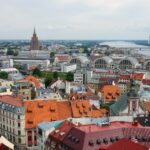
Latvia has four distinct seasons, long summer evenings and short winter days, so the right month depends on what you want to do. This guide compares the seasons, shows month-by-month conditions for Riga and explains how festivals and public holidays can shape your plans.
When Is the Best Time to Visit Latvia?
The best time to visit Latvia is from late May to early September, when days are long, temperatures are mild and festivals fill the calendar. July and August are warmest for beaches, June suits Midsummer, September is quieter, and December appeals to Christmas-market visitors. Winters are cold and dark but cheaper.
Last checked: November 2026
Latvia has a temperate, maritime-influenced climate. In Riga the warmest months are July and August, with typical daytime highs of around 21 degrees Celsius, while January and February nights commonly fall to between minus 7 and minus 8. Rain falls in every month, so the main seasonal differences are temperature and daylight rather than a dry or wet season.
Seasons at a Glance
Late Spring (May to June)
Days lengthen quickly and the countryside turns green. Night temperatures in Riga average around 6 degrees in May and 10 in June, and rainfall is moderate. This is a good time for city sightseeing, Gauja Valley walks and bird watching on the coast, with fewer visitors than in July.
Summer (June to August)
Summer is the most popular season, with up to about 18 hours of daylight in midsummer, a busy festival calendar and the best weather for beaches at Jūrmala, Liepāja and Ventspils. The Baltic Sea stays cool, and swimming is generally comfortable only in July and August. July and August are also the wettest months in Riga, so pack a light rain jacket.
Autumn (September to November)
September is mild, with daytime highs around 16 degrees, and works well for hiking, harvest-season food and quieter castle visits. October and November become wetter, darker and colder, with about 61 millimetres of rain a month in Riga.
Winter (December to February)
Winter is cold, with snow common from November to March and around eight hours of daylight in January. The UK FCDO notes that temperatures can drop to minus 25 degrees Celsius or lower between October and March. Reward yourself with Riga’s Old Riga Christmas Market in Dome Square in December, concerts, saunas and winter sports at resorts such as Sigulda and Madona.
Month-by-Month Guide for Riga
| Month | What to expect | Rainfall (mm) |
|---|---|---|
| January | Coldest month, nights around -8 C, snow likely | 36 |
| February | Cold and frosty, nights around -7 C | 27 |
| March | Still freezing at night, around -4 C | 32 |
| April | Cool, nights near 1 C, spring arrives | 41 |
| May | Fresh and green, nights around 6 C | 48 |
| June | Highs near 20 C, long evenings, Midsummer | 58 |
| July | Warmest month, highs near 21 C, busiest | 77 |
| August | Warm, highs near 21 C, wetter spells | 76 |
| September | Mild, highs near 16 C, quieter | 73 |
| October | Cool, damp and darkening | 61 |
| November | Cold and grey, first snow possible | 61 |
| December | Cold, festive, short days | 49 |
These figures are long-term averages for Riga from travel climate data and are a guide only. For forecasts, use the Latvian Environment, Geology and Meteorology Centre.
Regional Differences
The best time differs by region. Coastal areas such as Jūrmala, Liepāja and Ventspils are tempered by the sea, so winters are milder and summer days a little cooler. Inland Latgale is more continental: the average January minimum is around minus 6.6 degrees in Daugavpils, compared with around minus 2.8 in Liepāja. Cape Kolka and the Kurzeme coast are best for bird migration in April, May and September.
Festivals and Public Holidays
- Līgo and Jāņi (23 and 24 June): The midsummer public holidays. Many Latvians leave the cities for the countryside, so Riga can be quiet and some shops close.
- Restoration of Independence Day (4 May): A public holiday that follows Labour Day on 1 May, creating a long weekend.
- Proclamation Day (18 November): The national day, marked with ceremonies and events, particularly in Riga.
- Christmas (24 to 26 December) and New Year’s Eve (31 December): Public holidays, with many venues closed on 24 and 25 December.
- Easter: Good Friday and Easter Monday are public holidays, on movable dates.
Banks and government offices usually close on public holidays, and smaller-town shops may too. Confirm opening times locally if you travel on a holiday.
Peak and Low Seasons
Peak season runs from June to August, when hotel rates are highest and popular places such as Riga, Sigulda and Jūrmala are busiest. The low season is from October to March, apart from December, when Christmas markets draw visitors. Hotel prices are generally lower in winter. Shoulder months such as May and September balance good weather, fewer crowds and lower prices.
Best Season by Travel Style
- Beaches and swimming: July and August.
- City breaks and sightseeing: May to September.
- Hiking and canoeing: late May to early October.
- Cultural traditions: June, for Līgo and Jāņi.
- Christmas markets: December, in Old Riga.
- Winter sports: December to February, at Sigulda and Madona.
- Bird watching: April, May and September on the coast.
What to Pack
- All year: a waterproof jacket, comfortable walking shoes and layers.
- Summer: light clothes for warm days, a sweater for evenings, swimwear and sun protection.
- Winter: a thermal base layer, a warm coat, hat, gloves and boots with good grip. Check the Latvia Travel winter guide for ideas, and the FCDO’s safety and security advice for cold-weather and road warnings.
Best Time to Visit Latvia FAQs
What is the best month to visit Latvia?
July is the warmest and most popular month, but June offers long evenings and the Midsummer festivals with slightly fewer crowds. May and September are good choices if you prefer quieter sights.
Is Latvia worth visiting in winter?
Yes, if you enjoy snow, saunas, concerts and Christmas markets, and hotel prices are generally lower. Expect short days and temperatures well below freezing, and pack accordingly.
Can you swim in the sea in Latvia?
Yes, usually in July and August, although the Baltic Sea stays cool. Jūrmala, Liepāja and Ventspils have the best known beaches.
Will Midsummer affect my trip?
Līgo and Jāņi on 23 and 24 June are public holidays. Cities empty as people head to the countryside, so book accommodation early and check opening hours.