 Australia
DESTINATION
Bulgaria
Plan a trip to Bulgaria with top destinations, UNESCO sites, the best time to go, entry and visa basics, safety notes and how to get around.
📅 Last updated:
Bulgaria: Hotels · Flights · Visa Guide · Deals
🌍 Quick Facts

Bulgaria at a glance
🏛️
Capital: Sofia
💱
Currency: Euro (EUR)
💬
Language: Bulgarian
👥
Population: About 6.4 million
🕒
Time zone: UTC+2 (UTC+3 in summer)
📞
Calling code: +359
🌐
Internet domain: .bg
✈️
Main airport: Sofia Airport (SOF)
★
Best time to visit: May to June and September to October
Food
- Shopska salad
- Banitsa
- Kebapche
- Tarator
- Rakia
Places
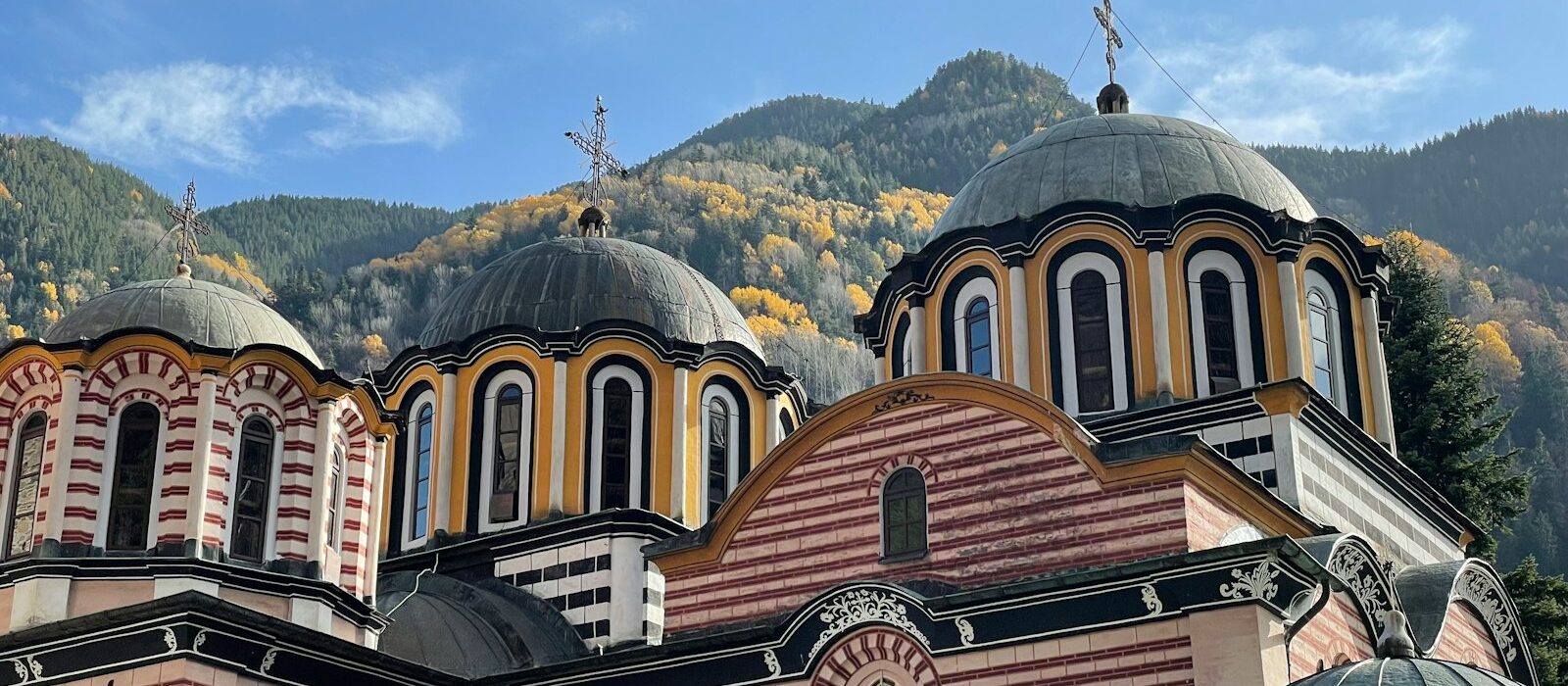
- Rila Monastery
- Plovdiv Old Town
- Alexander Nevsky Cathedral
- Veliko Tarnovo
- Nessebar
- Bansko and Pirin
- Boyana Church
Weather
Hot summers, cold snowy winters, mild spring and autumn
Culture
Orthodox monasteries, Thracian heritage and folk traditions
Cities
- Sofia
- Plovdiv
- Varna
- Burgas
- Veliko Tarnovo
📍 Bulgaria Map
📷 Photos of Bulgaria
Explore Bulgaria Travel Guides
Explore our detailed guides to plan every part of your Bulgaria trip.
📍
Bulgaria: Best Places
Compare the best places to visit in Bulgaria, from Sofia, Plovdiv and Rila Monastery to the Black Sea coast and mountain resorts,...
View Guide › 🌤️Bulgaria: Best Time to Visit
Plan the best time to visit Bulgaria with month-by-month weather, ski and beach seasons, festivals, holiday effects and what to pack.
View Guide › 🗺️Bulgaria: Itineraries
Choose a 3, 5, 7 or 10 day Bulgaria itinerary with realistic travel advice, getting-around tips and common planning mistakes.
View Guide › 🛂Bulgaria: Visa
Find out who needs a visa for Bulgaria, how the Schengen 90 in 180 day rule works and what to check about...
View Guide › ✈️Bulgaria: Flights
Plan flights to Bulgaria with the main airports, how to reach each city, bus and train options, time zone and a pre-flight...
View Guide › 🚆Bulgaria: Getting Around
Plan getting around Bulgaria with trains, buses, domestic flights, driving rules, taxis and Sofia public transport, plus realistic travel times.
View Guide › 🛌Bulgaria: Hotels
Find where to stay in Bulgaria, from Sofia and Plovdiv to the Black Sea coast and ski resorts, with stay types, family...
View Guide ›🖼️ Bulgaria: Location, History, Culture & Food
✨ Complete Travel Guide
Where Is Bulgaria Located?
Bulgaria is a country in southeastern Europe, on the eastern side of the Balkan Peninsula. It borders Romania to the north, Serbia and North Macedonia to the west, and Greece and Turkey to the south. The Black Sea forms its eastern edge, and Sofia is the capital. This Bulgaria travel guide covers the main facts.
Last checked: November 2026
The Danube marks most of the northern border with Romania. South of the river, the Balkan Mountains, called Stara Planina in Bulgarian, run east to west across the middle of the country. The Rila, Pirin and Rhodope mountains rise in the southwest and south, and Musala in the Rila range, at 2,925 metres, is the highest peak on the whole Balkan Peninsula. Between the Balkan Mountains and the Rhodopes lies the broad Upper Thracian Plain, around Plovdiv.
The country covers 110,994 square kilometres and uses Eastern European Time (UTC+2), which becomes UTC+3 in summer. People sometimes assume Bulgaria is small enough to cross in a few hours, but Sofia to the Black Sea coast is roughly 400 to 500 km by road, and mountain routes add time. Sofia, Varna, Burgas and Plovdiv have airports, and our guide to flights to Bulgaria compares them. Once you arrive, getting around Bulgaria explains trains, buses and driving.
Bulgaria Travel Guide: What Is the Country Known For?
Bulgaria is a parliamentary republic in the European Union, with Sofia as its capital and Bulgarian as its official language. The euro became its currency on 1 January 2026. About 6.4 million people live there as of 31 December 2025, according to the latest annual figure from the National Statistical Institute.
That population figure covers the whole country, not a single city. Sofia is the largest city, followed by Plovdiv, Varna, Burgas and Stara Zagora. Bulgaria joined NATO in 2004 and the European Union in 2007.
Visitors usually come for heritage and landscapes. Bulgaria has ten UNESCO World Heritage properties, including Rila Monastery, the Ancient City of Nessebar and Pirin National Park, all listed on the UNESCO World Heritage Centre. The country also has ski resorts, Black Sea beaches and a rose-growing valley near Kazanlak that is known for rose oil. Cyrillic became the third official alphabet of the EU when Bulgaria joined in 2007.
For ideas on where to start, see our guide to the best places to visit in Bulgaria. Entry rules depend on your passport, so check our Bulgaria visa guide for tourists before you book.
What Is the History of Bulgaria?
Bulgaria’s history reaches back to Thracian tribes and Roman cities, but the state dates to 681, when Byzantium recognised the First Bulgarian Empire. It later passed through a second empire, almost five centuries of Ottoman rule, independence in 1908, a communist period that ended in 1989 and EU membership in 2007.
The Bulgarian government’s history overview gives a short timeline of the main periods.
Early peoples: Thracians and Romans
Thracian tribes lived across the region for centuries, and the Thracian Tomb of Kazanlak dates from the 4th to 3rd centuries BC. Plovdiv was once called Philippopolis, after Philip II of Macedon, who took the town in the 4th century BC. Rome later ruled the region, and Serdica, the Roman town on the site of today’s Sofia, became an important regional centre.
The First Bulgarian Empire (681 to 1018)
Khan Asparuh’s Bulgars and local Slavic tribes formed the First Bulgarian Empire, which Byzantium recognised by treaty in 681. Boris I adopted Christianity in the 860s, and the Cyrillic alphabet took shape in the empire’s literary schools in the late 9th and early 10th centuries. Simeon I, who ruled from 893 to 927, led the empire to its greatest cultural and territorial reach. Byzantium ended it in 1018.
The Second Bulgarian Empire (1185 to 1396)
A revolt led by the brothers Asen and Peter restored a Bulgarian state in 1185, with its capital at Tarnovo, now Veliko Tarnovo. The empire reached its height under Ivan Asen II, who reigned from 1218 to 1241. The Ottomans took Tarnovo in 1393, and the last parts of the empire fell by 1396.
Ottoman rule and the National Revival (1396 to 1878)
Bulgaria spent almost five centuries under Ottoman rule. Monasteries such as Rila kept Bulgarian writing and religious life going, and a period known as the National Revival grew in the 18th and 19th centuries. The April Uprising of 1876 was put down, but it drew international attention. The Russo-Turkish War of 1877 to 1878 led to an autonomous Principality of Bulgaria, and 3 March, the date of the Treaty of San Stefano, is now Liberation Day.
Independence and the 20th century
Bulgaria united with Eastern Rumelia in 1885 and declared full independence on 22 September 1908, which is 5 October in the modern calendar. The country fought in the Balkan Wars of 1912 to 1913 and sided with Germany in both World Wars. The monarchy ended in 1946, and communist rule lasted until 1989.
Modern Bulgaria
A new constitution was adopted in 1991. Bulgaria joined the Schengen Area in stages, with air and sea borders opening on 31 March 2024 and land borders on 1 January 2025. Our Bulgaria itineraries show how to fit several historic sites into 3, 5, 7 or 10 days.
What Is Bulgarian Culture Like?
Bulgarian culture draws on Orthodox Christian tradition, Slavic and Thracian roots and centuries of Ottoman influence. Bulgarian is the official language and is written in Cyrillic. Customs follow the calendar, from red and white martenitsa threads on 1 March to masked winter dances, and folk music and dance still feature at local festivals.
Language
Bulgarian is a South Slavic language. In the 2021 census, 85.3% of people who answered said Bulgarian is their mother tongue, 8.7% said Turkish and 3.9% said Romani. Younger people in cities often speak some English, but signs and menus outside tourist areas can be in Cyrillic only, so a translation app helps.
Religion
The constitution names Eastern Orthodoxy as the traditional religion, and religious institutions are separate from the state. In the 2021 census, 71.5% of those who answered the religion question said they were Christian, almost all of them Eastern Orthodox, and 10.8% said they were Muslim. Rila Monastery and many other sites are still active places of worship.
Festivals and traditions
Several Bulgarian traditions are on UNESCO’s intangible heritage lists, and festival dates vary by year.
- Baba Marta, 1 March: people exchange red and white martenitsa threads as a sign of health and spring.
- Liberation Day, 3 March: a national holiday marking the end of Ottoman rule.
- Surva, Pernik region: a winter festival of masked dancers, listed by UNESCO in 2015.
- Rose Festival, Kazanlak: events around the rose harvest, usually in late May or early June.
- Nestinarstvo: a fire-dancing ritual that UNESCO also lists.
Check the best time to visit Bulgaria before you plan a trip around one of these events.
Etiquette
Bulgarians often shake the head to mean yes and nod to mean no, which confuses many visitors, so confirm answers in words. In churches and monasteries, cover your shoulders and knees and follow local rules on photography. If you’re invited to a home, take a small gift and follow your host’s lead about shoes.
Music and arts
Bulgarian folk music is known for complex polyphonic singing, which UNESCO has recognised in the songs of the Bistritsa Babi from the Shoplouk region and in the Visoko multipart singing of Dolen and Satovcha. Traditional instruments include the gaida, a bagpipe, and the kaval, a rim-blown flute. Chiprovtsi carpets, woven by hand, are also on the UNESCO list, and the church frescoes at Boyana date from the 13th century. Folk costumes appear mostly at festivals, while everyday clothing looks like that in the rest of Europe.
What Is Traditional Bulgarian Food?
Bulgarian food centres on fresh vegetables, white brine cheese called sirene, yogurt, grilled meat and baked pastries. Shopska salad, banitsa and kebapche are the dishes most visitors try first. Regional dishes vary between the Black Sea coast, the Danube plain and the mountains.
On the coast, fish and mussels appear on many menus, while inland cooking leans on grilled meat, stews and baked dishes. Food can also help you choose a base, so compare areas in our guide on where to stay in Bulgaria.
Staples
Bread, sirene, kashkaval (a yellow cheese), yogurt and seasonal vegetables are on most tables. Bulgarian yogurt is made with a bacterium named Lactobacillus bulgaricus, and lyutenitsa, a roasted pepper and tomato relish, is spread on bread. Vegetarian options exist, such as bean soup, salads and cheese pastries, but meat appears in many dishes, so ask before you order.
Signature dishes
- Shopska salad: tomatoes, cucumbers and peppers topped with grated sirene.
- Tarator: a cold soup of yogurt, cucumber, garlic and dill.
- Banitsa: layered filo pastry with eggs and sirene.
- Kebapche and kyufte: grilled minced-meat sausages and patties.
- Sarmi: cabbage or vine leaves stuffed with rice and minced meat.
- Kavarma: a slow-cooked stew of meat and vegetables, often served in a clay pot.
- Mish-mash: eggs scrambled with peppers, tomatoes and sirene.
- Shkembe chorba: tripe soup, usually served with garlic and vinegar.
- Moussaka: the Bulgarian version layers potatoes with minced meat and a yogurt topping.
- Patatnik: a baked potato dish from the Rhodope Mountains.
Street food
Bakeries called pekarnya sell banitsa, pastries and filled rolls for a quick breakfast. Mekitsi, fried dough served with jam or white cheese, are a common snack, and grilled kebapche is easy to find at casual stands.
Drinks
Rakia, a strong fruit brandy, is the traditional spirit and is often served with a salad. Wine regions include Melnik in the southwest, and boza, a thick fermented grain drink, is popular in cooler months. Ayran, a salted yogurt drink, is a common non-alcoholic choice. Halal food is limited outside Sofia, so Muslim travellers should check menus in advance.
Desserts
Baklava and halva are common sweets, and tikvenik is a pastry filled with pumpkin and walnuts. Kozunak is a sweet braided bread served at Easter, and sutlyash is a rice pudding made with milk.
Explore Hotels & Flights
Search accommodation and flights for your destination with Expedia. Compare available options and continue to Expedia to complete your booking.
Affiliate partner · Globe Navo may earn a commission from qualifying bookings at no extra cost to you.
❓ Bulgaria FAQ
Do I need a visa to visit Bulgaria?
It depends on your passport. Visa-exempt visitors, including many from the US, UK and Canada, can stay up to 90 days in any 180-day period. Others need a Schengen visa. Check the Bulgarian Ministry of Foreign Affairs and the EU entry system pages for your nationality before you book.
What is the best time to visit Bulgaria?
May to June and September to October suit cities and monasteries, July and August suit the Black Sea coast, and December to March suits skiing. Summers are hot, winters are cold and snowy, and spring and autumn are mild but changeable.
Is Bulgaria safe for tourists?
The US State Department rates Bulgaria Level 1, exercise normal precautions, and calls it generally safe. Common problems are petty theft, ATM skimming and card fraud. Use licensed taxis, bank ATMs and normal city precautions, and check mountain weather before hiking or skiing.
What currency does Bulgaria use?
Bulgaria adopted the euro on 1 January 2026, replacing the lev at a fixed rate of 1.95583 lev per euro. Both currencies circulated during January 2026, and the euro has been the only legal tender since 1 February 2026.
How many days do you need in Bulgaria?
Three days covers Sofia and a day trip to Rila Monastery. Five to seven days adds Plovdiv and Veliko Tarnovo, and ten days lets you add the Black Sea coast or the mountains. Road and rail journeys are slower than the distances suggest.
Plan Your Trip to Bulgaria
Your Next Adventure in Bulgaria Awaits!
Explore Deals →🎁 Best deals for Bulgaria
Offers from trusted travel stores for your Bulgaria trip. Compare a few options before you book, and check each store's terms for the final price.
Browse by type: Hotel deals · Flight deals · Travel eSIM · Car rental
 KkdayFind current Kkday coupons and deals for tours, attraction tickets, transport and first app orders. See minimum spend, discount caps and exclusions before you book.
Get Coupon View Deal
 ExpediaDiscover great deals on hotels, flights, vacation packages, car rentals, and activities with Expedia. Compare travel options and plan your next trip with convenient booking choices.
Get Coupon View Deal