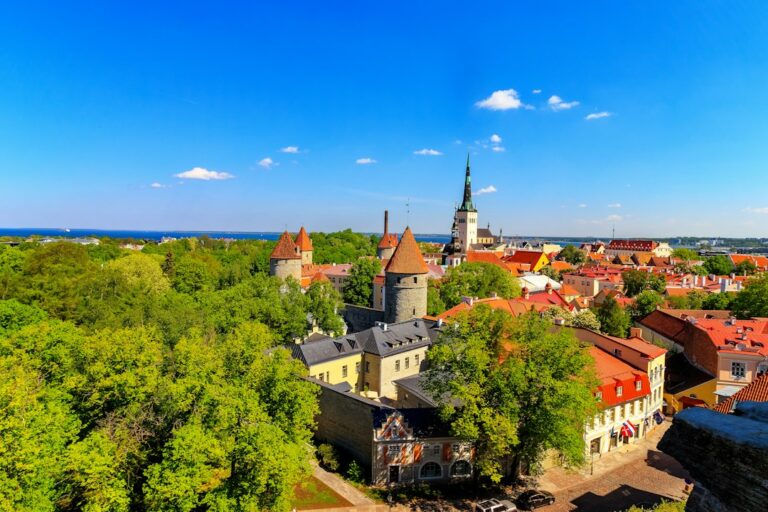
 EstoniaWhere Is Estonia Located? Estonia is a country in Northern Europe on the eastern…
DESTINATION
Jordan
Jordan travel guide: where it is, its history, culture and signature dishes.
📅 Last updated:
🌍 Quick Facts

Jordan at a glance
Capital: Amman
Currency: Jordanian dinar (JOD)
Language: Arabic
Population: About 12 million (approximate)
Time zone: UTC+3 (no daylight saving time)
Calling code: +962
Internet domain: .jo
Main airport: Queen Alia International Airport (AMM)
Best time to visit: March to May and September to November
📍 Jordan Map
🖼️ Jordan: Location, History, Culture & Food
✨ Complete Travel Guide
Safety Notice: check official advice before you plan any trip to Jordan. The US State Department lists Jordan at Level 3, “Reconsider Travel”, because of terrorism and armed conflict, and its advisory was updated on 29 August 2026. Its Level 4, “Do Not Travel”, areas are Mansheyat al Ghayyath, Ruwayshid and the borders with Syria and Iraq. The UK FCDO also advises against all travel to parts of Jordan. These warnings apply to specific risks and areas, not to the whole country, and conditions, including flight availability, can change quickly. Read the US State Department advisory and the UK FCDO travel advice for Jordan, and confirm that your travel insurance covers your plans. Last checked: November 2026
Where Is Jordan Located?
Jordan is a country in the Middle East, northwest of Saudi Arabia and between Israel to the west and Iraq to the east. It also borders Syria to the north and the West Bank along the Jordan Valley. Its only coastline is a short stretch on the Gulf of Aqaba, and its capital is Amman.
Last checked: November 2026
According to the CIA World Factbook, Jordan lies at roughly 31°N, 36°E and covers about 89,342 square kilometres, a little smaller than the US state of Indiana. Most of the country is desert plateau in the east, with a band of highlands in the west where the main cities and most of the population are found.
The Great Rift Valley runs along the western edge, carrying the Jordan River and the Dead Sea, the lowest point in Asia, which Jordan shares with Israel and the West Bank. In the far south-west, Jordan has a coastline of about 26 kilometres at Aqaba, its single port. The climate is mostly arid, with a rainy season in the west from November to April.
The geography explains how the country is used. The highlands hold Amman, Irbid and Zarqa, the Rift Valley holds the Dead Sea shore and farmland, and the south holds Petra and the desert of Wadi Rum. Because distances are short, travellers can see very different landscapes within a few hours’ drive. Our guide to the best places to visit in Jordan shows how these regions fit together.
Introduction to Jordan
Jordan, officially the Hashemite Kingdom of Jordan, is a monarchy in the Middle East that has been independent since 1946. About 12 million people live there. Arabic is the official language, English is widely understood, and the currency is the Jordanian dinar (JOD).
Last checked: November 2026
Jordan’s Department of Statistics put the population at about 12.05 million in mid-2026, with growth of roughly 1.7% a year. Around three-quarters of people live in just three governorates: Amman, Irbid and Zarqa, according to the Higher Population Council, so the north-west is far more densely settled than the vast eastern desert.
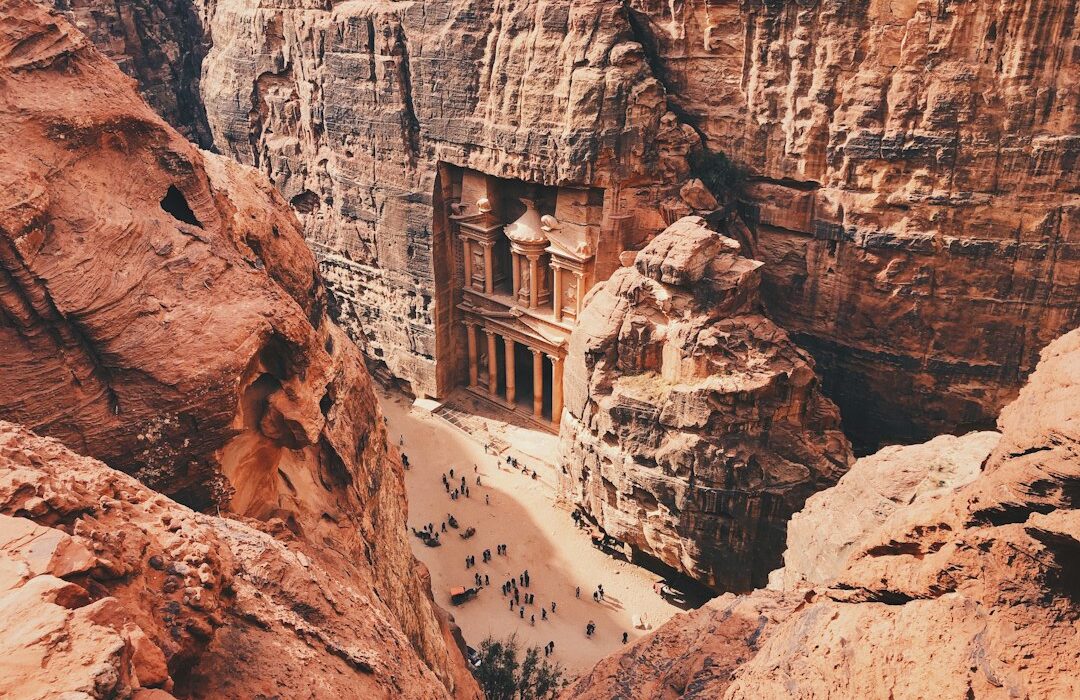
For visitors, the country offers a compact mix of ancient and natural sights: the rose-red city of Petra, the desert landscapes of Wadi Rum, the floating waters of the Dead Sea and the coral reefs of Aqaba. Petra and Wadi Rum are both on the UNESCO World Heritage List, alongside sites such as the Baptism Site and the desert castle of Quseir Amra. The international calling code is +962, the internet domain is .jo, and clocks stay on UTC+3 all year, with no seasonal change.
Daily life follows a Friday and Saturday weekend, and Arabic coffee, tea and conversation are part of most days. Visitors will find that many people speak some English, especially in the tourism industry, although a few words of Arabic are always appreciated. Before booking, check the Jordan visa requirements for your passport and compare flights to Jordan.
History of Jordan
Jordan’s past runs from Paleolithic settlement and the Iron Age kingdoms of Ammon, Moab and Edom to the Nabataeans of Petra, followed by Roman, Islamic and Ottoman rule. Britain created the Emirate of Transjordan in 1921, and the country became fully independent on 25 May 1946.
Last checked: November 2026
In the third century BC the Nabataeans, an Arab trading people, built their capital at Petra and grew rich from caravan routes linking Arabia, Egypt and the Mediterranean. Roman annexation followed in 106 CE, and the Greco-Roman period left a chain of cities such as Jerash in what is now northern Jordan. Later the region passed to the Byzantine, early Islamic, Crusader, Mamluk and Ottoman states, and the Crusader-era fortress of Karak still stands on the King’s Highway.
Ottoman authority in the area ended during World War I, after the Arab Revolt of 1916 in which Abdullah ibn Hussein’s Hashemite family played a leading role. Britain then recognised Abdullah as ruler of the Emirate of Transjordan, founded on 11 April 1921 as a British protectorate. A treaty signed in London in March 1946 ended the arrangement, and Abdullah took the title of king.
The state was renamed the Hashemite Kingdom of Jordan in 1949. Jordan took control of the West Bank during the 1948 war and lost it to Israel in 1967, and the questions that followed continue to shape the region. King Hussein led the country for decades until his death in 1999, when his son Abdullah II succeeded him. Today the country is a parliamentary constitutional monarchy led by King Abdullah II.
Culture and Traditions of Jordan
Jordanian culture is shaped by Arab and Islamic values, Bedouin heritage and a strong tradition of hospitality. Family is central to daily life, coffee and tea are offered as a welcome, and religious observance sets the weekly and yearly rhythm. Visitors are often invited to share a drink or a meal.
Last checked: November 2026
Islam is the state religion under the constitution, which also guarantees freedom of worship. Sources agree that well over 90% of Jordanians are Sunni Muslim, with a small Christian minority of roughly 5–6%. Many families have Bedouin roots, and customs such as serving cardamom-flavoured coffee to guests come from that desert tradition. Accepting a cup is taken as a sign of respect.
The Jordan Tourism Board advises visitors to shake hands when meeting people, while noting that some conservative women may not offer a hand. It also suggests carrying small change. Ramadan is the most important religious period of the year: many people fast from dawn to sunset, and visitors are expected to avoid eating, drinking or smoking openly in public during the day. Opening hours and alcohol availability can change in this month, so check locally. Our best time to visit Jordan guide explains how Ramadan and the seasons affect a trip.
Dress is generally modest outside beach and resort areas, and covering shoulders and knees is sensible at mosques and churches. The weekend falls on Friday and Saturday, so many businesses close on Friday. Jordanians are known for warmth toward guests, and polite greetings such as “ahlan wa sahlan” (welcome) are heard everywhere. The Eid festivals that follow Ramadan and the pilgrimage season are family occasions, and the Levantine folk dance known as dabke is often seen at weddings and celebrations.
Food and Cuisine of Jordan
Jordanian cuisine is built on lamb, chicken, rice, chickpeas, olive oil and yoghurt, with Bedouin and Levantine influences. The national dish is mansaf, lamb cooked in a dried-yoghurt sauce called jameed and served over rice. Meals are generous and shared, and mezze, flatbread and strong coffee are part of almost every table.
Last checked: November 2026
Jameed, a dried form of yoghurt, is unique to Jordanian cooking and gives mansaf its tangy flavour. Mansaf is served at weddings and other celebrations, usually from a big shared platter. Falafel and hummus are the classic breakfast, especially on Fridays, and the Jordan Tourism Board describes an invitation to eat as one where guests are expected to bring nothing and eat everything.
Drinks matter as much as dishes. Cardamom coffee is poured in small cups, sweet tea with mint or sage is served throughout the day, and a meal often ends with fruit, pastries or knafeh. Street food such as falafel sandwiches is cheap and filling, while restaurants in Amman offer both traditional recipes and modern cooking. Asking a local host what they recommend is usually the best way to find a good meal.
Signature dishes to try:
- Mansaf: the national dish, lamb cooked in jameed sauce and served on rice or bulgur.
- Zarb: a Bedouin barbecue of meat and vegetables slow-cooked in an underground pit, often served at desert camps.
- Maqluba: “upside-down” rice with meat or chicken and vegetables, turned out onto a platter.
- Musakhan: roast chicken with onions, sumac and pine nuts on taboon flatbread, a Palestinian dish loved in Jordan.
- Falafel: crisp fried chickpea balls, usually eaten in pita with salad and tahini.
- Hummus: a creamy chickpea and tahini dip served with Arabic bread.
- Mutabbal: a smoky roasted-aubergine dip, similar to baba ghanoush.
- Mujaddara: a simple dish of lentils, rice and fried onions.
- Labneh: strained yoghurt, served at breakfast and as a mezze starter with bread.
- Knafeh: a warm cheese pastry with syrup, best eaten fresh.
Ready to plan? See our Jordan itinerary ideas, compare where to stay in Jordan, and read how to get around Jordan once you arrive.
Explore Jordan Travel Guides
Explore our detailed guides to plan every part of your Jordan trip.
Jordan: Best Places
The best places to visit in Jordan, from Petra and Wadi Rum to Jerash, Amman, the Dead Sea and Aqaba, grouped by...
View Guide ›Jordan: Best Time to Visit
The best time to visit Jordan: spring and autumn for comfortable sightseeing, with regional climate, seasonal weather, Ramadan, holidays and packing advice.
View Guide ›Jordan: Flights
Flights to Jordan: Queen Alia and Aqaba airports, Royal Jordanian and other airlines, arrival tips, time zone and a Before You Fly...
View Guide ›Jordan: Getting Around
How to get around Jordan: JETT buses, car rental and driving rules, taxis, Uber and Careem, domestic flights and the best option...
View Guide ›Jordan: Hotels
Where to stay in Jordan: the best areas in Amman, Petra, Wadi Rum, the Dead Sea and Aqaba, with budget to luxury...
View Guide ›Jordan: Itineraries
Jordan itinerary ideas for 3, 5, 7 and 10 days, with realistic routes through Amman, Jerash, Petra, Wadi Rum, the Dead Sea...
View Guide ›Jordan: Visa
Jordan visa requirements: visa on arrival, the Jordan Pass fee waiver, passport validity, extensions and official sources, checked in November 2026.
View Guide ›Explore Jordan Tours
Discover guided tours and adventures in Jordan. Compare itineraries, prices and traveller reviews on TourRadar before you book.
Guided tours & deals
Affiliate partner · Globe Navo may earn a commission from qualifying bookings at no extra cost to you.
❓ Jordan FAQ
Where is Jordan?
Jordan is a country in the Middle East, bordering Saudi Arabia, Iraq, Syria, Israel and the West Bank. It has a short coastline on the Gulf of Aqaba and shares the Dead Sea shore. Its capital is Amman, and the country covers about 89,342 square kilometres.
What is the capital of Jordan?
The capital of Jordan is Amman, a hilltop city in the north-west highlands where most of the population lives. It is the main business, transport and cultural centre of the country, and it holds the Citadel and the Roman Theatre.
What language and currency are used in Jordan?
Arabic is the official language, and English is widely understood in tourism, hotels and larger cities. The currency is the Jordanian dinar (JOD). Check current exchange rates before you travel, and carry some small change for taxis and small shops.
What is Jordan famous for?
Jordan is best known for Petra, the rose-red Nabataean city, and the desert landscapes of Wadi Rum, both UNESCO World Heritage Sites. It is also known for the Dead Sea, the Roman ruins of Jerash, the coral reefs of Aqaba and Bedouin hospitality.
What is the national dish of Jordan?
Mansaf is the national dish of Jordan. It is lamb cooked in jameed, a dried-yoghurt sauce, and served over rice, often on a large shared platter at weddings and celebrations. Other favourites include maqluba, musakhan, falafel, hummus and knafeh.
Plan Your Trip to Jordan
Your Next Adventure in Jordan Awaits!
Explore Deals →🎁 Best deals for Jordan
Offers from trusted travel stores for your Jordan trip. Compare a few options before you book, and check each store's terms for the final price.
Browse by type: Hotel deals · Flight deals · Travel eSIM · Car rental
More destinations to explore
EstoniaWhere Is Estonia Located? Estonia is a country in Northern Europe on the eastern…
 FranceFrance is a Western European country known for Paris, castles, wine and food. Learn…
 ChadSafety notice: official advisories warn against travel to Chad. The US Department of State…