 Central African RepublicLocation, history, culture and food of the Central African Republic, with official safety advice…
DESTINATION
Ireland
Ireland travel guide: where the country is, its history, culture and traditions, and signature dishes like Irish stew, soda bread, boxty and colcannon.
📅 Last updated:
🌍 Quick Facts

Ireland at a glance
Capital: Dublin
Currency: Euro (EUR)
Language: English and Irish (Gaeilge)
Population: About 5.1 million (2022 census)
Time zone: GMT (UTC+0), IST (UTC+1) in summer
Calling code: +353
Internet domain: .ie
Main airport: Dublin (DUB), Shannon (SNN), Cork (ORK), Knock (NOC), Kerry (KIR)
Best time to visit: May to September
📍 Ireland Map
🖼️ Ireland: Location, History, Culture & Food
✨ Complete Travel Guide
Where Is Ireland Located?
Ireland is a country in north-western Europe that covers about five-sixths of the island of Ireland, in the North Atlantic Ocean to the west of Great Britain. Its only land border is with Northern Ireland, which is part of the United Kingdom, and its capital, Dublin, sits on the island’s east coast.
Last checked: November 2026
The state covers roughly 70,273 square kilometres of an island that measures about 84,421 square kilometres in total. Northern Ireland makes up the remaining part. The Atlantic Ocean lies along the west and north coasts, while the Irish Sea separates the island from Great Britain on the east.
Dublin lies near the middle of the east coast, at the mouth of the River Liffey. Most of the population lives in the east, in and around the capital, while the mountainous west is far more thinly settled. Traditionally the island is divided into four provinces: Leinster, Munster and Connacht, which lie wholly in the Republic, and Ulster, which is shared with Northern Ireland.
This position has long made Ireland a natural stopping point on air and sea routes between North America and northern Europe. For travellers, it also means a compact country where the capital, the Atlantic coast and the countryside are all within a few hours of one another.
The landscape is a mix of low central plains ringed by coastal mountains. The highest peak, Carrauntoohil in County Kerry, rises to 1,038 metres, and the River Shannon, at around 360 kilometres, is the longest river on the island. The western seaboard is known as the Wild Atlantic Way, a long coastal route of cliffs, bays and islands. If you are planning your journey, see our guide to flights to Ireland, and for moving around once you arrive, read how to get around Ireland by train, bus and car.
Introduction to Ireland
Ireland is a parliamentary republic and a member of the European Union, with Dublin as its capital, the euro as its currency, and English and Irish as its official languages. Often called the Emerald Isle for its green landscapes, it is a country of Atlantic coastline, historic towns and a distinct national identity.
Last checked: November 2026
Dublin is the largest city, and its metropolitan area is home to more than a quarter of the national population. Cork is the second-largest city. Irish, known locally as Gaeilge, is spoken mainly in areas along the western coast, while English is the language most people use day to day.
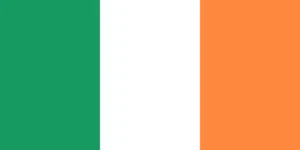
Symbols such as the harp and the shamrock, along with the national colours of green, white and orange on the flag, are part of everyday life across the country. The national anthem, “Amhrán na bhFiann”, is also known in English as “The Soldiers’ Song”.
About 5.1 million people lived in Ireland at the 2022 census. The country is governed through a two-house parliament, the Oireachtas, with a President as head of state and a Taoiseach as head of government. It is divided into 26 counties, each with its own character, from the busy streets of Dublin to the quiet lanes of the Dingle Peninsula. Before you go, check whether your nationality needs a visa in our Ireland visa requirements guide, and use our overview of the best places to visit in Ireland to choose where to go.
History of Ireland
Ireland’s history runs from early Celtic settlement and the Norman arrival in the 12th century, through centuries of English and British rule, to the Easter Rising of 1916 and the creation of the Irish Free State in 1922. The country became a republic in 1949 and joined the forerunner of the European Union in 1973.
Last checked: November 2026
Long before the Celts, farming communities built the passage tomb at Newgrange in County Meath around 3200 BC, which is older than Stonehenge and the pyramids of Giza. Christianity arrived in the 5th century, and tradition links it with Saint Patrick. Monasteries became centres of learning, and the illuminated Book of Kells, thought to date from around the year 800, is now kept at Trinity College Dublin. Viking raiders founded settlements, including Dublin, from the 9th century onwards.
Celtic tribes are generally said to have settled the island from around 600 BC, and the Normans invaded in the 12th century. Ireland was joined to Great Britain under the Act of Union in 1801. In the mid-19th century, potato blight led to the Great Famine, which killed more than a million people and drove about a million more to emigrate, mainly to North America.
The Easter Rising of 1916 in Dublin was put down within a week, but the execution of its leaders shifted public opinion and helped lead to the War of Independence between 1919 and 1921. The Anglo-Irish Treaty then created the Irish Free State in 1922, while six north-eastern counties stayed in the United Kingdom as Northern Ireland. A civil war between supporters and opponents of the treaty followed in 1922 and 1923.
A new constitution in 1937 renamed the state Ireland, and in 1949 it was declared a republic and left the Commonwealth. Ireland joined the United Nations in 1955 and, together with the United Kingdom, entered the European Economic Community in 1973. The Good Friday Agreement of 1998 later set out a peace settlement for Northern Ireland.
Culture and Traditions of Ireland
Irish culture is built on the Irish language, storytelling, traditional music and shared celebrations such as St Patrick’s Day on 17 March. These traditions mix Catholic feast days, older Celtic customs and a strong sense of community that visitors often meet first in pubs, festivals and sports grounds.
Last checked: November 2026
St Patrick’s Day honours Ireland’s patron saint and has grown into a worldwide celebration of Irish heritage, with parades and family meals. Halloween also has deep roots here, and a dish such as colcannon has been linked to Halloween traditions since at least the 18th century.
The Irish language, Gaeilge, is an official language and is still used in daily life mainly along the western coast. Traditional music, the harp and the shamrock are widely recognised national symbols. Gaelic games such as hurling and Gaelic football remain a major part of local sporting life in towns and villages.
Traditional music is usually played in informal sessions, where musicians gather around a table with fiddles, flutes, uilleann pipes, accordions and the bodhrán drum. Storytelling runs deep as well, and Irish writers including W. B. Yeats, Samuel Beckett and Seamus Heaney have won the Nobel Prize in Literature. Hospitality is summed up in the phrase céad míle fáilte, meaning a hundred thousand welcomes. Many visitors meet it in family-run guesthouses, and our guide to where to stay in Ireland explains the options, while the best time to visit Ireland guide lists the main festivals and seasons.
Food and Cuisine of Ireland
Traditional Irish cuisine is hearty and built around potatoes, cabbage, onions, lamb, pork and bread, shaped by the country’s climate and farming heritage. Signature dishes include Irish stew, soda bread, colcannon, boxty and Dublin coddle, usually served with butter and a warm drink or a pint.
Last checked: November 2026
Potatoes sit at the centre of many classic dishes, from mashed and cabbage-based sides to pancakes and breads. Here are ten dishes and drinks worth looking for:
- Irish stew: a slow-cooked lamb stew with potatoes, carrots and onions, often eaten with brown bread.
- Irish soda bread: a rustic loaf raised with baking soda instead of yeast, ideal with stew or butter.
- Colcannon: mashed potato mixed with cabbage, long linked with Halloween.
- Champ: creamy mashed potato with spring onions.
- Boxty: a potato pancake or flatbread made with grated raw potato.
- Dublin coddle: a stew of sausages, bacon, potatoes and onions.
- Bacon and cabbage: a traditional boiled dinner often served with parsley sauce.
- Black and white pudding: sausages found in the traditional Irish breakfast; black pudding contains blood.
- Barmbrack: a speckled fruit loaf, known in Irish as bairín breac.
- Irish coffee: hot coffee with whiskey, topped with cream.
Seafood is just as important along the coast, with oysters, mussels, smoked salmon and creamy fish chowder on many menus, alongside the country’s well-known butter, cheese and farmhouse dairy products. Guinness stout has been brewed in Dublin since 1759, and Irish whiskey has a long distilling tradition. A full Irish breakfast of eggs, bacon, sausages, pudding and soda bread is a classic start to the day. You can build food stops into any of the routes in our Ireland itineraries.
Explore Ireland Travel Guides
Explore our detailed guides to plan every part of your Ireland trip.
Ireland: Best Places
The best places to visit in Ireland by type, from Dublin, Galway and Cork to the Cliffs of Moher, the Ring of...
View Guide ›Ireland: Best Time to Visit
The best time to visit Ireland is usually May to September. See weather by season, month-by-month conditions, regional differences, festivals and what...
View Guide ›Ireland: Flights
Flights to Ireland explained: Dublin, Shannon, Cork and Knock airports, main airlines, US preclearance, arrival tips, time zone and a checklist before...
View Guide ›Ireland: Getting Around
How to get around Ireland by train, bus, car, ferry and taxi, with verified train times, driving rules, licence requirements and the...
View Guide ›Ireland: Itineraries
Realistic Ireland itineraries for 3, 5, 7 and 10 days, with routes, overnight stops, verified train times and practical tips for Dublin,...
View Guide ›Ireland: Visa
Who needs a visa for Ireland, who can enter without one, the €60 and €100 short-stay visa fees, passport rules and the...
View Guide ›Ireland: Hotels
Where to stay in Ireland: the best areas in Dublin, Galway, Cork, Kerry and Kilkenny, hotel types for every budget, taxes explained...
View Guide ›Explore Ireland Tours
Discover guided tours and adventures in Ireland. Compare itineraries, prices and traveller reviews on TourRadar before you book.
Guided tours & deals
Affiliate partner · Globe Navo may earn a commission from qualifying bookings at no extra cost to you.
❓ Ireland FAQ
What is the capital of Ireland?
Dublin is the capital and largest city of Ireland. It lies on the east coast at the mouth of the River Liffey, and its metropolitan area is home to more than a quarter of the national population. Cork is the second-largest city.
What language is spoken in Ireland?
English is the language most people use day to day, and Irish, also called Gaeilge, is the first official language of the state. Irish is spoken mainly in Gaeltacht areas along the western coast, and it is taught in schools across the country.
What currency does Ireland use?
The Republic of Ireland uses the euro, written EUR. Northern Ireland is part of the United Kingdom and uses the pound sterling, so travellers who cross the border need both currencies. Cards are widely accepted, but carrying a little cash is useful in rural areas.
Is Ireland part of the United Kingdom?
No. The Republic of Ireland is an independent country and a member of the European Union. Northern Ireland, on the same island, is part of the United Kingdom. The two share the Common Travel Area, which allows free movement for Irish and British citizens.
What is Ireland known for?
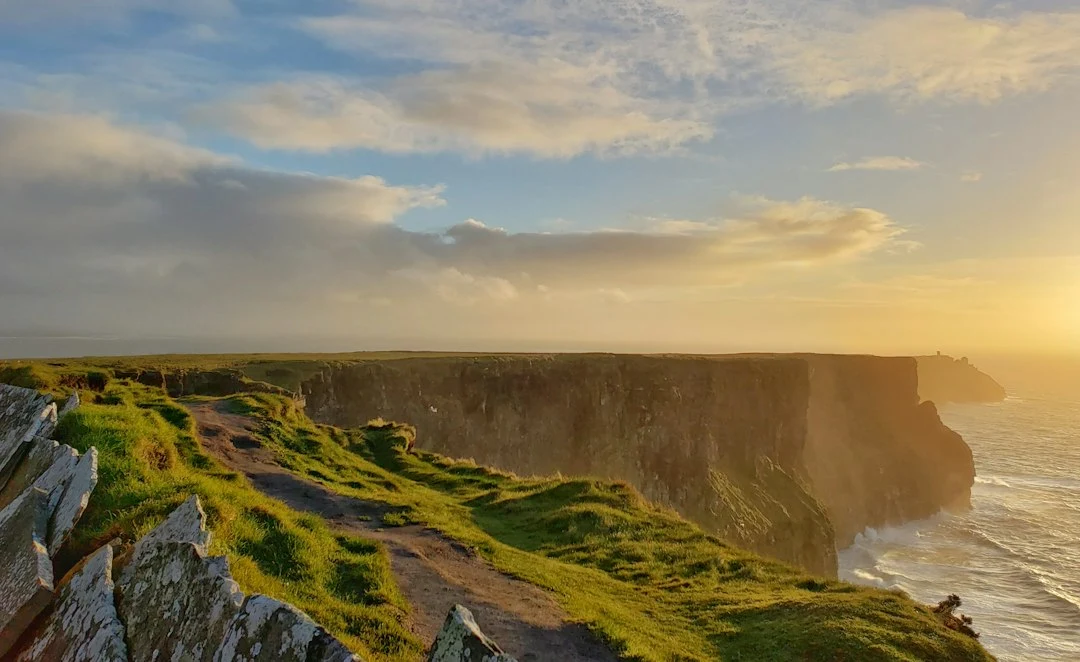
Ireland is known for its green landscapes, Atlantic coastline, medieval castles, traditional music, pubs and warm hospitality. Famous sights include the Cliffs of Moher, the Ring of Kerry and Newgrange, while Irish stew, soda bread and Guinness are among its best-known foods and drinks.
Plan Your Trip to Ireland
Your Next Adventure in Ireland Awaits!
Explore Deals →🎁 Best deals for Ireland
Offers from trusted travel stores for your Ireland trip. Compare a few options before you book, and check each store's terms for the final price.
Browse by type: Hotel deals · Flight deals · Travel eSIM · Car rental
More destinations to explore
Central African RepublicLocation, history, culture and food of the Central African Republic, with official safety advice…
 KiribatiKiribati travel guide covering where Kiribati is, its history, culture and traditions, and its…
 EswatiniEswatini is a small landlocked kingdom in southern Africa, known for wildlife reserves, royal…