Ireland is small enough to see a lot in one trip, yet each region feels distinct. This guide groups the best places to visit by type, so you can match them to your interests and the time you have. For every place you will find why it is worth a stop, what to see, how long to allow and who it suits best.
Quick answer: The most visited places in Ireland are Dublin, the Cliffs of Moher, Galway and the Wild Atlantic Way coast around Kerry. History lovers should add Newgrange and Kilkenny, while hikers and photographers will enjoy Connemara, Killarney and the Dingle Peninsula. Most visitors choose a mix of one city and one coastal region.
Last checked: November 2026
Major Cities
Dublin
Ireland’s capital is the main gateway and the best place for museums, literary history and nightlife. Highlights include Trinity College and the Book of Kells, Dublin Castle, St Patrick’s Cathedral, Kilmainham Gaol and the Guinness Storehouse. Allow two to three days. It suits first-time visitors, culture lovers and anyone who wants good food and live music within walking distance.
Cork
Cork is the second-largest city and a relaxed base for the south. Walk through the English Market, climb to Shandon Bells and use the city as a springboard to Kinsale and Blarney. Allow one to two days. It is ideal for food lovers and for travellers who prefer a smaller city feel.
Galway
Galway is a lively western city known for its pubs, street music and festivals, and it is the usual starting point for Connemara, the Burren and the Aran Islands. Allow one to two days, plus extra time for day trips. It suits couples, solo travellers and anyone who wants a social atmosphere.
Historic Places
Newgrange and the Boyne Valley
Brú na Bóinne in County Meath is a UNESCO World Heritage Site with passage tombs that are around 5,000 years old. Access to Newgrange is by guided tour from the visitor centre, and tickets can sell out in summer, so check the official heritage site and book ahead. Allow half a day. It suits history and archaeology fans.
Kilkenny and the Rock of Cashel
Kilkenny is a compact medieval city with a castle, narrow lanes and craft shops. The Rock of Cashel in County Tipperary is a striking hilltop group of medieval buildings. Together they make a good one-day or overnight trip from Dublin or on the way south. Both suit travellers who like architecture and old towns.
Glendalough
This monastic site in the Wicklow Mountains combines a round tower, ruined churches and two lakes with marked walking trails. It is one of the easiest day trips from Dublin and suits anyone who wants history and gentle hiking. Allow three to five hours.
Natural Wonders and Coast
Cliffs of Moher and the Burren
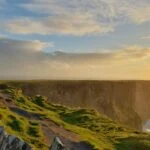
The Cliffs of Moher in County Clare rise high above the Atlantic and are one of the country’s most photographed landscapes. Nearby, the Burren is a rocky limestone region with unusual plants and ancient monuments. Allow half a day for the cliffs and a full day if you add the Burren. Check opening hours and ticketing on the official visitor experience site before you travel, and expect strong wind and changeable weather.
Connemara
Connemara in County Galway offers mountains, bogs, lakes and quiet beaches. Kylemore Abbey and Connemara National Park are popular stops, and the drive itself is the main attraction. Allow one to two days. It suits road-trippers, walkers and photographers.
Ring of Kerry and Dingle Peninsula
These two scenic peninsulas in County Kerry are classic stops on the Wild Atlantic Way. The Ring of Kerry is a long coastal loop around the Iveragh Peninsula, while Dingle is a smaller, more intimate peninsula with a lively harbour town and Gaelic-speaking communities. Allow two to three days to do both without rushing. They suit drivers and anyone who enjoys coastal scenery.
Skellig Michael
This remote monastic island off the Kerry coast is a UNESCO World Heritage Site. Landings depend on weather and sea conditions and are limited to a seasonal window, normally from mid-May to the end of September. In 2026 the Office of Public Works ended the landing season early, on 21 September, because of bad weather, and landings resume in the 2027 season. Cruises around the islands without landing may be an alternative, so check the operators and the official OPW notice.
Food and Culture Destinations
Food is a reason to travel in its own right here. Cork’s English Market and the seafood harbours of Kinsale, Dingle and Galway are good places to try local produce, and pubs across the country serve live traditional music. The Aran Islands, off Galway, are another cultural highlight, with Irish spoken in daily life, stone-walled fields and an Atlantic landscape, and they are best visited for a full day or an overnight stay.
National Parks and Outdoor Activities
- Killarney National Park (Kerry): lakes, woodland and mountains, with walking, cycling and boat trips. Allow one to two days.
- Wicklow Mountains National Park: close to Dublin and suited to day hikes and scenic drives.
- Connemara National Park (Galway): mountain trails and wide views.
- Glenveagh National Park (Donegal): remote landscapes in the north-west for travellers who like quieter scenery.
A Note on Northern Ireland
Famous sights such as the Giant’s Causeway and Belfast are in Northern Ireland, which is part of the United Kingdom, not the Republic of Ireland. They are easy to combine with a trip, but different entry rules, currency and mobile roaming may apply, so plan them separately.
Official Sources
- Office of Public Works: Sceilg Mhichíl visitor season 2026
- UNESCO: Skellig Michael
- UNESCO: Brú na Bóinne
Frequently Asked Questions
What are the top places to visit in Ireland?
Dublin, Galway, Cork, the Cliffs of Moher, Connemara, the Ring of Kerry, Dingle and Newgrange are among the most popular. Most visitors combine one city with a coastal region, depending on how many days they have.
How many days do I need in Ireland?
Five to seven days is enough for Dublin plus one region, such as the west coast. Ten days or more gives you time for Kerry, Galway and Cork as well. Driving distances are short, but roads are often narrow and slow.
Is Skellig Michael open all year?
No. Landings are limited to a seasonal window, usually from mid-May to the end of September, and depend on weather. The 2026 season ended early on 21 September, and the next season is 2027.
Is the Giant’s Causeway in Ireland?
It is on the island of Ireland but in Northern Ireland, which belongs to the United Kingdom. It is not part of the Republic, so entry and travel rules may differ from the rest of this guide.