 IndonesiaLearn where Indonesia is, how its history unfolded, what shapes its culture and which…
DESTINATION
Iraq
Discover Iraq: where it is, its history, culture and traditions, and signature dishes, with links to every travel guide.
📅 Last updated:
🌍 Quick Facts

Iraq at a glance
Capital: Baghdad
Currency: Iraqi dinar (IQD)
Language: Arabic and Kurdish (both official)
Population: Roughly 44 to 46 million (estimates vary by source)
Time zone: Arabia Standard Time (UTC+3)
Calling code: +964
Internet domain: .iq
Main airport: Baghdad International Airport (BGW)
Best time to visit: March to May and October to November; summers are extremely hot, and the best time varies by region
📍 Iraq Map
🖼️ Iraq: Location, History, Culture & Food
✨ Complete Travel Guide
Safety Notice: The US Department of State rates Iraq Level 4, Do Not Travel (advisory issued August 29, 2026), citing terrorism, kidnapping, armed conflict, crime, health risks and the US government’s limited ability to provide emergency services. This US advisory applies to the whole country. The UK Foreign, Commonwealth and Development Office (FCDO) advises against all travel to some parts of Iraq and against all but essential travel to other parts of Federal Iraq and the Kurdistan Region, according to its update history (latest update July 22, 2026). The FCDO also warns that consular support is severely limited and that travel insurance may be invalid if you travel against its advice. Read the full advisories on travel.state.gov and the UK FCDO travel advice before you consider any trip, because conditions can change quickly. Last checked: November 2026.
Where Is Iraq Located?
Iraq is a country in Western Asia, in the Middle East. It borders Turkey to the north, Iran to the east, Kuwait and Saudi Arabia to the south, and Jordan and Syria to the west. Its only coast is a short stretch of about 58 kilometres on the northern Persian Gulf.
Last checked: November 2026
Iraq covers about 438,317 square kilometres, which makes it similar in size to Morocco. Its land borders total roughly 3,809 kilometres, with the longest stretch shared with Iran (about 1,599 kilometres), followed by Saudi Arabia, Syria, Turkey, Kuwait and Jordan. The coastline at the head of the Persian Gulf is narrow, and the port of Umm Qasr and the Shatt al-Arab waterway give the country its outlet to the sea.
The land is shaped by two great rivers, the Tigris and the Euphrates, which cross the country and meet near Basra to form the Shatt al-Arab. A broad alluvial plain stretches from north of Baghdad down to the Gulf, and much of the population lives along this river corridor. Deserts, part of the Syrian Desert, cover the west, while the Zagros mountains rise in the north-east. The highest point is Cheekha Dar, at about 3,611 metres near the Iranian border.
Baghdad, the capital, lies on the Tigris in the centre-east of the country. Basra in the south is the main port and economic hub, while Erbil and Sulaymaniyah are the best-known cities of the Kurdistan Region in the north. Because Iraq sits at the crossroads of Arabia, Persia, Anatolia and the Levant, it has been a meeting point of cultures for thousands of years.
Introduction to Iraq
Iraq, officially the Republic of Iraq, is a federal parliamentary republic of roughly 44 to 46 million people in Western Asia. Its capital is Baghdad, its official languages are Arabic and Kurdish, and its currency is the Iraqi dinar. Often called the cradle of civilisation, it is the heartland of ancient Mesopotamia.
Last checked: November 2026
Population estimates differ by source, but most place Iraq among the thirty-five most populous countries in the world. Baghdad is the largest city, with a metropolitan population usually put at around seven million or more, followed by Basra, Mosul, Erbil and Kirkuk. The country is divided into governorates, and the Kurdistan Region in the north is an autonomous region within Iraq.
Arabs make up the majority of the population and Kurds are the second-largest group, alongside Turkmen, Yazidis, Armenians, Mandaeans and other communities. Arabic and Kurdish are both official languages, and Aramaic and Turkmen are also spoken. This mix of peoples and faiths is one of the defining features of everyday life in Iraq.
A few practical basics set the scene. The international calling code is +964, the currency is the Iraqi dinar (IQD), and the country uses UTC+3 as its standard time. Two of the world’s great rivers, the Tigris and the Euphrates, run through the country, and the region is where writing and some of the earliest cities are believed to have appeared.
That ancient heritage, from Ur and Babylon to the medieval splendour of Baghdad, is why Iraq holds such a large place in world history, and it is the thread the next section follows.
History of Iraq
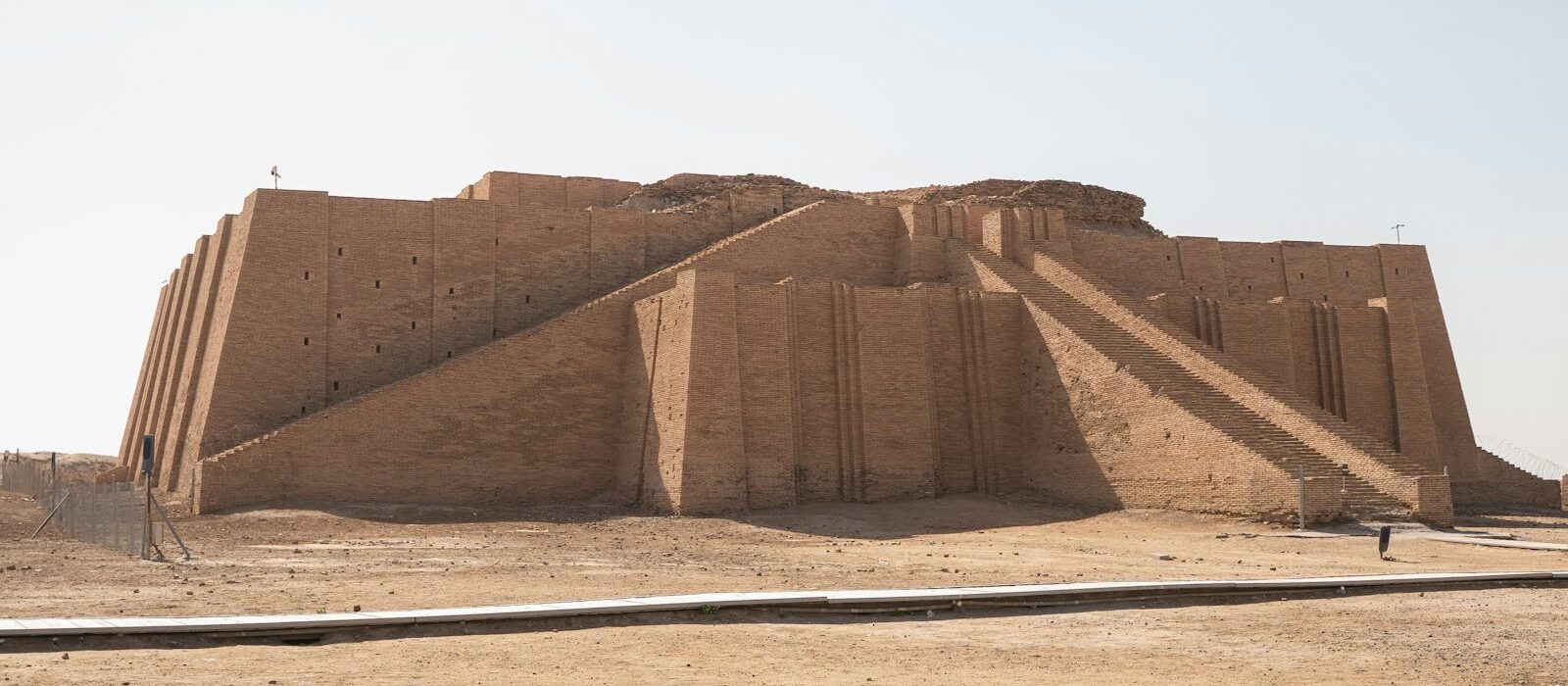
Iraq largely corresponds to ancient Mesopotamia, home to Sumer, Akkad, Babylon and Assyria, among the earliest civilisations. Baghdad became the Abbasid capital in 762 and a centre of learning. The Ottomans ruled from the 16th century, Britain held a mandate after World War I, independence came in 1932 and a republic in 1958.
Last checked: November 2026
The land between the Tigris and Euphrates saw some of the first farming communities, cities and writing. Sumer emerged in the south, followed by the Akkadian Empire and later the Babylonian and Assyrian kingdoms. Babylon fell to Cyrus the Great of Persia in 539 BC, and the region then passed through Persian, Hellenistic, Parthian and Sasanian rule.
Arab Muslim armies took control in the seventh century, and in 762 the Abbasid caliphs founded Baghdad, which became a leading city of the Arab and Muslim world for about five centuries. Scholars gathered at institutions such as the House of Wisdom during the Islamic Golden Age. The Mongols brought the Abbasid Caliphate to an end in 1258 and devastated the city.
Most of present-day Iraq came under Ottoman control in the 16th century. After World War I the Ottoman provinces of Baghdad, Basra and Mosul were placed under a British mandate from 1920. A monarchy under Faisal I was set up in 1921, and the Kingdom of Iraq became independent on 3 October 1932.
The monarchy was overthrown on 14 July 1958 and Iraq became a republic. The Ba’ath Party held power from 1968 until 2003, when a US and British-led invasion removed it. A new constitution was adopted in 2005, and modern Iraq has since lived through periods of conflict and instability alongside efforts at rebuilding. Its ancient sites, from Ur to Babylon, remain among the most important heritage places in the world.
Culture and Traditions of Iraq
Iraqi culture blends Mesopotamian heritage, Arab and Islamic traditions and the customs of Kurds, Turkmen, Yazidis, Armenians, Mandaeans and other communities. Hospitality is central: guests are offered strong sweet tea, shared meals and generous portions. Arabic and Kurdish are both official languages, and every region adds its own music, food and local customs.
Last checked: November 2026
The arrival of Arab Muslim armies in the seventh century brought the Arabic language and Islamic culture, which still shape daily life, literature and music across much of the country. Under the Abbasids, Baghdad became a centre of learning, and that scholarly reputation remains a source of pride. Iraq is also one of the places where writing is believed to have begun, so its cultural story reaches back thousands of years.
Hospitality is the tradition visitors notice first. Tea is more than a drink in Iraq: it is brewed very dark, sweetened generously, often scented with cardamom and served in small glasses called istikan. Offering tea to a guest, a customer or a neighbour is a basic social courtesy, and meals are usually shared from large communal dishes.
Iraq’s communities keep distinct languages, faiths and customs. Kurdish culture is especially strong in the north, while Turkmen, Yazidi, Armenian, Mandaean and other communities contribute their own traditions. Food is tied closely to occasions, such as quzi at weddings and for honoured guests, and margat qeema is associated with the month of Muharram.
Food and Cuisine of Iraq
Iraqi cuisine is among the world’s oldest, rooted in Mesopotamian farming and shaped by Persian, Arab, Ottoman and Kurdish influences. Signature dishes include masgouf (grilled carp), dolma, quzi (stuffed roast lamb), kubba and tashreeb, served with samoon bread and strong cardamom tea.
Last checked: November 2026
Meals often start with mezze and salads before the main dishes arrive, and rice, bread and stews are staples. Baghdad’s cuisine reached its peak under the Abbasids, and the food today still reflects that inheritance alongside ties to Iranian, Syrian and Turkish cooking. Spices such as cinnamon, cardamom, cumin and coriander, along with herbs like mint and dill, are common.
Ten dishes to look for:
- Masgouf: freshwater carp, seasoned and slow-grilled beside an open fire, widely called the national dish.
- Dolma: vine leaves, chard, onions or vegetables stuffed with rice, meat and herbs.
- Quzi: roast lamb served over spiced rice with nuts, a festive dish for weddings and guests.
- Kubba: bulgur or rice shells filled with spiced minced meat, boiled or fried, with many regional versions.
- Tashreeb: a hearty stew of lamb or chicken over bread soaked in broth.
- Biryani with timman: spiced rice with chicken or lamb, served beside plain rice cooked in clarified butter.
- Kebab: marinated grilled meat, usually served with samoon or flatbread.
- Samoon: a crisp-crusted, soft-centred Iraqi bread, ideal for scooping sauces.
- Kleicha: date-filled cookies often served with tea during celebrations.
- Pacha: a slow-cooked sheep dish, a traditional favourite for the adventurous eater.
Finish a meal the Iraqi way with a glass of tea. Dishes and names vary between the south, Baghdad, Mosul and the Kurdistan Region, so ask locally about each town’s speciality.
To plan further, read our guides to the Iraq visa process, the best places to visit in Iraq, the best time to visit Iraq, Iraq itineraries for 3 to 10 days, where to stay in Iraq, flights to Iraq and getting around Iraq.
Explore Iraq Travel Guides
Explore our detailed guides to plan every part of your Iraq trip.
Iraq: Best Places
The best places to visit in Iraq, from Babylon and Ur to Baghdad, Erbil and the southern marshes, with why to go,...
View Guide ›Iraq: Best Time to Visit
When to visit Iraq, with month-by-month Baghdad temperatures, regional climate differences, Ramadan and holiday notes, and packing advice.
View Guide ›Iraq: Flights
Flights to Iraq: the main international airports, airlines reported flying there, airspace notes, arrival basics, time zone and a pre-flight checklist.
View Guide ›Iraq: Getting Around
How to travel inside Iraq by domestic flight, road, shared taxi and private driver, with cautious travel-time estimates, checkpoints and common mistakes.
View Guide ›Iraq: Itineraries
Realistic Iraq itineraries for 3, 5, 7 and 10 days, with logical routes, overnight bases and cautious travel-time estimates between Baghdad, the...
View Guide ›Iraq: Visa
Find out how visas work for Iraq, why most visitors apply online before travel, which official sites to check and what to...
View Guide ›Iraq: Hotels
Where to stay in Iraq: the best areas in Baghdad, Erbil, Sulaymaniyah, Basra and the holy cities, plus hotel types, family tips...
View Guide ›Explore Iraq Tours
Discover guided tours and adventures in Iraq. Compare itineraries, prices and traveller reviews on TourRadar before you book.
Guided tours & deals
Affiliate partner · Globe Navo may earn a commission from qualifying bookings at no extra cost to you.
❓ Iraq FAQ
What is the capital of Iraq?
Baghdad is the capital and largest city of Iraq. It lies on the Tigris River in the centre-east of the country and was founded as the Abbasid capital in 762. Basra, Mosul and Erbil are other major cities.
Which countries border Iraq?
Iraq borders Turkey to the north, Iran to the east, Kuwait and Saudi Arabia to the south, and Jordan and Syria to the west. It also has a short coastline of about 58 kilometres on the northern Persian Gulf.
What languages are spoken in Iraq?
Arabic and Kurdish are the two official languages of Iraq. Aramaic and Turkmen are also spoken by smaller communities. Arabic is the main language in most of the country, while Kurdish is widely used in the Kurdistan Region in the north.
What is the national dish of Iraq?
Masgouf, freshwater carp seasoned and slow-grilled beside an open fire, is widely called the national dish of Iraq. Other signature dishes include dolma, quzi (stuffed roast lamb), kubba and tashreeb, usually served with samoon bread and strong cardamom tea.
Is it safe to travel to Iraq?
The US State Department rates Iraq Level 4, Do Not Travel, and the UK FCDO advises against all or all but essential travel depending on the area. Read both advisories, check current conditions and get insurance before considering any trip.
Plan Your Trip to Iraq
Your Next Adventure in Iraq Awaits!
Explore Deals →🎁 Best deals for Iraq
Offers from trusted travel stores for your Iraq trip. Compare a few options before you book, and check each store's terms for the final price.
Browse by type: Hotel deals · Flight deals · Travel eSIM · Car rental
More destinations to explore
IndonesiaLearn where Indonesia is, how its history unfolded, what shapes its culture and which…
 CubaCuba travel guide covering where Cuba is, its history, culture and traditions, and its…
 LibyaA guide to Libya's location, history, culture and cuisine, from the Mediterranean coast to…
