 DenmarkDenmark travel guide: where the country is, its history, culture and food.
DESTINATION
Djibouti
Djibouti is a Red Sea nation on the Horn of Africa, known for Lac Assal, Lake Abbe, Moucha Island, whale sharks and a culture shaped by Somali, Afar, Arab and French influences.
📅 Last updated:
🌍 Quick Facts

Djibouti at a glance
Capital: Djibouti City
Currency: Djiboutian franc (DJF)
Language: French and Arabic (official); Somali and Afar widely spoken
Population: About 1 million
Time zone: East Africa Time (EAT), UTC+3 all year
Calling code: +253
Internet domain: .dj
Main airport: Djibouti-Ambouli International Airport (JIB), Djibouti City
Best time to visit: November to March (cooler months)
📍 Djibouti Map
🖼️ Djibouti: Location, History, Culture & Food
✨ Complete Travel Guide
Safety Notice: The US State Department rates Djibouti Level 2 (exercise increased caution) because of terrorism, and advises reconsidering travel within 10 miles of the Eritrean border in the Tadjoura and Obock regions. The UK FCDO advises against all travel to the Djibouti-Eritrea border. These warnings apply to specific areas, not the whole country. Check the latest advice before booking, and see our Djibouti visa and entry guide for official links. Last checked: November 2026.
Where Is Djibouti Located?
Djibouti is a small country on the Horn of Africa, on the western shore of the Gulf of Aden at the southern entrance to the Red Sea. It borders Eritrea to the north, Ethiopia to the west and south, and Somalia (Somaliland) to the southeast, and faces Yemen across the Bab-el-Mandeb strait.
Last checked: November 2026
The country covers about 23,200 square kilometres, making it one of the smallest on the African mainland. Its coastline curves around the Gulf of Tadjoura, a deep inlet that shelters the capital, Djibouti City, and the ports that make the country important to regional trade. Inland, the land rises into volcanic plateaus, bare mountain ranges and stony desert.
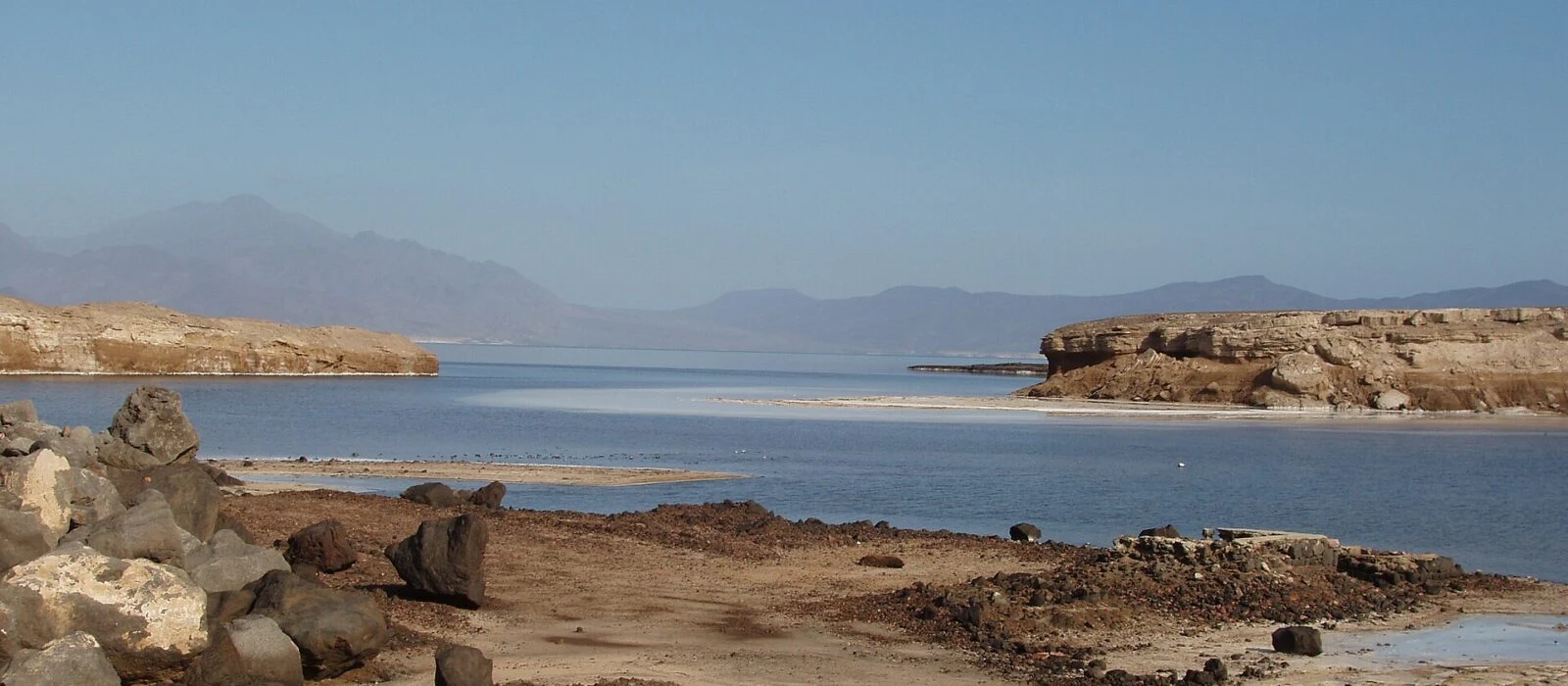
Djibouti holds some of Africa’s most dramatic extremes. Lac Assal sits roughly 155 metres below sea level, the lowest point on the continent, while Moussa Ali in the north reaches 2,028 metres. Lake Abbe, on the Ethiopian border, lies in the Afar region where three tectonic plates meet, and it is known for limestone chimneys that vent steam. You can see how these landscapes compare in our guide to the best places to visit in Djibouti.
A few quick facts help with orientation. The capital is Djibouti City, the currency is the Djiboutian franc, the international calling code is +253, the internet domain is .dj, and the country follows East Africa Time (UTC+3). Most international visitors arrive at Djibouti-Ambouli International Airport, covered in our guide to flights to Djibouti.
The climate follows the geography. The coast is hot and humid for much of the year, the interior plateaus are drier and more extreme, and the mountains of the north are cooler. Rain is scarce and uneven, which shapes where people live and how they travel.
Introduction to Djibouti
Djibouti is a Red Sea nation of roughly one million people, known for its salt lakes, volcanic landscapes, coral reefs and its role as a major shipping hub. French and Arabic are the official languages, Islam is the main religion, and daily life blends Afar, Somali, Arab and French influences.
Last checked: November 2026
Most Djiboutians live in or around the capital, while the interior is sparsely populated and traditionally home to nomadic herding communities. The two largest groups are the Somali (mainly Issa) and the Afar, and both have long histories of trade and pastoral life across the surrounding region. Djibouti City mixes colonial-era streets, busy markets and a working port.
For travellers the appeal is landscape and adventure rather than large-scale tourism. Visitors come to float in a hypersaline lake, walk beside steaming chimneys at dawn, snorkel on reef islands, and, in the right season, swim alongside whale sharks in the Gulf of Tadjoura. Tourist infrastructure is concentrated in the capital, so many trips outside it need a driver, a guide or a boat.
The climate is hot and dry for most of the year, and the cooler months are the most comfortable for travel. Our best time to visit Djibouti guide covers the seasons month by month, and our Djibouti itineraries show how to combine the main sights in three, five or seven days.
Daily life outside the capital follows the seasons and the herds. Families move with their animals in search of grazing, trade in salt from the lake basins has a long history, and small coastal towns such as Tadjoura and Obock depend on fishing and the sea. The Djiboutian franc is the national currency, and Djibouti is largely a cash economy.
History of Djibouti
Djibouti’s history centres on its position beside one of the world’s busiest sea lanes. The area was home to Afar and Somali peoples for centuries, became a French colony in the late nineteenth century, and gained independence on 27 June 1977 as the Republic of Djibouti.
Last checked: November 2026
Long before European arrival, Afar and Somali communities traded along the coast and across the desert, linking the highlands of Ethiopia with Red Sea and Indian Ocean routes. France established a presence at Obock in the 1860s and later developed the port of Djibouti, which became the capital of French Somaliland. The territory was renamed the French Territory of the Afars and the Issas in 1967.
The port’s value grew with the railway built by the French between 1894 and 1917 to carry goods between the coast and Ethiopia. After a 1977 referendum Djibouti became independent, with Hassan Gouled Aptidon as its first president. Ismail Omar Guelleh has led the country since 1999.
Today the port remains the economic engine of the country, and a modern electrified railway between Addis Ababa and Djibouti began operating in January 2018. Several foreign countries maintain military bases here because of the strategic location. Practical details on rail, ferries and roads are in our Djibouti getting around guide.
Independence is marked every year on 27 June, and the date is the country’s main national holiday. Religious festivals matter more to most families than state occasions, and they are marked with prayers, new clothes, visits to relatives and shared meals. Football is popular in the capital, and open-air markets remain a central social space.
Culture and Traditions of Djibouti
Djiboutian culture blends Somali, Afar, Arab and French influences, shaped by Islam and by a long tradition of nomadic herding and coastal trade. Hospitality, oral poetry, shared meals and modest dress are central to daily life.
Last checked: November 2026
Islam shapes the rhythm of the week and the year. Friday is the main day of prayer, shops and offices may keep shorter hours during Ramadan, and the two Eid festivals are major family occasions. Visitors are expected to dress modestly, particularly away from beach and hotel areas, and to show respect to people who are fasting.
Somali and Afar communities keep distinct languages and customs. Poetry and storytelling have long been valued forms of expression, and music and dance mark weddings and celebrations. Traditional dress includes the wraparound macawiis for men and light, colourful dresses and shawls for women, which suit the climate.
Many people chew qat in the afternoon, a social habit tied to the country’s trade links with Ethiopia and Yemen. Mint tea and spiced tea are offered to guests, and refusing hospitality outright can seem impolite. If you plan to stay in family-run guesthouses or camps, our where to stay in Djibouti guide explains the main options.
Hospitality is one of the clearest expressions of Djiboutian culture. Guests are offered tea or coffee soon after arriving, meals are usually eaten from shared dishes, and the right hand is used for eating. Greet elders first, and ask permission before photographing people, markets or religious buildings.
Food and Cuisine of Djibouti
Djiboutian food combines Somali, Afar, Yemeni and French influences, with grilled fish, spiced rice, flatbreads and slow-cooked meat at its core. Meals are often shared, and Red Sea seafood is a highlight of the capital’s restaurants.
Last checked: November 2026
The cuisine reflects the country’s position between Africa and Arabia. Rice, flatbread and spices come from the Somali and Yemeni kitchens, while baguettes and pastries are a French legacy. Halal food is the norm. Here are some signature dishes to look for:
- Skoudehkaris: spiced rice cooked with lamb or beef, often with cinnamon, cumin and cardamom.
- Fah-fah: a spicy boiled-meat soup, usually served with flatbread.
- Lahoh (canjeero): a spongy pancake-style bread eaten with stews, honey or tea.
- Sabaayad: a layered, pan-fried flatbread served with sauces and curries.
- Mukbassa: a bread-based dish with meat, popular in the capital.
- Grilled Red Sea fish: whole fish cooked over coals, often Yemeni-style with rice and sauce.
- Kitcha fit-fit: shredded flatbread mixed with spices and butter, common in Ethiopian-influenced households.
- Sambusa: small fried pastries filled with meat or vegetables.
- Camel milk and meat: traditional pastoral foods, especially in the interior.
- Shaah: sweet spiced tea, served at the end of meals and to guests.
Dishes vary by region and household, so ask local hosts what they recommend. Restaurants in Djibouti City range from simple fish grills to hotel dining rooms. Alcohol is not widely served outside hotels and some restaurants, so check ahead if it matters to you. Breakfast is often bread or lahoh with tea, lunch is the main meal of the day, and fresh juices, dates and fruit are common in the capital’s cafes. To plan a trip around these places, see our Djibouti itineraries.
Explore Djibouti Travel Guides
Explore our detailed guides to plan every part of your Djibouti trip.
Explore Djibouti Tours
Discover guided tours and adventures in Djibouti. Compare itineraries, prices and traveller reviews on TourRadar before you book.
Guided tours & deals
Affiliate partner · Globe Navo may earn a commission from qualifying bookings at no extra cost to you.
❓ Djibouti FAQ
Where is Djibouti located?
Djibouti is a small country on the Horn of Africa at the southern entrance to the Red Sea. It borders Eritrea, Ethiopia and Somalia (Somaliland), and faces Yemen across the Bab-el-Mandeb strait. Its capital, Djibouti City, sits on the Gulf of Tadjoura.
What languages are spoken in Djibouti?
French and Arabic are the official languages. Somali and Afar are widely spoken in daily life, reflecting the country's two largest communities. Visitors in the capital will find French useful, and a few Arabic or Somali greetings are warmly received.
What is Djibouti famous for?
Djibouti is known for Lac Assal, the lowest point in Africa, the steaming limestone chimneys of Lake Abbe, reef-fringed islands, whale shark encounters in season and its role as a major shipping port on the Red Sea trade route.
What food should I try in Djibouti?
Try skoudehkaris, a spiced rice dish with lamb or beef, along with fah-fah soup, lahoh flatbread, grilled Red Sea fish and sweet spiced tea. Food blends Somali, Yemeni and French influences, and halal meals are the norm.
Is Djibouti safe for tourists?
Official advisories apply to specific areas. The US rates Djibouti Level 2 because of terrorism and advises reconsidering travel within 10 miles of the Eritrean border. The UK advises against all travel to that border. Check current advice and read our visa and entry guide.
Plan Your Trip to Djibouti
Your Next Adventure in Djibouti Awaits!
Explore Deals →🎁 Best deals for Djibouti
Offers from trusted travel stores for your Djibouti trip. Compare a few options before you book, and check each store's terms for the final price.
Browse by type: Hotel deals · Flight deals · Travel eSIM · Car rental
 SimOptionsFind the latest SimOption promo code and coupon code for travel eSIM data plans. See how to apply an offer at checkout, fix common code errors and stay connected abroad.
Get Coupon View Deal
 TourRadarTourRadar is an online marketplace for multi-day guided tours, small-group trips and tailor-made journeys offered by independent tour operators around the world.
Get Coupon View Deal
More destinations to explore
DenmarkDenmark travel guide: where the country is, its history, culture and food.
 Marshall IslandsA guide to the Marshall Islands, a Pacific nation of coral atolls in Micronesia,…
 BruneiPlan a trip to Brunei with its location, history, culture and food, plus links…