 GuineaGuinea is a West African country on the Atlantic coast, with Conakry as its…
DESTINATION
Denmark
Denmark travel guide: where the country is, its history, culture and food.
📅 Last updated:
🌍 Quick Facts

Denmark at a glance
Capital: Copenhagen
Currency: Danish krone (DKK)
Language: Danish
Population: About 6 million
Time zone: UTC+1 (Central European Time), UTC+2 in summer
Calling code: +45
Internet domain: .dk
Main airport: Copenhagen Airport, Kastrup (CPH)
Best time to visit: Late spring to early autumn for mild weather and long days; December for Christmas markets
📍 Denmark Map
🖼️ Denmark: Location, History, Culture & Food
✨ Complete Travel Guide
Where Is Denmark Located?
Denmark is a Nordic country in Northern Europe, lying between the North Sea and the Baltic Sea. It covers the Jutland peninsula and more than 400 named islands, and its only land border is with Germany to the south. Sweden sits just across the Øresund strait to the east.
Last checked: November 2026
Jutland forms the mainland part of the country, while the largest islands, Zealand and Funen, hold much of the population and many of the best-known towns. Copenhagen, the capital, stands on the eastern shore of Zealand and faces Sweden across the water. A road and rail bridge links Denmark with the Swedish city of Malmö, which makes the region feel remarkably connected.
The landscape is low and gentle. Denmark has no mountains, and its highest natural point, Møllehøj in eastern Jutland, rises only about 171 metres. Instead, visitors find long sandy beaches, white chalk cliffs on the island of Møn, rolling farmland, beech forests and sheltered fjords. The coastline is long relative to the country’s size, so the sea is never far away.
Politically, the Kingdom of Denmark also includes two self-governing territories in the North Atlantic: Greenland and the Faroe Islands. They have their own governments and are quite different from the mainland. To get a sense of where to begin on the mainland, our guide to the best places to visit in Denmark highlights the main cities, coasts and landscapes.
Introduction to Denmark
Denmark is a small, prosperous constitutional monarchy known for design, cycling, high living standards and a relaxed approach to daily life. Copenhagen is the main gateway and cultural centre, and Danish is the official language. The currency is the Danish krone, not the euro, even though Denmark belongs to the European Union.
Last checked: November 2026
The country is led by a parliament, the Folketing, with a monarch as head of state. Society places a strong emphasis on trust, equality and public services, and many visitors notice how orderly and friendly everyday life feels. English is widely spoken, especially in cities, which makes the country approachable for first-time visitors to Scandinavia.
Denmark’s size is part of its appeal. Distances are short, and a single trip can combine a design-led capital, medieval towns, castles, islands and wide beaches. The country is also known for modern architecture, Michelin-starred dining, bicycle culture and a strong commitment to sustainability, from wind energy to harbour swimming in clean city waters.
Practical planning is easier once you know the basics. Entry rules depend on nationality, so check the current Denmark visa and entry requirements before you book. You can then compare flights to Denmark, browse hotels in Denmark and build a route with our Denmark itineraries.
History of Denmark
Denmark’s history runs from Viking-age kingdoms to a modern parliamentary democracy. In the 10th century King Harald Bluetooth raised the Jelling stones and brought Christianity to the realm. Absolute monarchy ended with the constitution of 1849, and Denmark joined the European Community in 1973.
Last checked: November 2026
The Viking Age, roughly the late 8th to the 11th century, saw Danish seafarers raid, trade and settle across Europe and the North Atlantic. The Jelling monuments in Jutland, a UNESCO World Heritage Site, are often described as the birth certificate of Denmark because they mark its early unification and conversion to Christianity. Museums such as the Viking Ship Museum in Roskilde show how those ships were built and sailed.
In the Middle Ages Denmark became a major Baltic power. The Kalmar Union of 1397 joined Denmark, Norway and Sweden under one crown, although Sweden eventually broke away. The Reformation reached Denmark in the 1530s, and Lutheranism became the state church, which still holds a special status today. Kronborg Castle in Helsingør, the setting associated with Shakespeare’s Hamlet, is a reminder of this era.
Denmark lost territory over the following centuries, including Norway in 1814 and Schleswig and Holstein in 1864, which shaped a more modest, inward-looking nation. German forces occupied the country from April 1940 until May 1945, and the Danish resistance and the rescue of most Danish Jews to Sweden in 1943 are remembered as defining moments. In the decades after the war, Denmark built its welfare state and became a founding voice in Nordic cooperation.
Culture and Traditions of Denmark
Danish culture values equality, modesty, design and togetherness. The best-known idea is hygge, a feeling of cosy, relaxed comfort shared with friends and family, often with candles, food and good conversation. Danes also take pride in cycling, public life, literature, architecture and a strong tradition of festivals.
Last checked: November 2026
Everyday customs are informal and polite. People tend to queue calmly, arrive on time and treat first names as normal, even in the workplace. A related social idea, often called the Law of Jante, discourages boasting and encourages people to see themselves as part of a group. Many visitors find this understated approach refreshing.
Danish design is a cultural signature. Furniture by figures such as Arne Jacobsen and Hans J. Wegner, lighting, ceramics and architecture are visible in cafés, homes and museums, and Copenhagen’s Design Museum Denmark is devoted to the subject. Literature and philosophy also have an international reach through Hans Christian Andersen, born in Odense, and Søren Kierkegaard, who lived in Copenhagen.
The yearly calendar is full of traditions. Christmas is a major season, with julefrokost lunches, candlelit homes and the Tivoli Gardens Christmas market in Copenhagen. On 23 June, Sankt Hans Aften is celebrated with bonfires by the water, and Fastelavn in late winter features costumed children and festive buns. The Roskilde Festival is one of Northern Europe’s largest music events. If you want to match these traditions with the weather, see our guide to the best time to visit Denmark. For city and regional travel, our guide to getting around Denmark covers how people move between these places.
Food and Cuisine of Denmark
Danish cuisine is built on rye bread, fish, pork, root vegetables, dairy and pastries, with a strong focus on seasonal local ingredients. Traditional dishes are hearty and simple, while modern chefs have made Copenhagen a leading global dining city. Open-faced sandwiches, known as smørrebrød, are the best-known everyday classic.
Last checked: November 2026
Lunch is often the traditional meal for smørrebrød, served on dark rye bread with toppings such as herring, egg, shrimp or roast beef. Seafood is central because of the long coastline, and pork is a staple of home cooking. Bakeries are an important part of daily life, and pastries are eaten with coffee at any time of day.
Drinks and food rituals are part of the experience too. Coffee is central to daily life, beer has a long brewing tradition, and a small glass of akvavit often accompanies festive lunches. Meals are usually relaxed and social, with an emphasis on freshness, good bread and simple preparation rather than heavy sauces.
Here are ten signature dishes and foods to look for:
- Smørrebrød: open-faced sandwiches on rye bread with varied toppings.
- Stegt flæsk med persillesovs: crispy fried pork belly with parsley sauce and potatoes, often called a national favourite.
- Frikadeller: pan-fried meatballs, usually served with potatoes and red cabbage.
- Rugbrød: dense, dark rye bread that forms the base of many meals.
- Marinated herring (sild): a classic on lunch tables, especially around holidays.
- Flæskesteg: roast pork with crackling, especially popular at Christmas.
- Rød pølse: bright red sausages sold at hot dog stands.
- Wienerbrød: the layered pastry known abroad as a Danish.
- Æbleskiver: round, fluffy pancake balls, traditionally eaten around Christmas.
- Rødgrød med fløde: a red berry dessert served with cream.
Alongside tradition, the New Nordic movement, popularised by Copenhagen restaurants such as Noma, brought foraged and fermented ingredients into fine dining. Today the city has everything from street food halls and bakeries to tasting-menu restaurants. Many travellers plan trips around meals, so it helps to match them with a route from our Denmark itinerary guide.
Explore Denmark Travel Guides
Explore our detailed guides to plan every part of your Denmark trip.
Denmark: Best Places
The best places to visit in Denmark: cities, castles, Viking sites, beaches, national parks and food destinations, with time needed and who...
View Guide ›Denmark: Best Time to Visit
When to visit Denmark: seasons, month-by-month conditions, festivals, holidays, crowds and packing tips for every travel style.
View Guide ›Denmark: Itineraries
Denmark itineraries for 3, 5, 7 and 10 days, with realistic routes, overnight stops, activities and practical planning tips.
View Guide ›Denmark: Visa
Denmark visa and entry guide: Schengen rules, passport validity, documents, fees, processing times, EES and overstay rules.
View Guide ›Denmark: Flights
Flights to Denmark: main airports, airlines, arrival tips, airport facilities, time zone and a before-you-fly checklist.
View Guide ›Denmark: Getting Around
Getting around Denmark: trains, metro, buses, ferries, driving rules, car rental, taxis, tickets, travel times and common transport mistakes.
View Guide ›Denmark: Hotels
Where to stay in Denmark: best areas in Copenhagen, Aarhus and Odense, accommodation types, family and halal-friendly tips and booking advice.
View Guide ›Explore Denmark Tours
Discover guided tours and adventures in Denmark. Compare itineraries, prices and traveller reviews on TourRadar before you book.
Guided tours & deals
Affiliate partner · Globe Navo may earn a commission from qualifying bookings at no extra cost to you.
❓ Denmark FAQ
Where is Denmark located?
Denmark is in Northern Europe, between the North Sea and the Baltic Sea. It includes the Jutland peninsula and more than 400 named islands. Germany is its only land neighbour, and Sweden lies across the Øresund strait to the east.
What is the capital and currency of Denmark?
The capital is Copenhagen, on the island of Zealand. Denmark uses the Danish krone (DKK) rather than the euro, even though it is a member of the European Union. The official language is Danish, and English is widely spoken in cities and tourist areas.
What is Denmark famous for?
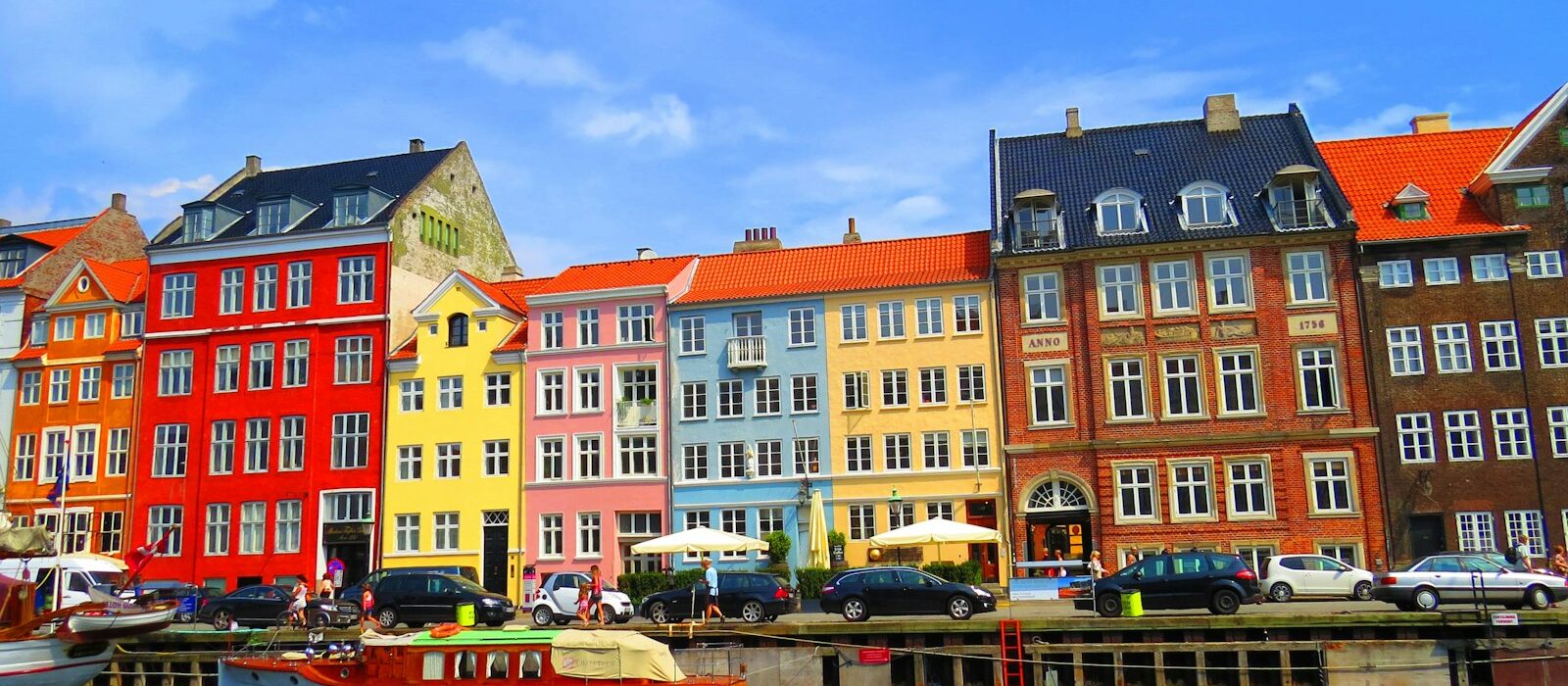
Denmark is famous for Viking history, modern design, cycling, the hygge lifestyle, Hans Christian Andersen and Copenhagen dining. Landmarks include Tivoli Gardens, Nyhavn, Kronborg Castle and the Jelling stones, a UNESCO World Heritage Site.
What is hygge?
Hygge is a Danish idea of cosy, relaxed togetherness, often linked to candles, warm drinks, good food and time with friends or family. It is less a product than a mood, and it is especially associated with the long, dark winter months.
What food should I try in Denmark?
Start with smørrebrød, the open-faced rye bread sandwiches, then try stegt flæsk med persillesovs, frikadeller and a fresh wienerbrød from a bakery. In winter, æbleskiver are a seasonal treat, and many cities also offer excellent seafood and New Nordic restaurants.
Plan Your Trip to Denmark
Your Next Adventure in Denmark Awaits!
Explore Deals →🎁 Best deals for Denmark
Offers from trusted travel stores for your Denmark trip. Compare a few options before you book, and check each store's terms for the final price.
Browse by type: Hotel deals · Flight deals · Travel eSIM · Car rental
 SimOptionsFind the latest SimOption promo code and coupon code for travel eSIM data plans. See how to apply an offer at checkout, fix common code errors and stay connected abroad.
Get Coupon View Deal
 TourRadarTourRadar is an online marketplace for multi-day guided tours, small-group trips and tailor-made journeys offered by independent tour operators around the world.
Get Coupon View Deal
More destinations to explore
GuineaGuinea is a West African country on the Atlantic coast, with Conakry as its…
 Dominican RepublicWhere Is Dominican Republic Located? The Dominican Republic is a Caribbean country that occupies…
 DubaiA Dubai travel guide covering where Dubai is, what it is known for, its…