 Côte d’IvoireCôte d'Ivoire travel guide covering where the country is, its history, culture, traditions and…
DESTINATION
Czechia
Czechia travel guide covering where the country is, its history, culture and food, with links to visa, flights, hotels and planning guides.
📅 Last updated:
🌍 Quick Facts

Czechia at a glance
Capital: Prague
Currency: Czech koruna (CZK)
Language: Czech
Population: About 10.9 million (Czech Statistical Office, June 2026, preliminary)
Time zone: CET (UTC+1), CEST (UTC+2) in summer
Calling code: +420
Internet domain: .cz
Main airport: Václav Havel Airport Prague (PRG)
Best time to visit: May to June and September to early October
📍 Czechia Map
🖼️ Czechia: Location, History, Culture & Food
✨ Complete Travel Guide
Where Is Czechia Located?
Czechia is a landlocked country in Central Europe, bordered by Germany to the west, Poland to the north and northeast, Slovakia to the southeast and Austria to the south. Its capital and largest city is Prague, and the country covers about 78,900 square kilometres, a little less than Austria.
Last checked: November 2026
Czechia is made up of three historic lands: Bohemia in the west, Moravia in the east and a small part of Czech Silesia in the northeast. For administration it is divided into 13 regions plus the capital, Prague. The Czech Statistical Office put the population at about 10.9 million at the end of June 2026, based on preliminary data, and most people live in towns and cities rather than in the countryside.
The landscape is a ring of low mountains around a rolling basin. The Giant Mountains (Krkonoše) on the Polish border hold the highest point, Sněžka, at 1,603 metres, while the Šumava forests run along the Bavarian and Austrian borders and the Ore Mountains mark the line with Saxony. The Vltava, the longest river inside the country, flows through Prague and joins the Elbe (Labe) north of the capital. Moravia is gentler, with vineyards, plains and the limestone caves of the Moravian Karst.
Czechia keeps Central European Time, which is UTC+1 in winter and UTC+2 in summer. Because the country is small and well connected, you can cross much of it in a few hours. Our guide to getting around Czechia covers trains, buses and driving, and the flights to Czechia guide explains how to arrive.
Introduction to Czechia
Czechia, officially the Czech Republic, is a parliamentary republic and a member of the European Union and NATO. It is known for Prague’s medieval centre, hundreds of castles, spa towns, beer and a strong musical tradition. The currency is the Czech koruna, and the official language is Czech.
Last checked: November 2026
Czechia is the short name that the Czech government promotes for everyday use, while Czech Republic remains the formal name, and both appear in official sources. The country joined the EU in 2004 and the Schengen Area in 2007, but it has kept its own currency, the koruna (CZK), rather than adopting the euro. The international dialling code is +420 and the internet domain is .cz.
Visitors usually start in Prague, one of the best preserved historic capitals in Europe, then branch out to fairy-tale towns such as Český Krumlov, Kutná Hora and Telč. Beyond the cities there are sandstone rock towns, spa resorts, wine villages and forest national parks. UNESCO lists well over a dozen places in the country, and you can see the full list on the UNESCO World Heritage page for Czechia.
Czechia is a practical country to visit. Public transport is dense, English is widely spoken in tourist areas, and distances are short. Our best places to visit in Czechia guide sorts the main sights by trip type, and the Czechia visa guide explains entry rules for different nationalities.
History of Czechia
Czech history began with Slavic tribes and the Great Moravian state in the 9th century, grew into the Kingdom of Bohemia under the Přemyslid dynasty, and later became part of the Habsburg Empire. Czechoslovakia was founded in 1918, and Czechia became an independent country on 1 January 1993.
Last checked: November 2026
Bohemia and the Přemyslids
Slavic tribes settled the region around the 6th century, and the Great Moravian state rose in the 9th century. The Přemyslid dynasty then united the Czech lands, and Prague Castle was founded in the late 9th century. Bohemia became a kingdom in the 12th century, and its rulers sat among the electors of the Holy Roman Empire.
Charles IV and the Golden Age
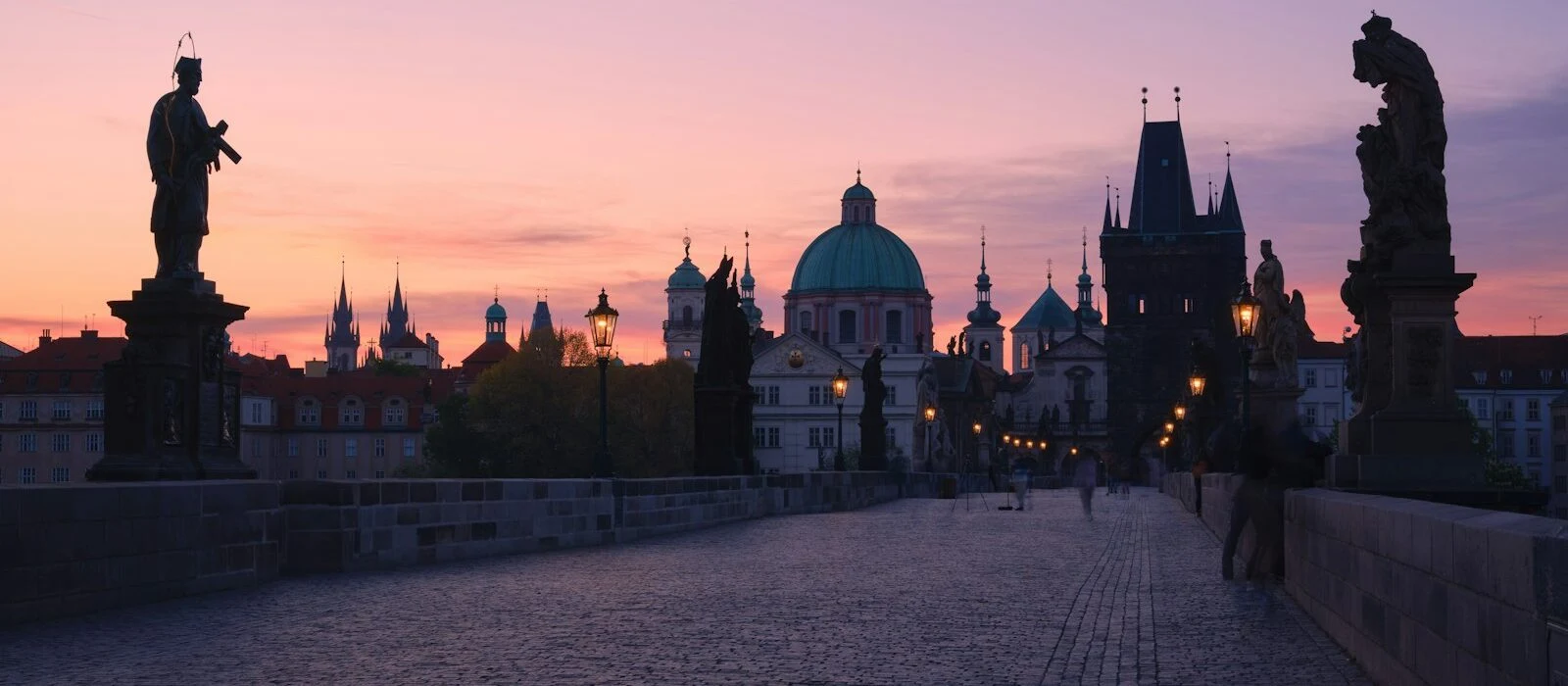
Charles IV, King of Bohemia from 1346 and Holy Roman Emperor from 1355, made Prague an imperial capital. He founded Charles University in 1348, began the Charles Bridge in 1357 and expanded the New Town. Much of the Gothic skyline that visitors see today comes from his reign.
Hussites and the Habsburgs
The preacher Jan Hus was burned at the stake in 1415, and his followers fought the Hussite Wars that followed. In 1526 the Bohemian crown passed to the Habsburgs. The Defenestration of Prague in 1618 helped start the Thirty Years’ War, and the defeat at White Mountain in 1620 brought centuries of Habsburg rule and Catholic reform.
Czechoslovakia
Czechoslovakia was created on 28 October 1918, when Austria-Hungary collapsed, and for twenty years it was a democracy in Central Europe. The Munich Agreement of 1938 and German occupation in 1939 ended that period. After the war, the Communist Party took power in 1948, and the Prague Spring reforms of 1968 were ended by the Warsaw Pact invasion in August of that year.
From the Velvet Revolution to Today
Mass protests in November 1989, known as the Velvet Revolution, ended communist rule without a civil war, and the dissident playwright Václav Havel became president. Czechoslovakia split peacefully into Czechia and Slovakia on 1 January 1993. Czechia joined NATO in 1999 and the European Union in 2004. The Czechia itineraries guide shows how to visit the main historic sites in a few days.
Culture and Traditions of Czechia
Czech culture combines Slavic roots, centuries of Bohemian and Habsburg influence, and a modern love of music, literature, theatre and pubs. Czech is the national language, family and countryside traditions remain strong, and most people are non-religious. Beer, mushroom picking and weekends at a cottage are everyday habits.
Last checked: November 2026
Language and Everyday Life
Czech is a West Slavic language related to Slovak and Polish. Younger people and staff in hotels and restaurants often speak English, and German is also understood in many border areas. A few words go a long way: dobrý den means good day, prosím means please or here you are, and děkuji means thank you.
Religion and Society
Czechia is one of the more secular countries in Europe, and many people say they have no religion. Catholic and Protestant churches remain important in the landscape, though, and Hussite history shapes the national story. The country has a strong tradition of tolerance for different views and a lively civic culture.
Festivals and Traditions
- Easter: Boys traditionally go from house to house with a braided willow whip called a pomlázka, and eggs are painted and decorated.
- Burning of the Witches: On 30 April, bonfires mark the end of winter across the country.
- St Nicholas Day: On 5 December, Mikuláš appears with an angel and a devil, and children receive sweets.
- Christmas Eve: The main celebration is on 24 December, with a dinner of fried carp and potato salad and gifts brought by Ježíšek, the baby Jesus.
- Velvet Revolution Day: 17 November is a public holiday, with candles and events in Prague.
Seasonal events affect crowds and prices, and our best time to visit Czechia guide explains when each one falls.
Music, Literature and Arts
Bedřich Smetana, Antonín Dvořák and Leoš Janáček are the great Czech composers, and the Prague Spring festival fills the city with classical music each year. Franz Kafka, Jaroslav Hašek and Karel Čapek, who introduced the word robot, shaped modern literature, while Czech puppetry and animation have a long tradition. Marionette theatre is part of the UNESCO list of intangible heritage.
Etiquette
- Greet shop staff and neighbours with dobrý den when you enter a room or lift.
- Take off your shoes when you visit a Czech home, because hosts often offer slippers.
- Make eye contact when you clink glasses and say na zdraví.
- Tipping of around 10 percent is common in restaurants if you are happy with the service.
- Keep to the right on escalators so that people can pass on the left.
For a closer look at local life, choose a family-run guesthouse in a smaller town, and see our where to stay in Czechia guide for the best areas.
Food and Cuisine of Czechia
Czech food is hearty and built on meat, dumplings, potatoes, cabbage and rich sauces, served with some of the world’s best beer. A traditional meal often centres on pork, beef or duck with knedlíky, which are bread or potato dumplings. Soups, cheese dishes and pastries round out the table.
Last checked: November 2026
Signature Dishes
- Svíčková: beef sirloin in a creamy root-vegetable sauce, served with bread dumplings and cranberries.
- Vepřo knedlo zelo: roast pork with dumplings and sauerkraut, often called the national dish.
- Guláš: a thick paprika beef stew, served with bread dumplings.
- Smažený sýr: breaded and fried cheese, served with tartar sauce and chips.
- Řízek: a breaded schnitzel, usually pork, with potato salad.
- Kulajda: a creamy soup of potatoes, dill and mushrooms, topped with a poached egg.
- Bramboráky: crisp potato pancakes flavoured with garlic and marjoram.
- Utopenci: pickled sausages served with onions as a pub snack.
- Chlebíčky: small open sandwiches with salads, ham or egg.
- Koláče: sweet pastries filled with poppy seed, curd cheese or fruit.
Beer and Pub Culture
The modern pale lager was first brewed in Plzeň in 1842, and Pilsner Urquell is still made there. České Budějovice is the home of Budvar, and nearly every town has its own brewery or pub. Czechs are among the biggest beer drinkers in the world, and a hospoda, or pub, is a normal place for lunch, dinner and a long chat.
Wine, Spirits and Other Drinks
South Moravia is the main wine region, with white varieties such as Riesling and Müller-Thurgau, and Czech sparkling wine and burčák, a young partly fermented wine sold in autumn, are popular. Becherovka, a herbal liqueur from Karlovy Vary, and slivovice, a plum brandy from Moravia, are the best known spirits. Tap water is safe to drink in most places.
Eating Out
Lunch menus, called denní menu, are a good deal on weekdays, and a soup is often included. Pork is common, so vegetarians and halal travellers should ask about ingredients and check menus in advance. Prague and Brno also have a wide range of international, vegetarian and vegan restaurants.
Explore Czechia Travel Guides
Explore our detailed guides to plan every part of your Czechia trip.
Czechia: Best Places
Best places to visit in Czechia: Prague, Český Krumlov, Kutná Hora, spa towns, Brno, national parks and wine country, with time needed...
View Guide ›Czechia: Best Time to Visit
Best time to visit Czechia: month-by-month weather, regional climate, festivals, public holidays, peak and low seasons and packing tips.
View Guide ›Czechia: Itineraries
Czechia itineraries for 3, 5, 7 and 10 days with realistic routes through Prague, Český Krumlov, Kutná Hora, Brno and more, plus...
View Guide ›Czechia: Visa
Czechia visa guide for tourists: Schengen 90/180 rule, who needs a visa, passport validity, EES and ETIAS, and official application sources.
View Guide ›Czechia: Flights
Flights to Czechia: Václav Havel Airport Prague, other airports, airlines, arrival tips, Entry/Exit System checks, time zone and a Before You Fly...
View Guide ›Czechia: Getting Around
Getting around Czechia by train, bus, metro, tram, car and taxi: tickets, driving rules, e-vignette, realistic travel times and common mistakes.
View Guide ›Czechia: Hotels
Where to stay in Czechia: best areas in Prague, Brno, Český Krumlov and Karlovy Vary, accommodation types, family and halal notes, and...
View Guide ›Explore Czechia Tours
Discover guided tours and adventures in Czechia. Compare itineraries, prices and traveller reviews on TourRadar before you book.
Guided tours & deals
Affiliate partner · Globe Navo may earn a commission from qualifying bookings at no extra cost to you.
❓ Czechia FAQ
Where is Czechia and what is its capital?
Czechia is a landlocked country in Central Europe, bordered by Germany, Poland, Slovakia and Austria. Its capital and largest city is Prague, which sits on the Vltava River in Bohemia. The country is made up of Bohemia, Moravia and a small part of Czech Silesia.
What language is spoken in Czechia?
Czech is the official language, and it is related to Slovak and Polish. English is widely spoken in hotels, restaurants and tourist areas, especially among younger people, and German is understood in many border regions. Learning a few words such as dobrý den and děkuji is appreciated.
What currency does Czechia use?
Czechia uses the Czech koruna, written CZK, not the euro. Cards are widely accepted in cities, but small cafes, markets and public toilets sometimes want cash. Use bank ATMs or official exchange counters, and avoid street exchange offices, which often offer poor rates.
What is Czechia best known for?
Czechia is known for the historic centre of Prague, medieval towns such as Český Krumlov, castles, spa towns and some of the best beer in the world. It also has a rich musical heritage, with composers such as Dvořák and Smetana, and a hearty food tradition built on dumplings, roasted meats and sauces.
What is Czech food like?
Traditional Czech dishes include svíčková, a beef sirloin in creamy sauce with dumplings, roast pork with dumplings and sauerkraut, and goulash. Fried cheese, potato pancakes and sweet koláče pastries are also popular. Vegetarians should ask about ingredients, because meat stock is common.
Plan Your Trip to Czechia
Your Next Adventure in Czechia Awaits!
Explore Deals →🎁 Best deals for Czechia
Offers from trusted travel stores for your Czechia trip. Compare a few options before you book, and check each store's terms for the final price.
Browse by type: Hotel deals · Flight deals · Travel eSIM · Car rental
 SimOptionsFind the latest SimOption promo code and coupon code for travel eSIM data plans. See how to apply an offer at checkout, fix common code errors and stay connected abroad.
Get Coupon View Deal
 TourRadarTourRadar is an online marketplace for multi-day guided tours, small-group trips and tailor-made journeys offered by independent tour operators around the world.
Get Coupon View Deal
More destinations to explore
Côte d’IvoireCôte d'Ivoire travel guide covering where the country is, its history, culture, traditions and…
 MadagascarA traveller's overview of Madagascar: where the island sits in the Indian Ocean, its…

 IrelandIreland travel guide: where the country is, its history, culture and traditions, and signature…