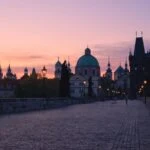
The best time to visit Czechia is generally May to June and September to early October, when days are mild, sights are open and crowds are smaller than in midsummer. December is the choice for Christmas markets, and January to March suits skiing in the mountains. The best month depends on what you want to do.
Last checked: November 2026
Overall best travel periods
Czechia has a continental climate with four distinct seasons. Summers are warm, winters are cold, and spring and autumn are changeable but pleasant. Weather also varies by region and altitude, so the Giant Mountains and the Šumava can be much colder and snowier than Prague or South Moravia. The figures below are typical ranges rather than forecasts, so check the Czech Hydrometeorological Institute forecast before you travel.
- Spring (April to June): gardens bloom, the days lengthen, and outdoor terraces reopen. Weather is changeable in April.
- Summer (July and August): the warmest months, with the longest days, plus the biggest crowds and the highest hotel prices in Prague.
- Autumn (September to October): mild days, harvest and wine festivals, and forest colours.
- Winter (November to March): cold and often grey in the lowlands, but with Christmas markets, thermal baths and skiing.
Month-by-month conditions
| Month | Typical conditions | Good for |
|---|---|---|
| January | Cold, with frost and some snow | Skiing, spas, quiet museums |
| February | Cold, with snow in the mountains | Skiing, Masopust carnival events |
| March | Cool and changeable | Low prices, indoor sights |
| April | Mild but unsettled | Easter markets, early spring walks |
| May | Mild and often sunny | Gardens, Prague Spring festival, hiking |
| June | Warm and long days | Castles, cycling, outdoor dining |
| July | Warm to hot, with thunderstorms | Lakes, festivals, longest days |
| August | Warm to hot | Swimming, rafting, mountain trails |
| September | Mild and often stable | Wine harvest, hiking, fewer crowds |
| October | Cooler, with autumn colour | Forests, cities, lower prices |
| November | Cold, grey and damp | Museums, concerts, early markets |
| December | Cold, with frost and possible snow | Christmas markets, ski season start |
Regional climate differences
Prague and the Bohemian basin are the driest and warmest parts of the country in summer and can feel cold and damp in winter. South Moravia is the warmest region and the heart of the wine country. The mountains along the borders, including the Krkonoše, Šumava and Jeseníky, are cooler year-round, get the most snow, and can have sudden weather changes. If you plan to hike, check the local forecast and carry a rain layer even in summer.
Festivals and public holidays
Public holidays close banks, many shops and some museums, and they bring Czech families out to the countryside, so book ahead for these dates.
- 1 January: New Year’s Day and Restoration Day of the Czech State.
- Easter Monday: a movable date in spring, with traditional customs in villages.
- 1 May and 8 May: Labour Day and Liberation Day.
- 5 and 6 July: the Day of Saints Cyril and Methodius and Jan Hus Day.
- 28 September: Czech Statehood Day.
- 28 October: Independence Day.
- 17 November: Struggle for Freedom and Democracy Day.
- 24, 25 and 26 December: Christmas Eve, Christmas Day and St Stephen’s Day.
Popular events include the Prague Spring classical music festival in May and June, the Karlovy Vary International Film Festival in early July, and Christmas markets from late November. Dates can change, so confirm them on the official event pages. For Muslim travellers, Ramadan does not affect opening hours in Czechia, but halal food is limited outside Prague and the big cities, so plan meals ahead.
Peak and low seasons
Peak season runs from June to August and over Christmas and New Year, when hotels in Prague cost the most and sights are busiest. Shoulder seasons in May, September and early October are often the best balance of weather, price and crowds. Low season, from January to March and in November, brings the lowest hotel prices, but days are short and some castles in smaller towns close or reduce their hours, so check opening times before you go.
Packing recommendations
- All year: comfortable walking shoes, because Prague’s streets are cobbled, and a small daypack.
- Spring and autumn: layers, a light waterproof jacket and an umbrella.
- Summer: sun protection, a hat and a refillable water bottle.
- Winter: a warm coat, gloves, a hat and shoes with good grip for icy pavements.
- Hiking: sturdy boots, a map or offline route and a rain layer.
Best seasons for different travel styles
- City breaks and sightseeing: May, June, September and early October.
- Hiking and cycling: late May to early October.
- Wine and food: September and October, during harvest.
- Christmas markets: late November to 24 December.
- Skiing: January to early March, depending on snow.
- Budget travel: November and January to March, outside the holidays.
For route ideas, see our Czechia itineraries, and for the places themselves, read the best places to visit in Czechia. You can also read Czech Tourism for seasonal events.
Frequently Asked Questions
What is the best month to visit Czechia?
May, June and September are the best months for most visitors, with mild weather, long days and open sights. For Christmas markets choose December, and for skiing choose January or February.
Is Czechia very cold in winter?
Winters are cold, with frost and some snow in the lowlands and heavier snow in the mountains. Pack a warm coat, gloves and shoes with good grip, and plan indoor stops such as museums, cafes and thermal baths.
When is Prague most crowded?
Prague is busiest from June to August and over Christmas and New Year. Visiting early in the morning or choosing May, September or October gives you more space at major sights.
When do the Christmas markets open?
Christmas markets usually open in late November or on the first weekend of Advent and run until about 24 December. Exact dates change each year, so check the official city event pages.