 India
DESTINATION
Austria
Austria is a Central European country known for Vienna, Salzburg, Hallstatt and the Alps, with easy train travel and Schengen entry rules.
📅 Last updated:
Austria: Hotels · Flights · Visa Guide · Deals
🌍 Quick Facts

Austria at a glance
🏛️
Capital: Vienna
💱
Currency: Euro (EUR)
💬
Language: German (official)
👥
Population: About 9.2 million
🕒
Time zone: Central European Time (UTC+1, UTC+2 in summer)
📞
Calling code: +43
🌐
Internet domain: .at
✈️
Main airport: Vienna International Airport (VIE)
★
Best time to visit: June to August for hiking; December to March for skiing
Food
- Wiener Schnitzel
- Tafelspitz
- Kaiserschmarrn
- Apple strudel
- Sachertorte
Places
- Schönbrunn Palace, Vienna
- Hohensalzburg Fortress, Salzburg
- Hallstatt and the Salzkammergut
- Wachau Valley
- Innsbruck and Tyrol
Weather
Warm summers and cold, snowy winters in the Alps
Culture
Classical music, coffee houses, baroque architecture and Alpine traditions
Cities
- Vienna
- Salzburg
- Innsbruck
- Graz
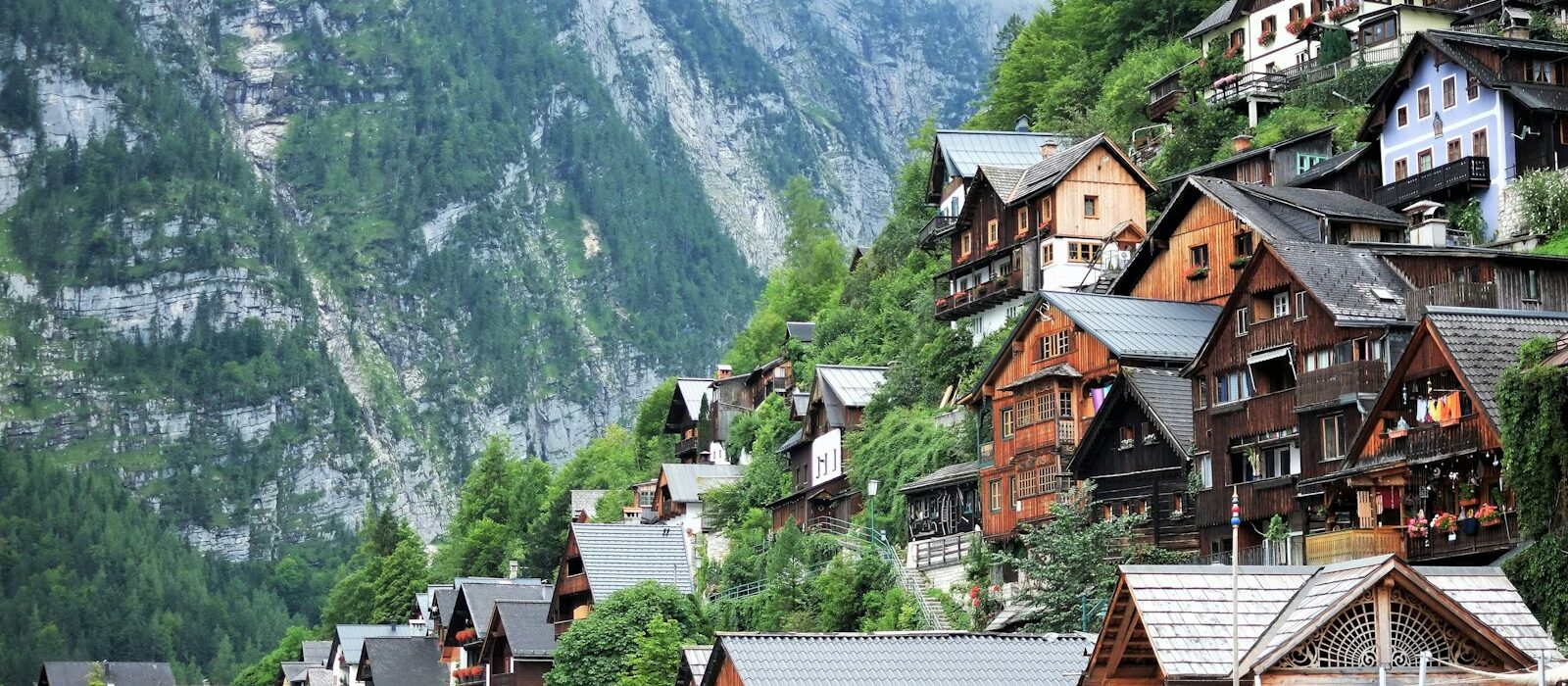
- Hallstatt
📍 Austria Map
📷 Photos of Austria
Explore Austria Travel Guides
Explore our detailed guides to plan every part of your Austria trip.
🗺️
Austria: Itineraries
Realistic Austria itineraries for 3, 5, 7 and 10 days, with real train times between Vienna, Salzburg, Hallstatt, Innsbruck and Graz.
View Guide › 🛂Austria: Visa
Check who needs a Schengen visa for Austria, the 90/180-day rule, passport rules, EES border checks and the current ETIAS status.
View Guide › 📍Austria: Best Places
From Vienna and Salzburg to Hallstatt, the Wachau and the Alps, here are the best places to visit in Austria and how...
View Guide › 🌤️Austria: Best Time to Visit
Summer suits hiking and lakes, winter suits skiing and Christmas markets, and spring and autumn are quieter. See Austria month by month.
View Guide › ✈️Austria: Flights
Most flights to Austria land at Vienna International Airport. See airports, airlines, train and airport transfers, and a Before You Fly checklist.
View Guide › 🛌Austria: Hotels
Compare Vienna, Salzburg, Innsbruck, Hallstatt and the ski villages to find the best area to stay in Austria for your trip.
View Guide › 🚆Austria: Getting Around
Plan travel inside Austria by train, bus, ferry, car or domestic flight, with realistic journey times and a quick choice guide.
View Guide ›🖼️ Austria: Location, History, Culture & Food
✨ Complete Travel Guide
Where Is Austria Located?
Austria is a landlocked country in Central Europe, with no coastline. It borders eight countries: Germany and Czechia to the north, Slovakia and Hungary to the east, Slovenia and Italy to the south, and Switzerland and Liechtenstein to the west. Vienna, the capital, lies in the east on the Danube.
Last checked: November 2026
This Austria travel guide starts with the map, because the country’s position shapes its history and its food. Austria covers about 83,900 square kilometres. The Alps fill most of the west and south, and the Grossglockner, at 3,798 metres, is the highest peak. The east is flatter, with the Danube valley, vineyards and the Vienna Basin. Nine federal states make up the country, and shared waters such as Lake Constance and Lake Neusiedl add to the map.
Austria uses Central European Time, which is UTC+1 in winter and UTC+2 in summer. Vienna and Bratislava, the capital of Slovakia, are less than 70 kilometres apart, so they are among the closest national capitals in Europe. Most visitors arrive at Vienna International Airport, and our flights to Austria guide covers the airports and airlines. Inside the country, the getting around Austria guide explains trains, buses and driving.
Austria Travel Guide: What the Country Is Known For
Austria is a federal parliamentary republic known for classical music, imperial palaces, coffee houses and Alpine scenery. German is the official language, the currency is the euro, and Vienna is the capital. About 9.2 million people lived in the country on 1 January 2026, according to Statistics Austria.
Vienna has about 2.04 million residents in the same preliminary count, so more than one in five Austrians lives in the capital. The other large cities are Graz, Linz, Salzburg and Innsbruck. The president is head of state, the chancellor leads the government, and the nine states have their own parliaments.
Austria joined the European Union on 1 January 1995, and euro notes and coins arrived in 2002, according to the EU’s country profile. The country has been neutral since 1955 and is not a NATO member. Because Austria is part of the Schengen Area, our Austria visa guide for tourists explains entry rules by passport.
Three details set Austria apart from its neighbours:
- Viennese coffee house culture has been on UNESCO’s list of intangible cultural heritage since 2011.
- The country has 12 UNESCO World Heritage properties, from Salzburg’s old town to the Wachau valley. See the UNESCO page for Austria.
- Mountains sit close to the cities. In Innsbruck, a funicular and cable cars rise from the town to Alpine viewpoints.
For ideas on where to go, see our guide to the best places to visit in Austria, or follow one of the Austria itineraries for three to ten days.
History of Austria: From Roman Noricum to the Present
Austria’s history runs from Celtic and Roman settlement through more than six centuries of Habsburg rule to the republic of today. The country took its modern shape after the empire ended in 1918, and it regained full independence in 1955 after ten years of Allied occupation.
Early settlement and Roman rule
People have mined salt at Hallstatt for thousands of years, and the Early Iron Age Hallstatt culture, dated to roughly 800 to 450 BC, takes its name from the site. The Celtic kingdom of Noricum later controlled much of the Eastern Alps. Rome took over the region around 15 BC and built a Danube frontier with forts such as Carnuntum and Vindobona, the Roman predecessor of Vienna.
Babenbergs and Habsburgs
The name Ostarrîchi, an early form of Österreich, appears in a document from 996. The Babenberg family ruled the region from 976 to 1246, and the Habsburgs took control from 1278 under Rudolf I. They stayed in power until 1918. Ottoman armies besieged Vienna in 1529 and again in 1683. Maria Theresa, who reigned from 1740 to 1780, introduced compulsory schooling in 1774.
Empire, war and republic
Francis II proclaimed the Austrian Empire in 1804, and the Dual Monarchy of Austria-Hungary followed in 1867. Defeat in the First World War ended the monarchy, and Austria was declared a republic on 12 November 1918. German troops crossed the border on 12 March 1938, and the annexation known as the Anschluss followed. It lasted until 1945.
Occupation and the modern state
Four Allied powers occupied Austria from 1945 to 1955, and Vienna was divided into sectors. The State Treaty, signed on 15 May 1955 in the Belvedere palace, restored full independence. Parliament then passed the neutrality law on 26 October 1955. Many visitors assume National Day marks the treaty, but it marks the neutrality law.
Austrian Culture and Traditions
Austrian culture blends Alpine folk customs with imperial-era music and coffee house life. German is the main language, Catholic traditions shape the holiday calendar, and classical music remains part of public life. Customs differ between Vienna, the western mountains and the south.
Language
German is the official language, and Austrian German has its own words. Austrians say Jänner for January, Erdäpfel for potatoes and Servus as a casual greeting. Grüß Gott is a traditional greeting, especially in rural areas. Six minority groups have legal recognition: Croats, Slovenes, Hungarians, Czechs, Slovaks and Roma.
Religion
Roman Catholicism has the longest history and the largest church membership. Public holidays such as Assumption Day on 15 August, All Saints’ Day on 1 November and the Immaculate Conception on 8 December follow its calendar. Islam has had legal recognition since 1912, and Protestant, Orthodox and Jewish communities also have a long presence.
Festivals
The Salzburg Festival, founded in 1920, fills the city with opera, theatre and concerts each summer. In winter, Vienna’s ball season peaks with the Vienna Opera Ball, listed for 4 February 2027. In autumn, farmers bring cattle down from mountain pastures in the Almabtrieb, often with decorated animals. Krampus processions appear in many towns on 5 December. Dates change each year, so the best time to visit Austria guide gives a month-by-month list.
Etiquette
Austrians greet with a handshake and use the formal Sie with strangers. Being on time matters for meals, tours and concerts. Most shops close on Sundays, and many people treat the day as a quiet one. Rounding up the bill is a common way to tip in restaurants. Say hello when you enter a small shop or café, because staff usually expect it.
Music and arts
Mozart was born in Salzburg in 1756, and Haydn, Beethoven, Schubert and Johann Strauss II all lived or worked in Vienna. The Vienna State Opera and the Vienna Philharmonic keep that tradition active. Gustav Klimt and Egon Schiele are the best-known painters of Vienna’s early 20th-century art scene. Many people wear traditional dress, the dirndl and Lederhosen, at festivals, weddings and in rural areas.
Austrian Food: Traditional Dishes, Drinks and Desserts
Austrian food is hearty and built on meat, dumplings, potatoes, cheese and pastry. Wiener Schnitzel, Tafelspitz and Kaiserschmarrn are the best-known dishes, and coffee with cake is an everyday ritual. Recipes vary by region, with Vienna, Styria, Tyrol and Carinthia each having signature dishes.
Staples and regional differences
Bread rolls, potatoes, pork, beef, cabbage and cheese appear on most menus. Regional cooking changes quickly. Styria uses pumpkin seed oil, Tyrol is known for smoked Speck and Kaspressknödel, and Carinthia has Kasnudeln, a filled pasta. Salzburg is known for Salzburger Nockerl, a light baked sweet dish.
Signature dishes
- Wiener Schnitzel: a breaded, fried veal cutlet. Under Austrian rules the name means veal, and pork versions are sold as Schnitzel Wiener Art.
- Tafelspitz: boiled beef served with apple-horseradish and chive sauces.
- Gulasch: a paprika-spiced beef stew.
- Backhendl: breaded fried chicken, popular in Styria and Vienna.
- Käsespätzle: egg noodles baked with mountain cheese and fried onions.
- Knödel: bread or semolina dumplings, served in soup or with meat.
- Leberkäse: a baked loaf of minced meat, usually sliced into a roll.
- Kaiserschmarrn: a torn, caramelised pancake with raisins and plum compote.
- Apfelstrudel: thin pastry rolled around spiced apples and raisins.
- Sachertorte: a chocolate cake with apricot jam, created in Vienna in 1832.
Street food
A Würstelstand, or sausage stand, sells Käsekrainer (a sausage with cheese), bratwurst and mustard in a roll. Leberkässemmel, a slice of Leberkäse in a bread roll, is a quick lunch. In Salzburg, look for the Bosna, a grilled sausage with onions and curry powder in a bun.
Drinks
In a Viennese coffee house, a Melange is milk coffee similar to a cappuccino, and it usually arrives with a glass of water. Grüner Veltliner is the leading white wine, and Zweigelt is a common red. In a Heuriger, a wine tavern, growers serve their own wine, often marked by a pine branch at the door. In autumn, look for Sturm, partly fermented young wine. Almdudler is a popular herbal soft drink, and apricot brandy from the Wachau is a local spirit.
Desserts
Apart from Sachertorte and strudel, Palatschinken are thin pancakes with jam or chocolate, and Germknödel is a yeast dumpling filled with plum jam. Mozartkugeln, chocolate-coated pistachio marzipan balls, were created in Salzburg in 1890. Many guesthouses and Alpine lodges serve these dishes, and the where to stay in Austria guide compares areas and types of places to stay.
Explore Hotels & Flights
Search accommodation and flights for your destination with Expedia. Compare available options and continue to Expedia to complete your booking.
Affiliate partner · Globe Navo may earn a commission from qualifying bookings at no extra cost to you.
❓ Austria FAQ
Do I need a visa to visit Austria?
It depends on your passport. Austria follows Schengen rules, so many nationalities can stay up to 90 days in any 180-day period without a visa, while others need a Schengen visa from an Austrian embassy or consulate. Check the official Austrian foreign ministry and interior ministry lists.
Is ETIAS required for Austria now?
Not yet. The European Commission says ETIAS is not operating and is not collecting applications, and that it will announce a start date several months ahead. The Entry/Exit System has been fully operational since 10 April 2026, so allow extra time at the border.
When is the best time to visit Austria?
Summer, June to August, suits hiking and lakes, and December to March suits skiing. April, May, September and October are quieter shoulder months. Christmas markets open from November, and some run until early January.
Is Austria safe for tourists?
The US State Department rates Austria Level 1, Exercise Normal Precautions, in an advisory issued on 21 August 2026. The UK FCDO notes that terrorist attacks cannot be ruled out. Use normal city precautions, check mountain weather, and call 112 in an emergency.
Can I travel around Austria by train?
Yes. According to ÖBB, the fastest Railjet trains take about 2 hours 25 minutes from Vienna to Salzburg and under 2 hours from Salzburg to Innsbruck. Vienna to Graz takes about 2.5 hours. Book early online for lower fares.
Plan Your Trip to Austria
Your Next Adventure in Austria Awaits!
Explore Deals →🎁 Best deals for Austria
Offers from trusted travel stores for your Austria trip. Compare a few options before you book, and check each store's terms for the final price.
Browse by type: Hotel deals · Flight deals · Travel eSIM · Car rental
 KkdayFind current Kkday coupons and deals for tours, attraction tickets, transport and first app orders. See minimum spend, discount caps and exclusions before you book.
Get Coupon View Deal
 eSIMFOXeSIMFOX is a travel eSIM provider offering prepaid mobile data plans for single countries and wider regions, delivered digitally so you can connect as soon as you land.
Get Coupon View Deal
 QuibityQuibity is a travel eSIM provider that lets you buy a mobile data plan online and activate it on your phone, so you can get connected abroad without a physical SIM card.
Get Coupon View Deal
 ExpediaDiscover great deals on hotels, flights, vacation packages, car rentals, and activities with Expedia. Compare travel options and plan your next trip with convenient booking choices.
Get Coupon View Deal
 KlookKlook is a travel activities platform where you can book attraction tickets, tours, day trips, transport passes, airport transfers and local experiences in destinations worldwide.
Get Coupon View Deal
 Trip.comTrip.com is a global online travel platform for flights, hotels, train tickets, airport transfers, attraction tickets and travel packages, available on web and mobile app.
Get Coupon View Deal
 TourRadarTourRadar is an online marketplace for multi-day guided tours, small-group trips and tailor-made journeys offered by independent tour operators around the world.
Get Coupon View Deal