 Belarus
DESTINATION
Brazil
Brazil travel guide covering where the country is, its people, history, culture and food, with links to seven detailed trip-planning guides.
📅 Last updated:
Brazil: Hotels · Flights · Visa Guide · Deals
🌍 Quick Facts

Brazil at a glance
🏛️
Capital: Brasilia
💱
Currency: Brazilian Real (BRL)
💬
Language: Portuguese
👥
Population: About 214.2 million (IBGE estimate, 2026)
🕒
Time zone: UTC-3 (Brasilia time); zones range from UTC-5 to UTC-2
📞
Calling code: +55
🌐
Internet domain: .br
✈️
Main airport: Sao Paulo-Guarulhos International Airport (GRU)
★
Best time to visit: Depends on the region: April to June and September to November for Rio
Food
- Feijoada
- Pao de queijo
- Acai
Places
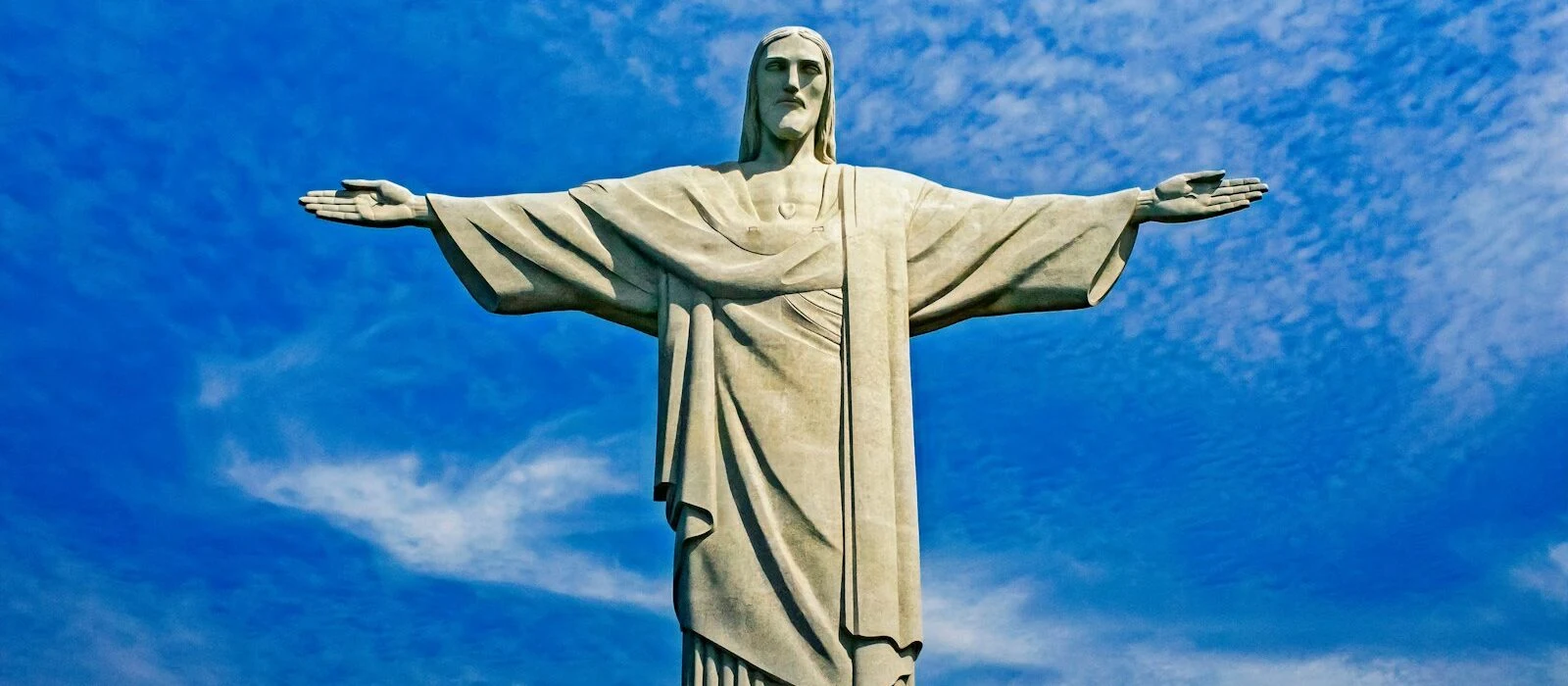
- Christ the Redeemer
- Iguacu Falls
- Pelourinho, Salvador
- The Pantanal
- Lencois Maranhenses
Weather
Brazil spans several climates. Rio is hot and rainy from December to March, with highs of about 30 to 35 C, and milder from June to August. The north-east is warm all year, the Pantanal is driest from May to October, and the Amazon sees rain in every month.
Culture
Portuguese is the official language. Carnival, samba, bossa nova and football are central to public life, and UNESCO lists 26 World Heritage properties in Brazil.
Cities
- Rio de Janeiro
- Sao Paulo
- Brasilia
- Salvador
- Foz do Iguacu
- Manaus
📍 Brazil Map
📷 Photos of Brazil
Explore Brazil Travel Guides
Explore our detailed guides to plan every part of your Brazil trip.
📍
Brazil: Best Places
The best places to visit in Brazil by region, from Rio de Janeiro and Iguacu Falls to Salvador, the Pantanal, the Amazon...
View Guide › 🌤️Brazil: Best Time to Visit
When to visit Brazil by region, with weather and rainy seasons for Rio, the north-east, the Pantanal, the Amazon, Iguacu and the...
View Guide › 🗺️Brazil: Itineraries
Route examples for 5, 7 and 10 days in Brazil, combining Rio de Janeiro, Iguacu Falls, Salvador and the Pantanal, with notes...
View Guide › 🛂Brazil: Visa
Who needs a Brazil visa or e-visa, how long you can stay, the fee for US, Canadian and Australian citizens, passport rules...
View Guide › ✈️Brazil: Flights
Which airports serve Brazil, which airlines operate there, how to plan domestic flights between regions and a checklist before you book.
View Guide › 🚆Brazil: Getting Around
How to travel inside Brazil: domestic flights, buses, trains, ferries, driving, taxis and city transport, with travel times between main cities.
View Guide › 🛌Brazil: Hotels
Where to stay in Brazil: practical bases in Rio de Janeiro, Sao Paulo, Brasilia, Salvador and Foz do Iguacu, with safety, Carnival...
View Guide ›🖼️ Brazil: Location, History, Culture & Food
✨ Complete Travel Guide
Safety notice for this Brazil travel guide: The US State Department rates Brazil at Level 2, Exercise Increased Caution (advisory issued 31 August 2026). It tells travellers not to enter informal housing developments (favelas), even on guided tours, and it restricts US government staff from the zones within 160 km of the land borders, except for the Foz do Iguacu and Pantanal national parks. The UK Foreign Office (page updated 28 October 2026) advises against all but essential travel on river routes in the west of Amazonas State, including the Japura River and its tributaries and the Rio Negro and its tributaries north or west of Barcelos. Read your own government’s current advice before you travel.
Where Is Brazil Located?
Brazil lies on the eastern side of South America, with the Atlantic Ocean along its entire eastern edge. It covers about 8.5 million square kilometres, which makes it the largest country in South America and the fifth largest in the world. Its capital is Brasilia, and it shares land borders with every South American country except Chile and Ecuador.
Last checked: November 2026
The Atlantic coastline runs for about 7,491 kilometres, from the border with French Guiana in the north to the border with Uruguay in the south. Inland, the Amazon basin fills the north, the Pantanal wetland spreads across the south-west of the interior, and the Brazilian Highlands cover much of the centre and south-east. Pico da Neblina, near the Venezuelan border, is the highest peak at about 2,995 metres.
The Equator crosses the north of the country and the Tropic of Capricorn crosses the south-east, so most of Brazil lies in the tropics. Seasons are the reverse of those in Europe and North America, and the climate changes sharply between regions. The best time to visit Brazil therefore depends on where you plan to go.
Brazil has four time zones, from UTC-5 in the far west to UTC-2 on the Atlantic islands. National time, used in Brasilia, Rio de Janeiro and Sao Paulo, is UTC-3, and the country stopped using daylight saving time in 2019. The south-east holds the two largest cities, and the guide on where to stay in Brazil compares bases in each. Because distances are large, our guides to flights to Brazil and to getting around Brazil cover the airports and the options inside the country.
Brazil Travel Guide: Introduction to the Country
Brazil is a federal republic of 26 states and one Federal District, and Portuguese is its official language. About 214.2 million people live there as of 2026, according to an estimate from the Brazilian Institute of Geography and Statistics (IBGE). That makes it the most populous country in South America and the only one where Portuguese is the national language.
- Capital: Brasilia
- Official language: Portuguese
- Currency: Brazilian real (BRL)
- Government: Federal presidential republic
- Population: About 214.2 million (IBGE estimate, 1 July 2026)
The IBGE counted 203.1 million people in the 2022 census, so the newer figure is an estimate. City figures are much smaller than the national one: the city of Sao Paulo has about 11.9 million residents, while the wider metropolitan area is larger. Two common mix-ups are worth clearing up. The capital is Brasilia, not Rio de Janeiro or Sao Paulo, and people speak Portuguese rather than Spanish.
The country is known for the Amazon rainforest, the largest tropical forest on Earth, for long Atlantic beaches, for Carnival and for football. The UNESCO World Heritage Centre lists 26 properties in Brazil, from the historic town of Ouro Preto, inscribed in 1980, to the Peruacu River Canyon, inscribed in 2025.
Officially, Brazil has five regions: North, North-east, Central-West, South-east and South. They differ in climate, food and accent, and our guide to the best places to visit in Brazil explains how to choose between them. Entry rules depend on nationality, so read the Brazil visa guide before booking, and see the Brazil itineraries for sample routes.
History of Brazil
Brazil’s history runs from Indigenous societies that lived on the land for thousands of years, through Portuguese colonisation from 1500, independence in 1822 and the end of slavery in 1888, to the republic declared in 1889. Brasilia became the capital in 1960, and civilian government returned in 1985.
Indigenous Peoples Before 1500
Many Indigenous peoples lived across the territory long before Europeans arrived, including Tupi-speaking groups along the coast and numerous societies in the Amazon basin. They farmed manioc, fished and hunted, and they traded across wide areas. Rock art in places such as the Peruacu River Canyon, a UNESCO site since 2025, records early human presence.
Portuguese Colony, 1500 to 1822
A Portuguese fleet led by Pedro Alvares Cabral reached the coast on 22 April 1500. Settlement grew from the 1530s, and sugar plantations in the north-east depended on enslaved labour, first of Indigenous people and then of Africans brought across the Atlantic. Salvador was the colonial capital until 1763, when Rio de Janeiro took over after gold was found in Minas Gerais.
In 1808 the Portuguese royal court sailed to Rio de Janeiro to escape Napoleon’s army. Brazil became a kingdom united with Portugal in 1815, which gave it a status no other American colony had held.
Empire and Abolition, 1822 to 1889
Prince Pedro declared independence on 7 September 1822 and became Emperor Pedro I. His son, Pedro II, reigned until 1889 and presided over the expansion of coffee farming in the south-east. Brazil ended slavery on 13 May 1888 with the Golden Law, the last country in the Americas to do so.
Republic and Democracy, 1889 to Today
The army ended the monarchy on 15 November 1889. Getulio Vargas dominated politics from 1930 to 1945 and returned as an elected president in 1951. Brasilia, designed by urban planner Lucio Costa and architect Oscar Niemeyer, was inaugurated on 21 April 1960. A military government ruled from 1964 to 1985, and a new constitution followed in 1988. Brazil has held direct presidential elections since 1989.
Brazilian Culture and Customs
Brazilian culture blends Indigenous, European and African influences, shaped by centuries of migration. Portuguese is spoken nationwide, Roman Catholicism is the largest religion, and music, football and festivals are central to public life. Customs vary by region, from the Amazon to the southern cattle country.
Language
Portuguese is the official language, and Brazilian Portuguese differs from the European variety in pronunciation, spelling and everyday words. Accents change noticeably between Rio de Janeiro, Bahia and the south. Indigenous languages are still spoken in some communities, and Libras, Brazilian Sign Language, is legally recognised.
Religion
Roman Catholicism has the most followers, and evangelical Protestant churches have grown quickly in recent decades. Afro-Brazilian religions such as Candomblé and Umbanda are practised in several regions, and some Brazilians combine elements of more than one tradition. Church and state are separate under the constitution.
Festivals
Carnival, held in the days before Lent, is the best-known festival. Rio de Janeiro stages large parade competitions, Salvador has street blocos led by sound trucks, and Recife and Olinda are known for frevo dancers with small umbrellas. Festas Juninas in June honour Saint John and other saints with bonfires, square-dance groups and corn dishes, especially in the north-east. Belem holds the Cirio de Nazare procession each October, and the Folklore Festival of Parintins takes place in Amazonas in late June. Embratur’s Visit Brasil site lists national events.
Etiquette
Greetings are warm. Friends often kiss on the cheek, with the number of kisses varying by region, and handshakes are common in formal settings. Personal space is often smaller than in northern Europe or North America. Social events start later than the stated time, while business meetings expect punctuality. Casual clothing is normal in daily life, and beachwear stays near the beach.
Music and Arts
Samba grew out of Afro-Brazilian communities in Rio de Janeiro and Salvador in the early 20th century. Bossa nova emerged in Rio de Janeiro in the late 1950s through Joao Gilberto and Antonio Carlos Jobim. Other styles include forro in the north-east, sertanejo in the interior and funk carioca in Rio de Janeiro. UNESCO lists the capoeira circle and the samba de roda of the Reconcavo of Bahia as intangible heritage. Football holds a similar place in daily life, and the men’s national team has won the World Cup five times, in 1958, 1962, 1970, 1994 and 2002.
Brazilian Food and Drink
Brazilian food centres on rice, beans, manioc and grilled meat, with strong regional traditions. Feijoada, pao de queijo, moqueca and acai are among the best-known dishes. Cooking differs sharply between Bahia, the Amazon, Minas Gerais and the south, so no single dish stands for the whole country.
Staples
Rice and beans appear at most daily meals, usually with farofa (toasted manioc flour), salad and a piece of meat or an egg. Manioc, also called cassava or aipim, is boiled, fried or ground into flour and tapioca starch. Brazil is also one of the world’s largest coffee producers, and small cups of strong coffee, called cafezinho, are served at homes and workplaces throughout the day.
Signature Dishes
- Feijoada: A black bean stew with pork, served with rice, kale and orange slices.
- Pao de queijo: Small baked cheese rolls from Minas Gerais, made with manioc starch.
- Moqueca: A fish or shrimp stew with coconut milk and palm oil in Bahia, and a lighter version in Espirito Santo.
- Acaraje: A deep-fried black-eyed pea fritter filled with shrimp and spiced paste, sold in Bahia.
- Picanha: A beef cut grilled on skewers and carved at the table in churrascarias.
- Bobo de camarao: A creamy shrimp dish made with manioc puree.
- Baiao de dois: Rice and beans cooked together with cheese, a north-eastern favourite.
- Tacaca: A hot soup of manioc starch, dried shrimp and jambu leaves from the Amazon.
- Pirarucu: A very large Amazon river fish, usually grilled or baked.
- Galinhada: Chicken cooked with rice and spices, common in Goias.
Regional contrasts are strong. The north relies on river fish, tucupi sauce and manioc, the north-east on coconut, seafood and palm oil, and Minas Gerais on cheese, pork and beans. In the south, cattle ranching and the European settlers shaped churrasco and sausages, and Sao Paulo shows Italian and Japanese influence.
Street Food
Coxinha is a teardrop-shaped croquette of shredded chicken, and pastel is a thin fried pastry with cheese, meat or palm hearts. Tapioca crepes are filled with cheese or coconut, and grilled cheese on skewers is sold on many beaches. In the Amazon, acai is traditionally eaten warm and savoury with fish and manioc flour, while the sweet acai bowl is a southern habit.
Drinks
The caipirinha, made from cachaca (sugarcane spirit), lime and sugar, is the national cocktail. Guarana soda is a common soft drink, and coconut water is sold fresh on the coast. Chimarrao, a hot mate infusion shared from one gourd, is part of everyday life in the south.
Desserts
Brigadeiro is a chocolate truffle of condensed milk and cocoa rolled in sprinkles, and beijinho is its coconut cousin. Quindim is a glossy custard of egg yolks and coconut, and pudim de leite is a dense caramel flan. Romeu e Julieta pairs white cheese with guava paste, a combination that appears in bakeries across the country.
Explore Hotels & Flights
Search accommodation and flights for your destination with Expedia. Compare available options and continue to Expedia to complete your booking.
Affiliate partner · Globe Navo may earn a commission from qualifying bookings at no extra cost to you.
❓ Brazil FAQ
Is Brazil safe to visit?
The US State Department rates Brazil at Level 2, Exercise Increased Caution, in an advisory issued 31 August 2026, citing crime and kidnapping risk. The UK Foreign Office advises against all but essential travel on some river routes in western Amazonas State. Read your own government advice before you go.
Is Rio de Janeiro the capital of Brazil?
No. The capital is Brasilia, which was inaugurated on 21 April 1960. Rio de Janeiro was the capital from 1763 until then, and Salvador held the role before it. Sao Paulo is the largest city by population.
When did Brazil abolish slavery?
Brazil abolished slavery on 13 May 1888 through the Golden Law, signed by Princess Isabel. It was the last country in the Americas to end legal slavery, and the monarchy fell the following year, on 15 November 1889.
What is a caipirinha made of?
A caipirinha is made from cachaca, a sugarcane spirit, with lime and sugar, served over ice. It is widely seen as Brazil national cocktail. Cachaca differs from rum because it is distilled from fresh sugarcane juice rather than molasses.
How many UNESCO World Heritage Sites are in Brazil?
The UNESCO World Heritage Centre lists 26 properties in Brazil. They include the historic town of Ouro Preto (1980), Iguacu National Park (1986), Lencois Maranhenses National Park (2024) and the Peruacu River Canyon (2025). The list covers cultural and natural sites.
Plan Your Trip to Brazil
Your Next Adventure in Brazil Awaits!
Explore Deals →🎁 Best deals for Brazil
Offers from trusted travel stores for your Brazil trip. Compare a few options before you book, and check each store's terms for the final price.
Browse by type: Hotel deals · Flight deals · Travel eSIM · Car rental
 KkdayFind current Kkday coupons and deals for tours, attraction tickets, transport and first app orders. See minimum spend, discount caps and exclusions before you book.
Get Coupon View Deal
 eSIMFOXeSIMFOX is a travel eSIM provider offering prepaid mobile data plans for single countries and wider regions, delivered digitally so you can connect as soon as you land.
Get Coupon View Deal
 QuibityQuibity is a travel eSIM provider that lets you buy a mobile data plan online and activate it on your phone, so you can get connected abroad without a physical SIM card.
Get Coupon View Deal
 ExpediaDiscover great deals on hotels, flights, vacation packages, car rentals, and activities with Expedia. Compare travel options and plan your next trip with convenient booking choices.
Get Coupon View Deal
 KlookKlook is a travel activities platform where you can book attraction tickets, tours, day trips, transport passes, airport transfers and local experiences in destinations worldwide.
Get Coupon View Deal
 Trip.comTrip.com is a global online travel platform for flights, hotels, train tickets, airport transfers, attraction tickets and travel packages, available on web and mobile app.
Get Coupon View Deal
 TourRadarTourRadar is an online marketplace for multi-day guided tours, small-group trips and tailor-made journeys offered by independent tour operators around the world.
Get Coupon View Deal