 Benin
DESTINATION
Bhutan
A Bhutan overview covering location, history, culture and food, with links to guides on visas, places, seasons, hotels, flights and transport.
📅 Last updated:
Bhutan: Hotels · Flights · Visa Guide · Deals
🌍 Quick Facts

Bhutan at a glance
🏛️
Capital: Thimphu
💱
Currency: Bhutanese Ngultrum (BTN)
💬
Language: Dzongkha
👥
Population: About 784,000 (2025 estimate)
🕒
Time zone: UTC+6, no daylight saving
📞
Calling code: +975
🌐
Internet domain: .bt
✈️
Main airport: Paro International Airport (PBH)
★
Best time to visit: March to May and September to November
Food
- Ema datshi
- Red rice
- Butter tea
- Momo
Places
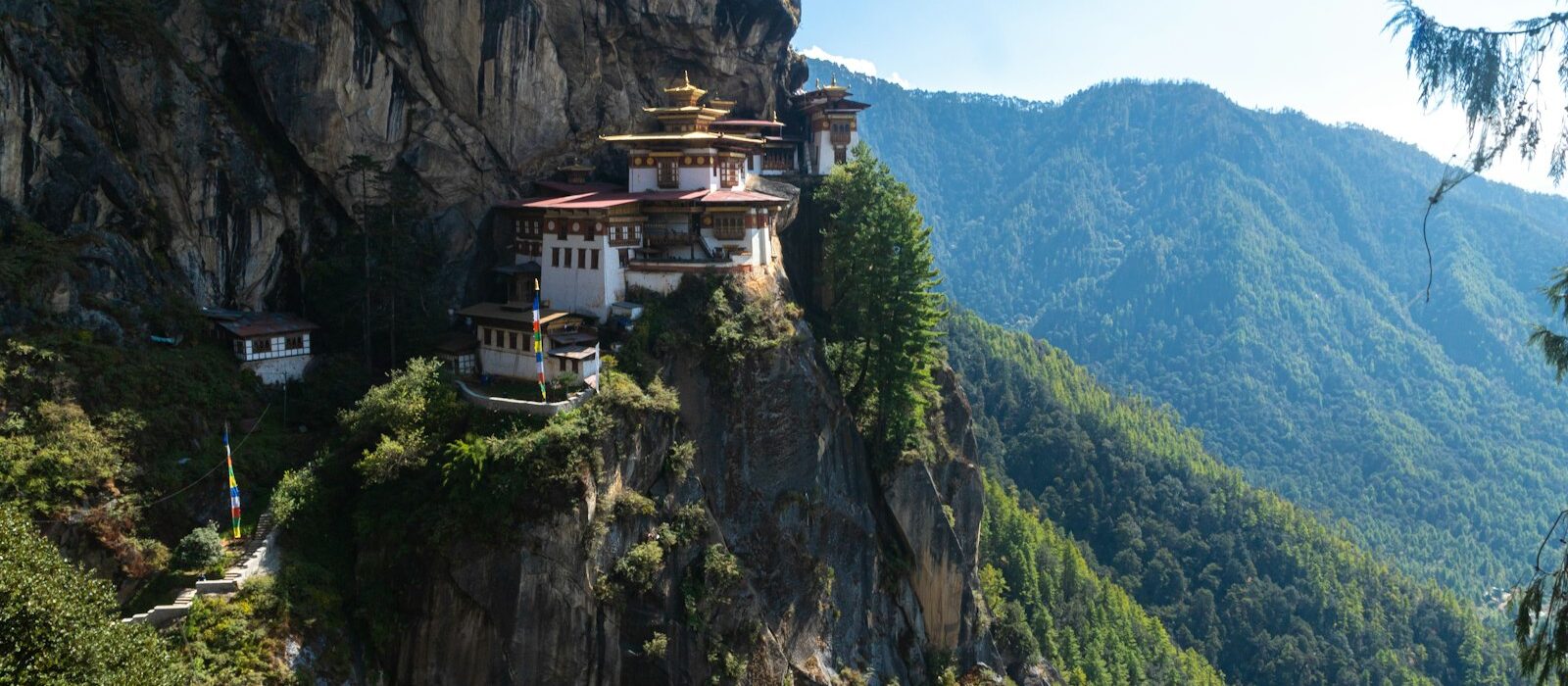
- Paro Taktsang
- Paro Rinpung Dzong
- Punakha Dzong
- Buddha Dordenma
- Dochula Pass
Weather
Western valleys such as Paro and Thimphu have cool springs and autumns, a monsoon from June to August, and dry winters with cold nights. Summer day highs reach about 24 to 27°C, and winter nights fall to around 0°C or below.
Culture
Dzongkha is the official language, and English is widely spoken. Dzongs are centres of religion and district administration, and tshechu festivals with masked dances follow the lunar calendar. Dress modestly at temples and dzongs.
Cities
- Thimphu
- Paro
- Punakha
- Haa
- Bumthang
- Gelephu
📍 Bhutan Map
📷 Photos of Bhutan
Explore Bhutan Travel Guides
Explore our detailed guides to plan every part of your Bhutan trip.
📍
Bhutan: Best Places
The best places to visit in Bhutan by region, from Paro and Thimphu to Punakha, Haa, Bumthang and the south, with festivals...
View Guide › 🌤️Bhutan: Best Time to Visit
A month-by-month guide to Bhutan weather, festivals and trekking windows, with notes on the monsoon, winter and how far ahead to book.
View Guide › 🗺️Bhutan: Itineraries
Route examples for 3, 5 and 7 days in Bhutan across Paro, Thimphu and Punakha, with notes on guides, fees, festivals and...
View Guide › 🛂Bhutan: Visa
Who needs a Bhutan visa, how much the visa fee and daily Sustainable Development Fee cost, how to apply and what guides...
View Guide › ✈️Bhutan: Flights
Which airports serve Bhutan, which airlines fly there, connection cities, land alternatives and a checklist before you book.
View Guide › 🚆Bhutan: Getting Around
How to get around Bhutan by road, domestic flight, taxi and bus, with typical drive times between towns and tips on guides,...
View Guide › 🛌Bhutan: Hotels
Where to stay in Bhutan: practical bases in Paro, Thimphu, Punakha and beyond, with notes on approved accommodation, nightly fees and booking...
View Guide ›🖼️ Bhutan: Location, History, Culture & Food
✨ Complete Travel Guide
Where Is Bhutan Located?
Bhutan is a landlocked country in the eastern Himalayas, in South Asia. China’s Tibet Autonomous Region lies to the north, and India borders it on the other three sides. This Bhutan travel guide starts with the map: the capital is Thimphu, and the country covers about 38,394 square kilometres.
Last checked: November 2026
That makes Bhutan slightly smaller than Switzerland. Sikkim lies to the west, West Bengal and Assam to the south, and Arunachal Pradesh to the east. There’s no coastline, so the nearest sea is the Bay of Bengal, reached through India. Bhutan is a sovereign state with its own language, currency and monarchy, not part of India.
Height changes fast. The southern foothills are low and subtropical, the central valleys sit between roughly 1,300 and 2,900 metres, and northern peaks rise above 7,000 metres. Paro’s airport is at about 2,235 metres, Thimphu near 2,300 and Punakha near 1,350, which explains why the weather differs between valleys. Rivers such as the Wang Chhu in Thimphu and the Pho Chhu and Mo Chhu at Punakha carve the valleys that hold the main towns. About 71 per cent of the land is forest, according to UN data, and the UK government notes that mountaineering is banned.
Bhutan uses UTC+6 all year, with no daylight saving. That’s half an hour ahead of India, which catches out travellers who connect through Delhi or Kolkata. Most visitors arrive by air at Paro. Our flights to Bhutan guide covers airports and airlines, and getting around Bhutan explains roads and domestic flights inside the country.
Bhutan Travel Guide: An Introduction to the Country
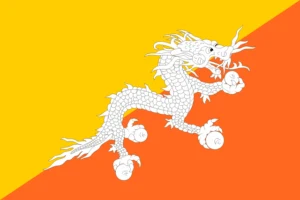
Bhutan is a small Himalayan kingdom known for fortress-monasteries called dzongs, a Buddhist way of life and a policy of measuring progress by Gross National Happiness. Thimphu is the capital, Dzongkha is the official language, and the currency is the ngultrum. The country is a constitutional monarchy.
Bhutan has had a two-house parliament since 2008. The Druk Gyalpo, or Dragon King, is head of state. King Jigme Khesar Namgyel Wangchuck has reigned since December 2006, and Tshering Tobgay is prime minister.
About 784,000 people live in Bhutan as of 2025, according to World Bank data, and that figure covers the whole country. Thimphu, the largest city, has about 203,000 residents in 2025, according to UN estimates. The ngultrum is pegged one-to-one to the Indian rupee, and rupees are also accepted as legal tender.
Gross National Happiness isn’t a mood survey. It’s a policy framework that weighs economic growth against culture, the environment and good governance, and the Fourth King promoted it from the 1970s. The constitution requires at least 60 per cent of the land to stay under forest. Visitors travel through licensed operators, and the Bhutan visa guide explains the entry rules. For a first trip, the Bhutan itineraries show how many nights different routes need.
A Short History of Bhutan
Bhutan was unified in the 17th century by the Tibetan lama Zhabdrung Ngawang Namgyal, who arrived in 1616. A hereditary monarchy began in 1907 under Ugyen Wangchuck, and the country adopted its written constitution in 2008. Bhutan was never colonised, though it signed treaties with British India.
Early Settlement and the Arrival of Buddhism
People have lived in Bhutan’s valleys for thousands of years. Tradition says Buddhism arrived in the 7th and 8th centuries, linked to the Tibetan king Songtsen Gampo and the teacher Guru Rinpoche. In the 13th century, the lama Phajo Drugom Zhigpo brought the Drukpa Kagyu school, which later shaped the state.
Unification Under the Zhabdrung (1616 to 1907)
Zhabdrung Ngawang Namgyal reached Bhutan in 1616 after a dispute in Tibet. He defeated three Tibetan invasions, issued a legal code called the Tsa Yig and built dzongs such as Punakha to defend and govern the valleys. His dual system split power between a religious head, the Je Khenpo, and a civil ruler, the Druk Desi. Many of these dzongs now top the list of best places to visit in Bhutan.
After the Zhabdrung’s death in 1651, civil conflict followed. A war with British India over the southern Duars in 1864 and 1865 ended with Bhutan giving up those lowlands.
The Wangchuck Monarchy (1907 to 2008)
Ugyen Wangchuck, the governor of Trongsa, began consolidating power in 1885. Bhutan’s chiefs and lamas chose him as the first hereditary king, and he was enthroned on 17 December 1907, a date still marked as National Day. A 1910 treaty left Bhutan’s foreign affairs under British guidance, and a treaty with newly independent India followed on 8 August 1949.
Bhutan joined the United Nations on 21 September 1971, and tourism opened in 1974, the year of the Fourth King’s coronation. In 1990, unrest in the south led thousands of ethnic Nepali people to leave for Nepal, a chapter that remains sensitive. The Britannica history of Bhutan covers these years in more detail.
Democracy and Modern Bhutan (2008 to Today)
The Fourth King, Jigme Singye Wangchuck, abdicated in December 2006 in favour of his son. The constitution was signed on 18 July 2008, and the first parliamentary elections followed that year, with the Fifth King crowned on 6 November 2008. General elections have since taken place in 2013, 2018 and 2024.
In December 2023, the King announced Gelephu Mindfulness City, a planned special economic zone in the south. On 8 December 2025, Drukair began international flights from Gelephu to Kolkata, which opened a second air gateway beside Paro.
Bhutanese Culture and Traditions
Bhutanese culture centres on Vajrayana Buddhism, the Dzongkha language, and traditions such as masked festivals, national dress and archery. Dzongs act as both monasteries and government offices. Daily life still follows customs of respect for monks, elders and sacred places, and the country has worked to protect its traditional arts and architecture.
Language
Dzongkha is the official language, written in a script derived from Tibetan. Sharchopka is spoken in the east, Bumthangkha in central Bhutan and Nepali in the south. English is the language of instruction in schools, and the UK government says it’s widely spoken.
Religion
Vajrayana Buddhism, mainly the Drukpa Kagyu school, shapes public life, and Hinduism is the second-largest religion. Prayer flags line ridges, prayer wheels sit beside paths, and chortens, which are stupas, stand at road bends. A dzong is two institutions in one: monks and district officials share the same walls.
Festivals
Tshechus are annual festivals at dzongs and temples, with masked cham dances and blessings. Dates follow the lunar calendar, so they move each year. The Mask dance of the drums from Drametse is on UNESCO’s Intangible Cultural Heritage lists. Our best time to visit Bhutan guide covers months and dates.
Etiquette
Dress modestly in temples and dzongs, and follow signs about shoes, hats and photography. Many Bhutanese wear the gho, a knee-length robe for men, and the kira, an ankle-length wrap dress for women, and both are required in schools and offices. Walk clockwise around chortens and prayer wheels, and don’t criticise the King, as the UK government advises.
Music and Arts
Zhungdra and boedra are traditional song styles, and rigsar is a modern pop style. The thirteen traditional arts, called Zorig Chusum, include painting, woodcarving and weaving, and a national institute in Thimphu teaches them. Archery, the national sport, is played in village matches with songs, dances and friendly teasing of the opposing team.
Bhutanese Food and Drink
Bhutanese food is built on red rice, chillies and cheese, with ema datshi, a stew of chillies and cheese, widely called the national dish. Meals often include pork, beef or chicken, vegetables and butter tea. Chilli is treated as a vegetable here, not just a seasoning, so dishes can be hot.
Staples
Red rice, a nutty rice grown in western valleys such as Paro, is the usual base of a meal. Maize is common in the east, and buckwheat in Bumthang and Haa. Cheese goes into most vegetable dishes, so many meals suit vegetarians, and in the south Nepali influence brings different spices.
Signature Dishes
- Ema datshi: chillies in a cheese sauce, eaten with rice at most meals.
- Kewa datshi: potatoes in cheese sauce, milder than ema datshi.
- Shamu datshi: mushrooms cooked with cheese and a little chilli.
- Phaksha paa: pork cooked with dried red chillies and greens.
- Sikam paa: dried pork stir-fried with chillies.
- Jasha maroo: a spicy chicken stew with tomato and onion.
- Momo: steamed dumplings filled with meat, cheese or vegetables.
- Thukpa: a noodle soup with vegetables or meat.
- Hoentay: buckwheat dumplings from Haa, filled with turnip greens and cheese.
- Puta: buckwheat noodles from Bumthang.
- Ezay: a chilli relish with tomato and cheese, served on the side.
Street Food
Street food is a smaller scene than in India or Thailand. Look for momo stalls and tea shops in Thimphu and Paro, and visit Thimphu’s weekend market for cheese, dried chillies, vegetables and local snacks. Many Bhutanese also chew doma, a betel nut wrapped in a leaf with lime paste, sold at small shops.
Drinks
Suja is butter tea, made with tea, butter and salt, and it’s served in homes and temples. Ngaja is sweet milk tea. Ara is a home-distilled spirit made from rice, maize or wheat, and chhang is a fermented drink. Local beer is also brewed in Bhutan.
Desserts
Sweets aren’t a big part of daily meals. Dresi is a sweet rice dish with butter and sugar, and khapse are deep-fried biscuits made for the new year festival, Losar. Meals are usually included in guided packages, so tell your operator about dietary needs, and see where to stay in Bhutan for how stays are usually arranged.
Explore Hotels & Flights
Search accommodation and flights for your destination with Expedia. Compare available options and continue to Expedia to complete your booking.
Affiliate partner · Globe Navo may earn a commission from qualifying bookings at no extra cost to you.
❓ Bhutan FAQ
Is Bhutan safe to visit?
The US State Department lists Bhutan at Level 1, Exercise Normal Precautions (updated 4 September 2026), and Ireland gives its lowest risk rating. Medical care is limited outside Thimphu, so buy insurance that covers evacuation.
Do I need a visa for Bhutan?
Yes. Bhutan.travel says all visitors need a visa before travelling, except Indian visitors, who need a permit. Applications go through the official portal or a licensed operator. Confirm the current rules on the official site before you pay.
What language do people speak in Bhutan?
Dzongkha is the official language. Sharchopka is spoken in the east, Bumthangkha in central Bhutan and Nepali in the south. English is used in schools and is widely spoken, according to the UK government, so visitors rarely struggle in towns.
What is Bhutan known for?
Bhutan is known for dzongs, mountain monasteries such as Paro Taktsang, masked festivals called tshechus and the Gross National Happiness policy. Tourism runs through licensed operators, so most trips are planned with a Bhutanese tour company.
What is the national dish of Bhutan?
Ema datshi, a stew of chillies and cheese, is widely called the national dish. It is served with red rice, and variations use potatoes or mushrooms. It can be very hot, so ask for a milder version if you are unsure.
Plan Your Trip to Bhutan
Your Next Adventure in Bhutan Awaits!
Explore Deals →🎁 Best deals for Bhutan
Offers from trusted travel stores for your Bhutan trip. Compare a few options before you book, and check each store's terms for the final price.
Browse by type: Hotel deals · Flight deals · Travel eSIM · Car rental
 KkdayFind current Kkday coupons and deals for tours, attraction tickets, transport and first app orders. See minimum spend, discount caps and exclusions before you book.
Get Coupon View Deal
 eSIMFOXeSIMFOX is a travel eSIM provider offering prepaid mobile data plans for single countries and wider regions, delivered digitally so you can connect as soon as you land.
Get Coupon View Deal
 QuibityQuibity is a travel eSIM provider that lets you buy a mobile data plan online and activate it on your phone, so you can get connected abroad without a physical SIM card.
Get Coupon View Deal
 ExpediaDiscover great deals on hotels, flights, vacation packages, car rentals, and activities with Expedia. Compare travel options and plan your next trip with convenient booking choices.
Get Coupon View Deal
 KlookKlook is a travel activities platform where you can book attraction tickets, tours, day trips, transport passes, airport transfers and local experiences in destinations worldwide.
Get Coupon View Deal
 Trip.comTrip.com is a global online travel platform for flights, hotels, train tickets, airport transfers, attraction tickets and travel packages, available on web and mobile app.
Get Coupon View Deal
 TourRadarTourRadar is an online marketplace for multi-day guided tours, small-group trips and tailor-made journeys offered by independent tour operators around the world.
Get Coupon View Deal