Last checked: October 2026
The best time to visit Bhutan depends on whether you want festivals, clear mountain views, trekking or fewer crowds. The seasons are clear, but festival dates follow the lunar calendar and move each year, so use the months below as a guide and confirm exact dates with your tour operator. Weather figures in this guide come from the tour operator Little Bhutan and describe Paro and Thimphu unless stated.
The Seasons at a Glance
- Peak seasons: March to May and September to November. October is the busiest month.
- Monsoon: June to August. Rain mostly comes in afternoon and overnight bursts and falls on most days from late June to early September.
- Winter: December to February. There is little to no rain from November to February, nights are cold, and eastern high passes can close with snow in December.
The Irish government describes the monsoon as running from early May to October, with frequent landslides and hazardous mountain roads. Operators and governments draw the season edges differently, so ask about road conditions for your specific dates.
Month by Month
- January: Days of 9 to 14°C and nights below freezing. Dry, with low crowds and good winter light. Punakha is milder.
- February: Days of 12 to 15°C and nights around 0°C. Dry and quiet. The Punakha Dromchoe and Tshechu festival is listed this month.
- March: Days of 17 to 19°C and nights around 4°C. Dry, with high crowds. The Paro Tshechu begins in late March.
- April: Days of 20 to 22°C and nights around 8°C. Light rain and rhododendron bloom. The Haa Spring Festival is listed for 25 to 27 April 2027.
- May: Days of 22 to 25°C and nights around 12°C. Light rain, medium crowds and quiet trails. Little Bhutan calls May one of the best value-for-weather months.
- June: Days of 24 to 27°C and nights around 15°C. Rain is building. The Nimalung and Kurjey Tshechus are listed.
- July: Days of 24 to 27°C and nights around 16°C. Monsoon, low crowds and the greenest valleys. High treks are off.
- August: Similar temperatures to July, with monsoon rain and paddies at their brightest.
- September: Days of 23 to 26°C and nights around 14°C. Rain is easing and the festival season opens, with the Thimphu Tshechu listed.
- October: Days of 20 to 24°C and nights around 9°C. Light rain and the highest crowds. This is peak trekking season, with the Jakar Tshechu and Royal Highland Festival listed.
- November: Days of 17 to 20°C and nights around 3°C. Dry, with medium crowds. Black-necked cranes arrive and a Crane Festival is listed for 11 November.
- December: Days of 14 to 17°C and nights below freezing. Dry and quiet. The Druk Wangyel Tshechu at Dochula is listed for 13 December.
Festivals and Date Changes
Tshechus are festivals with masked dances, and their dates follow the lunar calendar, so they can shift by weeks from year to year. Little Bhutan notes one conflict in its own information: its text places the Thimphu Tshechu in September, while another listing shows 10 to 12 October 2027. We could not resolve this, so verify the date for your year before booking flights. Little Bhutan also says the Haa summer festival moved to April in 2024 and is now the Haa Spring Festival, so older July listings are outdated.
Trekking Windows
- April to May: The classic window for the Jomolhari and Druk Path treks.
- October: The most reliable month on all routes. It is the only reliable window for the Snowman trek, whose 5,000 m passes are open then.
- Monsoon: Trails are muddy and leech-prone, and high passes are often in cloud.
The UK warns that altitude sickness is a risk in parts of Bhutan and that mountaineering is banned although trekking is allowed.
How Far Ahead to Book
Little Bhutan advises planning 3 to 6 months ahead for October and late-March festival dates, and 1 to 2 months for May, November and winter. It adds that flights sell out on seats rather than price. The same page mentions a 25% Drukair discount from Kathmandu in summer and winter through December 2026, which is time-limited, so check it with the airline. For domestic flights and road times between regions, see getting around Bhutan.
Which Month Suits You
- Festivals and clear views: Late March, September to October.
- Trekking: April to May and October.
- Lower crowds: June to August and December to February, with the weather trade-offs above.
- Warm winter stop: Punakha, which Little Bhutan says runs about 6 to 7°C warmer than Thimphu and Paro all year.
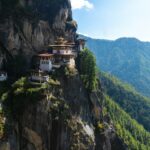
In winter, Little Bhutan says the top steps to Tiger’s Nest can have icy patches.
Seasonal Safety Notes
The US State Department notes that flooding, landslides and wildfires occur regularly in Bhutan and that it is vulnerable to earthquakes. The UK advises avoiding night travel and warns of hazardous road conditions in the monsoon. Read the full summary on our Bhutan travel guide.
Frequently Asked Questions
What is the best month to visit Bhutan?
October is the most reliable month for views and trekking, and also the busiest. March to May and November offer good weather with a little less pressure.
Is the monsoon a bad time to visit?
It brings the greenest scenery and fewer visitors, but also muddy trails, cloud on high passes and landslide risk. It suits travellers who accept some disruption.
Does Bhutan snow in winter?
Nights are cold and eastern high passes can close with snow in December, according to Little Bhutan. Western valleys are dry and clear.
When is the Paro Tshechu?
It begins in late March, according to Little Bhutan. Confirm the exact dates for your year, because they follow the lunar calendar.
Do I need to book early?
Yes for October and late March, where Little Bhutan suggests 3 to 6 months. See the flights guide for airline notes.