Last checked: October 2026
Bhutan is small, but its valleys are separated by high passes and slow mountain roads, so every place you add costs time and an extra night of Sustainable Development Fee. This guide groups the main destinations by region and explains what each is known for, so you can decide where to spend your nights. Festival dates and fees change, so confirm them with your tour operator before you book.
How to Choose Where to Go
Most first trips cover Paro, Thimphu and Punakha. These western valleys have the airport, the capital and some of the best-known monuments, and they can be linked in about a week. Central and eastern Bhutan take more time because of the distances, and you will need a guide for any travel beyond Thimphu and Paro, according to the Irish government. Ask your operator for current drive times, because mountain roads can be slow and are affected by weather and landslides. Our guide to getting around Bhutan lists typical drive times and domestic flights.
Paro
Paro is where most visitors arrive, because Paro International Airport is the main gateway. It is also home to two of Bhutan’s best-known sights.
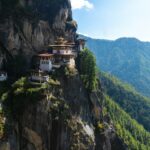
- Tiger’s Nest (Paro Taktsang): The monastery built into a cliff above the valley and the image most people associate with Bhutan. Little Bhutan says the top steps can be icy in winter.
- Paro Rinpung Dzong: A fortress-monastery that, like other dzongs, serves as a centre of religion and district administration.
- Paro Tshechu: A festival that begins in late March, according to Little Bhutan. Festival periods fill hotels and flights quickly.
Little Bhutan puts Paro and Thimphu temperatures at 17 to 19°C in March days and 24 to 27°C in June to August, with cold nights in winter.
Thimphu
Thimphu is the capital and largest city, home to close to 15% of the population, according to Wikipedia. The Buddha Dordenma, a giant seated Buddha statue overlooking the valley, is one of its main landmarks. Jigme Dorji Wangchuck National Referral Hospital in Thimphu is the only facility the UK lists for surgery and emergency treatment, which is one reason to keep your first nights near the capital if you have health concerns. The drive from Paro to Thimphu is about one hour to an hour and a half, according to Druk Asia, which gives the time inconsistently on one page.
On the road between Thimphu and Punakha, Dochula Pass hosts the Druk Wangyel Tshechu festival, which Little Bhutan lists for 13 December.
Punakha
Punakha is known for Punakha Dzong, one of the dzongs on Bhutan’s tentative UNESCO list. Little Bhutan says Punakha runs about 6 to 7°C warmer than Thimphu and Paro all year, which makes it the easiest valley in winter, and it lists the Punakha Dromchoe and Tshechu festival in February. The valley is a common overnight stop between Thimphu and the central regions.
Haa
Haa is a quieter western valley. Little Bhutan says its summer festival moved to April in 2024 and is now the Haa Spring Festival, with 25 to 27 April 2027 listed. Older sources still list a July festival, so check dates before you plan around it.
Bumthang and Central Bhutan
Bumthang is the main base for central Bhutan, and its Jakar Tshechu takes place in October. The Royal Highland Festival is also listed in October by Little Bhutan. In November, black-necked cranes arrive, and Little Bhutan lists a Crane Festival on 11 November. Central Bhutan is a reason to allow at least a week, because of the distances involved.
Gelephu and the South
Gelephu is a land border town and an airport. Gelephu International Airport began international services in December 2025, with Drukair flying to and from Kolkata, according to Druk Asia, which suits itineraries focused on southern Bhutan. Wikipedia says the King announced the Gelephu Mindfulness City special economic zone on 17 December 2023, though most of what is planned there is not yet a tourist attraction.
Nature and Trekking
Trekking is allowed, although the UK says mountaineering is banned. Little Bhutan gives these windows:
- April to May: The classic window for the Jomolhari and Druk Path treks.
- October: The most reliable month on all routes and the only reliable window for the Snowman trek, whose 5,000 m passes are open then.
- July: High treks are off during the monsoon.
The tentative UNESCO list includes Jigme Dorji National Park, Royal Manas National Park, Bumdelling Wildlife Sanctuary and Sakteng Wildlife Sanctuary. The UK warns that altitude sickness is a risk in parts of Bhutan and that harming protected species or littering can bring fines or imprisonment.
Heritage Status
Bhutan has no UNESCO World Heritage Sites inscribed so far. It has eight on its tentative list, including the dzongs of Punakha, Wangdue Phodrang, Paro, Trongsa and Dagana, plus Tamzhing Monastery and the ruins of Drukgyel Dzong. The Mask dance of the drums from Drametse is on UNESCO’s Intangible Cultural Heritage list.
Frequently Asked Questions
What is the best place for a first trip to Bhutan?
Paro, Thimphu and Punakha are the usual choice because they are close to the airport and each other. Add Haa or Bumthang if you have more time.
Is Tiger’s Nest hard to reach?
It is a hike on steep steps up a cliff, and altitude can affect some visitors. Little Bhutan says the top steps can be icy in winter, so plan footwear and timing with your guide.
Do I need a guide for these places?
Ireland says a guide is mandatory for any journey beyond Thimphu and Paro. Book through a licensed operator.
Does Bhutan have UNESCO World Heritage Sites?
No sites are inscribed yet. Eight are on the tentative list, according to Wikipedia.
When are the festivals?
Dates follow the lunar calendar and move each year. Our best time to visit Bhutan guide lists the festival months we found.