 Cambodia
DESTINATION
Argentina
Plan a trip to Argentina with an overview of the main regions, entry rules, safety, seasons and links to detailed guides.
📅 Last updated:
Argentina: Hotels · Flights · Visa Guide · Deals
🌍 Quick Facts

Argentina at a glance
🏛️
Capital: Buenos Aires
💱
Currency: Argentine Peso (ARS)
💬
Language: Spanish
👥
Population: About 46 million
🕒
Time zone: ART (UTC-3), no daylight saving
📞
Calling code: +54
🌐
Internet domain: .ar
✈️
Main airport: Ezeiza (EZE) and Aeroparque (AEP), Buenos Aires
★
Best time to visit: March to May and September to November for cities, December to February for Patagonia hiking
Food
- Asado
- Empanadas
- Milanesa
- Alfajores
- Malbec Wine
- Mate
Places
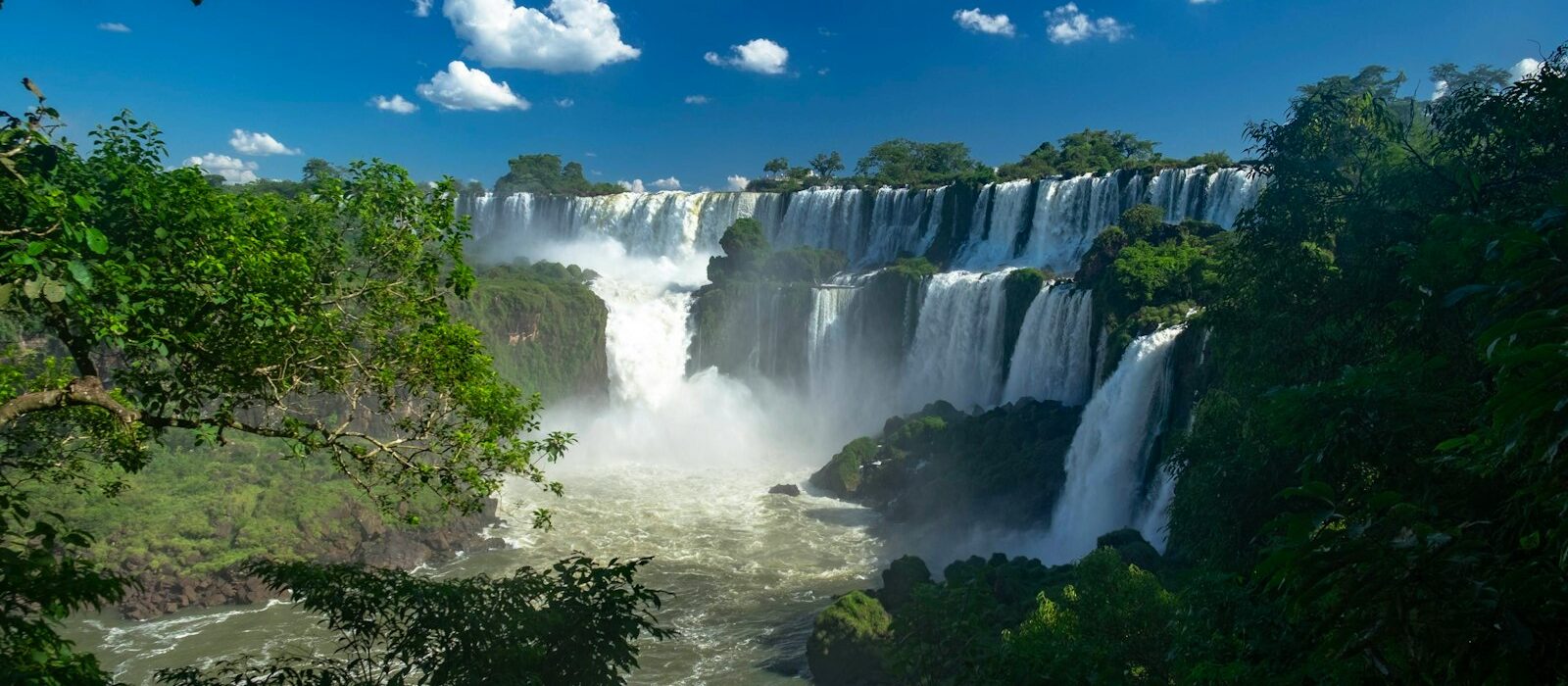
- Iguazú Falls
- Perito Moreno Glacier
- Fitz Roy, El Chaltén
- Quebrada de Humahuaca
- Península Valdés
- Bariloche and the Lake District
Weather
Argentina has very different climates by region. The north is subtropical and humid, Buenos Aires has warm summers and mild winters, Mendoza is dry, and Patagonia is cool to cold. Seasons are reversed from the northern hemisphere, so summer runs from December to February.
Culture
Social life in Argentina runs late, and dinner often starts late in the evening. Sharing mate, a herbal drink, is a common habit, and tango is closely tied to Buenos Aires. Friends usually greet each other with a kiss on the cheek, while a handshake is normal in formal settings.
Cities
- Buenos Aires
- Mendoza
- Salta
- Bariloche
- El Calafate
- Ushuaia
📍 Argentina Map
📷 Photos of Argentina
Explore Argentina Travel Guides
Explore our detailed guides to plan every part of your Argentina trip.
🗺️
Argentina: Itineraries
Realistic Argentina itineraries for 3, 5, 7 and 10 days, with travel times, getting around and tips for choosing regions.
View Guide › 🛂Argentina: Visa
Who needs a visa for Argentina, how the AVE and consular visas work, passport rules and what to expect at the border.
View Guide › 📍Argentina: Best Places
The best places to visit in Argentina grouped by type, with suggested days for each and a guide to choosing between them.
View Guide › 🌤️Argentina: Best Time to Visit
A month-by-month guide to Argentina's weather, festivals, whale season and holidays, with the best months for each type of trip.
View Guide › ✈️Argentina: Flights
Which airports serve Argentina, how to reach Buenos Aires from Ezeiza and Aeroparque, main airlines and a checklist before you fly.
View Guide › 🚆Argentina: Getting Around
How to travel inside Argentina: domestic flights, long-distance buses, trains, car rental, taxis and city transport, with travel times.
View Guide › 🛌Argentina: Hotels
Where to stay in Argentina: the best areas in Buenos Aires and the main regional bases, with booking tips and family notes.
View Guide ›🖼️ Argentina: Location, History, Culture & Food
✨ Complete Travel Guide
Where Is Argentina Located?
Argentina is a country in the southern part of South America, between the Andes in the west and the Atlantic Ocean in the east. This Argentina travel guide places it south of Bolivia and Paraguay, with Chile along its long western border and Uruguay and Brazil to the north-east. Its capital is Buenos Aires.
Last checked: November 2026
Argentina covers about 2,780,400 square kilometres of continental territory. That makes it the eighth-largest country in the world and the second largest in South America after Brazil. According to the Argentine foreign ministry, it stretches roughly 3,694 km from north to south and 1,423 km from east to west, which is why a ten-day trip can feel short.
The land changes sharply from region to region. The Pampas, flat grassland around Buenos Aires, support the country’s beef and grain farming. The Andes run along the western edge, and Aconcagua, at about 6,961 metres, is the highest peak in the Americas. The north holds subtropical forest and the Gran Chaco plains, Patagonia fills the south, and Tierra del Fuego sits at the far end. The Río de la Plata, a wide estuary shared with Uruguay, meets the Atlantic beside Buenos Aires.
Argentina uses UTC-3 all year and doesn’t observe daylight saving time, so the gap with your home country shifts when your clocks change. Distances shape every plan here, so read how to cross them in our guide to getting around Argentina.
Argentina Travel Guide: An Introduction to the Country
Argentina is a federal republic with Spanish as its main language and the Argentine peso as its currency. About 46 million people live there, based on the 2022 census count of 46,044,703. The country is known for tango, beef, Malbec wine, the glaciers of Patagonia and the Iguazú Falls.
The country is made up of 23 provinces and the autonomous city of Buenos Aires, which is both the capital and the largest city. The president serves as head of state and head of government. Check which figure you’re reading, because the city proper has just over 3 million residents, while the wider Buenos Aires metropolitan area, which spills into the surrounding province, is several times larger. The national count comes from INDEC, Argentina’s national statistics institute.
Argentina is large enough to suit several kinds of trip. Visitors choose Buenos Aires for architecture and nightlife, the northeast for Iguazú Falls, Mendoza for vineyards, and Patagonia for glaciers and mountain trails. UNESCO (the United Nations Educational, Scientific and Cultural Organization) lists 12 World Heritage properties in the country, and you can browse them on its Argentina country page. Our guide to the best places to visit in Argentina sorts them by type.
Entry rules depend on your passport, so check the Argentina visa guide for tourists before you book. The seasons are reversed from the northern hemisphere, which the best time to visit Argentina page explains month by month. For routes, see the Argentina itineraries. For beds, read where to stay in Argentina, and for arrival details, flights to Argentina.
History of Argentina From Early Settlement to Today
Argentina’s history runs from hunter-gatherer groups who lived in the region thousands of years ago, through Spanish colonial rule from the 16th century, to independence in 1816 and a modern republic. The 20th century brought mass immigration, military rule and, since 1983, uninterrupted democracy.
Early Peoples
Human presence in the area goes back to the Paleolithic period. The hand paintings at Cueva de las Manos in Santa Cruz province, a UNESCO site listed in 1999, are among the oldest traces of people in Patagonia. In the northwest, farming communities lived in the Andean valleys, and the Inca Empire expanded into the region before the Spanish arrived.
Spanish Colonial Era
Juan Díaz de Solís reached the Río de la Plata in 1516. Pedro de Mendoza founded Buenos Aires in 1536, but the settlement was abandoned, and Juan de Garay refounded it in 1580. Spain created the Viceroyalty of the Río de la Plata in 1776 with Buenos Aires as its capital. The Jesuit buildings of Córdoba date from this period and became a UNESCO site in 2000.
Independence and Nation-Building
The May Revolution of 25 May 1810 began the break with Spain, and a congress meeting in Tucumán declared independence on 9 July 1816. General José de San Martín led an army across the Andes in 1817 to help free Chile and Peru. Argentina adopted its constitution in 1853. From the late 19th century, millions of immigrants, mainly from Italy and Spain, arrived and reshaped the cities.
The 20th Century
Juan Domingo Perón was first elected president in 1946 and shaped Argentine politics for decades. Military governments took power several times. The last dictatorship ran from 1976 to 1983, and thousands of people were killed or disappeared. In 1982, Argentina and the United Kingdom fought a war over the Falkland Islands, which Argentina calls the Malvinas. UNESCO listed the former ESMA site, now a memory museum in Buenos Aires, in 2023.
Democracy and Recent Decades
Democracy returned in 1983 with the election of Raúl Alfonsín, and elected governments have held power since. A severe economic crisis in 2001 and 2002 led to several changes of president. Javier Milei took office as president in December 2023.
Argentina Culture and Traditions
Argentine culture blends Indigenous, Spanish and large-scale Italian influences. People speak Spanish, most identify as Catholic, and daily life centres on long meals, shared mate and late evenings. Tango, football and literature are national passions. Customs are warm and informal, though punctuality is relaxed for social events.
Language
Spanish is the main language. The Buenos Aires region uses a local form called Rioplatense, where people say vos instead of tú and pronounce ll and y with a soft sh sound. English is easier to find in tourist areas than in small towns. Indigenous languages such as Guaraní, Quechua and Mapudungun are still spoken in some regions.
Religion
Catholicism is the largest religion, and the constitution guarantees freedom of worship. Protestant, Jewish and Muslim communities also live in the country. Buenos Aires has a large Jewish community and several mosques, including the King Fahd Islamic Cultural Center.
Festivals
Carnival is held in February, and the dates move each year. The country marks the May Revolution on 25 May and Independence Day on 9 July. Mendoza celebrates its grape harvest with a wine festival in the early months of the year. Public holidays can close shops and offices, so check the calendar when you plan.
Etiquette
Friends greet each other with a single kiss on the cheek, and a handshake is normal in formal settings. Dinner often starts after 9 pm. If someone offers you mate, drink the whole gourd, don’t stir the metal straw, and hand it back. Saying thanks tells the server you’re finished, so wait until you’ve had enough.
Music and Arts
Tango developed in the port neighbourhoods of Buenos Aires and Montevideo in the late 19th century, and UNESCO added it to its intangible heritage list in 2009. Folk styles such as chacarera and zamba are strong in the north and the interior. Writers Jorge Luis Borges and Julio Cortázar are known worldwide, and the Teatro Colón is the capital’s main opera house.
Argentine Food and Drink
Argentine food centres on grilled beef, empanadas, pasta and pizza from Italian immigrants, and sweets made with dulce de leche. Meals are social and start late. Wine, especially Malbec from Mendoza, and mate, a herbal infusion, are the national drinks.
Staples
Beef is the centre of most menus and is cooked on a parrilla, a charcoal or wood grill. Bread, potatoes, pasta and salads fill out the table. Regional cooking differs: the northwest relies on corn, beans and spiced stews, Patagonia is known for lamb and river trout, and the Litoral region along the rivers serves freshwater fish. Chimichurri, a herb and garlic sauce, is not a hot sauce, whatever the name suggests.
Signature Dishes
- Asado: Beef and other meats grilled slowly over embers, usually shared on weekends.
- Bife de chorizo: A thick sirloin steak, usually cooked on the parrilla.
- Empanadas: Baked or fried pastries filled with beef, chicken or cheese, with a different filling in each province.
- Milanesa: A breaded cutlet, often served a la napolitana with ham, tomato sauce and cheese.
- Locro: A thick stew of corn, beans and meat, eaten on national holidays such as 25 May.
- Provoleta: Provolone cheese grilled until soft, served as a starter.
- Humita: A creamy corn filling, served in corn husks or inside empanadas in the northwest.
- Ñoquis del 29: Potato gnocchi, traditionally eaten on the 29th of each month.
- Fugazzeta: A thick pizza topped with onions and cheese, with Genoese roots.
- Chimichurri: A parsley, garlic and vinegar sauce for grilled meat.
Street Food
Choripán, a grilled chorizo sausage in a bread roll, is the classic street snack at markets and football grounds. Empanadas are sold by the dozen, and bakeries sell medialunas, small crescent pastries, for breakfast. Street vendors also sell garrapiñadas, caramelised nuts, at fairs and parks.
Drinks
Mate is an infusion of yerba mate leaves that people share from a gourd with a metal straw. Mendoza is the best-known wine region for Malbec, and the Cafayate valleys in Salta province are known for the white grape Torrontés. Fernet mixed with cola is a favourite in Córdoba, and cafés serve small coffees such as the cortado all day. The Argentine tourism board lists wine regions and food routes.
Desserts
Dulce de leche, a milk caramel, goes into alfajores, which are sandwich cookies, as well as pancakes and cakes. Flan is served with dulce de leche and whipped cream. Ice cream, called helado, follows Italian style and is sold in dedicated shops that stay open late. For a cheese and sweet pairing, ask for queso y dulce.
Explore Hotels & Flights
Search accommodation and flights for your destination with Expedia. Compare available options and continue to Expedia to complete your booking.
Affiliate partner · Globe Navo may earn a commission from qualifying bookings at no extra cost to you.
❓ Argentina FAQ
Do I need a visa for Argentina?
It depends on your passport. Citizens of the US, UK, Canada, Australia and EU countries can visit for tourism without a visa for up to 90 days. Others may qualify for an online AVE with a valid US visa, or need a consular visa. Check the official Cancillería page.
Is Argentina safe for tourists?
The US State Department rates Argentina Level 1, exercise normal precautions, and the UK FCDO does not advise against travel to any part of the country. Petty theft and scams happen in big cities, so watch your belongings. Check both advisories before you book.
What is the best time to visit Argentina?
It depends on the region. Buenos Aires is usually most comfortable in autumn (March to May) and spring (September to November). Patagonia is best for hiking from December to February, and whale watching at Península Valdés peaks in September and October.
How many days do I need in Argentina?
Ten days is a realistic minimum for three regions, such as Buenos Aires, Iguazú and Patagonia. With 5 to 7 days, pick one or two regions. Distances are long, so domestic flights between regions save a lot of time.
Do I need health insurance to enter Argentina?
Decree 366/2025 expects visitors to have health insurance, and travellers sign a declaration about it at entry. Since August 2026, national hospitals ask non-residents without cover to pay before routine care. Carry a travel policy that is valid in Argentina.
Plan Your Trip to Argentina
Your Next Adventure in Argentina Awaits!
Explore Deals →🎁 Best deals for Argentina
Offers from trusted travel stores for your Argentina trip. Compare a few options before you book, and check each store's terms for the final price.
Browse by type: Hotel deals · Flight deals · Travel eSIM · Car rental
 KkdayFind current Kkday coupons and deals for tours, attraction tickets, transport and first app orders. See minimum spend, discount caps and exclusions before you book.
Get Coupon View Deal
 eSIMFOXeSIMFOX is a travel eSIM provider offering prepaid mobile data plans for single countries and wider regions, delivered digitally so you can connect as soon as you land.
Get Coupon View Deal
 QuibityQuibity is a travel eSIM provider that lets you buy a mobile data plan online and activate it on your phone, so you can get connected abroad without a physical SIM card.
Get Coupon View Deal
 ExpediaDiscover great deals on hotels, flights, vacation packages, car rentals, and activities with Expedia. Compare travel options and plan your next trip with convenient booking choices.
Get Coupon View Deal
 KlookKlook is a travel activities platform where you can book attraction tickets, tours, day trips, transport passes, airport transfers and local experiences in destinations worldwide.
Get Coupon View Deal
 Trip.comTrip.com is a global online travel platform for flights, hotels, train tickets, airport transfers, attraction tickets and travel packages, available on web and mobile app.
Get Coupon View Deal
 TourRadarTourRadar is an online marketplace for multi-day guided tours, small-group trips and tailor-made journeys offered by independent tour operators around the world.
Get Coupon View Deal