 BahrainBahrain is a small Persian Gulf island kingdom with three UNESCO World Heritage Sites,…
DESTINATION
Nauru
Nauru is a one-island Pacific nation just south of the equator. Learn about its location, phosphate-era history, Nauruan customs and coconut-and-fish cooking.
📅 Last updated:
🌍 Quick Facts

Nauru at a glance
Capital: Yaren (no official capital)
Currency: Australian dollar (AUD)
Language: Nauruan and English
Population: About 11,700 (2021 census)
Time zone: UTC+12
Calling code: +674
Internet domain: .nr
Main airport: Nauru International Airport (INU)
Best time to visit: May to October (relatively drier months)
📍 Nauru Map
🖼️ Nauru: Location, History, Culture & Food
✨ Complete Travel Guide
Where Is Nauru Located?
Nauru is a one-island country in the central Pacific Ocean, in the region of Micronesia, a little south of the equator. Covering just 21 square kilometres, it is one of the smallest countries on Earth, and its nearest neighbour is Banaba, a Kiribati island about 300 kilometres to the east.
Last checked: November 2026
The island sits roughly 40 to 55 kilometres below the equator, at about 0°32′ S and 166°55′ E, so it lies in both the Southern and Eastern hemispheres. Published figures for the exact distance from the equator differ slightly, which is understandable for a place this small. Nauru has no land borders at all. The nearest large landmasses are far away: the Solomon Islands are about 1,300 kilometres to the southwest, the Marshall Islands lie to the north, and Tuvalu is to the southeast. Sydney is more than 3,900 kilometres away.
The island is a raised coral atoll, an oval of limestone around 5.6 kilometres long and 4 kilometres wide, with a coastline of about 30 kilometres. A fringing reef rings the shore, and there is no natural harbour, which shaped how ships and people reached the island for centuries. A narrow, fertile belt of land runs around the coast, while the interior is a high plateau of old phosphate workings, with Command Ridge reaching around 65 metres at its highest.
Nauru has no official capital. Government offices and Parliament are in the Yaren district on the southern coast, which is also home to the country’s only airport, and the island is divided into 14 districts. Clocks run on UTC+12 all year with no daylight saving, and traffic keeps to the left.
Introduction to Nauru
The Republic of Nauru is a Pacific island nation of about 11,700 residents, counted in its 2021 census, and one of the least-visited countries in the world. Nauruan is the national language, English is widely used in government, business and schools, and the Australian dollar is the currency.
Last checked: November 2026
Nauru became independent on 31 January 1968 after decades under League of Nations and United Nations trusteeship, and it joined the United Nations and the Commonwealth in 1999. It is a parliamentary republic in which the president serves as both head of state and head of government. Almost everyone lives in a ring of settlements along the coast, so the whole country feels like one long, low-key town.
The island’s modern story is tied to phosphate. Rich deposits made Nauru unusually wealthy in the twentieth century, but the best reserves were exhausted and mining left the interior stripped. Today the economy leans on fishing licences, government services and overseas aid, while the country works to rehabilitate the mined land and diversify.
For visitors, Nauru is a place for slow, small-scale travel: a coastal road that circles the island in under an hour, war relics, a quiet freshwater lagoon and a warm welcome from a tightly knit community. Before planning, it helps to know the practical limits, since tourist infrastructure is minimal and visits are usually short. Start with the Nauru visa requirements, then see the best places to visit in Nauru, build a plan with a Nauru itinerary, read about where to stay in Nauru, check flights to Nauru and learn how to get around Nauru. The island’s climate and the best months for a trip are covered in our guide to the best time to visit Nauru.
- Official name: Republic of Nauru
- Capital: None official; government offices are in Yaren
- Languages: Nauruan and English
- Currency: Australian dollar (AUD)
- Time zone: UTC+12
- Calling code and domain: +674 and .nr
History of Nauru
Nauruans trace their roots to settlers who reached the island about 3,000 years ago and organised themselves into twelve clans. Germany annexed Nauru in 1888, phosphate mining began in 1906, Japan occupied the island in 1942 and, after United Nations trusteeship under Australia, Nauru became independent on 31 January 1968.
Last checked: November 2026
Clans and first European contact
For most of its past the island developed in relative isolation, with ocean currents making landfall difficult, and its language grew apart from those of neighbouring islands. In 1798 a British trading captain, John Fearn, sighted the island and called it Pleasant Island after its friendly reception. From the 1830s whalers and traders brought firearms and alcohol, which unsettled clan life and fed a civil war in the late 1870s and 1880s.
German rule, phosphate and the mandate years
Germany annexed the island in 1888 and disarmed its people. Phosphate was identified in 1900, and the Pacific Phosphate Company began mining under an agreement with the German administration in 1906, shipping its first cargo the next year. Australian forces took the island in 1914, and under the 1919 Nauru Island Agreement the rights passed to the British Phosphate Commission, run jointly by Britain, Australia and New Zealand, which dominated the island’s economy for decades.
Japanese occupation
Japanese forces took Nauru in August 1942 and built an airfield, which Allied aircraft bombed. Around 1,200 Nauruans were deported to Chuuk (then known as Truk) as labourers, and 463 of them died there. The island was bypassed by the main Allied advance, and the Japanese garrison surrendered in September 1945.
Trusteeship and independence
In 1947 the United Nations approved a trusteeship with Australia, New Zealand and the United Kingdom as joint administering authority. Nauru became self-governing in January 1966, and a constitutional convention prepared the way for full independence on 31 January 1968, when Hammer DeRoburt became the first president. In 1999 the country joined the United Nations. The decline of phosphate revenue and financial mismanagement brought the economy close to collapse by the late 1990s, and the island has been rebuilding since.
Culture and Traditions of Nauru
Nauruan society traditionally revolves around twelve tribes, with descent passed through the mother, and Christianity now shapes daily life and the national motto, “God’s will first”. Angam Day on 26 October is the best-known celebration, honouring the survival and growth of the Nauruan people.
Last checked: November 2026
Tribes, family and faith
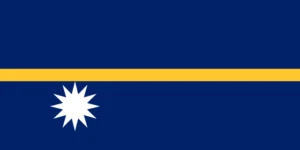
The twelve tribes are remembered in the twelve-pointed star on the national flag, and kinship is largely matrilineal, with some inheritance customs following the father’s line. On an island where everyone lives within a few kilometres of everyone else, family obligations and community gatherings carry real weight. Most residents are Christian, mainly Protestant with a large Roman Catholic minority, and church leaders and congregations remain influential in public life. Few of the old customs have survived intact after a century of outside influence, so you will see more church choirs and sport than ceremony.
Angam Day and national days
Angam, a word associated with homecoming and achieving a goal, grew out of fears for the nation’s survival after epidemics and war. Leaders set a target of 1,500 people, and the birth of the 1,500th Nauruan child, a girl named Eidagaruwo, on 26 October 1932 is remembered each year as the first Angam. Today the day brings feasting, singing, dance and sporting contests, while Independence Day on 31 January marks the country’s 1968 independence. Public holidays also include Christmas and Boxing Day.
Music, dance and sport
Rhythmic group singing and dance are still performed at celebrations, and the frigate bird dance, known as iti, is among the best-known traditional performances. Modern Nauru is just as passionate about sport: Australian rules football and weightlifting are especially popular, and national days often include competitions. Nauruan is spoken at home by most people, so a few words in the language are always appreciated, though English will get you through any shop, office or hotel.
Food and Cuisine of Nauru
Nauruan cooking is built on coconut, reef and ocean fish, and pandanus fruit, with most other ingredients arriving by plane or ship. The signature dish is coconut fish, raw fish in coconut milk, and everyday eating today mixes island flavours with Chinese-style and imported foods.
Last checked: November 2026
Before phosphate mining, coconut palms, pandanus groves and the surrounding sea fed the island, and coconut milk and cream still tie many dishes together. Because very little can be grown in the thin, mined soil, much of what is eaten now is imported, so true local dishes are more often cooked at home and at family gatherings than listed on restaurant menus. Written records of Nauruan food are thin and descriptions vary between sources, so treat the list below as the dishes most often named rather than a fixed menu.
- Coconut fish: fresh raw fish, usually tuna, dressed in coconut milk with seasonings and widely described as the national dish.
- Coconut-crusted fish: a cooked version of fish coated in coconut and served with rice.
- Fish soup: a simple, warming soup built on fresh reef or ocean fish.
- Noddy bird: a small seabird traditionally hunted and then roasted or grilled, now eaten only occasionally at family occasions.
- Pandanus fruit paste: the sweet pulp of the pandanus fruit, preserved as a dense paste that is often compared with dates.
- Breadfruit chips: breadfruit sliced thin and fried until crisp, eaten as a snack or side.
- Coconut toddy: sap collected from the coconut flower, drunk fresh as a sweet juice or left to ferment into a mildly alcoholic drink.
- Lemon chicken: a Chinese-style dish that has become a favourite in local restaurants.
- Fried rice: a common, filling plate that reflects the importance of imported rice and tinned meat.
For special occasions, some foods are still cooked in an earth oven, known as yom, and iced coffee is a popular everyday drink.
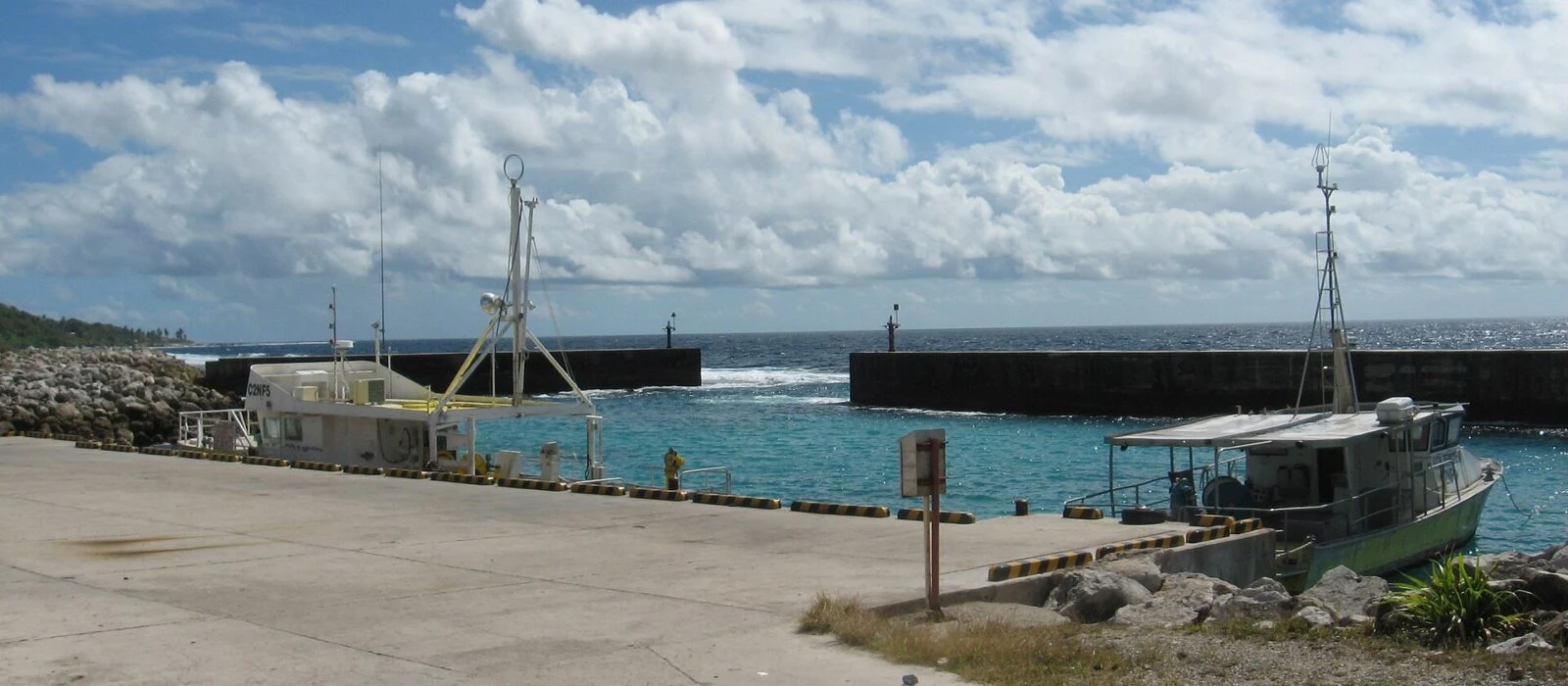
Cover photo: Anibare boat harbour, Vladimir Lysenko, CC BY-SA 4.0, via Wikimedia Commons.
Explore Nauru Travel Guides
Explore our detailed guides to plan every part of your Nauru trip.
Nauru: Best Places
A guide to Nauru's standout places, from Anibare Bay and Buada Lagoon to Command Ridge, Moqua Well and the mined limestone plateau...
View Guide ›Nauru: Best Time to Visit
When to visit Nauru: month-by-month rain and temperature, the November to February wet season, drought years, festivals and what to pack.
View Guide ›Nauru: Flights
How to fly to Nauru: Nauru Airlines routes from Brisbane, Nadi and Tarawa, the single airport at Yaren, check-in rules and a...
View Guide ›Nauru: How to Get Around
How to get around Nauru: hiring a car or driver, the community bus, walking the 19 km ring road, driving rules and...
View Guide ›Nauru: Itineraries
Four realistic Nauru itineraries for 3, 5, 7 and 10 days, built around the 19 km ring road with relaxed pacing and...
View Guide ›Nauru: Visa
A plain guide to getting a Nauru visitor visa: who must apply, official fees by length of stay, documents, arrival checks and...
View Guide ›Nauru: Hotels
Where to stay in Nauru, from the Menen Hotel on the east coast to Aiwo and Ewa options, plus booking tips for...
View Guide ›Explore Nauru Tours
Discover guided tours and adventures in Nauru. Compare itineraries, prices and traveller reviews on TourRadar before you book.
Guided tours & deals
Affiliate partner · Globe Navo may earn a commission from qualifying bookings at no extra cost to you.
❓ Nauru FAQ
Where is Nauru?
Nauru is a single raised coral island in the central Pacific Ocean, in Micronesia, just south of the equator. It covers about 21 square kilometres, and its nearest neighbour is Banaba in Kiribati, around 300 kilometres to the east.
What is the capital of Nauru?
Nauru has no official capital. Government offices and Parliament are in the Yaren district on the southern coast, which also has the island airport, so Yaren is usually treated as the de facto capital.
What language and currency are used in Nauru?
Nauruan is the national language, and English is widely used in government, business and schools. The currency is the Australian dollar, and cash is the safest way to pay, so bring enough Australian dollars with you.
What is Nauru known for?
Nauru is known for being one of the smallest countries in the world and for its phosphate history, which brought great wealth and left a mined limestone plateau. It is also one of the least visited countries on Earth.
How big is Nauru?
Nauru covers 21 square kilometres, roughly 5.6 kilometres long and 4 kilometres wide. A 19-kilometre ring road circles the coast and can be driven in under an hour, so every district is within easy reach.
Plan Your Trip to Nauru
Your Next Adventure in Nauru Awaits!
Explore Deals →🎁 Best deals for Nauru
Offers from trusted travel stores for your Nauru trip. Compare a few options before you book, and check each store's terms for the final price.
Browse by type: Hotel deals · Flight deals · Travel eSIM · Car rental
More destinations to explore
BahrainBahrain is a small Persian Gulf island kingdom with three UNESCO World Heritage Sites,…
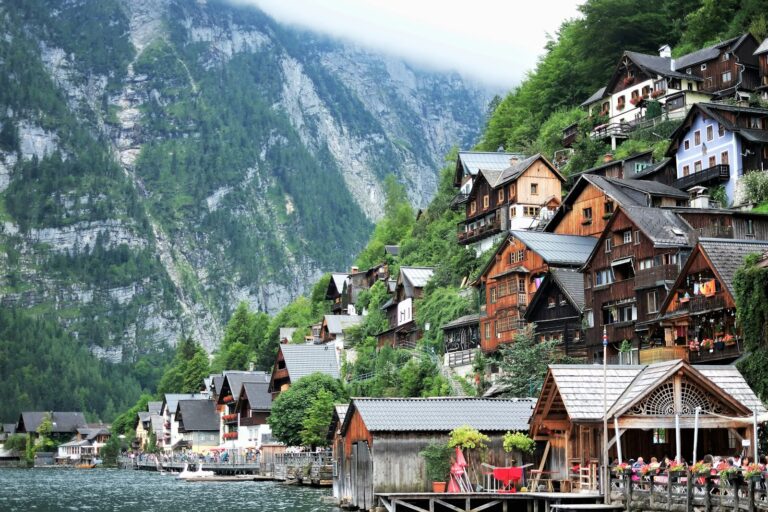 AustriaAustria is a Central European country known for Vienna, Salzburg, Hallstatt and the Alps,…
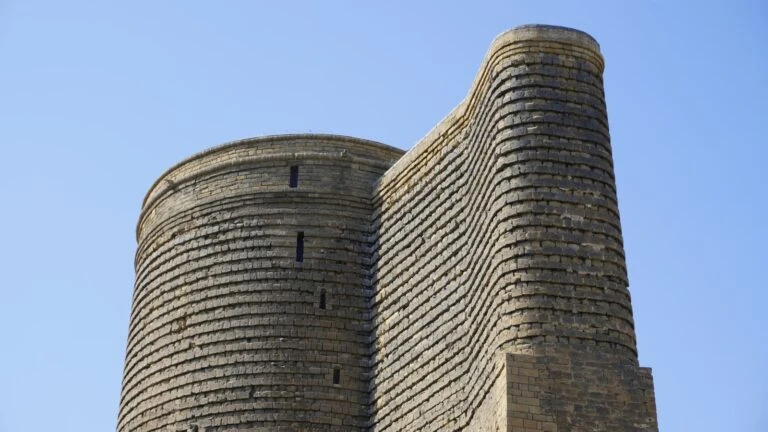 AzerbaijanAzerbaijan is a South Caucasus country on the Caspian Sea, known for Baku’s Old…