 IranDiscover Iran: where it is, its Persian history, culture and traditions, and signature dishes,…
DESTINATION
Myanmar
Myanmar is a Southeast Asian country between India, China and Thailand, with a long coast, rich Buddhist heritage and a distinctive food culture.
📅 Last updated:
🌍 Quick Facts

Myanmar at a glance
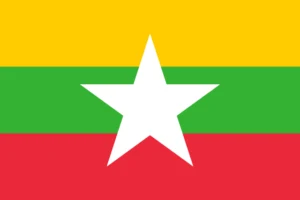
Capital: Nay Pyi Taw
Currency: Myanmar kyat (MMK)
Language: Burmese (Myanmar language)
Population: About 51.4 million (2024 census, partly estimated)
Time zone: UTC+6:30 (no daylight saving)
Calling code: +95
Internet domain: .mm
Main airport: Yangon International (RGN), Yangon
Best time to visit: November to February
📍 Myanmar Map
🖼️ Myanmar: Location, History, Culture & Food
✨ Complete Travel Guide
Where Is Myanmar Located?
Myanmar is a country in mainland Southeast Asia, bordered by Bangladesh, India, China, Laos and Thailand, with a long coastline on the Bay of Bengal and the Andaman Sea. Its capital is Nay Pyi Taw, its largest city is Yangon, and it covers roughly 677,000 square kilometres.
Last checked: November 2026
Myanmar sits where South Asia meets Southeast Asia. India and Bangladesh lie to its west, China to the north and north-east, and Laos and Thailand to the east and south-east. That position has made the country a crossing point for trade, religion and migration for centuries.
The land stretches a long way from north to south. In the far north, the country rises into the eastern end of the Himalayan ranges, where Hkakabo Razi, at 5,881 metres, is the highest point. In the far south, a narrow strip of land called Tanintharyi runs down towards Kawthaung, with islands scattered off its coast.
Rivers organise much of the map. The Irrawaddy flows from north to south through the middle of the country and spreads into a wide delta near the sea, while the Chindwin and the Salween drain other parts of the interior. Central Myanmar is a drier plain, and hills and plateaus run along the borders in the west, north and east.
Nay Pyi Taw, the capital, lies inland in the centre of the country and replaced Yangon as the seat of government in 2005. Yangon, on the delta, is still the biggest city and the main commercial hub, and Mandalay is the main city of the upper Irrawaddy plain. Myanmar uses Myanmar Standard Time, UTC+6:30, a half-hour offset that does not change in summer.
Introduction to Myanmar
Myanmar, known as Burma until 1989, is a Theravada Buddhist country of about 51 million people, with Burmese as its main language and the kyat as its currency. It is known for the temple plains of Bagan, the golden Shwedagon Pagoda in Yangon, Inle Lake and a wide mix of ethnic traditions.
Last checked: November 2026
The country’s name has two forms because of history. The government adopted Myanmar as the English name in 1989, and many people, including some governments and news outlets, still say Burma. Both names refer to the same country, and the people of Myanmar are usually called Burmese in English.
The 2024 census counted about 51.4 million people, according to the Department of Population, though that total includes estimates for areas where counting was not possible. Treat it as an approximate figure rather than an exact one. Around two-thirds of people live in rural areas, and Yangon is by far the most densely populated region.
Myanmar is home to many ethnic groups. The Bamar are the largest, and the Shan, Karen, Kachin, Chin, Mon, Rakhine and others each have their own languages, dress and customs. This variety shows up everywhere, from market stalls and festivals to the way a dish changes between the hills and the delta.
Two places are on the UNESCO World Heritage List, according to the UNESCO World Heritage Centre: the Pyu Ancient Cities, listed in 2014, and Bagan, listed in 2019. The Pyu sites are brick-walled cities from the first millennium, and Bagan is a vast plain of medieval Buddhist temples beside the Irrawaddy.
Conditions in Myanmar have changed since the military takeover of February 2021, and some regions are affected by armed conflict. Check current official travel advice before making plans, and read the rest of this guide with that in mind. If you are working out entry rules, our guide to Myanmar visa requirements and the eVisa explains how the application works.
History of Myanmar
Myanmar’s history runs from the Pyu city-states of the first millennium through the Pagan kingdom, centuries of rival dynasties and British rule, to independence in 1948. Since then, the country has lived through a long period of military rule, a short opening from 2011 and renewed military control from February 2021.
Last checked: November 2026
The earliest well-documented states in the Irrawaddy valley were the Pyu cities, whose brick ruins survive at Halin, Beikthano and Sri Ksetra. From around the ninth century the Bamar-led kingdom centred on Bagan grew strong, and under King Anawrahta in the eleventh century it brought much of the country under one ruler. Bagan’s rulers adopted Theravada Buddhism and built the thousands of temples and pagodas that still define the site today.
The kingdom weakened in the late thirteenth century after Mongol attacks, and for the next few hundred years power moved between competing courts. Ava and Toungoo ruled the central plains at different times, the Mon kingdom of Hanthawaddy held the south, and Mrauk U flourished on the Rakhine coast. The Konbaung dynasty, founded in 1752, reunited much of the territory and became the last royal line.
Three wars with Britain between 1824 and 1885 ended the monarchy, and the country was folded into British India and then ruled as a separate colony. Colonial rule reshaped the economy around rice exports and left lasting tensions among ethnic groups. Japan occupied the country during the Second World War, and Burma became independent on 4 January 1948.
The early years of independence were marked by uprisings in several border regions. In 1962 General Ne Win seized power and kept the country largely closed for decades. A mass uprising in 1988 was put down, the government changed the country’s English name to Myanmar in 1989, and military rule continued under different names until 2011, when a civilian-led government began a period of political and economic opening.
That opening ended on 1 February 2021, when the military removed the elected government and took power. Armed resistance and fighting followed in many regions, and the situation has remained unsettled since. This background matters for visitors because it shapes where travel is possible, which services run, and how plans can change at short notice.
Culture and Traditions of Myanmar
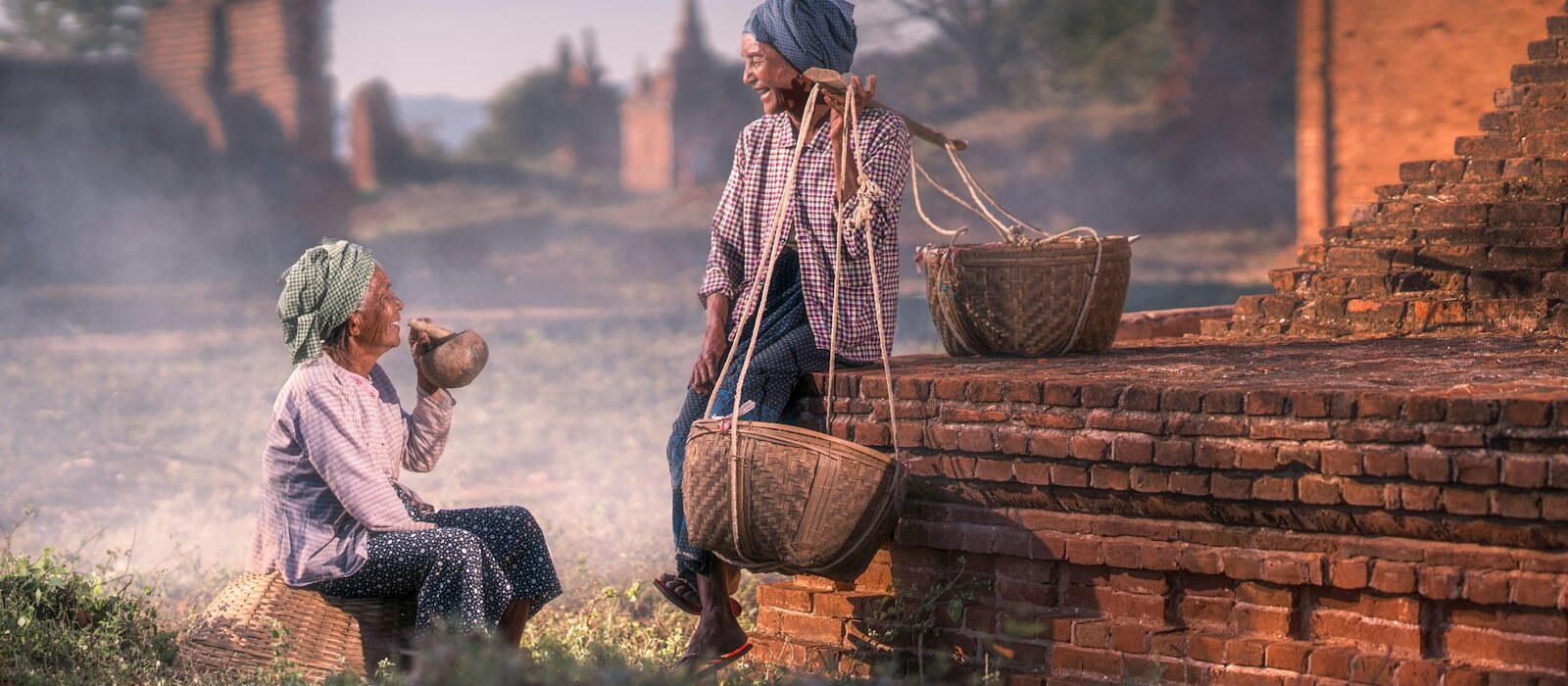
Daily life in Myanmar is shaped by Theravada Buddhism, respect for elders and monks, and a strong sense of community. Pagodas serve as social centres, festivals follow the lunar calendar, and traditional dress such as the longyi and thanaka paste remains part of ordinary life across the country.
Last checked: November 2026
Religion sets the rhythm of the week and the year. Most people are Buddhist, young men often spend time as novice monks, and families make regular offerings of food and flowers. Alongside this, many people also honour nats, spirits associated with particular places and people, and nat festivals mix music, dance and spirit possession in a lively, earthy way, quite different from the calm of the temple.
The biggest celebration is Thingyan, the new-year water festival held around mid-April. Its dates follow the traditional calendar, and it is a public holiday of several days when people splash water on one another, visit pagodas and make merit. In October and November, the Festival of Lights seasons bring lanterns, candles and lit pagodas to towns and villages, and almost every community also holds its own annual pagoda fair.
Everyday dress is distinctive. Men and women wear the longyi, a tube of cloth tied at the waist, and many people, especially women and children, brush a pale paste of ground thanaka bark on their cheeks as a sun shield and a cosmetic. Each ethnic group has its own costume, and you will see them at festivals and in the hill markets.
Etiquette is easy to learn and appreciated when you follow it. Take off your shoes and socks before entering any pagoda or monastery compound, not just the main hall, and dress with shoulders and knees covered. Avoid touching people’s heads, never point your feet at a person or a Buddha image, and keep public displays of affection to a minimum. Monks should not be touched, and women should not hand items directly to a monk.
Food and Cuisine of Myanmar
Burmese food is built around rice, noodles, fermented flavours and sharp, fresh salads. Mohinga, a fish-based noodle soup eaten at breakfast, is widely seen as the national dish, and laphet thoke, a salad of fermented tea leaves, is the other classic. Shan, Indian and Chinese cooking all leave their mark.
Last checked: November 2026
A traditional meal centres on a plate of rice with a curry, a clear soup, raw vegetables with a chilli or fish-paste dip, and perhaps a salad. Flavour comes from fish sauce, ngapi (fermented fish or shrimp paste), tamarind, lime, garlic and fried onion rather than from heat alone. Curries tend to be oily and gently spiced, and portions are usually shared.
Noodles are everywhere, particularly at breakfast. These are the signature dishes to look for:
- Mohinga: rice vermicelli in a catfish and lemongrass broth, topped with fritters, egg and herbs.
- Laphet Thoke: pickled tea leaves tossed with fried beans, peanuts, sesame, garlic and tomato.
- Ohn No Khao Swe: wheat noodles in a creamy coconut and chicken curry broth.
- Shan Khao Swe: flat rice noodles from Shan State, served in a light broth or dry, with a tomato-based meat topping.
- Nan Gyi Thoke: thick round rice noodles in a cold salad with chicken curry, chickpea flour, onion and lime.
- Mee Shay: rice noodles with minced pork in a thick, savoury sauce.
- Htamin Jin: a tangy fermented rice dish from Inle Lake in Shan State, eaten as a salad.
- Kyay Oh: noodles with meat or seafood and egg, served as a soup or dry.
- Ohn Htamin: coconut rice, usually eaten with a curry.
Regional kitchens add variety. Shan cooking leans on tomato, soybean and mild spices, Rakhine and the south use more seafood, and the Indian and Chinese communities in the cities have given Myanmar its flaky parathas, flatbreads and stir-fries. Street stalls and tea shops are the best place to eat cheaply, where a pot of tea is often served alongside the food.
Anyone with allergies should ask about fish sauce, shrimp paste and peanuts, which appear in many dishes. Vegetarian travellers will find it easier in the Buddhist-influenced tea shops and at the many dedicated vegetarian restaurants in the larger cities.
To plan the rest of your trip, explore our guides to the best places to visit in Myanmar, the best time to visit Myanmar, a ready-made Myanmar itinerary, where to stay in Myanmar, flights to Myanmar and how to get around Myanmar.
Safety Notice
The US Department of State advises Americans not to travel to Burma (Myanmar) for any reason, a Level 4 advisory issued on 8 May 2026 that cites armed conflict, civil unrest, landmines and unexploded ordnance, arbitrary enforcement of local laws and weak health infrastructure.
The UK Foreign, Commonwealth and Development Office advises against all travel to Kachin, Chin, Kayah, Kayin, Mon and Rakhine states, Sagaing and Magway regions, northern Shan State, northern Mandalay Region, the area east of the Yangon–Mandalay Expressway in Bago Region, and most of Tanintharyi Region. It advises against all but essential travel to the rest of Mandalay Region, southern and eastern Shan State and parts of Bago and Ayeyarwady, and notes a heightened risk in Yangon and Nay Pyi Taw.
Check the latest FCDO travel advice for Myanmar and the US advisory before making any plans, and confirm that your travel insurance covers your destination. Last checked: November 2026.
Explore Myanmar Travel Guides
Explore our detailed guides to plan every part of your Myanmar trip.
Myanmar: Best Places
A practical guide to the best places in Myanmar, from Bagan’s temple plain and Yangon’s Shwedagon to Inle Lake, Mandalay and ancient...
View Guide ›Myanmar: Best Time to Visit
When to go to Myanmar: cool dry months, the hot season and monsoon, regional climate differences, festivals like Thingyan and what to...
View Guide ›Myanmar: Flights
Flights to Myanmar explained: the main airports, airlines and routes, arrival tips at Yangon, time zone and a checklist before you fly.
View Guide ›Myanmar: Getting Around
How to get around Myanmar: domestic flights, buses, trains, river boats, taxis and driving rules, with the best option for each journey.
View Guide ›Myanmar: Hotels
Where to stay in Myanmar: the best areas of Yangon, Bagan, Inle Lake and Mandalay, with options by budget and practical booking...
View Guide ›Myanmar: Itineraries
Realistic Myanmar itineraries for 3, 5, 7 and 10 days, linking Yangon, Bagan, Mandalay and Inle Lake with sensible routes and pacing.
View Guide ›Myanmar: Visa
How Myanmar’s eVisa works: who needs a visa, the fee and 28-day stay, passport rules, documents, border checks and what happens if...
View Guide ›Explore Myanmar Tours
Discover guided tours and adventures in Myanmar. Compare itineraries, prices and traveller reviews on TourRadar before you book.
Guided tours & deals
Affiliate partner · Globe Navo may earn a commission from qualifying bookings at no extra cost to you.
❓ Myanmar FAQ
Where is Myanmar and which countries border it?
Myanmar lies in mainland Southeast Asia, where South Asia meets Southeast Asia. It shares borders with Bangladesh and India to the west, China to the north and east, and Laos and Thailand to the east and south-east, with a long coastline to the south and west.
Is Myanmar the same country as Burma?
Yes. Burma was the country’s English name until 1989, when the government adopted Myanmar. Both names are still used today, and some governments and media outlets prefer Burma. They refer to the same country, and Burmese is the main language.
What is the capital of Myanmar?
The capital is Nay Pyi Taw, an inland city in the centre of the country that replaced Yangon as the seat of government in 2005. Yangon remains the largest city and the main commercial centre, while Mandalay is the main hub of the north.
What language do people speak in Myanmar?
Burmese is the official and most widely spoken language. Many ethnic groups also have their own languages, including Shan, Karen, Kachin, Chin and Mon. English is understood in some hotels and tourism businesses but is not widely spoken elsewhere.
What is the most famous food in Myanmar?
Mohinga, a rice noodle soup in a fish broth usually eaten at breakfast, is widely regarded as the national dish. Laphet thoke, a salad of fermented tea leaves with beans, nuts and sesame, is the other dish most associated with Burmese cooking.
Plan Your Trip to Myanmar
Your Next Adventure in Myanmar Awaits!
Explore Deals →🎁 Best deals for Myanmar
Offers from trusted travel stores for your Myanmar trip. Compare a few options before you book, and check each store's terms for the final price.
Browse by type: Hotel deals · Flight deals · Travel eSIM · Car rental
More destinations to explore
IranDiscover Iran: where it is, its Persian history, culture and traditions, and signature dishes,…
 IndiaIndia travel guide covering where India is, what it is known for, its history,…
 IsraelIsrael travel guide: where it is, its history, culture and signature dishes, plus a…