 BurundiBurundi is a small, landlocked East African country on Lake Tanganyika, known for royal…
DESTINATION
Laos
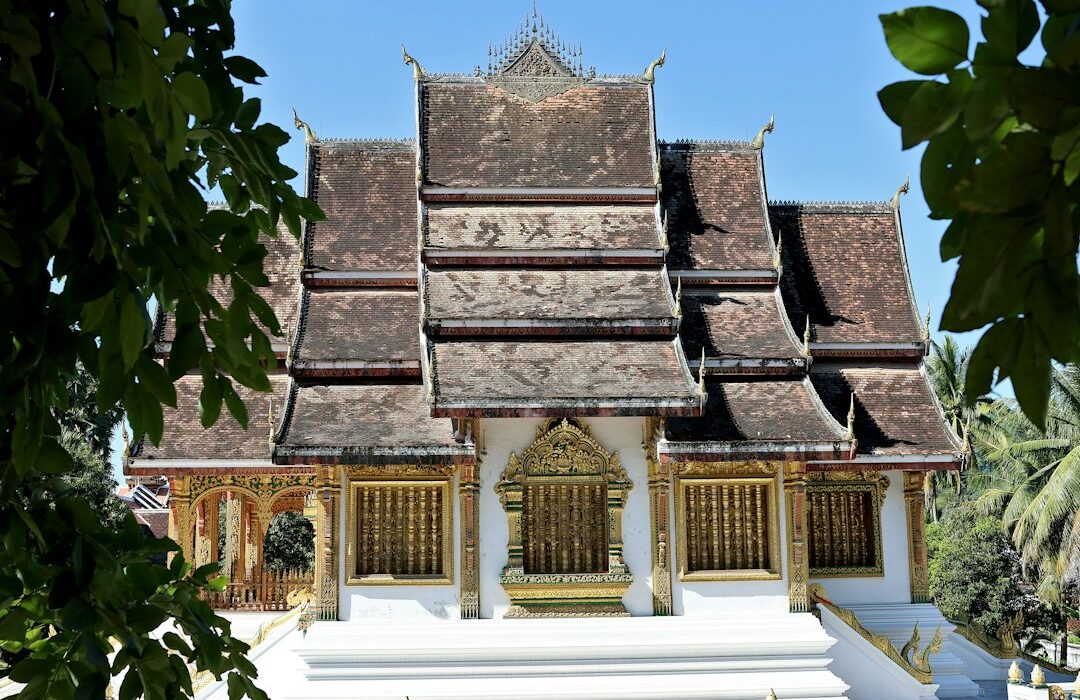
Laos is a landlocked Southeast Asian country of Mekong river life, Buddhist temples and sticky-rice cuisine. Learn where it is, its past and what to eat.
📅 Last updated:
🌍 Quick Facts

Laos at a glance
Capital: Vientiane
Currency: Lao Kip (LAK)
Language: Lao
Population: About 7.9 million
Time zone: ICT (UTC+7)
Calling code: +856
Internet domain: .la
Main airport: Wattay International Airport (VTE)
Best time to visit: November to February
📍 Laos Map
🖼️ Laos: Location, History, Culture & Food
✨ Complete Travel Guide
Safety Notice: The US State Department rates Laos Level 2, exercise increased caution, because of crime, unrest and unexploded ordnance (advisory issued 28 July 2026), and advises travellers to reconsider travel to Xaisomboun Province because of civil unrest. The UK FCDO advises against all but essential travel to Xaisomboun Province. These warnings apply to that province, not to the whole country. Check the latest advice from the US State Department and the UK FCDO before you travel.
Last checked: November 2026
Where Is Laos Located?
Laos is a landlocked country in mainland Southeast Asia, bordered by Myanmar and China to the northwest, Vietnam to the east, Cambodia to the south and Thailand to the west and southwest. Its capital and largest city, Vientiane, lies on the Mekong River close to the Thai border.
Last checked: November 2026
Laos covers about 236,800 square kilometres, which makes it slightly larger than the US state of Utah. It has no coastline and is the only landlocked country in Southeast Asia, so the Mekong River works as its main natural highway and forms a large part of the western border with Thailand.
The country shares about 5,274 kilometres of land borders with five neighbours: Vietnam (2,161 km), Thailand (1,845 km), Cambodia (555 km), China (475 km) and Myanmar (238 km). The terrain is mostly rugged mountains with some plains and plateaus, and the mean elevation is about 710 metres. Most people live in the Mekong valley, and the area around Vientiane is the most densely populated.
Laos uses a single time zone, Indochina Time (UTC+7), and does not observe daylight saving. Administratively it is divided into 17 provinces and one prefecture, Vientiane Capital. Floods and droughts are the main natural hazards, and the monsoon season runs from May to October.
Introduction to Laos
Laos, officially the Lao People’s Democratic Republic, is a one-party state of about 7.9 million people, known for Buddhist temples, the Mekong River, French colonial architecture and a slower pace than its neighbours. Visitors come for Luang Prabang’s UNESCO-listed old town, mountain scenery, waterfalls and village life.
Last checked: November 2026
Lao is the official language, the currency is the Lao kip (LAK), and the international calling code is +856. Roughly two-thirds of the population is Buddhist, and the country is young and largely rural, with about 55 percent of people under the age of 25. Vientiane is the political and economic centre, while Luang Prabang in the north is the best-known heritage town.
What sets Laos apart is how closely daily life follows the river and the seasons. Markets sell fresh herbs and river fish, monks collect alms at dawn, and villages along the Mekong still organise their year around rice farming and temple festivals. Tourism infrastructure is simpler than in neighbouring Thailand or Vietnam, which suits travellers who value unhurried journeys over polished resorts.
The landscape changes sharply from north to south. Forested mountains and river valleys dominate the north, the central region holds the Mekong plains and limestone country, and the south is known for plateaus, waterfalls and the wide, island-dotted stretch of the Mekong. This variety explains why visitors often combine several regions in one trip.
History of Laos
Laos traces its identity to the Lan Xang kingdom, founded in 1353, which later split into rival kingdoms and came under Siamese influence. It became part of French Indochina in 1893, gained independence in 1953 and has been the Lao People’s Democratic Republic since the monarchy ended on 2 December 1975.
Last checked: November 2026
Lan Xang, often translated as the Land of a Million Elephants, united Lao principalities under King Fa Ngum and made Luang Prabang a royal and religious centre. In the early 18th century the realm divided into the kingdoms of Luang Prabang, Vientiane and Champasak. From 1778 these kingdoms were vassals of Siam, a relationship that lasted until French control in 1893.
Under French rule Laos became part of French Indochina, and colonial buildings still line the streets of Vientiane and Luang Prabang. After World War II the country declared its independence, and it became a fully independent kingdom on 22 October 1953. Civil conflict followed between the royal government and the communist Pathet Lao, and the wider Indochina wars left Laos heavily affected by unexploded ordnance, a hazard that remains a concern today.
On 2 December 1975 the monarchy was abolished and the Lao People’s Democratic Republic was proclaimed. Three places in Laos are on UNESCO’s World Heritage List: the Town of Luang Prabang, inscribed in 1995, Vat Phou and the associated ancient settlements of the Champasak cultural landscape, inscribed in 2001, and the megalithic jar sites of Xiengkhuang, known as the Plain of Jars, inscribed in 2019.
Culture and Traditions of Laos
Lao culture is shaped by Theravada Buddhism, Mekong river life and village customs. Daily alms-giving, the baci ceremony, the khaen mouth organ and the Lao New Year water festival, Pi Mai, show how religion, music and community remain part of everyday life rather than staged performances.
Last checked: November 2026
Buddhism sets the rhythm of daily life. In Luang Prabang, monks walk the streets at dawn to collect alms of sticky rice, a tradition known as tak bat, and visitors who watch should stay quiet and keep a respectful distance. Temples, called wats, are community centres as well as places of worship, and many Lao men spend a period as a monk at some point in their lives.
The baci ceremony is a ritual in which participants tie white cotton strings around the wrists of guests or family members to wish them health and good fortune. It marks weddings, departures, homecomings and festivals. Music is another pillar of tradition: the khaen, a mouth organ made of bamboo pipes, is central to Lao folk music, and UNESCO inscribed khaen music of the Lao people on its intangible heritage list in 2017.
Pi Mai, the Lao New Year, is celebrated in mid-April with water blessings, temple visits and street celebrations. In Vientiane, the Boun That Luang festival at Pha That Luang, the national symbol, draws crowds in November. Handwoven silk and cotton textiles are a long-standing craft, with patterns that vary by region and ethnic group.
Everyday etiquette is simple but important. Remove your shoes before entering temples and homes, dress modestly at religious sites, and avoid touching people’s heads, which are considered sacred. A calm manner is valued, and raising your voice in public is generally seen as impolite.
Food and Cuisine of Laos
Lao cuisine centres on sticky rice, fresh herbs, grilled meats, river fish and fermented chilli sauces. Signature dishes include larb, tam mak hoong, or lam, khao piak sen, sai oua and mok pa, usually eaten with sticky rice by hand and shared across the table.
Last checked: November 2026
Sticky rice is the foundation of most meals. It is steamed in a bamboo basket, rolled into small balls by hand and used to scoop up other dishes. Flavours lean towards sour, salty, bitter and spicy, balanced by herbs such as dill, mint, coriander and lemongrass rather than by sweetness.
- Larb: a salad of minced meat or fish with lime juice, chilli, fresh herbs and toasted ground rice, widely regarded as the national dish.
- Tam mak hoong: pounded green papaya salad, often made in the Lao style with fermented fish sauce and plenty of chilli.
- Khao niao: steamed sticky rice, served in a small woven basket and eaten with the hands.
- Or lam: a herbal stew of meat and vegetables flavoured with sakhan, a peppery vine wood, associated with Luang Prabang.
- Khao piak sen: a chicken noodle soup made with thick, hand-cut rice noodles.
- Sai oua: grilled pork sausage seasoned with lemongrass, galangal and kaffir lime.
- Mok pa: fish steamed in a banana leaf parcel with herbs.
- Khao soi: a northern noodle dish served with a minced pork and tomato sauce.
- Sin dat: Lao barbecue, cooked at the table on a domed grill surrounded by a moat of broth.
- Jeow bong: a sweet and spicy chilli paste from Luang Prabang, eaten as a dip.
Many dishes are served with raw vegetables and a dip called jeow, and meals are usually shared from several dishes placed in the middle of the table. Lao coffee, grown on the Bolaven Plateau in the south, is a popular way to end a meal and a good souvenir to bring home.
Street food and morning markets are the best places to see everyday Lao cooking, from grilled fish and sausages to baguettes, a legacy of the French period that is still sold in markets and cafes across the country.
Planning to visit? Read our Laos visa guide for tourists for e-visa, visa on arrival and entry-point details.
Keep planning with our other Laos guides: see the best places to visit in Laos, check the best time to visit Laos, follow a ready-made Laos itinerary, find where to stay in Laos, compare flights to Laos and learn how to get around Laos.
Explore Laos Travel Guides
Explore our detailed guides to plan every part of your Laos trip.
Laos: Best Places
A region-by-region guide to Laos' top destinations, from UNESCO heritage and Mekong towns to waterfalls, karst valleys and southern islands.
View Guide ›Laos: Best Time to Visit
When to go to Laos: seasons, month-by-month conditions, northern and southern differences, festivals, haze and what to pack for each period.
View Guide ›Laos: Flights
Which airports and airlines serve Laos, how to connect from major regional hubs, what to expect on arrival and what to check...
View Guide ›Laos: Getting Around
A practical guide to moving around Laos by train, plane, bus, boat, taxi or self-drive, with the best option for each common...
View Guide ›Laos: Itineraries
Four realistic Laos routes for 3, 5, 7 and 10 days, with overnight stops, verified train and flight links and practical pacing...
View Guide ›Laos: Visa
How tourists enter Laos: e-visa, visa on arrival, visa exemptions, entry points, extensions and what to verify on official sites before you...
View Guide ›Laos: Hotels
Choose the right base in Laos with area-by-area advice for every budget, family and halal-friendly needs, and booking points to check.
View Guide ›Explore Laos Tours
Discover guided tours and adventures in Laos. Compare itineraries, prices and traveller reviews on TourRadar before you book.
Guided tours & deals
Affiliate partner · Globe Navo may earn a commission from qualifying bookings at no extra cost to you.
❓ Laos FAQ
Is Laos a landlocked country?
Yes. Laos is the only landlocked country in Southeast Asia, bordered by Myanmar, China, Vietnam, Cambodia and Thailand. The Mekong River forms much of the western border with Thailand and works as the country’s main natural transport route.
What is the capital of Laos?
The capital and largest city is Vientiane, on the Mekong River close to the Thai border. It is the political and economic centre, while Luang Prabang in the north is the best-known heritage town, with a UNESCO-listed old town.
What language and currency are used in Laos?
The official language is Lao and the currency is the Lao kip (LAK). The international calling code is +856, and the country follows Indochina Time (UTC+7) all year, with no daylight saving time.
Which UNESCO World Heritage Sites are in Laos?
Laos has three: the Town of Luang Prabang (inscribed 1995), Vat Phou and the associated ancient settlements of the Champasak cultural landscape (2001), and the megalithic jar sites of Xiengkhuang, known as the Plain of Jars (2019).
Is Laos safe to visit?
The US State Department rates Laos Level 2, exercise increased caution, citing crime, unrest and unexploded ordnance. It advises reconsidering travel to Xaisomboun Province, and the UK advises against all but essential travel there. Check current advisories before you go.
Plan Your Trip to Laos
Your Next Adventure in Laos Awaits!
Explore Deals →🎁 Best deals for Laos
Offers from trusted travel stores for your Laos trip. Compare a few options before you book, and check each store's terms for the final price.
Browse by type: Hotel deals · Flight deals · Travel eSIM · Car rental
More destinations to explore
BurundiBurundi is a small, landlocked East African country on Lake Tanganyika, known for royal…
 Democratic Republic of the CongoExplore the Democratic Republic of the Congo's location, geography, history, culture and food, with…

 FinlandFinland is a Nordic country in Northern Europe known for its forests, lakes, archipelagos,…