 GhanaGhana travel guide to its location in West Africa, history, culture and food, from…
DESTINATION
Japan
Japan travel guide with quick facts, location, history, culture and traditional food, plus UNESCO sites and links to visa, flights, hotels and itinerary guides.
📅 Last updated:
🌍 Quick Facts
Japan at a glance
Capital: Tokyo
Currency: Japanese yen (JPY)
Language: Japanese
Population: About 123.05 million (2025 census, preliminary count)
Time zone: JST (UTC+9), no daylight saving
Calling code: +81
Internet domain: .jp
Main airport: Tokyo Haneda (HND), Narita (NRT), Osaka Kansai (KIX)
Best time to visit: Spring March to May and autumn September to November
📍 Japan Map
🖼️ Japan: Location, History, Culture & Food
✨ Complete Travel Guide
Planning a trip to Japan? Start with our guides to Japan visa requirements, the best places to visit in Japan, the best time to visit Japan, Japan itineraries for 3, 5, 7 and 10 days, where to stay in Japan, flights to Japan and how to get around Japan.
Where Is Japan Located?
Japan is an island country in East Asia, lying between the Sea of Japan and the Pacific Ocean. It has no land borders. Its capital, Tokyo, is on the main island of Honshu, and the whole country uses a single time zone, Japan Standard Time (UTC+9).
Last checked: November 2026
Japan is an archipelago of thousands of islands that curves in a long arc off the east coast of the Asian mainland. Four main islands hold most of the land: Hokkaido in the north, Honshu in the centre, and Shikoku and Kyushu to the south. The Ryukyu Islands, including Okinawa, continue the chain south-west of Kyushu. In total the country covers roughly 378,000 square kilometres, and it spans about 20 to 45 degrees of north latitude.
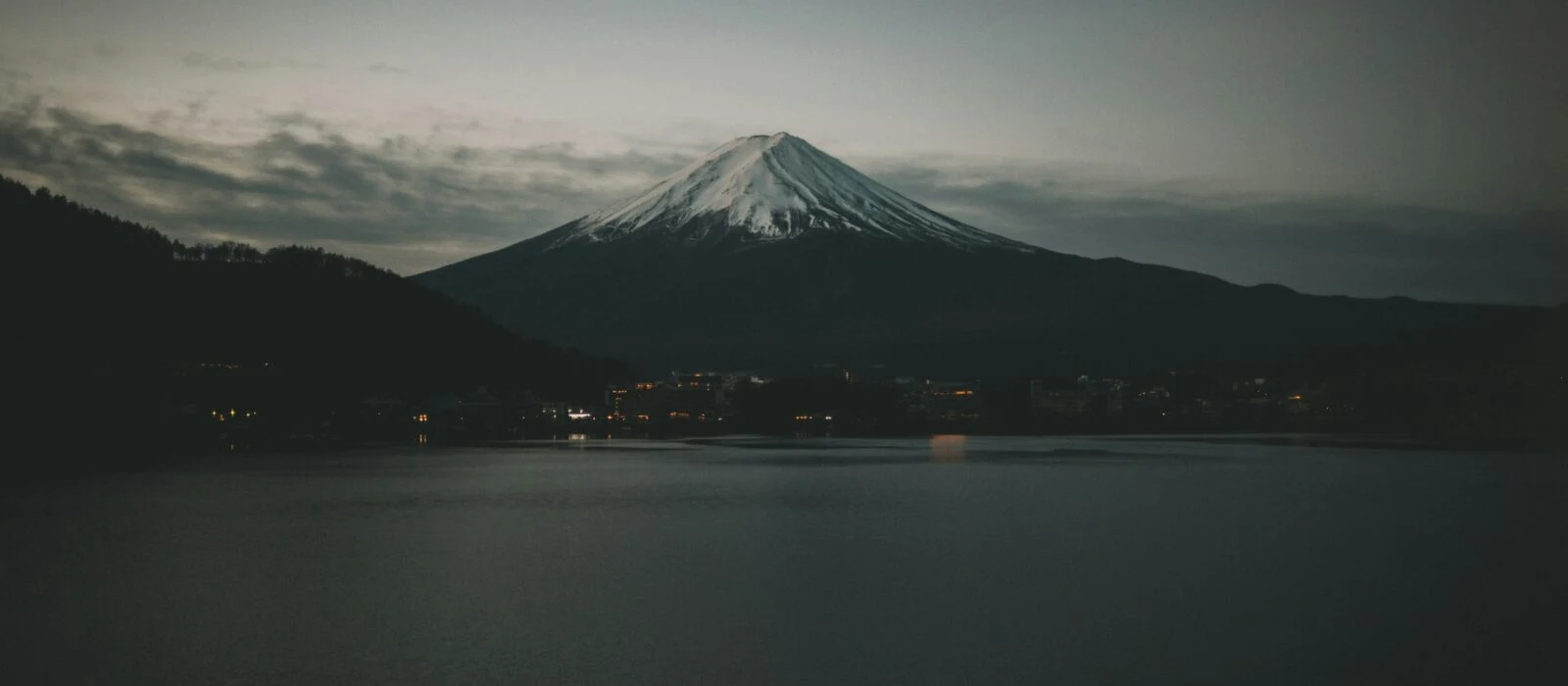
About three-quarters of Japan’s terrain is mountainous, so most people live on narrow coastal plains. The Kanto Plain around Tokyo is the largest lowland area, and Mount Fuji, at 3,776 metres, is the highest peak. Japan lies on the Pacific Ring of Fire, which explains its many volcanoes, such as Mount Aso on Kyushu, and its abundant hot springs.
Administratively, Japan is divided into 47 prefectures, which are commonly grouped into eight traditional regions. Hokkaido is the northernmost prefecture and Okinawa the southernmost. Kyushu sits relatively close to the Korean Peninsula across the sea, while Honshu holds the major cities of Tokyo, Yokohama, Osaka and Kyoto.
Introduction to Japan
Japan is a parliamentary constitutional monarchy in East Asia with about 123 million people. Tokyo is the capital, Japanese is the national language, and the currency is the yen (JPY). The country is known for its mix of ancient temples, modern cities, high-speed rail, seasonal landscapes and 27 UNESCO World Heritage sites.
Last checked: November 2026
The Emperor is the symbol of the state, while political power rests with an elected parliament, the Diet, and a prime minister. The Statistics Bureau’s preliminary 2025 census count put the population at 123.05 million, about 3.1 million fewer than in 2020, and Tokyo prefecture is the largest, with roughly 14.2 million residents. Details are published on the Statistics Bureau of Japan news bulletin.
Japan has 27 World Heritage sites, 22 cultural and 5 natural, according to Japan’s Agency for Cultural Affairs. The newest addition is the Ancient Capitals of Asuka and Fujiwara in Nara Prefecture, inscribed in 2026. Earlier listings include the Buddhist monuments of the Horyuji area, Himeji Castle and Shiretoko. See the Agency’s overview of World Heritage sites in Japan.
- Official name: Japan
- Capital: Tokyo
- Language: Japanese
- Currency: Japanese yen (JPY)
- Calling code and domain: +81 and .jp
- Time zone: Japan Standard Time (UTC+9), no daylight saving
History of Japan
Japan’s recorded history runs from early Jomon settlements through imperial courts, samurai-led shogunates and the Tokugawa peace of 1603 to 1868. The Meiji Restoration of 1868 began rapid modernisation, and after defeat in 1945 the 1947 constitution made Japan a parliamentary democracy and constitutional monarchy.
Last checked: November 2026
Early Japan, imperial courts and the first shoguns
The earliest known inhabitants belonged to the Jomon culture, which is usually dated from around 10,000 BCE to 300 BCE, followed by the Yayoi and Kofun periods. A centralised court emerged in the Asuka and Nara periods, and the capital moved to Heian-kyo, today’s Kyoto, in 794. In 1192 Minamoto no Yoritomo was appointed shogun and set up a military government at Kamakura, beginning centuries in which warrior rulers held real power while the emperor stayed in Kyoto.
Warring states and the Tokugawa peace
The Muromachi period (1336 to 1573) ended in the long civil wars of the Sengoku era. Oda Nobunaga and Toyotomi Hideyoshi then reunified the country, and Tokugawa Ieyasu founded a new shogunate at Edo, now Tokyo, in 1603. The Tokugawa era brought more than two centuries of peace, rapid urban growth and a policy of national seclusion from the 1630s, under which foreign trade was largely limited to Dutch and Chinese merchants at Nagasaki.
Meiji modernisation and the Second World War
American naval ships arrived in 1853, and the Tokugawa government fell in 1868. The new Meiji government moved the capital to Tokyo, opened the first railway line between Tokyo and Yokohama in 1872 and promulgated a constitution in 1889. Japan industrialised quickly and built an empire in the decades that followed, a path that led to the Pacific War and Japan’s surrender in 1945.
Postwar Japan
The Allied occupation lasted until 1952. A new constitution took effect in 1947, removing the emperor’s political power and renouncing war. Japan joined the United Nations in 1956 and, from the 1950s, rebuilt its economy into one of the largest in the world.
Culture and Traditions of Japan
Japanese culture blends ancient Shinto and Buddhist traditions with refined arts and modern pop culture. Courtesy, seasonal awareness and craftsmanship shape daily life across the country. UNESCO lists 23 Japanese elements as intangible heritage, including kabuki, noh, washi paper and washoku cuisine.
Last checked: November 2026
Religion, etiquette and daily life
Shinto, Japan’s indigenous belief system, and Buddhism, which arrived from the Asian mainland, exist side by side, and many people visit both shrines and temples for festivals, New Year and life events. Everyday etiquette favours politeness and consideration for others: visitors usually bow as a greeting, remove their shoes when entering homes, ryokan and many temples, and keep their voices low on public transport. Public baths and hot springs, known as sento and onsen, are part of local life and have their own customs, such as washing before entering the bath.
Performing arts, crafts and festivals
Noh, bunraku puppet theatre and kabuki were inscribed on UNESCO’s Representative List in 2008, and the court music known as gagaku followed in 2009. Hand-made washi paper was inscribed in 2014, and the Yama, Hoko, Yatai float festivals, which include Kyoto’s Gion Matsuri, in 2016. Japan’s most recent listing is the traditional knowledge and skills of sake-making with koji mold, added in December 2024. The Ministry of Foreign Affairs keeps an official list of Japan’s intangible cultural heritage elements.
Seasons, tea and everyday traditions
The passing of the seasons is a theme in poetry, cooking, clothing and festivals. Customs such as the tea ceremony, flower arranging (ikebana) and viewing cherry blossoms with friends and family reflect that attention to the seasons. Modern culture sits comfortably alongside these traditions, from manga and anime to convenience stores and vending machines, and visitors often find that the contrast between old and new is what makes Japan memorable.
Food and Cuisine of Japan
Japanese cuisine, known as washoku, is built on rice, seafood, vegetables, soy-based seasonings and seasonal ingredients. Famous dishes include sushi, ramen, tempura and okonomiyaki, and each region adds its own specialities. UNESCO inscribed washoku on its Representative List of the Intangible Cultural Heritage in 2013.
Last checked: November 2026
A traditional meal is often organised around rice and soup with several small side dishes, and the emphasis is on seasonal produce and balanced flavours. Regional food varies a great deal: Hokkaido is known for seafood such as crab and sea urchin, Osaka for street food such as takoyaki and okonomiyaki, and Kagawa on Shikoku for its chewy Sanuki udon. The Japan National Tourism Organization describes many favourites in its guide to dishes to try in Japan.
Signature dishes to try
- Sushi and sashimi: vinegared rice with fish or other toppings, and sliced raw fish served on its own.
- Ramen: wheat noodles in a hot soup, seasoned with salt, soy sauce or miso, or served in a pork-bone broth.
- Tempura: seafood and vegetables fried in a light batter, often eaten with a dashi-based dipping sauce.
- Udon: thick, soft wheat noodles served hot in broth or chilled.
- Soba: thin buckwheat noodles, popular chilled in warm weather and eaten on New Year’s Eve for good luck.
- Okonomiyaki: a savoury cabbage pancake; Osaka’s version mixes the ingredients into the batter, while Hiroshima’s is built in layers.
- Takoyaki: fried batter balls filled with octopus, a street-food classic from Osaka.
- Yakitori: skewers of grilled chicken and other meats or vegetables, usually seasoned with salt or a sweet soy glaze.
- Tonkatsu: a breaded and fried pork cutlet, usually served with shredded cabbage and rice.
- Miso soup: a dashi-based soup flavoured with fermented soybean paste, served with most traditional meals.
Drinks and sweets
Green tea is served throughout the country, and sake, shochu and awamori are made with koji mold, a technique that UNESCO recognised in 2024. Seasonal sweets, often made with rice flour or sweet bean paste, are a regular part of tea ceremonies and festivals.
Explore Japan Travel Guides
Explore our detailed guides to plan every part of your Japan trip.
Japan: Best Places
The best places to visit in Japan grouped by type, from Tokyo, Kyoto and Osaka to Mt. Fuji, Hokkaido and Okinawa, with...
View Guide ›Japan: Best Time to Visit
When to visit Japan: seasons, month-by-month temperatures, regional climate, festivals, peak and low seasons, typhoon and rainy-season timing, and packing tips.
View Guide ›Japan: Flights
Flying to Japan: main international airports, airlines and route options, arrival steps, time zone, the departure tax, a before-you-fly checklist and flight...
View Guide ›Japan: Getting Around
How to get around Japan by Shinkansen, local trains, buses, domestic flights and rental car, with IC cards, driving rules, journey times...
View Guide ›Japan: Hotels
Where to stay in Japan: best areas in Tokyo, Kyoto and Osaka, hotel types from business hotels to ryokan, accommodation taxes, booking...
View Guide ›Japan: Itineraries
Realistic Japan itineraries for 3, 5, 7 and 10 days, linking Tokyo, Kyoto, Osaka, Nara and Hiroshima, with overnight stops, Shinkansen times...
View Guide ›Japan: Visa
Check Japan visa rules by nationality: visa-free short stays, the eVISA, passport and border checks, extensions and overstaying, with official MOFA links.
View Guide ›Explore Japan Tours
Discover guided tours and adventures in Japan. Compare itineraries, prices and traveller reviews on TourRadar before you book.
Guided tours & deals
Affiliate partner · Globe Navo may earn a commission from qualifying bookings at no extra cost to you.
❓ Japan FAQ
Where is Japan located?
Japan is an island country in East Asia between the Sea of Japan and the Pacific Ocean. It has four main islands, Hokkaido, Honshu, Shikoku and Kyushu, plus thousands of smaller ones, and no land borders. Tokyo, the capital, is on Honshu.
What is the capital of Japan and what language is spoken?
Tokyo is the capital and largest city of Japan. Japanese is the national language, and the currency is the yen (JPY). The whole country uses Japan Standard Time (UTC+9) and does not observe daylight saving time.
How many UNESCO World Heritage sites does Japan have?
Japan has 27 UNESCO World Heritage sites, 22 cultural and 5 natural, according to the Agency for Cultural Affairs. The most recent addition is the Ancient Capitals of Asuka and Fujiwara in Nara, inscribed in 2026.
What is washoku?
Washoku is the traditional dietary culture of Japan, built on rice, soup, seasonal ingredients and balanced flavours. UNESCO inscribed it on its Representative List of the Intangible Cultural Heritage in 2013, and it is closely linked with New Year celebrations.
Is Japan a monarchy?
Japan is a parliamentary constitutional monarchy. Under the 1947 constitution the Emperor is the symbol of the state and has no political power, while government is led by a prime minister and an elected parliament called the Diet.
Plan Your Trip to Japan
Your Next Adventure in Japan Awaits!
Explore Deals →🎁 Best deals for Japan
Offers from trusted travel stores for your Japan trip. Compare a few options before you book, and check each store's terms for the final price.
Browse by type: Hotel deals · Flight deals · Travel eSIM · Car rental
More destinations to explore
GhanaGhana travel guide to its location in West Africa, history, culture and food, from…
 BelizeBelize is an English-speaking Central American country on the Caribbean coast, known for the…
 Democratic Republic of the CongoExplore the Democratic Republic of the Congo's location, geography, history, culture and food, with…