 HaitiDiscover Haiti: where it is, its revolutionary history, Creole culture and traditions, and signature…
DESTINATION
Grenada
Discover Grenada, the Spice Isle of the southeastern Caribbean: its location, history, culture and signature local food.
📅 Last updated:
🌍 Quick Facts

Grenada at a glance
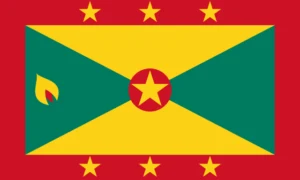
Capital: St. George's
Currency: East Caribbean Dollar (XCD)
Language: English (official), with English-based Creole and some French Patois
Population: About 114,600 (2024 estimate)
Time zone: AST (UTC-4), no daylight saving
Calling code: +1 473
Internet domain: .gd
Main airport: Maurice Bishop International Airport (GND)
Best time to visit: January to May, the drier season, with February and March usually the driest months
📍 Grenada Map
🖼️ Grenada: Location, History, Culture & Food
✨ Complete Travel Guide
Where Is Grenada Located?
Grenada is an island country in the southeastern Caribbean, at the southern end of the Windward Islands. It lies north of Trinidad and Tobago and south of Saint Vincent and the Grenadines, and it includes the main island plus Carriacou and Petite Martinique. Its capital, St. George’s, sits on the southwest coast.
Last checked: November 2026
The whole state covers about 344 square kilometres (133 square miles), which makes it one of the smallest independent countries in the world. The main island is roughly 34 km long and 19 km wide, with the Caribbean Sea along its western shore and the Atlantic Ocean to the east. Its volcanic origins explain the terrain: a mountainous, rainforest-covered interior, dry lowlands and coastal mangroves.
Carriacou, the larger of the two sister islands, is about a 90-minute boat ride from St. George’s, and tiny Petite Martinique lies to its northeast. Administratively, the country is divided into six parishes plus the dependency of Carriacou and Petite Martinique. Islands in the Grenadine chain north of the Martinique Channel belong to Saint Vincent and the Grenadines, not to Grenada.
Introduction to Grenada
Grenada is a small, independent island nation in the Caribbean, nicknamed the Spice Isle for its nutmeg, mace, cinnamon and cocoa. It is a parliamentary democracy and a member of the Commonwealth. Visitors come for white-sand beaches, rainforest hikes, waterfalls and diving, including the world’s first underwater sculpture park.
Last checked: November 2026
Around 114,600 people live in Grenada (2024 estimate), mostly along the coast and around St. George’s. English is the official language, and many Grenadians also speak an English-based Creole, with French Patois heard in some communities. The country is also known internationally for St. George’s University, whose medical and veterinary schools draw students from more than 140 countries.
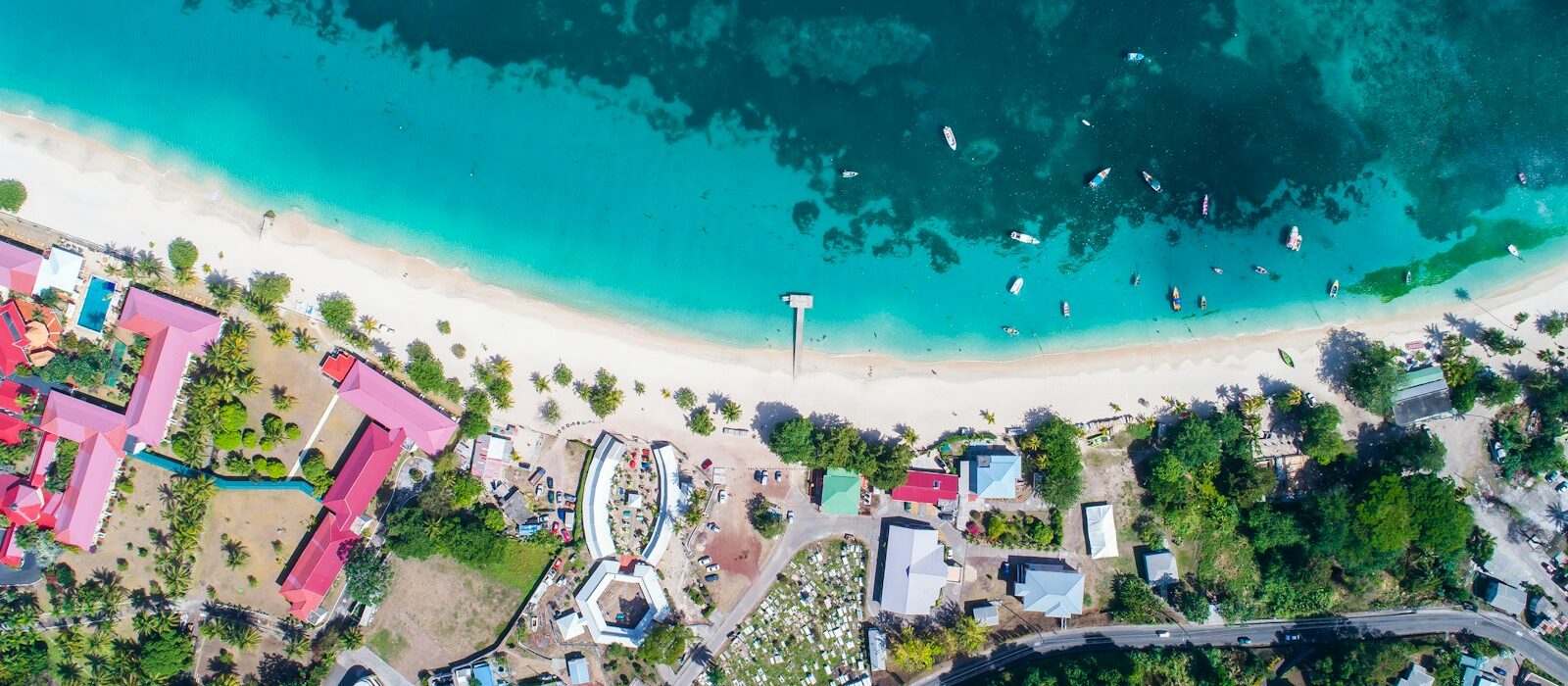
Rich volcanic soil is the reason spices grow so well here, and you can see that heritage at plantations, nutmeg processing stations and markets. Grand Anse Beach, just south of the capital, is the best-known stretch of sand. Inland, Grand Etang National Park and Forest Reserve offers crater-lake scenery and trails, while the Molinere Underwater Sculpture Park, created by artist Jason deCaires Taylor, sits just off the west coast.
If you are planning a trip, our guides to Grenada visa requirements, the best places to visit in Grenada and the best time to visit Grenada explain what to prepare and when to go.
History of Grenada
Grenada was home to Indigenous Kalinago (Carib) people before French settlers founded a colony in 1649. Britain gained the island in 1763, and Grenada became independent on 7 February 1974. A 1979 revolution and a US-led intervention in 1983 marked its most turbulent years, followed by restored democracy and recovery after Hurricane Ivan in 2004.
Last checked: November 2026
Christopher Columbus sighted the island in 1498, but European attempts to settle it were resisted by the Kalinago for over a century. In 1649 a French expedition of about 200 men from Martinique, led by Jacques Dyel du Parquet, established a permanent settlement, and fighting with the Indigenous population ended in 1654. The French developed a sugar economy that relied on enslaved Africans, and records suggest roughly 127,600 enslaved people were brought to Grenada by the French and British between 1669 and 1808.
Britain took control formally under the Treaty of Paris in 1763, apart from a brief French recapture between 1779 and 1783. St. George’s became the capital of the British Windward Islands, and cocoa and spices later joined sugar as key crops. Grenada became an associated state with full internal self-government in 1967, and independence followed in 1974 under Eric Gairy, the country’s first prime minister.
The New Jewel Movement seized power in 1979, and the unrest that followed led to the 1983 intervention by United States forces. The constitution was restored in 1984 and free elections have continued since. In September 2004 Hurricane Ivan struck as a Category 4 storm, damaging most of the island’s buildings and much of its nutmeg crop, and Hurricane Emily caused further damage in 2005. Rebuilding and replanting have since helped tourism and spice farming recover.
Culture and Traditions of Grenada
Grenadian culture blends African, French, British and Indigenous influences, expressed through Spicemas carnival, calypso and soca music, storytelling and a strong sailing and fishing tradition. On Carriacou, living customs such as the Big Drum Nation Dance and Shakespeare Mas stand out, and UNESCO inscribed Shakespeare Mas on its Intangible Cultural Heritage list in 2024.
Last checked: November 2026
The main cultural event is Spicemas, Grenada’s carnival, held each August and ending with the J’ouvert street party, with its Jab Jab characters, followed by the Monday and Tuesday mas parades. Expect steel pan, soca and calypso competitions, and fetes across St. George’s. Independence Day on 7 February is another national celebration.
Carriacou keeps some of the Caribbean’s most distinctive traditions. Shakespeare Mas is a theatrical contest in which costumed performers recite lines from the playwright’s works, and a wrong line earns a symbolic lash. The Big Drum Nation Dance, performed at weddings, boat launchings and tombstone feasts, honours African ancestral nations, while the island also hosts a Maroon and Stringband Music Festival in April, the Carriacou Regatta in August and a Parang Festival of Creole Christmas songs in December.
Food and Cuisine of Grenada
Grenadian cuisine centres on spices, coconut, fresh seafood and root vegetables, and its national dish is oil down, a slow-cooked stew of breadfruit, callaloo, salted meat and coconut milk. As the Spice Isle, Grenada uses nutmeg, cinnamon, cloves and cocoa in everything from desserts to drinks.
Last checked: November 2026
Many dishes are cooked in one pot and shared at weekend gatherings. Fish and shellfish dominate on the coast, and the weekly Fish Friday street party in the fishing town of Gouyave is the best place to try grilled catch and fried conch. Signature local dishes to look for include:
- Oil down: the national dish, made with breadfruit, callaloo, dumplings, salted meat or fish and turmeric, simmered in coconut milk.
- Callaloo soup: a thick green soup made from dasheen leaves, often with crab or salted meat.
- Fried bake and saltfish: fried dough served with salted cod, a classic breakfast.
- Lambi (conch) souse and fritters: tenderised conch, pickled or fried, popular at fish fries.
- Pelau: a one-pot dish of rice, chicken and pigeon peas cooked in coconut milk.
- Roti: a flatbread wrapped around curried meat, fish or vegetables with potato.
- Crab back: seasoned crab meat served in the shell.
- Curry goat: slow-cooked, spiced goat served with rice or roti.
- Nutmeg ice cream: a local favourite made with freshly grated nutmeg.
- Sweet potato pudding: a dense, lightly spiced dessert.
- Cocoa tea: a breakfast drink made by grating local cocoa balls into hot water with nutmeg and cinnamon.
Grenada is also known for chocolate made from locally grown cocoa and for its rum, including rum punch grated with fresh nutmeg. Bean-to-bar chocolate makers and spice estates welcome visitors, which makes food one of the easiest ways to understand the island’s farming heritage.
To turn these ideas into a trip, use our Grenada itineraries, hotel guide, flight guide and getting around guide.
Explore Grenada Travel Guides
Explore our detailed guides to plan every part of your Grenada trip.
Grenada: Best Places
The best places to visit in Grenada, grouped by interest: historic St. George's, beaches, rainforest waterfalls, diving, spice estates and Carriacou.
View Guide ›Grenada: Best Time to Visit
When to visit Grenada: the dry season, month-by-month rainfall, hurricane season, festivals and public holidays, plus what to pack.
View Guide ›Grenada: Flights
Flights to Grenada: Maurice Bishop International Airport, airlines and routes, arrival information, time zone and a pre-flight checklist.
View Guide ›Grenada: Getting Around
How to get around Grenada: minibuses, taxis, water taxis, car rental and driving rules, plus ferries and flights to Carriacou.
View Guide ›Grenada: Itineraries
Realistic Grenada itineraries for 3, 5, 7 and 10 days, with routes, overnight bases, activities and practical advice, including Carriacou.
View Guide ›Grenada: Visa
Who needs a visa for Grenada, how entry works, passport rules and where to confirm the requirements for your nationality.
View Guide ›Grenada: Hotels
Where to stay in Grenada: the best areas, hotel types for every budget, family and couples options, and practical booking tips.
View Guide ›Explore Grenada Tours
Discover guided tours and adventures in Grenada. Compare itineraries, prices and traveller reviews on TourRadar before you book.
Guided tours & deals
Affiliate partner · Globe Navo may earn a commission from qualifying bookings at no extra cost to you.
❓ Grenada FAQ
Where is Grenada located?
Grenada is an island country in the southeastern Caribbean, at the southern end of the Windward Islands. It lies north of Trinidad and Tobago and south of Saint Vincent and the Grenadines, with the Caribbean Sea to the west and the Atlantic Ocean to the east.
Why is Grenada called the Spice Isle?
Grenada earned the nickname Spice Isle because its rich volcanic soil grows nutmeg, mace, cinnamon and cocoa. Nutmeg is the best known, and visitors can see spices grown and processed at plantations, nutmeg stations and local markets across the island.
What are the capital, language and currency of Grenada?
The capital is St. George’s, on the southwest coast of the main island. English is the official language, and many Grenadians also speak an English-based Creole, with French Patois heard in some communities. The currency is the East Caribbean dollar (XCD).
Is Grenada one island or several?
Grenada is a three-island state made up of the main island, Carriacou and Petite Martinique. Carriacou is the larger of the two sister islands and is about a 90-minute boat ride from St. George’s, while tiny Petite Martinique lies to its northeast.
What is the national dish of Grenada?
Oil down is Grenada’s national dish. It is a slow-cooked one-pot stew of breadfruit, callaloo, dumplings, salted meat or fish and turmeric, simmered in coconut milk. It is one of many Grenadian dishes cooked in a single pot and shared at gatherings.
Plan Your Trip to Grenada
Your Next Adventure in Grenada Awaits!
Explore Deals →🎁 Best deals for Grenada
Offers from trusted travel stores for your Grenada trip. Compare a few options before you book, and check each store's terms for the final price.
Browse by type: Hotel deals · Flight deals · Travel eSIM · Car rental
More destinations to explore
HaitiDiscover Haiti: where it is, its revolutionary history, Creole culture and traditions, and signature…
 AustriaAustria is a Central European country known for Vienna, Salzburg, Hallstatt and the Alps,…
 JordanJordan travel guide: where it is, its history, culture and signature dishes.