 NepalDiscover where Nepal sits in the Himalayas, how its history unfolded, and what shapes…
DESTINATION
Georgia
Georgia travel guide covering where the country is, its history, culture and food, plus links to our visa, flights and planning guides.
📅 Last updated:
🌍 Quick Facts

Georgia at a glance
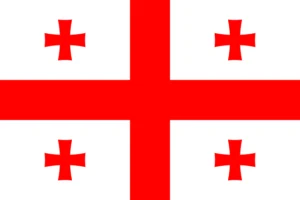
Capital: Tbilisi
Currency: Georgian lari (GEL)
Language: Georgian
Population: About 3.94 million
Time zone: Georgia Time (UTC+4)
Calling code: +995
Internet domain: .ge
Main airport: Tbilisi International Airport (TBS)
Best time to visit: May to June and September to October (summer for the high mountains; ski season mid-December to March)
📍 Georgia Map
🖼️ Georgia: Location, History, Culture & Food
✨ Complete Travel Guide
Safety notice for travellers
The UK Foreign, Commonwealth and Development Office (FCDO) advises against all travel to the breakaway regions of South Ossetia and Abkhazia, and against all but essential travel to areas immediately next to the administrative boundary lines with those regions.
The US State Department rates Georgia Level 1: Exercise Normal Precautions overall, but lists South Ossetia and Abkhazia as Level 4: Do Not Travel because of crime, unrest and landmines. US Embassy staff are barred from travelling within 5 km of the boundary lines, and the embassy cannot assist US citizens in either region.
The rest of the country is not covered by these warnings. This guide is informational only, so read both advisories in full and confirm the latest advice shortly before you travel.
Where Is Georgia Located?
Georgia is a country in the South Caucasus, where Eastern Europe meets Western Asia. It borders Russia to the north, Azerbaijan to the southeast, Armenia to the south and Turkey to the southwest, and it has a Black Sea coastline in the west. Its capital and largest city is Tbilisi.
Last checked: November 2026
The US State Department places Georgia in Europe, while many geographers describe the South Caucasus as a crossroads between Europe and Asia. Both labels appear in guidebooks, so you may see either. What matters for travellers is the position: mountains run along the northern border with Russia, and the Black Sea coast faces west.
Georgia’s National Statistics Office (Geostat) reported a population of about 3.94 million on 1 January 2026. That figure does not cover the occupied territories, and more than a third of the population lives in Tbilisi.
Two regions, Abkhazia and South Ossetia, are occupied by Russian troops. The United States and most other countries consider both part of Georgia, although the local de facto authorities claim independence. The safety notice at the top of this page explains why visitors should keep both regions, and the areas next to their boundary lines, off any itinerary.
Introduction to Georgia
Georgia is a mountainous country in the South Caucasus, known for ancient churches and monasteries, high alpine villages and a Black Sea coast. Georgian is the official language, and the currency is the Georgian lari (GEL). Tbilisi is the capital, and most visitors pass through it on the way to the mountains, the wine regions or the coast.
Last checked: November 2026
Geostat counted about 3.94 million residents on 1 January 2026, and it reports that roughly 63 percent of people live in urban settlements. Tbilisi is by far the largest city, so the capital feels very different from the villages in the highlands. The US State Department describes the country as generally safe for travellers, with the exceptions explained in the safety notice above.
Four properties are on UNESCO’s World Heritage List. Three are cultural: the Historical Monuments of Mtskheta, Gelati Monastery and Upper Svaneti. The fourth, the Colchic Rainforests and Wetlands, was inscribed in 2021 and is Georgia’s only natural site, spread across the coastal regions of Adjara, Guria and Samegrelo-Zemo Svaneti. The UNESCO World Heritage Centre page for Georgia shows the current list.
Many travellers combine a few days in the capital with a longer trip to the mountains or the coast. Those two sides of the country differ a lot in climate and pace, which is worth knowing before you start planning.
History of Georgia: From Colchis and Iberia to Today
Georgia’s history runs from the ancient kingdoms of Colchis and Iberia through the adoption of Christianity in the early fourth century, a medieval golden age under King David IV and Queen Tamar, Russian and Soviet rule, and independence in 1991. The country has kept its own language, alphabet and church through all of it.
Last checked: November 2026
Colchis, Iberia and early Christianity
Two kingdoms emerged in antiquity: Colchis in the west, along the Black Sea, and Iberia in the east. Greek myth placed the Golden Fleece sought by Jason in Colchis. Both kingdoms adopted Christianity in the early fourth century, and historians give different dates for the conversion of Iberia, usually between 319 and 337 AD.
The golden age of the Georgian kingdom
The western and eastern Georgian lands were brought together under a single kingdom around the turn of the 11th century, often dated to the reign of Bagrat III. The kingdom reached its peak in the 11th and 12th centuries under King David IV, known as David the Builder, and his great-granddaughter Queen Tamar, who was the first woman to rule Georgia in her own right. Many of the monasteries and fortresses that visitors see today date from this period or from the centuries around it.
Foreign powers and Russian rule
The kingdom later declined and fragmented under pressure from the Mongols, the Ottoman Empire and Persia. In the late 18th century the eastern kingdom of Kartli-Kakheti sought Russian protection, and Russia began annexing Georgian lands in 1801. Russian imperial rule lasted until the revolution of 1917.
Independence, Soviet rule and the 1991 declaration
Georgia declared an independent democratic republic on 26 May 1918. The Red Army invaded in February 1921, and Georgia became part of the Soviet Union. An independence movement grew in the 1980s, and Georgia declared independence from the Soviet Union on 9 April 1991, a date that became final when the Soviet Union dissolved on 25 December that year.
Recent history
The 1990s brought political turmoil, economic crisis and conflicts in Abkhazia and South Ossetia. In 2003, the peaceful Rose Revolution removed President Eduard Shevardnadze and led to a period of reform. In August 2008, fighting between Georgian forces and Russian forces in and around South Ossetia ended with Russian troops remaining in both Abkhazia and South Ossetia, which is why the safety notice at the top of this page matters for travellers today.
Culture and Traditions of Georgia
Georgian culture rests on its own language and alphabet, a strong Orthodox Christian tradition, polyphonic singing, wine made in clay vessels and a culture of hospitality centred on the supra feast. UNESCO lists several Georgian traditions on its intangible heritage list, and many of them are still part of everyday life.
Last checked: November 2026
Language and alphabet
Georgian is the official language and has its own script. The alphabet has taken three forms over its history, called Asomtavruli, Nuskhuri and Mkhedruli, and Mkhedruli is the one in use today. UNESCO inscribed the living culture of all three writing systems on its intangible heritage list in 2016. Russian, Armenian and Azerbaijani are also spoken in parts of the country, and a few Georgian words are appreciated when you leave the main tourist areas.
Religion
Most people in Georgia belong to the Georgian Orthodox Church, and churches and monasteries are active places of worship as well as historic sites. Dress modestly when you visit, and ask before photographing services or people. Smaller Muslim, Catholic and other communities also live in the country.
Music, dance and sport
Georgian polyphonic singing was listed by UNESCO in 2008. The Georgia National Tourism Administration says every region has its own sound, with structured polyphony as the common thread, and dance is another strong tradition that tells stories of love, war, belief and work. Chidaoba, a traditional style of wrestling, joined UNESCO’s list in 2018.
The supra and hospitality
Many visitors meet Georgian culture first at a supra, a traditional feast that is an important part of social life. Meals are long and shared, with many dishes on the table at once. If you are invited to someone’s home, expect generous hosting and plan to take your time.
Wine as culture
Wine is part of national identity as well as food. UNESCO listed the ancient Georgian qvevri wine-making method in 2013, and the Georgia National Tourism Administration points to 8,000-year-old grape pips found at Gadachrili Gora as evidence of very early winemaking. You can read more on the official Georgia culture page of the national tourism administration.
Food and Cuisine of Georgia
Georgian food is rich, hearty and built for sharing, with cheese breads, dumplings, walnut-based dishes, grilled meat and many vegetarian options. Regional differences are strong, and wine is part of the table. Most visitors start with khachapuri and khinkali, then explore the starters, stews and soups.
Last checked: November 2026
Regional character
Georgian cooking is shaped by its neighbours: eastern regions reflect Iranian and Central Asian flavours, while western Georgia leans toward Turkish and Mediterranean tastes. Cheese is often used in hot dishes instead of being served on its own. Meals usually begin with a spread of cold starters and vegetable dishes before the heavier courses arrive.
Signature dishes
- Khachapuri: cheese-filled bread that comes in several regional forms. The boat-shaped Adjarian version, topped with an egg, is often called the national dish.
- Khinkali: large dumplings filled with spiced minced meat. They are usually eaten by hand, and travellers often say the best ones come from mountain regions such as Mtskheta and Kazbegi.
- Pkhali: chopped, cooked vegetables such as spinach or beetroot, mixed with walnuts and herbs and shaped into small balls or served as a paste.
- Lobio: a slow-cooked bean stew, often served in a clay pot with mchadi, a simple cornbread, and pickles.
- Mtsvadi: skewered meat, most often pork, grilled over open coals and commonly served with a sour plum sauce called tkemali.
- Badrijani nigvzit: aubergine rolls filled with a walnut paste.
- Ajapsandali: a vegetable stew with aubergine, often compared to ratatouille.
- Chakhokhbili: a fragrant chicken stew with tomatoes, garlic, onions and fresh herbs.
- Chikhirtma: a tangy chicken-broth soup with egg and herbs, often served as a restorative dish.
- Churchkhela: a nut-based sweet that hangs in shop windows and is often mistaken for a sausage.
Vegetarian options
Vegetarians have plenty to eat. Lobio, pkhali, badrijani nigvzit and ajapsandali are all meat-free, and cheese breads are everywhere. Ask about meat stock or lard if you avoid animal products entirely, as menus do not always say.
Wine and drinks
Georgian wine is traditionally made in clay vessels called qvevri, and the method is on UNESCO’s intangible heritage list. Wine appears at nearly every shared meal, and many guesthouses and restaurants pour their own or local bottles. Order what the table is drinking if you are unsure, and ask your host about the grape variety.
Plan your trip: check entry rules, insurance and passport requirements in our Georgia visa guide for tourists, and choose where to go with our guide to the best places to visit in Georgia, then pick your dates with our month-by-month guide to the best time to visit Georgia. Build your route with our Georgia itineraries for 3, 5, 7 and 10 days, choose where to stay in Georgia, compare flights to Georgia, and plan local transport with our guide to getting around Georgia.
Explore Georgia Travel Guides
Explore our detailed guides to plan every part of your Georgia trip.
Georgia: Best Places
A regional guide to the best places to visit in Georgia, from Tbilisi and Mtskheta to Kazbegi, Svaneti, Kakheti, Batumi and the...
View Guide ›Georgia: Best Time to Visit
When to visit Georgia: regional weather, month-by-month conditions, festivals, public holidays, ski season and packing advice.
View Guide ›Georgia: Flights
Which airport to use for flights to Georgia, how Tbilisi, Kutaisi and Batumi differ, airlines and routes, and a Before You Fly...
View Guide ›Georgia: Itineraries
Realistic Georgia itineraries for 3, 5, 7 and 10 days, with routes from Tbilisi to Mtskheta, Kazbegi, Kakheti, Kutaisi and Batumi.
View Guide ›Georgia: Visa
Who needs a visa for Georgia, how the one-year visa-free stay works, e-visa basics, mandatory insurance and what to expect at the...
View Guide ›Georgia: Getting Around
How to get around Georgia by train, marshrutka, taxi and car, with driving rules, licence notes, ride-hailing tips and the best option...
View Guide ›Georgia: Hotels
Where to stay in Georgia: best areas in Tbilisi, Batumi, Kutaisi and the mountains, hotel types, family and halal-friendly notes, and booking...
View Guide ›Explore Georgia Tours
Discover guided tours and adventures in Georgia. Compare itineraries, prices and traveller reviews on TourRadar before you book.
Guided tours & deals
Affiliate partner · Globe Navo may earn a commission from qualifying bookings at no extra cost to you.
❓ Georgia FAQ
Where is Georgia located?
Georgia is in the South Caucasus, between Eastern Europe and Western Asia. It borders Russia to the north, Azerbaijan to the southeast, Armenia to the south and Turkey to the southwest, and it has a Black Sea coastline in the west.
What is the capital of Georgia and what currency is used?
The capital and largest city is Tbilisi. The official currency is the Georgian lari (GEL). Geostat reported about 3.94 million residents on 1 January 2026, and more than a third of them live in Tbilisi, so the capital is the main gateway for most visitors.
Is Georgia safe to visit?
The US State Department rates Georgia Level 1, exercise normal precautions, but advises against travel to South Ossetia and Abkhazia. The UK FCDO also advises against all travel to those regions. Check both advisories shortly before you travel, because official advice can change.
What language do people speak in Georgia?
Georgian is the official language and uses its own alphabet, Mkhedruli. Other languages, including Russian, Armenian and Azerbaijani, are spoken in parts of the country. Learning a few Georgian words is helpful and appreciated when you leave the main tourist areas.
Does Georgia have UNESCO World Heritage Sites?
Yes. Four properties are on the World Heritage List: the Historical Monuments of Mtskheta, Gelati Monastery, Upper Svaneti and the Colchic Rainforests and Wetlands. The last, inscribed in 2021, is the only natural site, while the first three are cultural.
Plan Your Trip to Georgia
Your Next Adventure in Georgia Awaits!
Explore Deals →🎁 Best deals for Georgia
Offers from trusted travel stores for your Georgia trip. Compare a few options before you book, and check each store's terms for the final price.
Browse by type: Hotel deals · Flight deals · Travel eSIM · Car rental
 TourRadarTourRadar is an online marketplace for multi-day guided tours, small-group trips and tailor-made journeys offered by independent tour operators around the world.
Get Coupon View Deal
More destinations to explore
NepalDiscover where Nepal sits in the Himalayas, how its history unfolded, and what shapes…
 GermanyGermany travel guide: where the country is, its history, culture and food.
 PakistanPakistan travel guide covering where the country is, its history, culture and food, with…