 MoldovaDiscover Moldova, a landlocked Eastern European country of rolling vineyards, medieval monasteries, Orthodox traditions…
DESTINATION
Gabon
Gabon is a rainforest and Atlantic-coast country in Central Africa. Learn where it is, its history, culture and signature dishes, and how to plan your trip.
📅 Last updated:
🌍 Quick Facts

Gabon at a glance
Capital: Libreville
Currency: Central African CFA franc (XAF)
Language: French (official); Fang, Myene, Nzebi, Punu and others
Population: About 2.5 million (estimates vary)
Time zone: West Africa Time (UTC+1)
Calling code: +241
Internet domain: .ga
Main airport: Libreville Léon-Mba International Airport (LBV), Port-Gentil Airport (POG)
Best time to visit: June to September (main dry season); mid-December to January (short dry spell)
📍 Gabon Map
🖼️ Gabon: Location, History, Culture & Food
✨ Complete Travel Guide
Where Is Gabon Located?
Gabon is a country on the Atlantic coast of Central Africa, straddling the Equator. It borders Equatorial Guinea and Cameroon to the north, the Republic of the Congo to the east and south, and the Gulf of Guinea to the west. Its capital and largest city is Libreville.
Last checked: November 2026
Gabon covers about 267,667 square kilometres, making it slightly smaller than the US state of Colorado. It shares roughly 3,261 km of land borders with its three neighbours and has an 885 km Atlantic coastline. Libreville sits on the coast in the northwest, while Port-Gentil, Franceville, Oyem and Moanda are among the other major towns.
Behind a narrow coastal plain, the interior rises into undulating, forested uplands, with savanna in the east and south. The Ogooué River, the country’s main waterway, runs for roughly 1,200 km from the Congo border to the Atlantic. Dense rainforest covers much of the land, and the small population is concentrated in a handful of towns, with Libreville alone home to a large share of Gabonese people.
Gabon follows West Africa Time (UTC+1) all year, with no daylight saving, so it is six hours ahead of Washington, D.C. during US winter time. Traffic drives on the right, and the international dialling code is +241. The country is divided into nine provinces: Estuaire, home to Libreville, lies in the northwest, while Ogooué-Maritime, centred on Port-Gentil, occupies a stretch of the coast.
Introduction to Gabon
Gabon is a Central African nation known for dense equatorial rainforest, a long Atlantic coastline and a network of 13 national parks created in 2002. French is the official language, and Libreville is the capital. Visitors come mainly for wildlife, beaches and nature rather than mass tourism, in a country with a very low population density.
Last checked: November 2026
The 13 national parks announced in 2002 protect a little over 10 percent of the country. Two places are on the UNESCO World Heritage List: the Ecosystem and Relict Cultural Landscape of Lopé-Okanda, inscribed in 2007, and Ivindo National Park, inscribed in 2021. Loango National Park, on the southern coast, is celebrated for its forest, lagoon and beach scenery.
Gabon gained independence from France on 17 August 1960. About 2.5 million people live in the country, and more than four in five of them live in towns and cities. Libreville is the administrative and commercial centre, while Port-Gentil is the hub of the oil and timber industries that, together with manganese, dominate the country’s exports.
The national currency is the Central African CFA franc (XAF), and Gabon has been a member of the Commonwealth of Nations since June 2022, an unusual step for a former French colony. Most international visitors arrive through Libreville, the capital, and travel in Gabon tends to revolve around wildlife, rivers and coastline rather than big-city sightseeing.
History of Gabon
Gabon’s history runs from early Bantu-speaking settlement, through Portuguese contact in 1472 and French colonial rule, to independence on 17 August 1960. Libreville was founded in 1849 as a settlement for freed captives. After independence, the Bongo family dominated politics for decades until a military takeover in August 2023.
Last checked: November 2026
Bantu-speaking communities settled the region over many centuries, and coastal peoples such as the Mpongwe later traded with European ships. Portuguese sailors reached the Komo estuary in 1472, and the name Gabon is thought to come from the Portuguese word gabão, a cloak that the estuary was said to resemble. Dutch, British and French traders followed, dealing in ivory, timber and enslaved people.
France signed treaties with coastal chiefs in 1839 and 1841, and in 1849 captives freed from a seized slave ship founded Libreville, meaning “Free Town”. Gabon became a French colony in 1886 and, in 1910, one of the four territories of French Equatorial Africa. It voted to remain in the French Community in 1958 and became fully independent on 17 August 1960 under its first president, Léon M’Ba.
Omar Bongo took power in 1967 and led the country until his death in 2009, when his son Ali Bongo was elected. Oil and manganese mining shaped the economy over these decades. On 30 August 2023, military officers led by General Brice Oligui Nguema removed Ali Bongo shortly after a disputed election, opening a political transition.
One of the best-known landmarks of the colonial era is the hospital founded by the physician Albert Schweitzer at Lambaréné, on the Ogooué River, in 1913. Brice Oligui Nguema later became the elected president in 2025, and Gabon’s politics and economy remain closely watched in the region.
Culture and Traditions of Gabon
Gabonese culture blends more than 40 ethnic groups, each with its own languages, rituals, music and art. The Fang, Punu, Myene and Mitsogo are among the best known. French is the official language, most people are Christian, and masks, initiation societies and ancestor traditions remain central to cultural life.
Last checked: November 2026
The Fang, the largest group, live mainly in the north, and Fang and Kota carved figures and masks are prized by collectors around the world. Punu masks, associated with the south, are among the most recognisable in Central Africa. Masks traditionally belong to initiation societies and appear at funerals, weddings and other ceremonies, accompanied by drums, dance and song.
Bwiti is a spiritual tradition practised by the Fang, Mitsogo, Punu and others. It combines ancestor veneration with initiation ceremonies and, in some branches, Christian elements. Its rituals are sacred to those who follow them, so visitors should approach them with respect and only through a local invitation. Instruments such as the ngombi harp and the balafon accompany ritual music.
Christianity, mainly Catholic and Protestant, is the majority religion, and many people also keep traditional beliefs. French is used in schools, administration and business, while Fang, Myene, Nzebi, Punu and other languages are spoken at home. Greetings are polite and fairly reserved, usually a handshake, with cheek kisses among friends. In Libreville, the National Museum and the craft markets are good places to see Gabonese art up close.
Independence Day on 17 August is the best-known national holiday. Museums and cultural centres in Libreville are the easiest places for visitors to learn about the country’s many ethnic traditions without intruding on private ceremonies, which should only be attended by invitation.
Food and Cuisine of Gabon
Gabonese food is built on cassava, plantain, smoked fish, palm nuts and forest ingredients, with French influence in cities such as Libreville. The national dish is poulet nyembwe, chicken in a rich palm-nut sauce, usually served with baton de manioc or rice. Fresh fish from the Atlantic and the Ogooué River is also central.
Last checked: November 2026
The word nyembwe is said to mean palm oil in the Myene language, and the sauce is made by boiling and pressing palm nuts into a thick, orange-red base. In Libreville, a plate of nyembwe over baton de manioc is a classic Sunday meal. Away from the capital, cooking is simpler and leans on cassava, rice and yams, while Cameroonian, Congolese and Senegalese dishes also appear on city menus.
Signature dishes to look for:
- Poulet nyembwe: chicken simmered in palm-nut sauce with onion, garlic and chilli.
- Baton de manioc: fermented cassava paste steamed in leaves, the everyday starch.
- Feuilles de manioc: pounded cassava leaves cooked with smoked fish.
- Poisson salé aux légumes: aromatic salted fish stewed with vegetables.
- Bouillon de poisson: a peppery fish stew, often served in Libreville restaurants.
- Poulet à la moutarde: mustard chicken cooked with onion, garlic and lemon juice.
- Dongo-dongo: okra cooked with smoked fish.
- Poisson fumé au concombre: smoked fish simmered in a thick cucumber sauce.
- Atanga (safou): a local fruit, often eaten warm with bread or cassava.
- Beignets: deep-fried doughnuts, usually sold as a street snack.
Fried or boiled plantain is a common side dish, and Régab is widely regarded as the country’s best-known local lager.
Menus in Libreville are mostly written in French, so a few basic food words are useful when ordering. Because many traditional main dishes centre on fish, chicken or smoked meat, vegetarians may find it easier to build a meal from sides such as plantain, cassava and rice, and it helps to ask how a dish is prepared before you order.
To go further, read our Gabon visa guide, explore the best places to visit in Gabon, check the best time to visit Gabon, follow a 3 to 10 day Gabon itinerary, compare where to stay in Gabon, look up flights to Gabon, and see how to get around Gabon.
Explore Gabon Travel Guides
Explore our detailed guides to plan every part of your Gabon trip.
Gabon: Visa
Who needs a visa for Gabon, how the official DGDI e-visa works, documents to prepare, extensions, and the current visa suspension for...
View Guide ›Gabon: Best Places
The best places to visit in Gabon: national parks such as Loango, Lopé and Ivindo, Pongara's beaches, the river town of Lambaréné...
View Guide ›Gabon: Best Time to Visit
When to visit Gabon: dry and rainy seasons, month-by-month weather, regional differences, packing advice and the best season for each travel style.
View Guide ›Gabon: Itineraries
Realistic 3, 5, 7 and 10 day Gabon itineraries linking Libreville, Pongara, Lambaréné, Lopé and Loango, with overnight bases and practical tips.
View Guide ›Gabon: Hotels
Where to stay in Gabon: the best areas in Libreville, Port-Gentil and park lodges, options by budget, family stays and tips for...
View Guide ›Gabon: Flights
Flights to Gabon explained: Libreville's Léon-Mba airport, reported airlines and routes, connection tips, time zone and a Before You Fly checklist.
View Guide ›Gabon: Getting Around
How to get around Gabon by domestic flight, Transgabonais train, taxi, shared bus, boat or car, with the best option for each...
View Guide ›Explore Gabon Tours
Discover guided tours and adventures in Gabon. Compare itineraries, prices and traveller reviews on TourRadar before you book.
Guided tours & deals
Affiliate partner · Globe Navo may earn a commission from qualifying bookings at no extra cost to you.
❓ Gabon FAQ
Where is Gabon located?
Gabon lies on the Atlantic coast of Central Africa, straddling the Equator. It borders Equatorial Guinea and Cameroon to the north and the Republic of the Congo to the east and south, with the Gulf of Guinea to the west. Libreville is the capital.
What is the capital and main language of Gabon?
Libreville is both the capital and the largest city, on the northwest coast. French is the official language and is used in government, schools and business. Fang, Myene, Nzebi, Punu and other local languages are spoken at home across the country.
What currency does Gabon use?
Gabon uses the Central African CFA franc, with the code XAF. The currency is shared with several neighbouring countries in the region. Check current exchange rates and payment options with your bank before you travel.
What is Gabon famous for?
Gabon is known for its dense equatorial rainforest, 13 national parks created in 2002 and a long Atlantic coastline. It has two UNESCO World Heritage sites, Lopé-Okanda and Ivindo National Park, and traditions such as Punu and Fang masks and Bwiti.
What is the national dish of Gabon?
Poulet nyembwe, chicken cooked in a rich palm-nut sauce, is widely regarded as the national dish. It is usually served with baton de manioc, a steamed cassava paste, or with rice. Fresh and smoked fish dishes are also central to Gabonese cooking.
Plan Your Trip to Gabon
Your Next Adventure in Gabon Awaits!
Explore Deals →🎁 Best deals for Gabon
Offers from trusted travel stores for your Gabon trip. Compare a few options before you book, and check each store's terms for the final price.
Browse by type: Hotel deals · Flight deals · Travel eSIM · Car rental
 SimOptionsFind the latest SimOption promo code and coupon code for travel eSIM data plans. See how to apply an offer at checkout, fix common code errors and stay connected abroad.
Get Coupon View Deal
 TourRadarTourRadar is an online marketplace for multi-day guided tours, small-group trips and tailor-made journeys offered by independent tour operators around the world.
Get Coupon View Deal
More destinations to explore
MoldovaDiscover Moldova, a landlocked Eastern European country of rolling vineyards, medieval monasteries, Orthodox traditions…
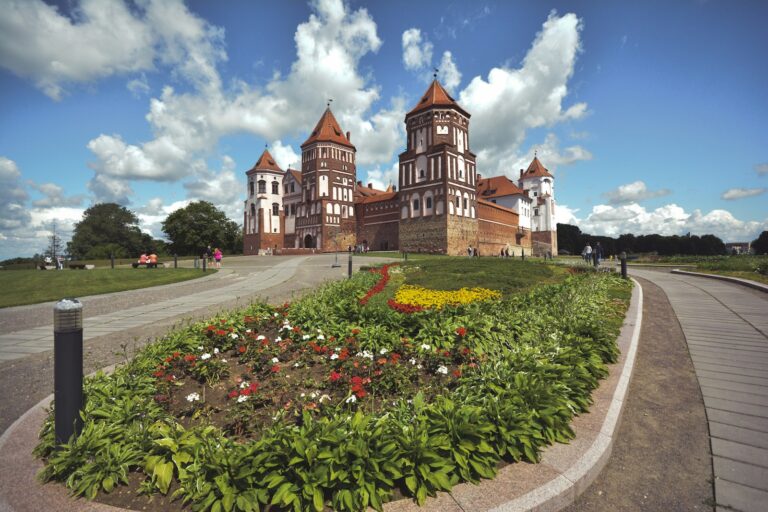 BelarusBelarus at a glance: where it sits, how its history unfolded, what shapes its…
 HaitiDiscover Haiti: where it is, its revolutionary history, Creole culture and traditions, and signature…